
Chef Lupita
Acambaritas de Acámbaro
Guanajuato's daily bread from Acámbaro, a small glazed roll built on pata, enriched with manteca de cerdo, and baked until the top shines lightly for merienda.
A cooking platform built around craft, culture, and the stories behind what we eat.
Created by
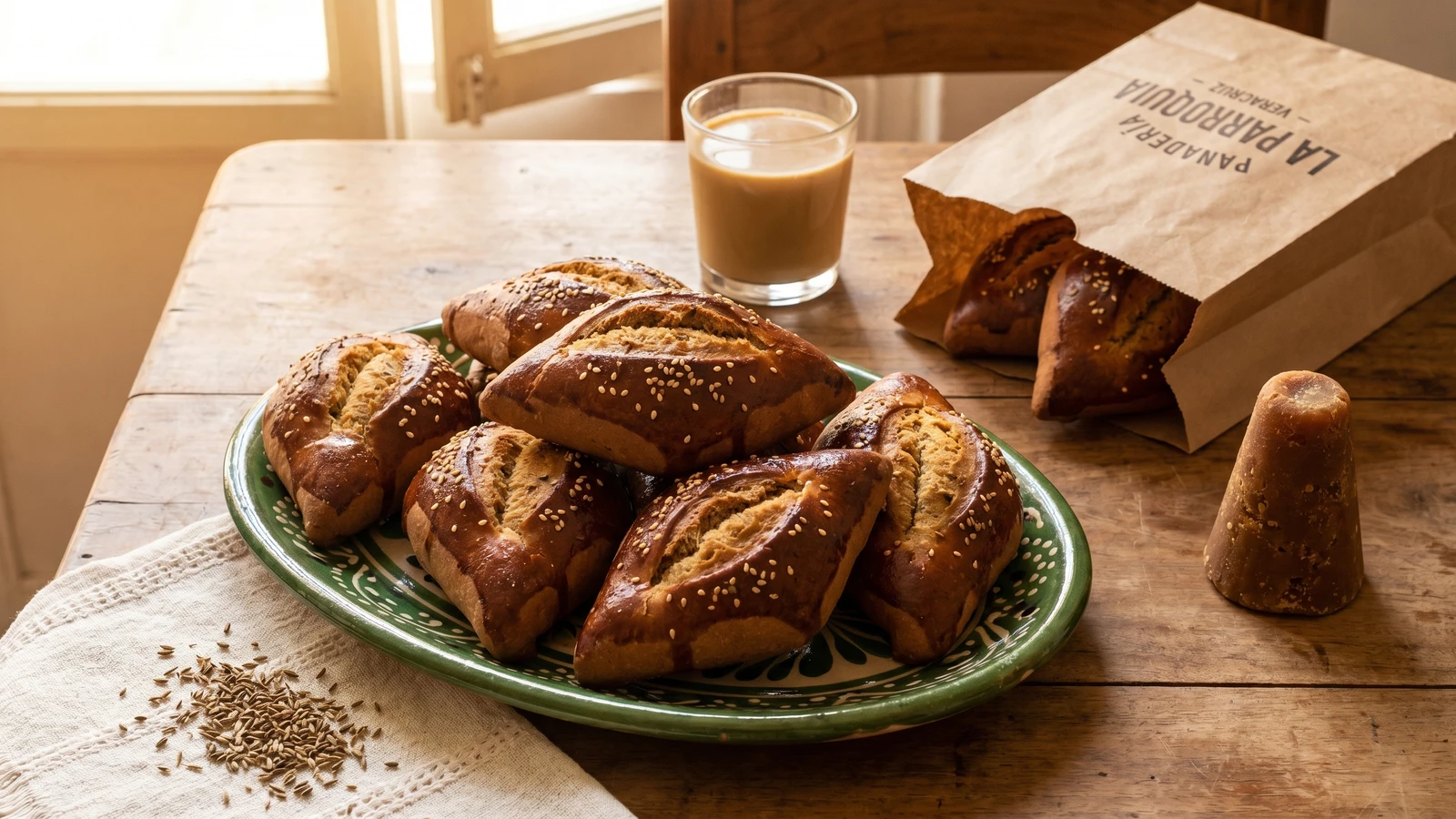
Central Veracruz's rhombus-shaped pan dulce, sweetened with piloncillo from the cañaverales, scented with anise and clove, and baked the way old panaderías kept port wheat traditions alive.
Central Veracruz keeps these cocoles in the panaderías between Xalapa, Coatepec, Xico, and the towns that smell of coffee, cane, and wet earth after rain. This is not a bread from a single Mexico. It belongs to Veracruz, where wheat entered through the port and cane grew in the hot lowlands until piloncillo became kitchen money.
The flavor is piloncillo, anise, clove, and manteca de cerdo. No chile here. Not every Mexican dish needs chile, and anyone who tells you Mexican food is only heat has not stood in a Veracruz bakery before sunrise. The bread should be brown, lightly chewy at the edge, soft in the middle, with that dark cane sweetness that panela and piloncillo carry from the cañaverales.
I learned this version from a señora in a market bakery outside Coatepec who shaped each piece into a rhombus without looking down. She told me the corners teach you if the dough is right: if they tear, it is dry; if they slump, it is weak. That is the kind of instruction a recipe rarely gives you. Pregúntale a las señoras del mercado. They know.
Use lard and let the dough rise properly. No me vengas con atajos. A cocol is old pan dulce, patient pan dulce, the kind you eat with café lechero while the morning is still cool. Saber cocinar es saber vivir.
Cocol comes from the Nahuatl 'cocolli,' a word associated with twisted or shaped bread forms, and the modern wheat version developed after Spanish wheat entered New Spain through Veracruz, Mexico's first Atlantic door from 1519. Piloncillo and panela became central to Veracruz baking because sugarcane took root in the state's warm, humid lowlands during the colonial period, linking pan dulce to local cañaverales rather than imported white sugar. The rhombus-shaped cocol survived in central Mexican and Veracruz panaderías as one of the older forms of pan dulce, carrying indigenous naming, colonial wheat, and regional cane sweetness in the same loaf.
Quantity
1 cup
grated or chopped
Quantity
3/4 cup
Quantity
1 tablespoon
Quantity
2
Quantity
1 small piece, about 2 inches
Quantity
4 cups, plus more for dusting
Quantity
1/2 cup
Quantity
2 1/4 teaspoons
Quantity
1 teaspoon
Quantity
1/2 teaspoon
Quantity
1/2 cup
room temperature
Quantity
2
room temperature
Quantity
1 tablespoon
Quantity
1 large egg beaten with 1 tablespoon water
Quantity
2 tablespoons
for topping
| Ingredient | Quantity |
|---|---|
| piloncillograted or chopped | 1 cup |
| water | 3/4 cup |
| anise seeds | 1 tablespoon |
| whole cloves | 2 |
| Mexican canela | 1 small piece, about 2 inches |
| bread flour | 4 cups, plus more for dusting |
| whole wheat flour | 1/2 cup |
| active dry yeast | 2 1/4 teaspoons |
| fine sea salt | 1 teaspoon |
| ground clove | 1/2 teaspoon |
| pork lard (manteca de cerdo)room temperature | 1/2 cup |
| large eggsroom temperature | 2 |
| orange zest | 1 tablespoon |
| egg wash | 1 large egg beaten with 1 tablespoon water |
| sesame seedsfor topping | 2 tablespoons |
Combine the piloncillo, water, anise seeds, cloves, and canela in a small saucepan. Simmer over medium-low heat for 5 to 7 minutes, until the piloncillo dissolves and the syrup smells of anise and cane. Strain it and let it cool until warm, about 105F to 110F. Too hot and you kill the yeast. Too cold and the dough sleeps.
In a large bowl, stir together the bread flour, whole wheat flour, yeast, salt, and ground clove. Add the warm piloncillo tea, lard, eggs, and orange zest. Mix until a shaggy dough forms. It will look rough at first. Good. Bread starts as work, not as decoration.
Knead by hand for 10 to 12 minutes, or in a stand mixer on medium-low for 7 to 8 minutes, until the dough becomes smooth, elastic, and slightly tacky. Do not bury it in flour. A dry cocol bakes up heavy. The dough should pull from the bowl but still feel alive under your hand.
Place the dough in a lightly greased bowl, cover with a clean cotton cloth, and let it rise in a warm place for 1 1/2 to 2 hours, until doubled. In a Veracruz kitchen, the humidity helps the dough. In a dry kitchen, cover it well so the surface does not crust.
Turn the dough onto a lightly floured surface and divide it into 12 equal pieces. Shape each piece into a flat rhombus, about 4 inches long and 3 inches wide, thicker in the center and thinner at the corners. This diamond shape matters. A round bun is a bun. A cocol has its own body.
Arrange the cocoles on parchment-lined baking sheets, leaving space between them. Cover and let rise 30 to 40 minutes, until puffy but not collapsed. Brush with egg wash and sprinkle with sesame seeds. Press the sesame lightly so it stays on the bread instead of decorating the tray.
Bake at 375F for 18 to 22 minutes, rotating the pans halfway through. The cocoles are done when the tops are deep brown, the piloncillo gives a molasses gleam, and the bottoms sound hollow when tapped. Let them cool on a rack for at least 15 minutes. Hot bread tears. Warm bread opens clean.
Serve warm or at room temperature with café lechero, black coffee, or hot chocolate. These are make-ahead breads. The anise and piloncillo settle overnight and taste more serious the next morning. Recetas probadas y garantizadas.
1 serving (about 95g)
Culinary guides, cultural storytelling, and the editorial depth that makes cooking meaningful.
Discover Culinary ExplorerChef Lupita
Guanajuato's daily bread from Acámbaro, a small glazed roll built on pata, enriched with manteca de cerdo, and baked until the top shines lightly for merienda.

Chef Lupita
Michoacan's Tinguindin aguacatas are flat, leaf-scored sweet breads made with harina de trigo, piloncillo, anise, and manteca de cerdo, shaped by hand for the wood oven.

Chef Lupita
From Ajijic on Lake Chapala, Pan Tachihual is a lightly sweet wedding loaf built with harina de trigo, harina de maiz, piloncillo, manteca, anise, and the old Guadalajara pata.

Chef Lupita
Comitán's pan de yema shaped into little pigs, birds, and rabbits, a Chiapas bakery bread rich with egg yolks, manteca de cerdo, and anís, baked golden on hoja de plátano.