Chef Makoa
Kalo Rolls (Hawaiian Taro Bread)
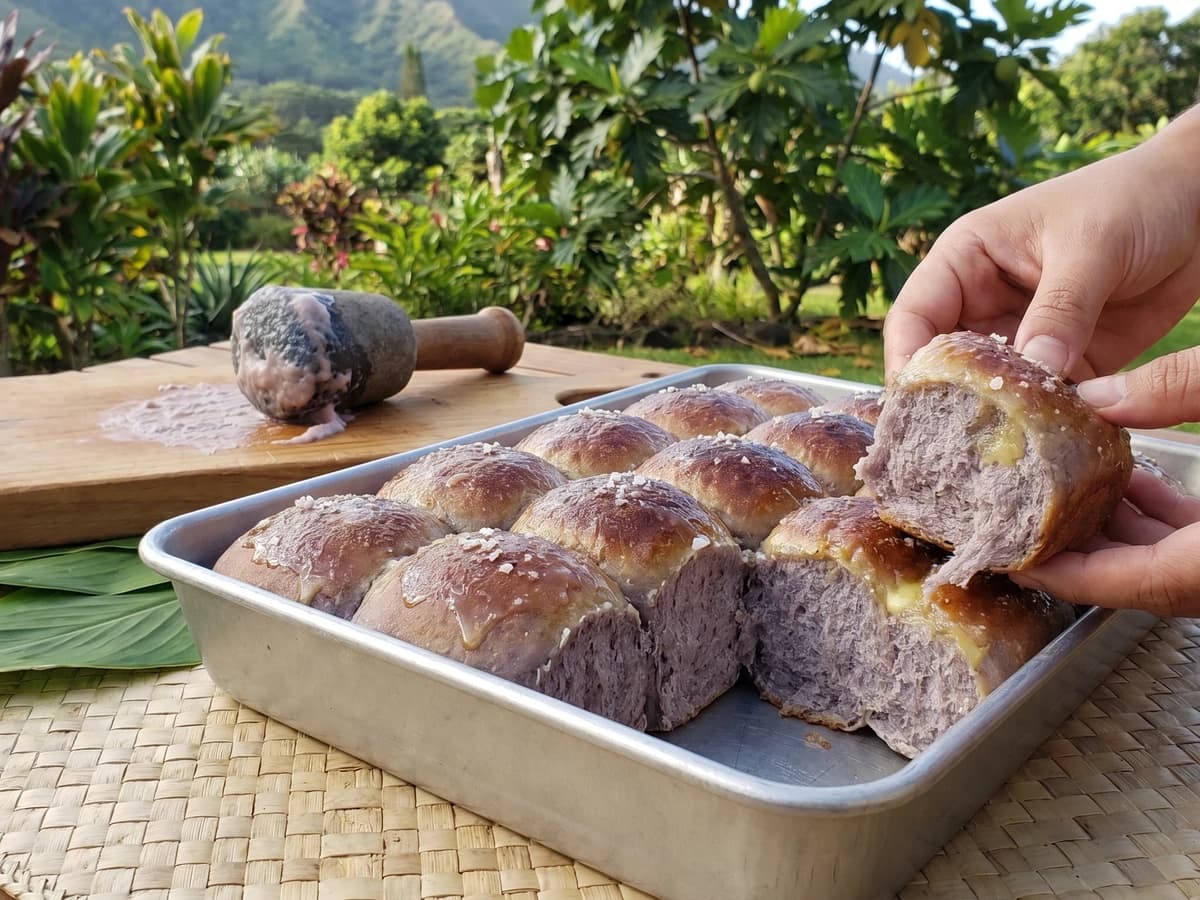
Soft Hawaiian kalo rolls, lavender from poi (pounded taro) and tender with butter, baked pull-apart for the lūʻau (feast) table, the potluck pan, or breakfast.
A cooking platform built around craft, culture, and the stories behind what we eat.
Created by
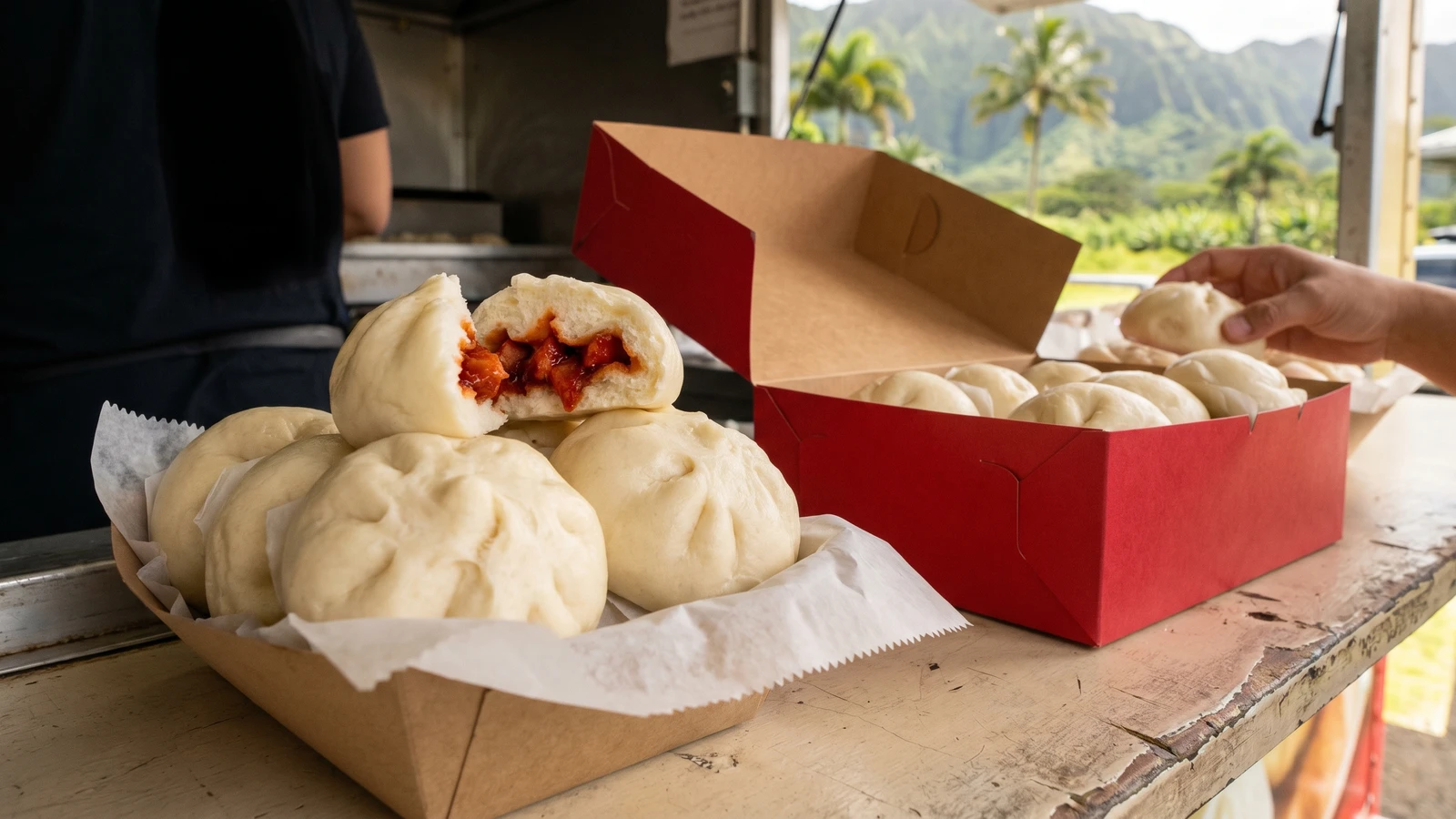
Hawaiʻi Local manapua, born from Chinese char siu bao and raised by lunch wagons, with soft sweet dough wrapped around glossy red pork, big enough for one hand and one small-kid memory.
Papa Kainoa used to say, no blame the plate for being humble. He meant poi when he said it, but I hear him when the manapua truck rolls up too, because Hawaiʻi feeds its people in more than one voice. This one belongs to Hawaiʻi, and the place I know it best is Oʻahu: a white bun in wax paper, sweet red pork inside, eaten standing by the curb before somebody tells you get in the car already.
Manapua carries ʻōlelo Hawaiʻi (the Hawaiian language) in its name, from mea ʻono puaʻa, delicious pork food, but its close older cousin is Chinese char siu bao, the bun around red roasted pork. That is the truth of Local food in Hawaiʻi: Hawaiian, Chinese, Japanese, Portuguese, Korean, Filipino, Puerto Rican, and more hands sharing one sugar-camp stove because history squeezed everybody hard. ʻĀina, kānaka, meaʻai, land, people, food, still holds, even here by the lunch wagon.
This isn't a canoe-crop deep food like kalo (taro) or ʻulu (breadfruit), and I won't dress it up like one. The old table is still there: Hawaiian poi and laulau, Sāmoan palusami, Tongan lū, Cook Islands rukau, Māori hāngī, each named by its own hand. Manapua stands on the other half of the Hawaiʻi table, beside saimin, plate lunch, and Spam musubi. Across the Triangle that everyday half has cousins too: Sāmoan sapasui, Tongan lū pulu with tinned beef, Māori boil-up in Aotearoa. Not the same dish. Same living habit of taking what history dropped at the door and feeding the family anyway.
So make the dough soft, let it rise until it feels light under your fingers, and cool the filling before you tuck it inside. The bun should open tender, not gummy, with glossy char siu in the middle. Eat what you have: wax paper, paper bag, rice cooker humming in the kitchen. No need make it precious. Just make enough for one more.
Chinese contract laborers began arriving in Hawaiʻi for the sugar plantations in 1852, and Cantonese char siu bao came with the families, stores, bakeries, and street vendors that grew around that work. In Hawaiʻi the bun became manapua, a name tied to ʻōlelo Hawaiʻi mea ʻono puaʻa, delicious pork food, and it grew into a larger Local lunch-wagon staple, sold steamed or baked from red boxes and manapua trucks. It is not pre-contact Hawaiian deep food like poi, paʻiʻai, ʻulu, or the imu; it is post-contact Hawaiʻi Local food, the plantation-creole half of the table sitting beside plate lunch, saimin, and Sāmoan sapasui as living island food.
Quantity
3 cups (360 g)
plus more for dusting
Quantity
1/4 cup (32 g)
Quantity
1/3 cup (65 g)
Quantity
2 1/4 teaspoons
Quantity
2 teaspoons
Quantity
1/2 teaspoon
Quantity
1 cup
105F to 110F
Quantity
2 tablespoons
plus more for the bowl
Quantity
2 cups
finely diced
Quantity
1 tablespoon
for the filling
Quantity
1/2 small
finely diced
Quantity
1 clove
minced
Quantity
1 teaspoon
grated
Quantity
2 tablespoons
Quantity
1 tablespoon
Quantity
1 tablespoon
Quantity
2 teaspoons
Quantity
1/4 cup
Quantity
1 teaspoon
Quantity
2 teaspoons cornstarch plus 1 tablespoon water
Quantity
10
3 to 4 inches each
Quantity
for serving
| Ingredient | Quantity |
|---|---|
| all-purpose flour or bao flourplus more for dusting | 3 cups (360 g) |
| cornstarch | 1/4 cup (32 g) |
| sugar | 1/3 cup (65 g) |
| instant yeast | 2 1/4 teaspoons |
| baking powder | 2 teaspoons |
| fine sea salt | 1/2 teaspoon |
| warm water105F to 110F | 1 cup |
| neutral oil or melted shorteningplus more for the bowl | 2 tablespoons |
| fully cooked char siu porkfinely diced | 2 cups |
| neutral oilfor the filling | 1 tablespoon |
| yellow onionfinely diced | 1/2 small |
| garlicminced | 1 clove |
| fresh gingergrated | 1 teaspoon |
| hoisin sauce | 2 tablespoons |
| oyster sauce or mushroom oyster sauce | 1 tablespoon |
| shoyu (soy sauce) | 1 tablespoon |
| sugar or honey | 2 teaspoons |
| chicken stock or water | 1/4 cup |
| toasted sesame oil | 1 teaspoon |
| cornstarch mixed with water | 2 teaspoons cornstarch plus 1 tablespoon water |
| parchment paper squares3 to 4 inches each | 10 |
| Chinese hot mustard or shoyu (optional) | for serving |
In a large bowl, whisk the flour, cornstarch, sugar, yeast, baking powder, and salt. Add the warm water and oil, then mix until the dough turns shaggy and no dry flour hides at the bottom. Knead 8 to 10 minutes by hand, or 5 to 6 minutes in a mixer, until it feels smooth, soft, and a little tacky, like it wants to hold your hand but not glue itself there.
Oil the bowl lightly, tuck the dough inside, cover it, and let it rise in a warm place for 60 to 75 minutes, until puffy and almost doubled. Press it with one floured finger. The dent should slowly fill back in, not snap shut and not stay dead flat. Dough has its own breath. Let it breathe.
While the dough rises, warm 1 tablespoon oil in a skillet over medium heat. Cook the onion until soft and sweet-smelling, 3 to 4 minutes, then stir in the garlic and ginger for 30 seconds. Add the diced char siu, hoisin, oyster sauce, shoyu, sugar, and stock. Let it bubble until the pork is glossy, then stir in the cornstarch slurry and cook until the sauce thickens enough to mound on a spoon. Finish with sesame oil and cool completely.
Turn the risen dough onto a lightly floured surface and press out the big air pockets. Cut it into 10 equal pieces, about 70 to 75 grams each if you are weighing. Roll each piece into a smooth ball, cover them with a towel, and rest 10 minutes so the dough relaxes and rolls without fighting you.
Roll one dough ball into a 5-inch round, keeping the center a little thicker than the edges. Spoon about 2 tablespoons filling into the middle. Gather the edges up around the pork, pleat or pinch them tight, then set the bun seam-side down on a parchment square for the smooth lunch-wagon top. Cover while you shape the rest.
Let the filled buns rest 20 to 30 minutes, until they look puffy and feel light when you lift the parchment. They should not double huge. A gentle fingertip tap should leave a soft mark that slowly springs back.
Set a bamboo or metal steamer over a steady simmer. Arrange the buns with at least 1 inch between them, working in batches so they have room to swell. Cover and steam 12 to 14 minutes, until the dough is set, smooth, and springy. Turn off the heat, crack the lid for 3 minutes, then open fully so the buns do not wrinkle hard from the sudden change.
Serve warm in wax paper, with hot mustard or shoyu if your table likes it. The bun should pull apart soft and white, with the red pork glossy and thick inside. For later, cool completely, wrap, and refrigerate up to 3 days or freeze up to 2 months. Reheat in a steamer until soft again.
1 serving (about 120g)
Culinary guides, cultural storytelling, and the editorial depth that makes cooking meaningful.
Discover Culinary ExplorerChef Makoa
Soft Hawaiian kalo rolls, lavender from poi (pounded taro) and tender with butter, baked pull-apart for the lūʻau (feast) table, the potluck pan, or breakfast.
Chef Makoa
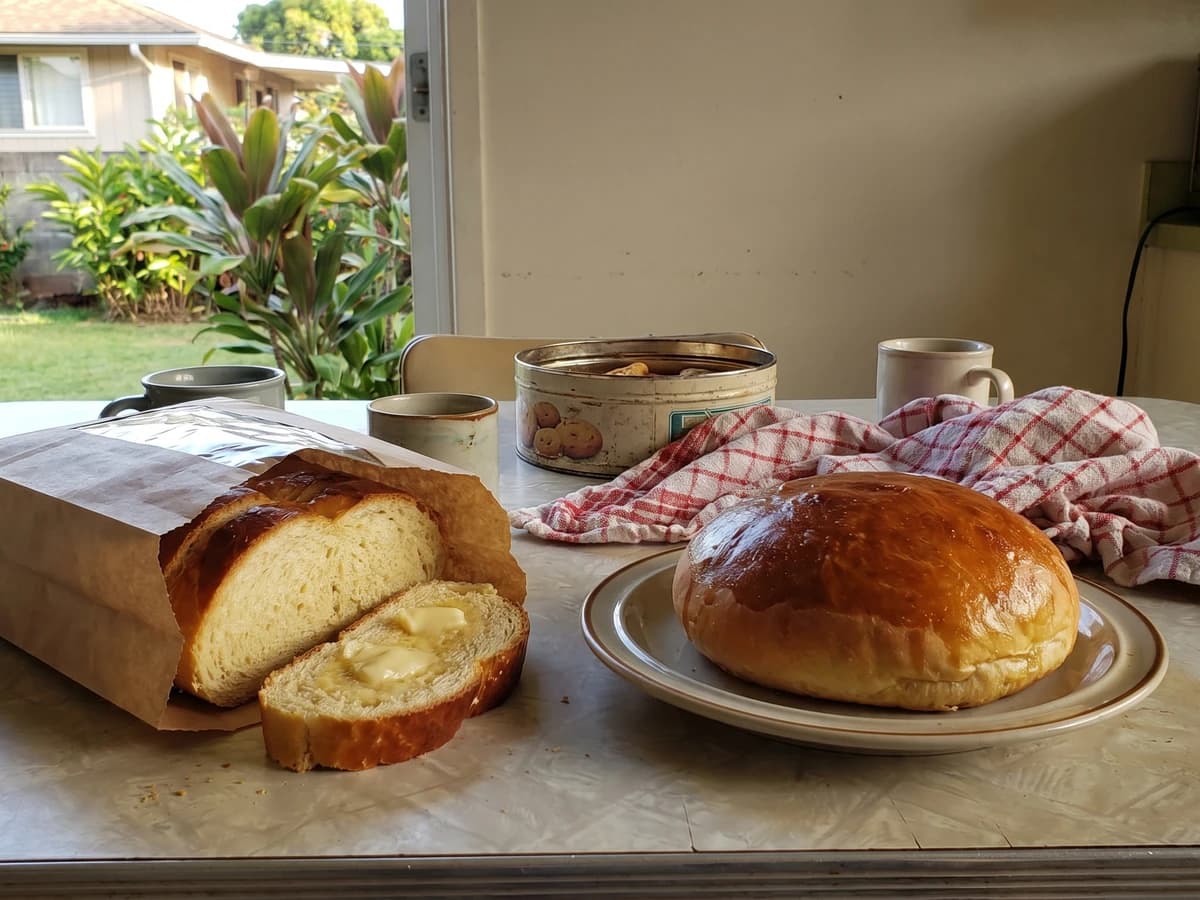
A soft, golden egg-and-butter loaf the Portuguese carried to Hawaiʻi from the Azores and Madeira, now a Local table bread for holidays, breakfast toast, and one more auntie walking in.

Chef Juliette
Pâte à brioche ordinaire teaches enriched dough properly: wake the leaven, build strength before the last egg, then work in pliable butter by stages and let one long fermentation do its quiet work.

Chef Juliette
Ordinary brioche takes one exact measure of butter and a patient rise in the mould, becoming so light and silken that it can cradle fruit without losing its tender crumb.