
Chef Makoa
ʻAʻama (Hawaiian Black Rock Crab with Paʻakai)
Hawaiʻi's reef-gathered ʻaʻama, the small black rock crab from the shoreline stones, boiled quick in salty water and picked whole at the lūʻau table beside ʻopihi.
A cooking platform built around craft, culture, and the stories behind what we eat.
Created by
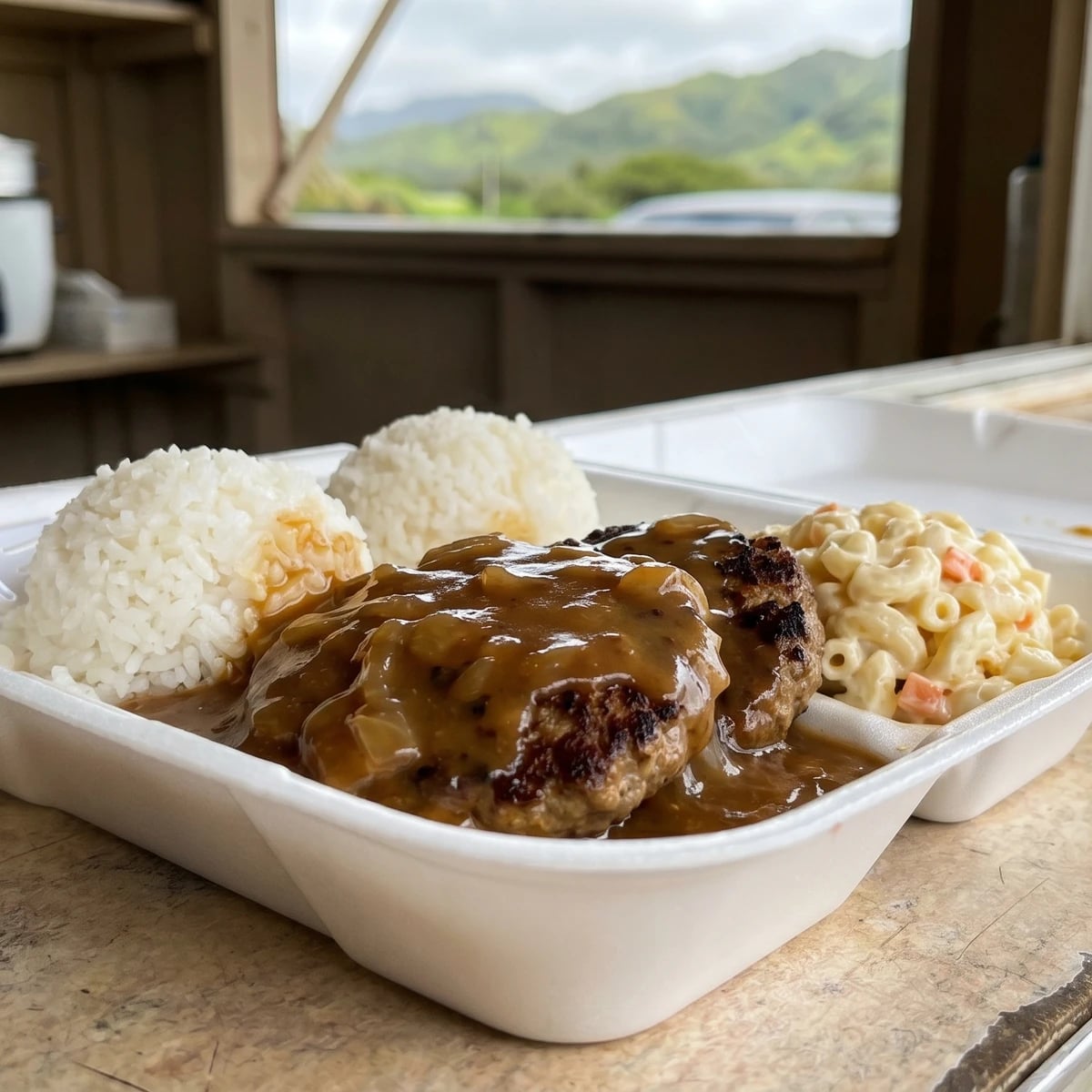
A Hawaiʻi Local plate-lunch staple: tender seasoned beef patties smothered in onion brown gravy over two scoops rice, with mac salad alongside. The loco moco's plainspoken cousin, no egg needed.
The first plate lunch I remember came across a drive-in counter on windward Oʻahu, gravy already running into the rice before we even got the forks. This is Hawaiʻi Local food, the everyday table of Hawaiʻi, not the old deep food of kalo and ʻulu, and no need make that lesser. Hawaiian, Japanese, Chinese, Portuguese, Korean, Filipino, Puerto Rican, and other hands fed each other on the sugar-camp stove, and hamburger steak is one way that history learned to eat lunch.
The plate-lunch rule is plain: two scoops rice, one scoop macaroni salad, and the protein, all on one plate, no sides to negotiate. The patty gets seasoned enough to taste like somebody cared, the onions go brown and sweet, and the gravy carries everything home. When that gravy hits the rice, that's the point. No blame the plate for being humble.
Across the Triangle, the cousins have their own everyday comfort too, and we name them by their own hands: Sāmoan sapasui, chop suey made local to Sāmoa; Tongan lū pulu, corned beef wrapped with taro leaf; Cook Islands tinned beef with taro; Māori mince and gravy on a cold day in Aotearoa. Not the same dish. Same lesson. People take what history put in the pantry and feed the family anyway.
So cook this unfussy. Use the rice cooker. Use good ground beef if you can, and what you have if you can't. This is not ceremony, and it doesn't need to pretend. ʻĀina, kānaka, meaʻai: land, people, food. Sometimes that looks like paʻiʻai pounded on the board, and sometimes it looks like onion gravy over rice in a takeout plate.
Hamburger steak plate lunch belongs to Hawaiʻi's Local plantation-creole table, shaped in the late 1800s and early 1900s as Native Hawaiian, Japanese, Chinese, Portuguese, Filipino, Korean, Puerto Rican, and other laboring communities shared lunch-pail food across the sugar fields. By the mid-20th century, drive-ins and lunch wagons fixed the format many people know now: two scoops white rice, macaroni salad, and a protein under gravy or sauce. It sits close to loco moco, often traced to Hilo in 1949, but without the egg, showing how American ground beef and brown gravy became Hawaiʻi food without becoming ancient Hawaiian deep food.
Quantity
1 1/2 pounds
80/20 preferred
Quantity
1/2 small
grated
Quantity
1/3 cup
Quantity
1 large
Quantity
2 tablespoons
Quantity
1 tablespoon
Quantity
1 tablespoon
Quantity
1 teaspoon
Quantity
1/2 teaspoon
Quantity
1/2 teaspoon
Quantity
1 tablespoon
Quantity
1 large
thinly sliced
Quantity
3 tablespoons
Quantity
3 tablespoons
Quantity
2 1/2 cups
Quantity
1 tablespoon
for the gravy
Quantity
1 teaspoon
for the gravy
Quantity
1/2 teaspoon
for the gravy
Quantity
8 scoops
about 4 cups cooked
Quantity
4 scoops
| Ingredient | Quantity |
|---|---|
| ground beef80/20 preferred | 1 1/2 pounds |
| yellow oniongrated | 1/2 small |
| panko or fine dry breadcrumbs | 1/3 cup |
| egg | 1 large |
| milk | 2 tablespoons |
| Worcestershire sauce | 1 tablespoon |
| shoyu (soy sauce) | 1 tablespoon |
| garlic powder | 1 teaspoon |
| kosher salt | 1/2 teaspoon |
| black pepper | 1/2 teaspoon |
| neutral oil | 1 tablespoon |
| yellow onionthinly sliced | 1 large |
| unsalted butter | 3 tablespoons |
| all-purpose flour | 3 tablespoons |
| low-sodium beef stock | 2 1/2 cups |
| shoyu (soy sauce)for the gravy | 1 tablespoon |
| Worcestershire saucefor the gravy | 1 teaspoon |
| black pepperfor the gravy | 1/2 teaspoon |
| cooked short-grain white riceabout 4 cups cooked | 8 scoops |
| prepared Hawaiʻi-style macaroni salad | 4 scoops |
Get the rice going first, because plate lunch waits on the rice cooker more than the cook. Keep the macaroni salad cold and ready. The rule is simple in Hawaiʻi: two scoops rice, one scoop mac salad, protein with gravy, all on one plate.
In a bowl, mix the ground beef, grated onion, panko, egg, milk, Worcestershire, shoyu, garlic powder, salt, and pepper just until it holds together. Don't work it hard. You want a patty that eats tender, not one that fights you.
Divide into 4 big patties, or 8 smaller drive-in style patties, and press a shallow dimple into the middle of each one. They shrink as they cook, so shape them wider than you think. That's auntie math, and auntie is usually right.
Heat the oil in a large heavy skillet over medium-high heat. Sear the patties until browned on both sides, about 3 minutes per side for big patties, then move them to a plate. They don't need to be cooked through yet; the gravy will finish them.
Lower the heat to medium and add the sliced onion to the same pan. Cook until the onion softens, turns golden at the edges, and pulls the beefy browned bits off the bottom. That's where the gravy starts tasting like lunch counter, not just stock.
Add the butter and let it melt into the onions, then sprinkle in the flour and stir for 1 to 2 minutes until it smells nutty and looks like wet sand. Whisk in the beef stock a little at a time, then add the shoyu, Worcestershire, and pepper. Simmer until glossy and thick enough to coat the back of a spoon.
Slide the patties back into the gravy with any juices from the plate. Simmer gently, spooning gravy over the top, until the centers reach 160F and the onions sit soft around the beef. If the gravy gets too thick, loosen it with a splash of stock or water. No panic. Gravy forgives.
Put two scoops rice on each plate, set the hamburger steak over or beside the rice, and flood it with onion gravy so some runs down into the grains. Add one scoop macaroni salad. Plastic fork, paper napkin, everybody eat while the gravy still shines.
1 serving (about 640g)
Culinary guides, cultural storytelling, and the editorial depth that makes cooking meaningful.
Discover Culinary Explorer
Chef Makoa
Hawaiʻi's reef-gathered ʻaʻama, the small black rock crab from the shoreline stones, boiled quick in salty water and picked whole at the lūʻau table beside ʻopihi.

Chef Makoa
Hawaiʻi Local chicken hekka, the plantation-camp cousin of Japanese sukiyaki, with tender chicken, long rice, shiitake, bamboo shoots, and sweet shoyu gravy for rice.

Chef Makoa
Hawaiʻi's Local plate-lunch comfort: juicy chicken thigh in panko, fried crisp, sliced over white rice with mac salad and katsu sauce, the sugar-camp stove brought home.

Chef Makoa
Hawaiian chicken lūʻau is kalo leaf cooked past its bite with tender chicken and coconut milk, a windward Oʻahu comfort pot with cousins in Sāmoa's palusami, Tonga's lū, and Cook Islands rukau.