
Chef Graziella
Agnolotti del Plin
The pinched pasta of Piedmont, each tiny parcel sealed with thumb and forefinger, filled with braised meat that has surrendered to hours of slow cooking. Butter or broth. Nothing more.
A cooking platform built around craft, culture, and the stories behind what we eat.
Created by
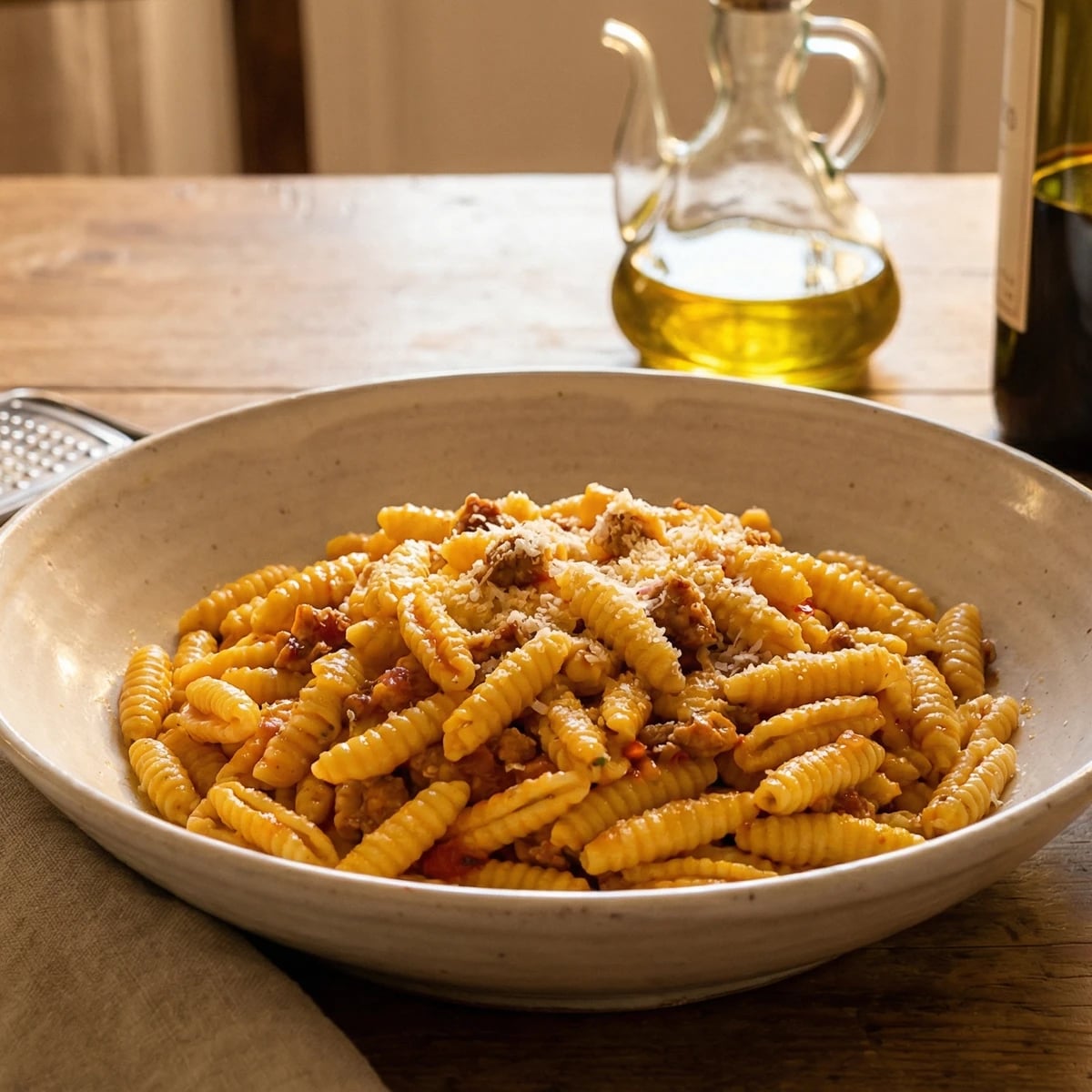
The proud pasta of Sardinia's Campidano plain, where saffron-gold gnocchetti meet fennel-scented sausage in a sauce that speaks of shepherds, wheat fields, and an island that answers to no one.
Italian cooking, as such, does not exist. There is Bolognese cooking, Venetian cooking, Roman cooking. And then there is Sardinian cooking, which barely acknowledges the mainland at all. This island has been ruled by Phoenicians, Romans, Catalans, and Piedmontese, yet its kitchen remains stubbornly its own. Malloreddus alla Campidanese is the proof.
The pasta itself tells you everything. These small ridged shapes, golden with saffron, are made from semolina and water. No eggs. This is not the fresh pasta of Emilia-Romagna. This is the durum wheat tradition of the Mediterranean south, pressed by hand against woven baskets to create the grooves that catch the sauce. The name means 'little bulls' in the local dialect, though no one agrees on why.
The sauce is equally uncompromising. Sardinian sausage, perfumed with fennel and sometimes touched with heat, broken into the pan and simmered with tomatoes until the fat renders and the flavors marry. Pecorino sardo, the sheep's milk cheese that Sardinians consider far superior to its Roman cousin, grated over at the end. Nothing more. What you keep out is as significant as what you put in.
Malloreddus have been made in Sardinia since at least the 17th century, when saffron cultivation flourished on the island under Spanish rule. The Campidano plain, the agricultural heartland stretching from Cagliari toward Oristano, gave the dish its name and its identity. Sardinian women traditionally made malloreddus for weddings and festivals, pressing each piece against the bottom of a woven basket called a ciuliri to create the distinctive ridges.
Quantity
1 pound
Quantity
1 pound
Quantity
3 tablespoons
Quantity
1 medium
diced fine
Quantity
2
lightly crushed and peeled
Quantity
1/2 cup
Quantity
1 can (28 ounces)
crushed by hand
Quantity
1/4 teaspoon
crumbled
Quantity
1 small pinch
Quantity
to taste
Quantity
for serving
freshly grated
| Ingredient | Quantity |
|---|---|
| dried malloreddus | 1 pound |
| Sardinian pork sausage | 1 pound |
| extra virgin olive oil | 3 tablespoons |
| yellow oniondiced fine | 1 medium |
| garlic cloveslightly crushed and peeled | 2 |
| dry white wine | 1/2 cup |
| San Marzano tomatoescrushed by hand | 1 can (28 ounces) |
| saffron threadscrumbled | 1/4 teaspoon |
| red pepper flakes | 1 small pinch |
| kosher salt | to taste |
| pecorino sardofreshly grated | for serving |
Remove the sausage from its casing and break it into rough chunks. In a wide, heavy skillet or braiser, heat the olive oil over medium-high heat. Add the sausage and cook, breaking it into smaller pieces with a wooden spoon, until deeply browned in places and the fat has rendered, about 10 minutes. Do not stir constantly. Let it sit and develop color. The fond that forms on the pan bottom is flavor you will use.
Reduce heat to medium. Push the sausage to one side and add the onion to the cleared space. Cook, stirring occasionally, until the onion softens and turns translucent, about 8 minutes. Add the crushed garlic cloves and cook one minute more. The garlic should perfume the oil but not brown. You will remove it later.
Pour in the white wine and scrape the bottom of the pan with your wooden spoon, dissolving all the browned bits into the liquid. Let the wine bubble until it has reduced by half and you no longer smell raw alcohol. This takes about 3 minutes.
Add the crushed tomatoes, crumbled saffron, and red pepper flakes. Stir well to distribute the saffron. Bring to a gentle simmer, then reduce heat to low. Cook uncovered, stirring occasionally, for 25 to 30 minutes. The sauce should thicken and the fat should rise in orange pools to the surface. Fish out and discard the garlic cloves. Season with salt.
Bring a large pot of water to a vigorous boil. Salt it generously. Add the malloreddus and cook according to package directions, usually 12 to 15 minutes for dried pasta. These are thick shapes that require more time than ribbon pasta. Test frequently in the final minutes. They should be tender throughout but with the faintest resistance at the center. Reserve one cup of pasta water before draining.
Add the drained malloreddus directly to the skillet with the sauce. Toss over medium heat for one minute, adding splashes of pasta water as needed to help the sauce coat the ridged shapes. The pasta should glisten. The sauce should cling to every groove. There should be no pool of liquid at the bottom of the pan.
Transfer to a warm serving bowl or individual plates. Pass pecorino sardo at the table for each person to add as they wish. Once the pasta is sauced, serve it promptly, inviting your guests and family to put off talking and start eating. This pasta waits for no one.
1 serving (about 300g)
Culinary guides, cultural storytelling, and the editorial depth that makes cooking meaningful.
Discover Culinary Explorer
Chef Graziella
The pinched pasta of Piedmont, each tiny parcel sealed with thumb and forefinger, filled with braised meat that has surrendered to hours of slow cooking. Butter or broth. Nothing more.

Chef Graziella
The Sunday pasta of Palermo, where tiny rings of dried pasta bake with meat ragù, sweet peas, and melting cheese until a burnished crust forms that families fight over at the table.

Chef Graziella
The thick, rough pasta of the Veneto dressed with slow-braised duck, a dish that proves why this region's cooking stands apart from everything else called Italian.

Chef Graziella
A Venetian Lenten dish of startling depth: fat whole-wheat noodles tangled with onions cooked to silk and anchovies dissolved to nothing. Three ingredients. One hour. Umami before we had the word.