
Chef Dimitra
Aegean Island Kakavia (Κακαβιά)
Aegean kakavia is the fisherman’s soup named for the pot itself: small rockfish, potato, onion, lemon, and enough olive oil to turn a poor catch rich.
A cooking platform built around craft, culture, and the stories behind what we eat.
Created by
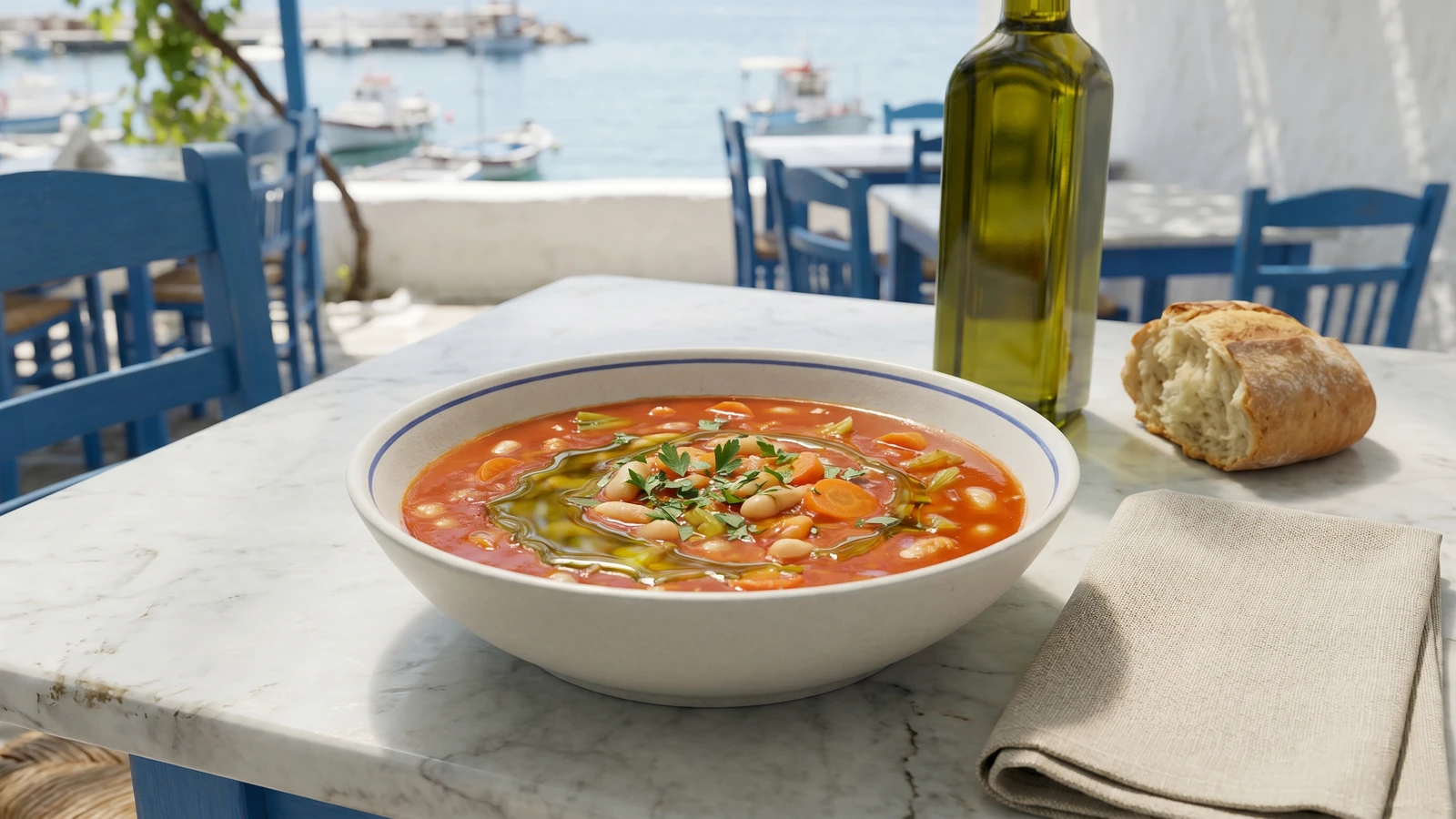
Fasolada is the mainland bean soup of the Greek weekday table: white beans, vegetables, tomato, and the olive oil stirred in raw at the end.
Fasolada is the mainland Greek bean pot, plain in the best way: white beans, carrot, celery, onion, tomato, and olive oil. It belongs to the weekday table and to the fasting table, nistisimi, with no apology and no decoration. The beans should be soft but whole, the broth red-gold and loose enough to spoon, not thick like paste.
The one method that decides it is the first boil. Soak the beans overnight, cover them with fresh water, boil them for ten minutes, then drain that water before the real pot begins. It gives you a cleaner broth and beans that cook evenly, without the muddy heaviness that makes people say they don't like fasolada. Usually they only met a rushed one.
After that, the work is patience. Simmer low with the vegetables until the beans yield, then stir in the olive oil off the heat so it stays green, peppery, and alive. My mother Sofia would put the pot on before the day took hold, and by lunch the house smelled of celery leaf and tomato. A recipe written down is a recipe saved, even for a dish everyone thinks they already know.
Fasolada became known in the 20th century as Greece's everyday national dish, but its roots are older than the modern state: beans and pulse soups fed rural households through fasts, poor harvests, and winters. The tomato-red version now common on the mainland became possible only after tomatoes entered Greek cooking widely in the 19th century. In Lenten households it remains one of the clearest examples of nistisima cooking, filling, vegan by tradition, and built from the store cupboard.
Quantity
500g
soaked overnight
Quantity
2.2 liters
divided, plus more as needed
Quantity
1 large
finely chopped
Quantity
2 medium
sliced into thin rounds
Quantity
2
finely sliced
Quantity
3
thinly sliced
Quantity
250g fresh or 240g canned
fresh tomatoes grated
Quantity
2 tablespoons
Quantity
1
Quantity
1 teaspoon
Quantity
90ml
divided
Quantity
1 1/2 teaspoons
plus more to taste
Quantity
1/2 teaspoon
Quantity
2 tablespoons
chopped
Quantity
to serve
| Ingredient | Quantity |
|---|---|
| dried medium white beanssoaked overnight | 500g |
| waterdivided, plus more as needed | 2.2 liters |
| yellow onionfinely chopped | 1 large |
| carrotssliced into thin rounds | 2 medium |
| celery stalks with leavesfinely sliced | 2 |
| garlic clovesthinly sliced | 3 |
| ripe tomatoes or canned crushed tomatoesfresh tomatoes grated | 250g fresh or 240g canned |
| tomato paste | 2 tablespoons |
| dried bay leaf | 1 |
| sweet paprika | 1 teaspoon |
| extra virgin olive oildivided | 90ml |
| fine sea saltplus more to taste | 1 1/2 teaspoons |
| freshly ground black pepper | 1/2 teaspoon |
| flat-leaf parsleychopped | 2 tablespoons |
| red wine vinegar (optional) | to serve |
Put the beans in a large bowl and cover them with plenty of cold water. Leave them overnight, 10 to 12 hours. They should look swollen and their skins should feel smooth, not wrinkled.
Drain the soaked beans, put them in a heavy pot, and cover with 1.2 liters fresh water. Bring to a boil and cook hard for 10 minutes, skimming any foam. Drain and rinse the beans. This first boil is the small kindness that gives fasolada a clean broth and helps the beans cook evenly.
Wipe the pot, add 45ml olive oil, and set it over medium heat. Add the onion, carrots, celery, and garlic with a pinch of salt. Cook 8 minutes, stirring often, until the onion softens and the celery smells sweet.
Stir in the tomato paste and paprika for 1 minute, just until the paste darkens a shade. Add the grated tomatoes, bay leaf, drained beans, and 1 liter water. The liquid should cover the beans by about 3cm. Bring to a boil, then lower to a gentle simmer.
Simmer partly covered for 60 to 80 minutes, stirring now and then. Add hot water in small splashes if the pot looks dry. Salt after the beans have started to soften, about halfway through, then continue until the beans are tender but still whole and the broth is glossy.
Take the pot off the heat. Remove the bay leaf, stir in the remaining 45ml olive oil, the black pepper, and the parsley. Taste for salt. Let the fasolada rest 15 minutes before serving, because the broth settles and the oil rounds the edges.
Serve warm in deep bowls, with country bread and a little red wine vinegar at the table if you like the sharpness. Olives on the side are proper. Feta is for non-fasting days, not part of the soup itself.
1 serving (about 520g)
Culinary guides, cultural storytelling, and the editorial depth that makes cooking meaningful.
Discover Culinary ExplorerChef Dimitra
Aegean kakavia is the fisherman’s soup named for the pot itself: small rockfish, potato, onion, lemon, and enough olive oil to turn a poor catch rich.

Chef Dimitra
Corfu's bourdeto is a red, pepper-hot fish braise, traditionally made with scorpionfish, potatoes, tomato, and enough heat to announce the Ionian table.

Chef Dimitra
Central Macedonia's spring lamb fricassee braises shoulder with romaine, dill, and spring onion, then finishes the pot with avgolemono, the egg-lemon sauce that makes it silk.

Chef Dimitra
In Chania, tsigariasto is goat or lamb browned in olive oil, softened with wine, and left to braise without water until the pot gives back only glossy meat juices.