
Chef Makoa
Baked ʻUala (Hawaiian Sweet Potato in the Embers)
Whole Hawaiian ʻuala baked in embers or a hot oven until the skins char and the flesh goes honey-soft, finished plain with paʻakai so the canoe crop tastes like itself.
A cooking platform built around craft, culture, and the stories behind what we eat.
Created by
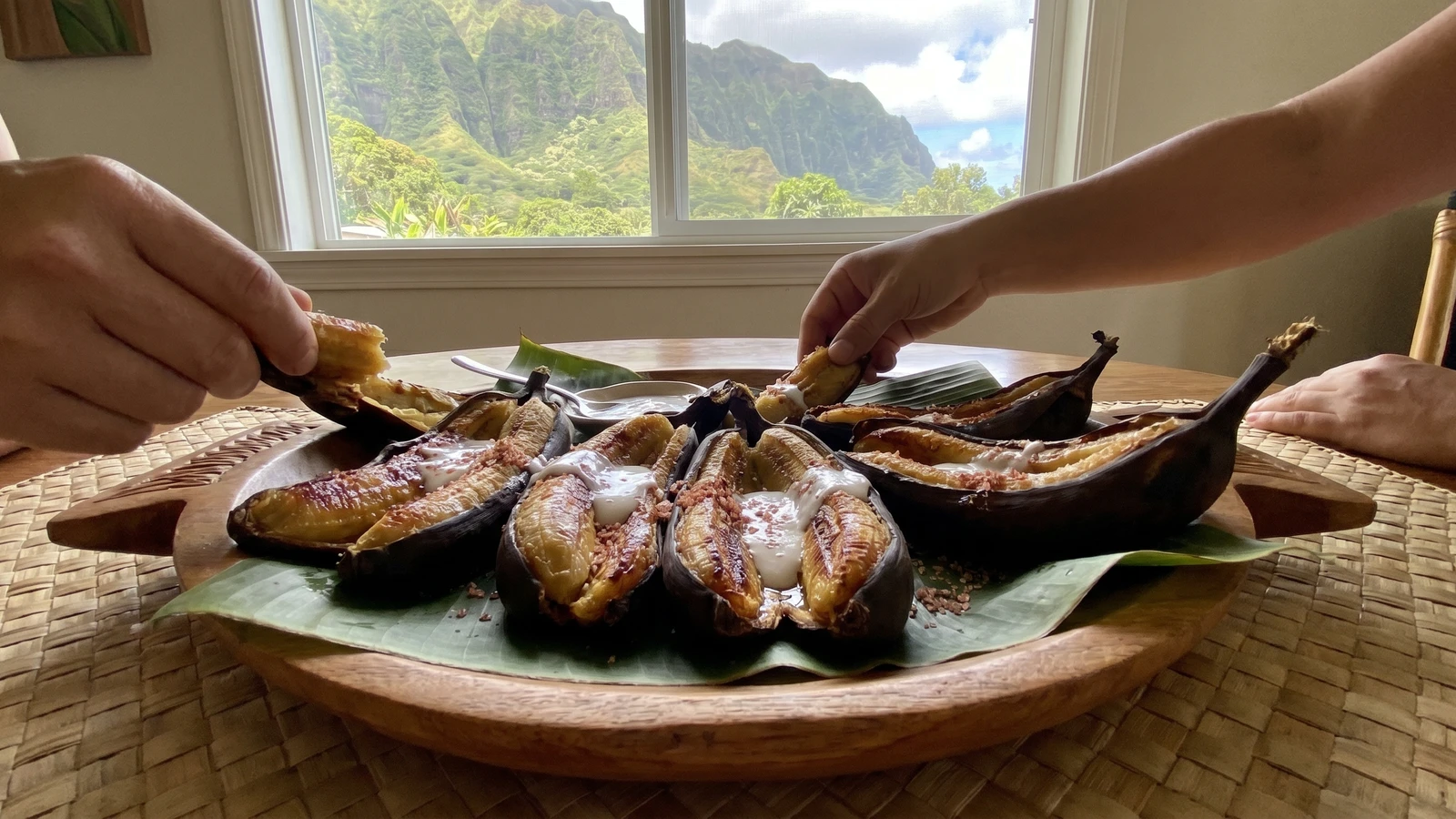
Firm Hawaiian maiʻa baked in its own skin until the starch relaxes into quiet sweetness, split open with coconut cream and paʻakai, a canoe-crop side for weeknight rice or a lūʻau table.
The canoe doesn't carry snacks. It carries relatives. That took me too long to understand, same as plenty things from my own people, but once it lands in your chest you can't unlearn it. In Hawaiʻi this one is maiʻa, the cooking banana, carried here with kalo, taro, and ʻulu, breadfruit, by the old voyagers from Kahiki, the ancestral southern lands our stories often tie to Tahiti.
This dish belongs to Hawaiʻi in the hand that cooks it: maiʻa baked in its own skin until the starch softens and turns quietly sweet. But the family is wider. Sāmoa has faʻi, banana. Tahiti has meiʻa. The Cook Islands have meika. Rapa Nui has maika. One ocean, one canoe, one root, even when the root is really a banana keiki tucked into the hull so a new island could be fed.
So don't peel it first. The skin is the wrapper, same thinking as leaf around a laulau or palusami, smaller and humbler, but it knows its job. The oven heat works slow through that skin, the flesh gives up its chalkiness, and a little salt and coconut cream bring it home. Papa Kainoa used to say, no blame the taro. Same law here. No blame the maiʻa if you rushed it or bought the wrong cousin.
This is weeknight food too. Put it beside rice, canned fish, eggs, kālua from yesterday, whatever get. The deep foods and the everyday plate are not enemies. ʻĀina, kānaka, meaʻai, land, people, food, they stay tied together when you cook the canoe crops like kin and still feed the kitchen you actually live in.
Maiʻa was one of the canoe plants brought into Hawaiʻi by Polynesian voyagers before European contact, with Hawaiian growers tending many named cooking types, including maoli, pōpōʻulu, and iholena bananas. Before 1819, the ʻai kapu, the sacred eating system, placed bananas among foods restricted to men, beside pork, coconut, and certain fish; when Liholiho and Kaʻahumanu broke that system, foods like maiʻa moved through a changed table. Across the Triangle, names like Sāmoan faʻi, Tahitian meiʻa, Cook Islands meika, and Rapa Nui maika still show the old canoe trail of this crop.
Quantity
6
firm-ripe, or use ripe plantains
Quantity
1 tablespoon
for rubbing the skins
Quantity
1/2 teaspoon
or coarse sea salt, plus more to taste
Quantity
1/2 cup
fresh if possible or canned
Quantity
1 teaspoon
only if the bananas are very firm
| Ingredient | Quantity |
|---|---|
| Hawaiian cooking bananas (maiʻa maoli, pōpōʻulu, or another starchy maiʻa)firm-ripe, or use ripe plantains | 6 |
| coconut oilfor rubbing the skins | 1 tablespoon |
| paʻakai ʻalaea (Hawaiian red sea salt)or coarse sea salt, plus more to taste | 1/2 teaspoon |
| thick coconut creamfresh if possible or canned | 1/2 cup |
| raw sugar or honey (optional)only if the bananas are very firm | 1 teaspoon |
Pick firm-ripe maiʻa, yellow with some black freckles, heavy for their size, still starchy when you press them. This is a Hawaiian cooking banana, not the soft dessert banana most markets push at you. If plantains are what you have, use them. Eat what you have, just know which cousin is in your hand.
Heat the oven to 400F. Rinse and dry the bananas, then make one shallow lengthwise slit through each skin, not deep into the flesh. Rub the skins lightly with coconut oil and lay them on a banana-leaf-lined sheet pan, or parchment if that's what the kitchen gives you.
Bake 30 to 35 minutes, turning once, until the skins are dark and split, the flesh gives softly under a spoon, and a little amber syrup shows at the opening. The skin is the small oven inside the oven. Leave it on and the starch turns sweet without drying out.
While the maiʻa rests, warm the coconut cream gently with the paʻakai ʻalaea until it loosens and shines. If your bananas are still on the firm side, stir in the raw sugar or honey. No need make it sweet like dessert. The banana already knows where it's going.
Open each skin and spoon the salted coconut cream over the golden flesh. Serve the maiʻa warm, still sitting in its own peel, beside rice, fish, laulau, kālua puaʻa, eggs, or whatever is feeding the table that night. Deep food doesn't have to act fancy. It just has to feed the people.
1 serving (about 220g)
Culinary guides, cultural storytelling, and the editorial depth that makes cooking meaningful.
Discover Culinary ExplorerChef Makoa
Whole Hawaiian ʻuala baked in embers or a hot oven until the skins char and the flesh goes honey-soft, finished plain with paʻakai so the canoe crop tastes like itself.
Chef Makoa
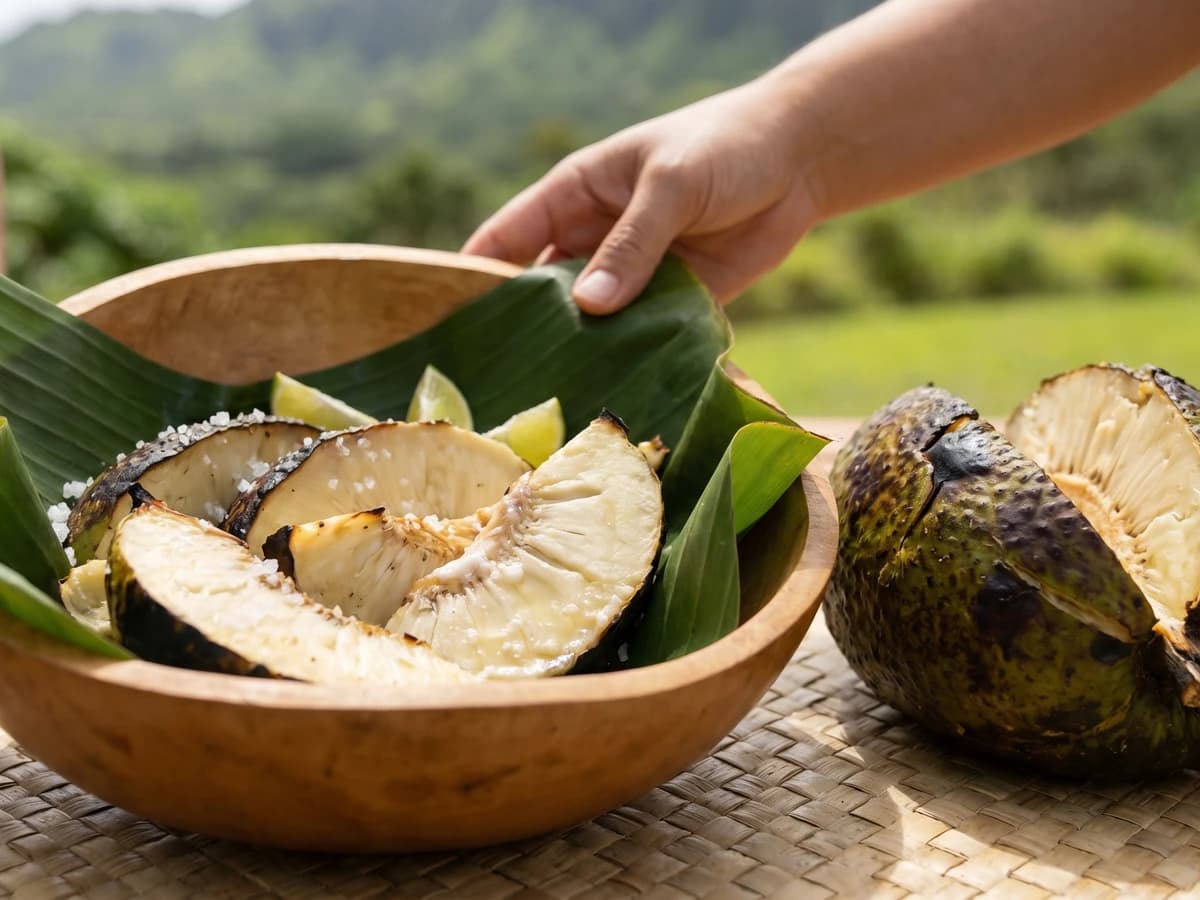
Hawaiʻi's ʻulu, breadfruit, roasted whole until the skin blackens and the inside turns soft and bread-like, the old canoe crop made real for a weeknight oven.
Chef Makoa
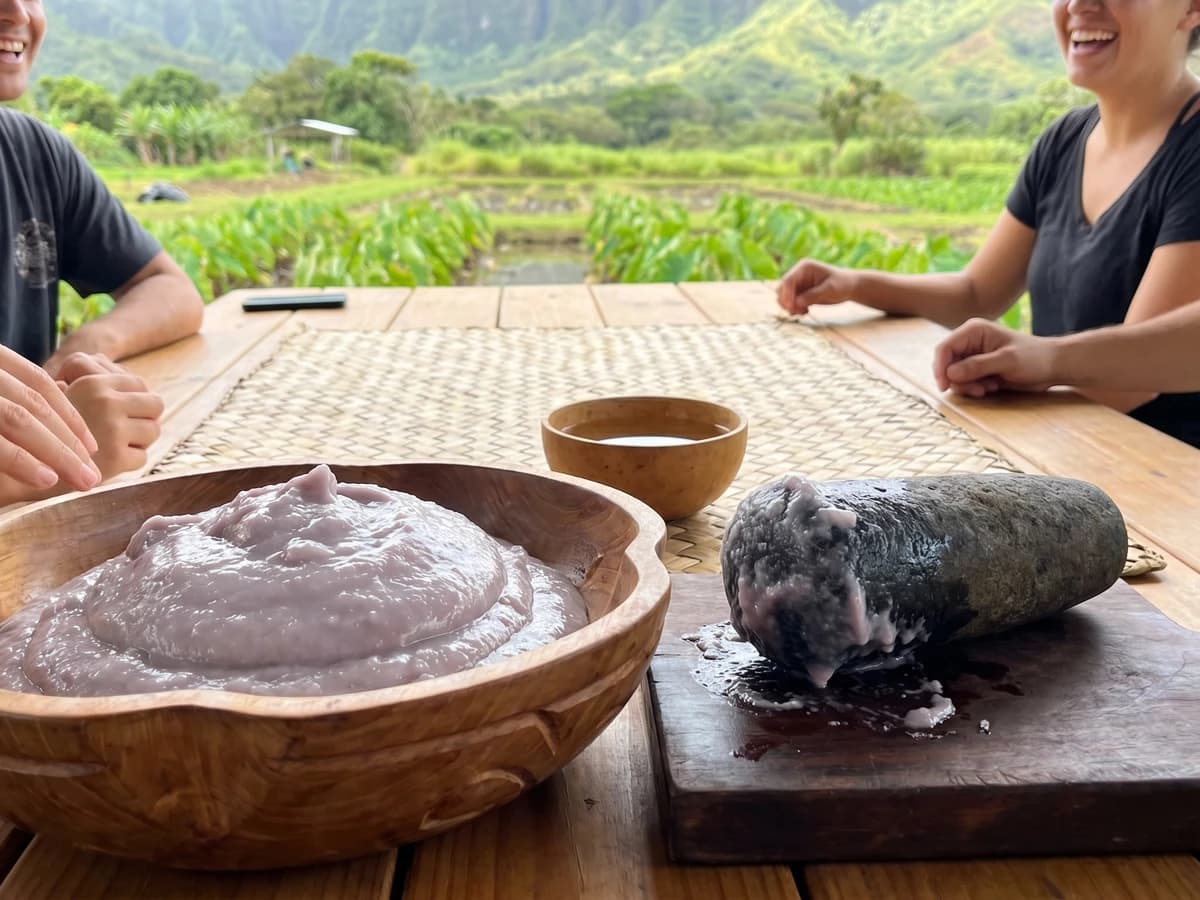
Hawaiian paʻiʻai is kalo steamed soft, cleaned, and pounded by hand until it shines, thick enough to lift from the stone, ready to eat as is or loosen into poi.
Chef Makoa
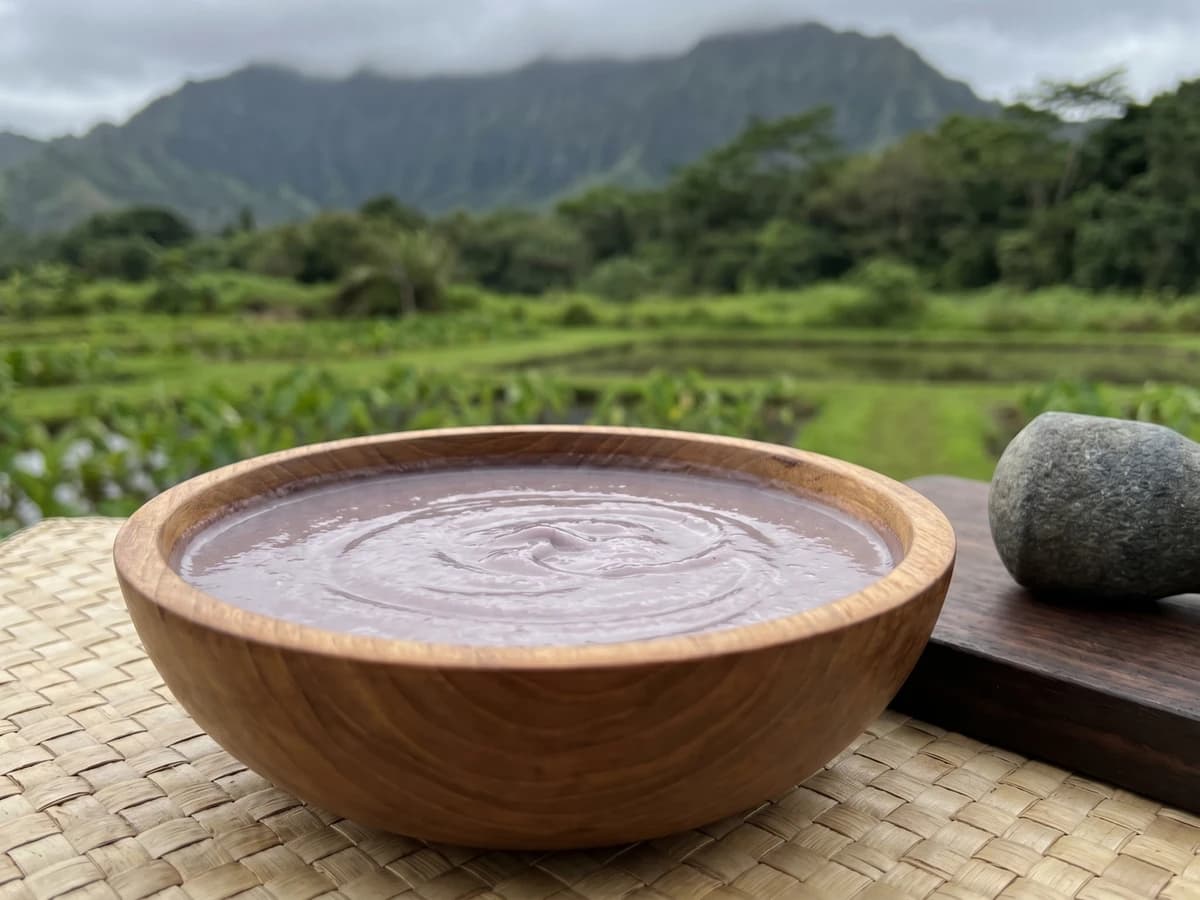
Fresh Hawaiian poi left to turn ʻawaʻawa, sour, over a few days, tangy and clean from its own kalo life, ready beside fish, kālua puaʻa, laulau, or tomorrow's plate lunch.