
Chef Lesia
Adzhyka po-Ukrainsky (аджика, tomato-pepper relish)
The tomatoes go from garden-red to brick-red while the peppers slump and the garlic waits. By the end, the spoon leaves a path and the whole south fits in one jar.
A cooking platform built around craft, culture, and the stories behind what we eat.
Created by
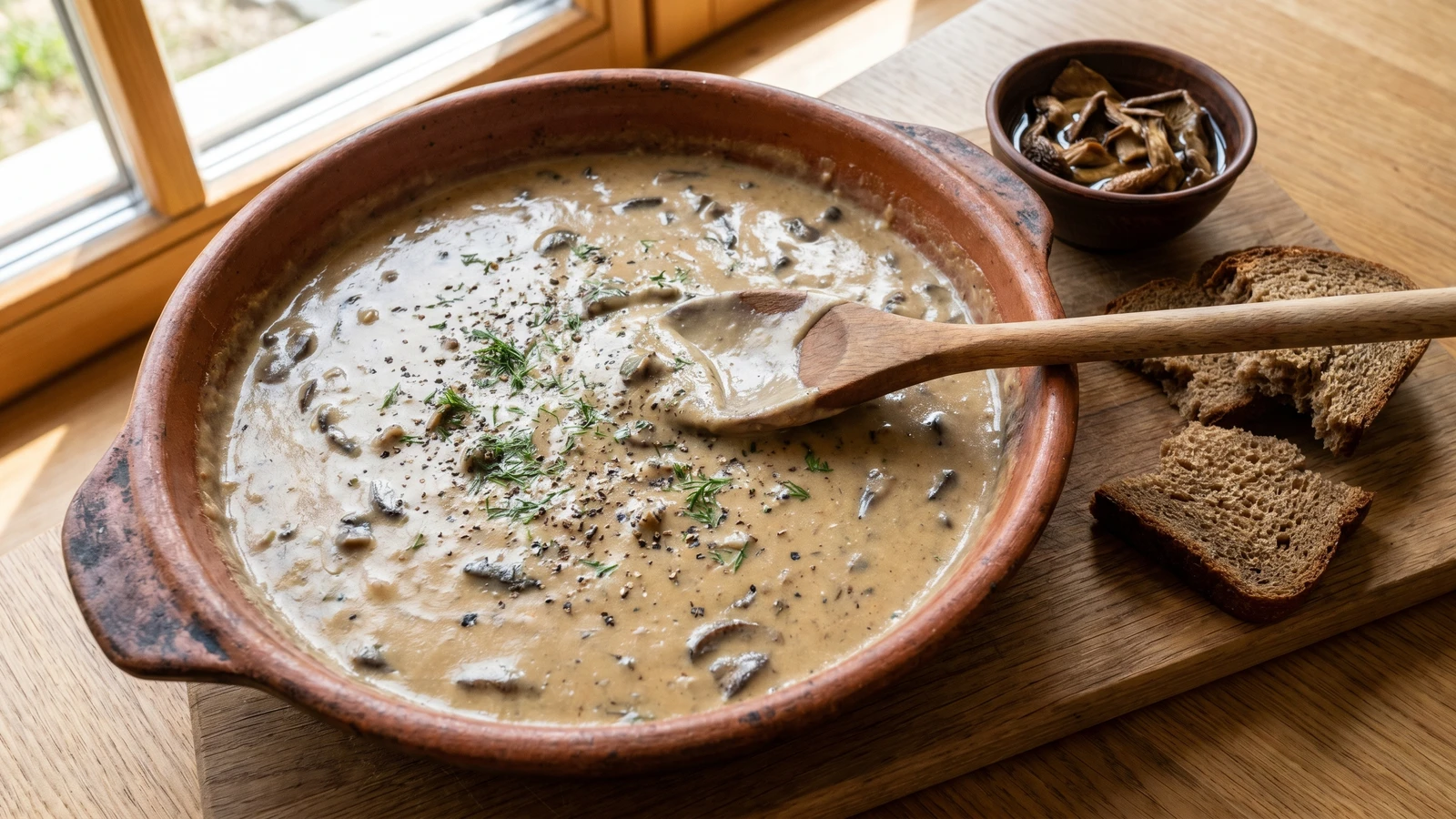
A spoonful of machanka should fall slowly, mushroom-dark and smetana-pale at once, the kind of sauce that turns bread into supper.
The first thing machanka tells you is that it is not a polite sauce. It is thick, mushroom-dark under the smetana, glossy at the edges, and made for tearing bread straight through the pan. A dip, yes. Also supper. In Transcarpathia, where the forests feed the table as much as the garden does, dried mushrooms carry winter in their smell before they ever touch the pot.
The dish thinks through soaking liquor. Don't throw it away. That brown, woodsy water is your stock, and when it meets slow onion, garlic, and smetana, it becomes something you can drag halushky through until the bowl is clean. Aunt Nadia once wrote "until it sounds right" beside a mushroom sauce, which was useless and also true: when the pan stops hissing sharply and starts murmuring thickly, the flour has cooked and the smetana has settled in.
Temper the smetana before it goes in. That's the step that decides the dish. Cold sour cream dumped into a hot pan can split; warmed gently with mushroom liquor, it turns velvet and clings to bread like it was always meant to be there.
Machanka takes its name from the Ukrainian verb machaty, to dip, and western Ukrainian versions often lean on forest mushrooms, smetana, and the soaking liquor of dried boletes. In Transcarpathia, where Ukrainian, Rusyn, Hungarian, Slovak, and Romanian home kitchens meet in the mountains, mushroom gravies like this belong to the Carpathian habit of making a small handful of dried forest food feed a full table. The dish is also a quiet correction to the idea that Ukrainian sauces are only tomato or beet-red: here the flavor is woodland brown, sour cream white, and completely Ukrainian.
Quantity
40g
Quantity
500ml
Quantity
400g
sliced
Quantity
2 tablespoons
Quantity
1 large
finely diced
Quantity
2 cloves
finely grated
Quantity
1 tablespoon
Quantity
250g
Quantity
1 teaspoon, plus more to taste
Quantity
1/2 teaspoon
Quantity
1 small bunch
finely chopped
Quantity
to serve
| Ingredient | Quantity |
|---|---|
| dried porcini or mixed wild mushrooms | 40g |
| just-boiled water | 500ml |
| fresh mushroomssliced | 400g |
| unrefined sunflower oil or butter | 2 tablespoons |
| onionfinely diced | 1 large |
| garlicfinely grated | 2 cloves |
| plain flour | 1 tablespoon |
| smetana or full-fat sour cream | 250g |
| sea salt | 1 teaspoon, plus more to taste |
| black pepper | 1/2 teaspoon |
| dillfinely chopped | 1 small bunch |
| rye bread, boiled potatoes, banosh, or halushky | to serve |
Put the dried mushrooms in a bowl, cover with the just-boiled water, and leave them until they soften and the water turns brown and smells like damp forest floor. Lift the mushrooms out with your fingers, feeling for grit, then chop them small. Strain the soaking liquor through a fine sieve or clean cloth and keep it. That is not washing water. That is flavor.
Warm the sunflower oil or butter in a wide pan and add the onion with a pinch of salt. Let it soften slowly until it turns translucent and sweet, not browned. Add the garlic and chopped soaked mushrooms, and stir until the smell changes from raw onion to deep, nutty mushroom.
Tip in the sliced fresh mushrooms and cook them hard enough that they give up their water, then calm the heat and let that water cook away. The pan will sound sharp and wet at first, then quieter and thicker. Wait for that. If you rush, the machanka tastes thin even when it looks thick.
Sprinkle the flour over the mushrooms and stir until it disappears into the fat and juices. Give it a little time, until the raw flour smell is gone and the bottom of the pan looks glossy rather than dusty. This is what gives the sauce its body, the spoon must drag a path through it.
Pour in the strained mushroom liquor a little at a time, stirring as you go so the sauce thickens without lumps. Let it murmur, not boil hard, until it coats the spoon and falls back slowly. Taste now for salt and pepper because dried mushrooms can be bossy in different ways.
Put the smetana in a bowl and whisk in a few spoonfuls of the hot mushroom sauce until it warms and loosens. Lower the heat, then stir the warmed smetana back into the pan. Keep it gentle now. You want a creamy sauce, not a split one, pale at the edges with mushroom darkness underneath.
Stir in most of the dill and let the machanka sit off the heat for a few minutes so the flour settles and the mushrooms speak up again. Scatter the last dill over the top. Bring the pan to the table with rye bread, boiled potatoes, banosh, or halushky and let everyone drag their own piece through it.
1 serving (about 175g)
Culinary guides, cultural storytelling, and the editorial depth that makes cooking meaningful.
Discover Culinary ExplorerChef Lesia
The tomatoes go from garden-red to brick-red while the peppers slump and the garlic waits. By the end, the spoon leaves a path and the whole south fits in one jar.

Chef Lesia
A jar of grated beets turns ordinary water into sour red light, the kind that wakes borshch from inside instead of shouting over it.

Chef Lesia
Raw garlic, salt, and green sunflower oil turn into a sauce that announces itself from the doorway, sharp enough for pampushky, potatoes, grilled meat, and any tired Tuesday plate.

Chef Lesia
The gravy should start dark as wet bark, then soften when smetana goes in. Spoon it over buckwheat, potatoes, or mlyntsi and nobody asks where the meat went.