Chef Makoa
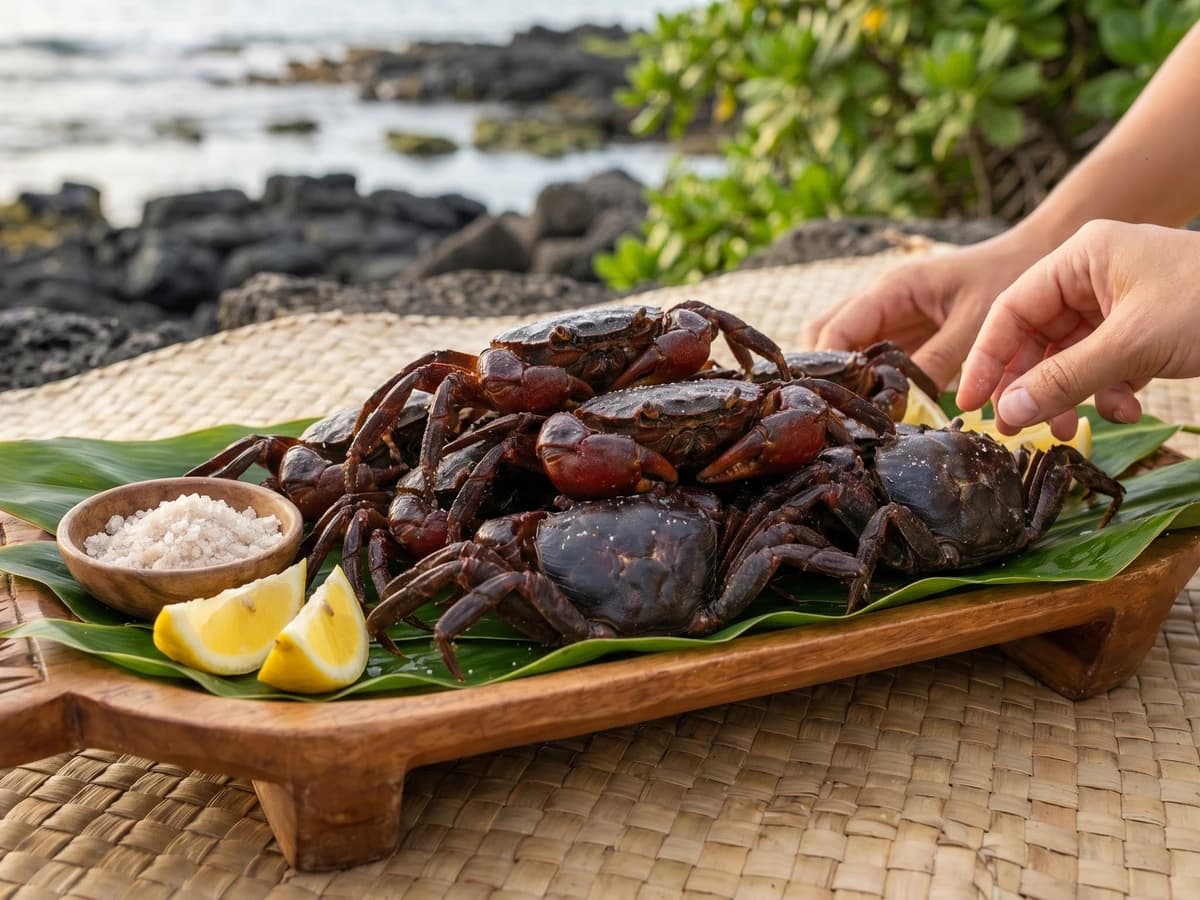
ʻAʻama (Hawaiian Black Rock Crab with Paʻakai)
Hawaiʻi's reef-gathered ʻaʻama, the small black rock crab from the shoreline stones, boiled quick in salty water and picked whole at the lūʻau table beside ʻopihi.
A cooking platform built around craft, culture, and the stories behind what we eat.
Created by
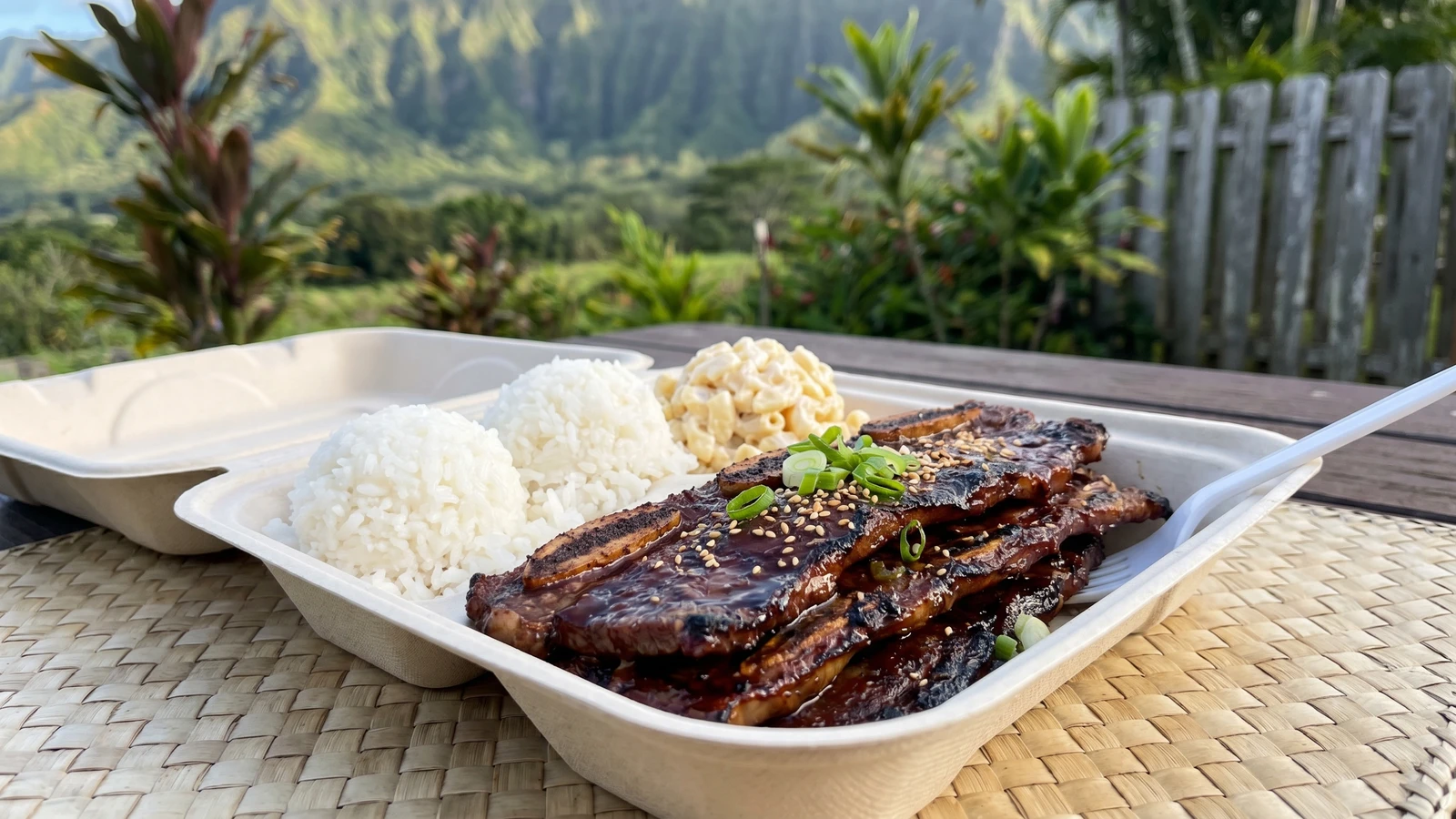
Sweet shoyu-sesame kalbi from Hawaiʻi's Local plate-lunch table, Korean camp cooking carried into the drive-in plate with hot rice, mac salad, and enough for one more.
The plate lunch is kinship too, just from a different doorway. Back home in Hawaiʻi, not the old imu line and not the papa kuʻi ʻai board, but the sugar-camp stove, the lunch wagon, the drive-in counter, the rice cooker talking in the corner. Hawaiian, Japanese, Chinese, Portuguese, Korean, Filipino, Puerto Rican hands all put something on that plate, and no blame the plate for being humble.
This kalbi belongs to Hawaiʻi's Local table, with Korean hands at the center. Kalbi is not an ancestral Hawaiian dish, and I no pretend it is. It came through Korean families and workers, through camp cooking and home kitchens, and Hawaiʻi took it into the plate lunch: flanken-cut short ribs, shoyu, sugar, sesame, garlic, ginger, grilled hot and eaten with rice and mac salad. That's the island named proper: Hawaiʻi Local, Korean-Hawaiian by the hand that carried it.
Across the Triangle, the cousins have their own everyday meats beside the deep foods: Tongan lū sipi, Sāmoan sapasui and pisupo with rice, Māori boil-ups, Hawaiian kālua puaʻa from the imu when the day is ceremonial. Same ocean, different histories on the table. One ocean, one canoe, one root still holds us, and the Local plate tells the other half of the story, the plantation half, the everybody-working-and-feeding-each-other half.
So cook it easy. Get the ribs cut thin, marinate them long enough to listen, then fire them hot and don't walk away. The sugar wants to go glossy and brown, the fat wants to crisp at the bone, and the rice is waiting. That's real food, yeah. Enough for one more.
Korean immigration to Hawaiʻi began in 1903, when the first large group of Korean laborers arrived to work the sugar plantations, bringing foodways that later became part of Hawaiʻi's Local cooking. Kalbi on a plate lunch is a post-contact, plantation-era food, not pre-contact deep food, but it sits honestly beside poi, kālua puaʻa, poke, and laulau in the way Hawaiʻi eats now. The standard plate-lunch form, two scoops rice, one scoop macaroni salad, and one protein, grew from laborers' mixed lunch tins and drive-in counters, a creole table built by many hands.
Quantity
3 pounds
about 1/3 inch thick
Quantity
1 cup
preferably Aloha shoyu or another Hawaiian-style soy sauce
Quantity
1/2 cup
Quantity
1/4 cup
Quantity
2 tablespoons
Quantity
2 tablespoons
Quantity
6
grated or finely minced
Quantity
1 tablespoon
grated
Quantity
1 small Asian pear or 1/2 apple
grated
Quantity
4
thinly sliced, plus more for finishing
Quantity
1 tablespoon
plus more for finishing
Quantity
1 teaspoon
Quantity
for serving
Quantity
for serving
| Ingredient | Quantity |
|---|---|
| flanken-cut beef short ribsabout 1/3 inch thick | 3 pounds |
| shoyupreferably Aloha shoyu or another Hawaiian-style soy sauce | 1 cup |
| packed brown sugar | 1/2 cup |
| mirin | 1/4 cup |
| rice vinegar | 2 tablespoons |
| sesame oil | 2 tablespoons |
| garlic clovesgrated or finely minced | 6 |
| fresh gingergrated | 1 tablespoon |
| Asian pear or applegrated | 1 small Asian pear or 1/2 apple |
| green onionsthinly sliced, plus more for finishing | 4 |
| toasted sesame seedsplus more for finishing | 1 tablespoon |
| black pepper | 1 teaspoon |
| cooked white rice | for serving |
| macaroni salad | for serving |
Run the flanken-cut ribs under cold water and rub away any little bone dust from the saw. Pat them very dry. That drying matters, because wet beef fights the grill and you want the edges to catch fast.
In a wide bowl, stir the shoyu, brown sugar, mirin, rice vinegar, sesame oil, garlic, ginger, grated pear, green onion, sesame seeds, and black pepper until the sugar loosens into the shoyu. Taste it. It should be salty first, sweet right behind it, with garlic and sesame hanging on your fingers.
Lay the ribs into the marinade and turn each piece so the meat is coated from edge to edge. Cover and chill at least 4 hours, or overnight if you can. The pear helps tenderize, the shoyu seasons deep, and the sugar gives you that lacquered brown edge on the fire.
Set a charcoal or gas grill for high direct heat. Oil the grates well. This is quick cooking, Local plate-lunch style, not the imu or the umu, and no need make it precious. Hot fire, close watch, good food.
Lift the ribs from the marinade and let the excess drip off. Grill 2 to 4 minutes per side, turning when the edges go dark and glossy and the fat begins to crisp. Watch the sugar, yeah? It should char in spots, not burn bitter.
Move the ribs to a tray and let them rest 5 minutes so the juices settle back into the meat. Scatter with green onion and sesame seeds. Serve with two scoops white rice and one scoop macaroni salad, the plate-lunch spine, no sides to negotiate.
1 serving (about 520g)
Culinary guides, cultural storytelling, and the editorial depth that makes cooking meaningful.
Discover Culinary ExplorerChef Makoa
Hawaiʻi's reef-gathered ʻaʻama, the small black rock crab from the shoreline stones, boiled quick in salty water and picked whole at the lūʻau table beside ʻopihi.

Chef Makoa
Hawaiʻi Local chicken hekka, the plantation-camp cousin of Japanese sukiyaki, with tender chicken, long rice, shiitake, bamboo shoots, and sweet shoyu gravy for rice.
Chef Makoa
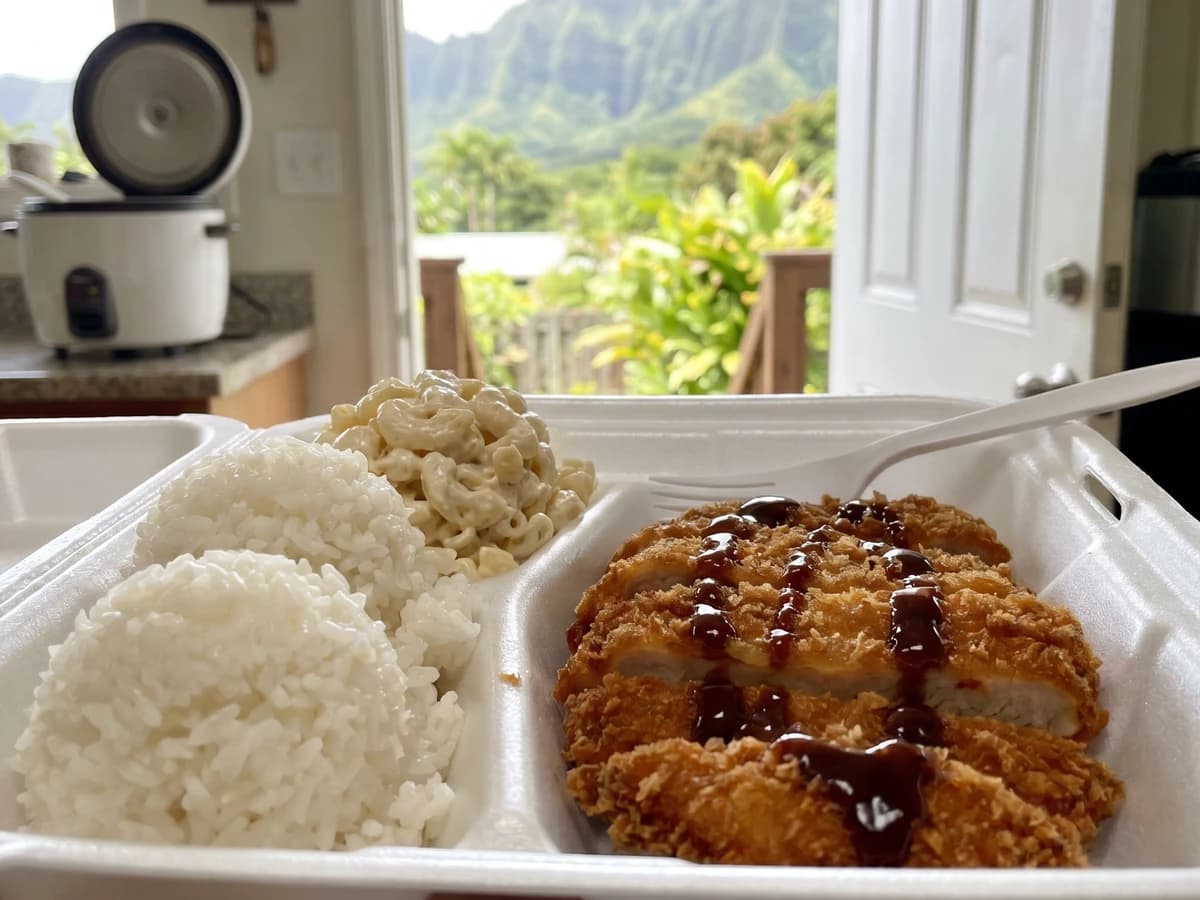
Hawaiʻi's Local plate-lunch comfort: juicy chicken thigh in panko, fried crisp, sliced over white rice with mac salad and katsu sauce, the sugar-camp stove brought home.
Chef Makoa
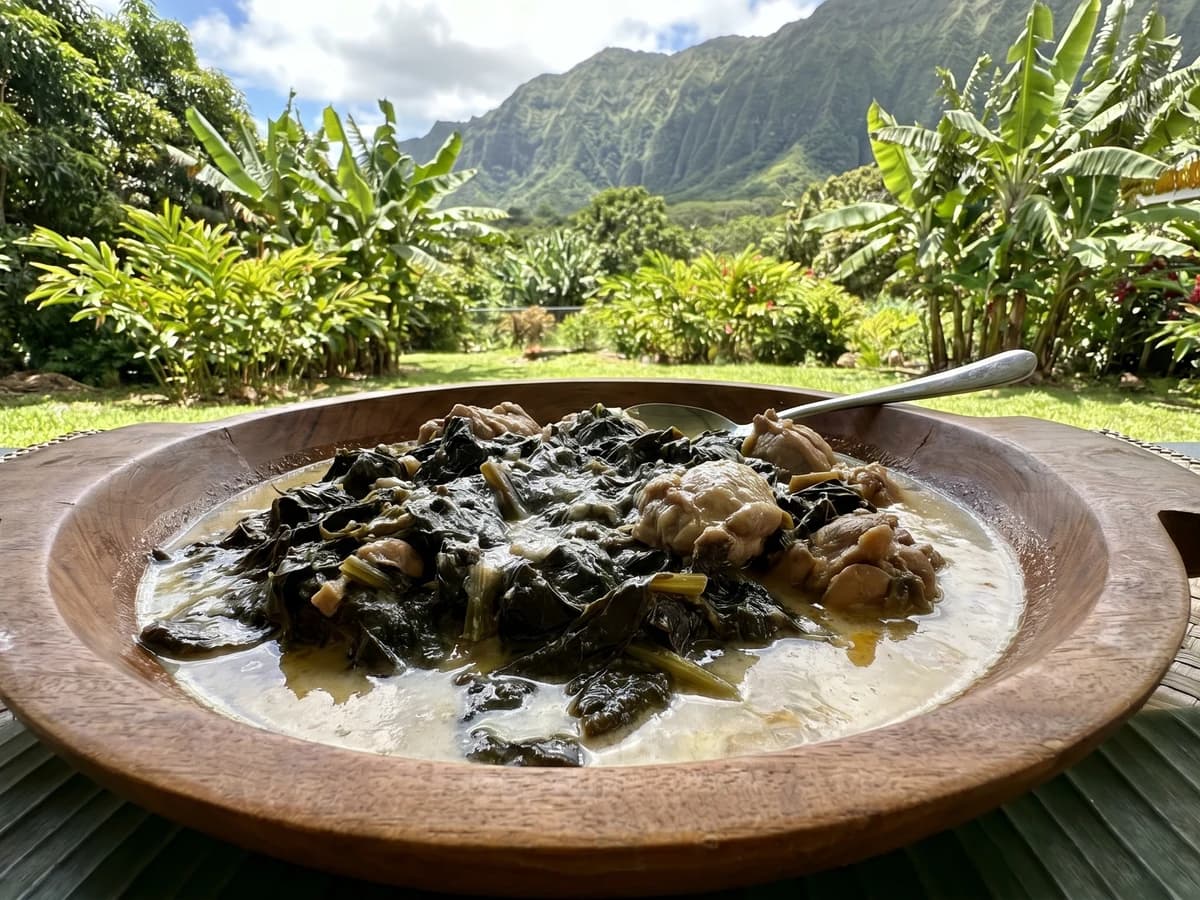
Hawaiian chicken lūʻau is kalo leaf cooked past its bite with tender chicken and coconut milk, a windward Oʻahu comfort pot with cousins in Sāmoa's palusami, Tonga's lū, and Cook Islands rukau.