Chef Joost
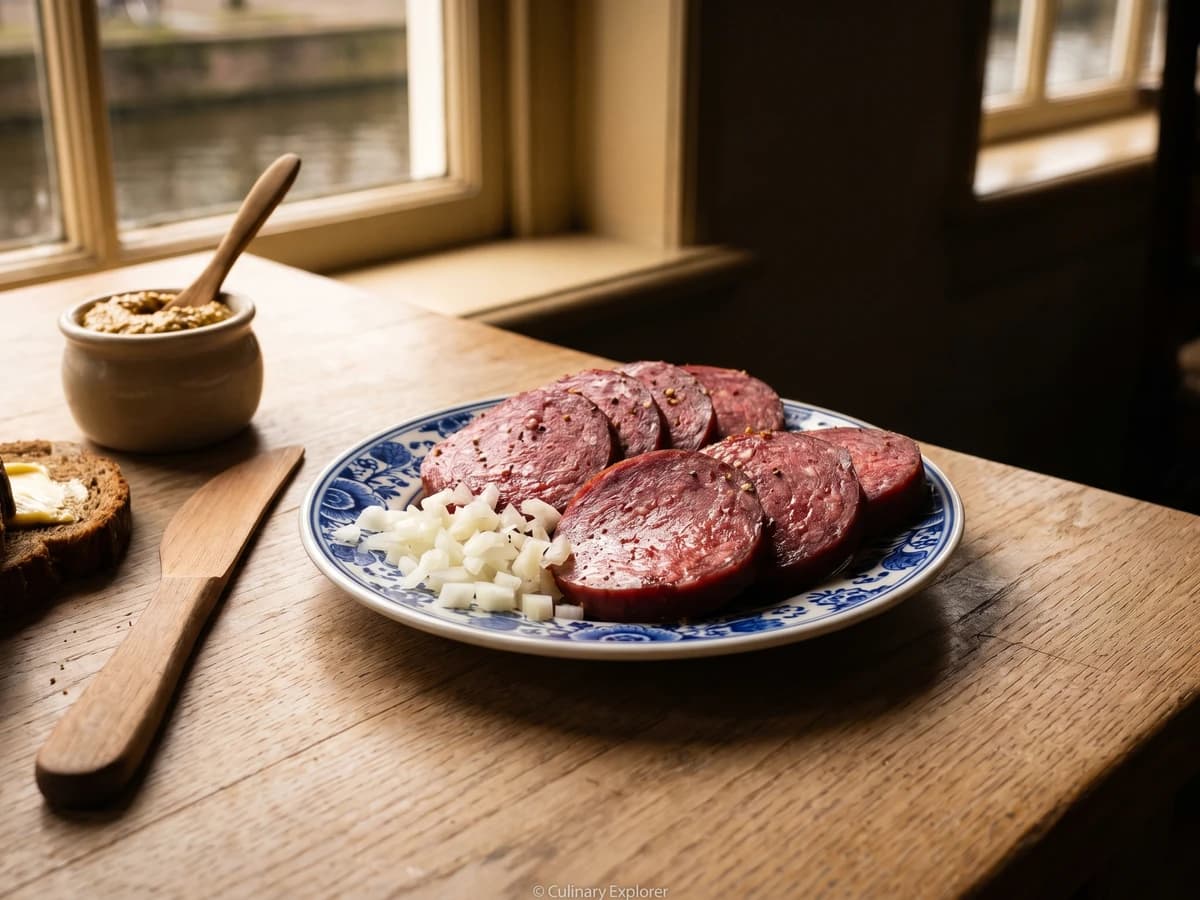
Amsterdamse Ossenworst
The name means ox sausage, but the real story is Amsterdam itself: cattle trade, Jewish butchers, VOC spices, and raw beef sliced thin with onion.
A cooking platform built around craft, culture, and the stories behind what we eat.

Created by
Before pâté sounded grand, the Dutch had leverpastei: frugal liver made rich, smooth, and respectable with pork fat, warm spice, and a slice of rye.
In my grandmother's second notebook, the expensive foods are written briefly and the cheap ones carefully. Liver belonged to the second category. Not because it was lesser, but because it needed manners: a little fat, a little onion, a hand with mace and nutmeg, and enough patience to make roughness turn smooth.
The name already tells you most of the truth. Lever is liver. Pastei comes to Dutch through the old European family of pasty, pâté, and pie, words that once meant meat enclosed or worked into a seasoned paste. The little supermarket tin has made leverpastei seem ordinary, which is how many good dishes hide in plain sight. But let me tell you a secret: this was borrel food before anyone needed a French accent to spread it on toast.
The method is honest. Liver cooks quickly and turns bitter when bullied, so you brown the bacon and onion first, then let the liver just lose its raw centre. The butter is not luxury; it is structure. It carries the spice, softens the iron note, and sets the pastei into that smooth, sliceable spread you want on roggebrood, dark rye bread, with something sharp beside it. Hou het altijd simpel. A jar, a knife, a pickle, and the table is ready.
Leverpastei belongs to the Dutch and broader Low Countries tradition of using the whole animal, especially in household pork cookery after the autumn slaughter. The word pastei originally referred to a seasoned meat preparation related to pies and pâtés, and by the twentieth century Dutch grocers sold leverpastei widely in small tins and tubes as an everyday bread spread and borrel snack. Its seasoning, especially nutmeg and mace, shows how VOC-era spices became ordinary pantry notes in Dutch meat dishes rather than rare feast-day luxuries.
Quantity
350g
trimmed of sinew and greenish spots
Quantity
100g
diced
Quantity
1 small
finely chopped
Quantity
1 small
finely chopped
Quantity
1 tablespoon
Quantity
2 tablespoons
Quantity
125g
softened and divided
Quantity
1/2 teaspoon
Quantity
1/4 teaspoon
freshly ground
Quantity
1/4 teaspoon
Quantity
1/8 teaspoon
freshly grated
Quantity
1 teaspoon
Quantity
1 tablespoon
Quantity
to serve
Quantity
to serve
| Ingredient | Quantity |
|---|---|
| fresh chicken liverstrimmed of sinew and greenish spots | 350g |
| smoked streaky bacondiced | 100g |
| onionfinely chopped | 1 small |
| garlic clovefinely chopped | 1 small |
| neutral oil | 1 tablespoon |
| Dutch jenever or brandy | 2 tablespoons |
| unsalted buttersoftened and divided | 125g |
| fine sea salt | 1/2 teaspoon |
| white pepperfreshly ground | 1/4 teaspoon |
| ground mace | 1/4 teaspoon |
| nutmegfreshly grated | 1/8 teaspoon |
| Dijon mustard | 1 teaspoon |
| cornichon brine or mild pickle juice | 1 tablespoon |
| cornichons (optional) | to serve |
| dark rye bread or toast | to serve |
Trim the livers of sinew and any greenish marks, then pat them dry. Be fussy here. Liver is generous, but it remembers bad handling, and one bitter spot can announce itself through the whole jar.
Warm the oil in a frying pan over medium heat and cook the diced bacon until its fat runs and the edges begin to colour. Add the onion and cook for 5 to 6 minutes, until soft and golden at the edges. Add the garlic for the last minute only, because burnt garlic is a small tragedy with a loud voice.
Add the trimmed livers to the pan and cook for 3 to 4 minutes, turning them once, until browned outside and still faintly pink in the centre. They should feel springy, not firm. Overcook them and the pastei becomes grainy, which no amount of butter can fully apologize for.
Pour in the jenever or brandy and scrape the bottom of the pan while it bubbles down for about 30 seconds. Take the pan off the heat. Those browned bits are the deep savoury note, and the spirit lifts them into the paste instead of leaving them stuck to the pan.
Tip the warm liver mixture into a food processor. Add 100g of the softened butter, the salt, white pepper, mace, nutmeg, mustard, and cornichon brine. Blend until very smooth, stopping to scrape the bowl once or twice. Taste carefully; it should be rich, gently spiced, and just bright enough at the edge.
Spoon the pastei into two clean small jars or ramekins and smooth the tops. Melt the remaining 25g butter and pour a thin layer over each surface. Cover and chill for at least 4 hours, preferably overnight, until set. The rest is not decoration; it lets the spice settle and the texture become spreadable.
Serve cold but not icy, with dark rye bread or toast and cornichons. Let the jar stand for 10 minutes before spreading. At the table, use a small knife and don't fuss with it. Leverpastei was made for the borrel, the Dutch drink-and-small-bite hour, where food should be good enough to notice and simple enough to pass.
1 serving (about 105g)
Culinary guides, cultural storytelling, and the editorial depth that makes cooking meaningful.
Discover Culinary ExplorerChef Joost
The name means ox sausage, but the real story is Amsterdam itself: cattle trade, Jewish butchers, VOC spices, and raw beef sliced thin with onion.

Chef Joost
The little yellow onion on the Amsterdam borrel board looks modest, until vinegar, turmeric, and patience turn it into the sharp bite that wakes cheese, herring, and sausage.

Chef Joost
The bear's claw of the northern snackbar: a seasoned gehaktbal, Dutch meatball, cut into thick discs, skewered with onion, fried until the edges catch, then dragged through peanut sauce.

Chef Joost
The name points to the drink, not the mood: bitterballen are crisp little balls of beef ragout made for the borrel table, mustard beside them, fingers slightly burned by impatience.