
Chef Lupita
Arroz a la Oaxaqueña
Oaxaca's red rice, stained with tomato and fried in lard, steamed with carrots, ejotes, black beans, and epazote. The side that anchors a Oaxacan family meal and earns its place beside the main.
A cooking platform built around craft, culture, and the stories behind what we eat.

Created by
Querétaro's semidesierto lentil pot, built with tomato, chile ancho, garlic, and manteca, then sharpened with xoconostle the way Otomí cooks taught the Bajío to use cactus fruit.
Querétaro, especially the semidesierto around Cadereyta, Tolimán, and Ezequiel Montes, is where these lentils make sense. The land is cactus, maguey, stone, hard sun, and cooks who know how to make sourness work for them. Xoconostle is not decoration here. It is the acid, the brightness, the thing that turns a brown pot of lentils into a Queretaro pot.
I first ate lentils like this near the Mercado de la Cruz in Santiago de Querétaro, from a señora who told me the xoconostle had to go in late or the lentils would never soften. She was right. The tomato and chile ancho give the base its color, the garlic gives it backbone, the epazote keeps the legume flavor clean, and the manteca carries everything. No me vengas con atajos. Two tablespoons of lard are not excess. They are the difference between food with memory and food that tastes like a hospital diet.
This is not a fiery dish. Not all Mexican cooking is trying to prove something with heat. The chile ancho is there for depth, not punishment. The xoconostle is the sharp edge. Serve the pot in simple barro, the kind used in ranch kitchens, with corn tortillas and nothing silly on top. No cheddar. No sour cream. This is a 32-state cuisine, and Querétaro has its own hand.
Xoconostle comes from the Nahuatl words xococ, meaning sour, and nochtli, meaning cactus fruit, and it has long been used in central Mexico's arid zones as an acidulant for broths, salsas, and stews. Lentils arrived in New Spain with Spanish colonial grain and pulse supplies in the 16th century, but cooks in Querétaro adapted the imported legume to local ingredients rather than European vinegar. In the semidesierto, especially among Otomí and Chichimeca-descended communities, cactus fruits like xoconostle mark the difference between a generic lentil soup and a regional Bajío pot.
Quantity
1 1/2 cups
picked over and rinsed
Quantity
1
stemmed and seeded
Quantity
3
halved
Quantity
3
unpeeled
Quantity
2 tablespoons
Quantity
1/2 medium
finely chopped
Quantity
6 cups, plus more as needed
Quantity
1 1/2 teaspoons, plus more to taste
Quantity
3 medium
peeled, seed centers removed, flesh cut into 1/2-inch pieces
Quantity
1 small sprig
Quantity
2 tablespoons
for serving
Quantity
1/8 teaspoon
for serving
Quantity
for serving
warmed
| Ingredient | Quantity |
|---|---|
| brown lentils (lentejas pardinas)picked over and rinsed | 1 1/2 cups |
| dried chile anchostemmed and seeded | 1 |
| ripe Roma tomatoeshalved | 3 |
| garlic clovesunpeeled | 3 |
| manteca de cerdo | 2 tablespoons |
| white onionfinely chopped | 1/2 medium |
| water | 6 cups, plus more as needed |
| kosher salt | 1 1/2 teaspoons, plus more to taste |
| xoconostlespeeled, seed centers removed, flesh cut into 1/2-inch pieces | 3 medium |
| fresh epazote | 1 small sprig |
| chopped fresh cilantro (optional)for serving | 2 tablespoons |
| freshly ground chilcuague root (optional)for serving | 1/8 teaspoon |
| hand-pressed corn tortillas (optional)warmed | for serving |
Pick through the lentils and remove any stones or broken bits. Rinse under cool water until the water runs clear. Do not soak them overnight. Lentils cook quickly, and soaking them too long makes them split before the pot has any body.
Heat a dry comal over medium. Toast the chile ancho for 15 to 20 seconds per side, just until it softens and smells like raisins and warm chile. Do not blacken it. Put it in a bowl and cover with hot water for 15 minutes. Hot water, not boiling. Boiling water drags bitterness out of the skin.
On the same comal, roast the tomatoes cut side down and the unpeeled garlic until the tomatoes are blistered and the garlic softens, about 8 minutes. Peel the garlic. Blend the drained chile ancho, tomatoes, garlic, and 1/2 cup of fresh water until smooth. This is a small recaudo, not a salsa for the table. It gives the lentils depth without turning the dish into a chile pot.
Trim the ends from the xoconostles. Make a shallow slit down the side and peel away the tough outer skin. Cut the fruit open and remove the firm seed center, then cut the flesh into 1/2-inch pieces. The xoconostle is the acid in this dish. Do not replace it with lime. Do not replace it with vinegar. Cada estado, su propia cocina.
Melt the manteca de cerdo in a lead-free clay cazuela or heavy pot over medium heat. Add the chopped white onion and cook until translucent, about 5 minutes. Pour in the blended recaudo. It will sputter. Cook, stirring often, until the color deepens to brick red and the fat begins to glisten around the edges, 6 to 8 minutes. La manteca es el sabor.
Add the rinsed lentils and 6 cups water. Bring to a gentle simmer, then lower the heat so the pot moves steadily without boiling hard. Cook uncovered for 25 minutes, stirring now and then. Add the salt and keep cooking until the lentils are nearly tender but still hold their shape, about 10 minutes more.
Stir in the xoconostle pieces and the epazote sprig. Simmer 10 to 15 minutes, until the lentils are tender and the xoconostle has softened but has not disappeared. The broth should be loose and lightly glossy, not thick like refried beans. If it tightens too much, add a splash of hot water.
Turn off the heat and let the lentils rest for 10 minutes. Remove the epazote. Taste for salt. Serve from the cazuela with chopped cilantro on top and a tiny pinch of ground chilcuague at the table if you have it. Chilcuague is powerful, so use it like a seasoning, not like flour. Warm corn tortillas belong beside the pot. Flour tortillas do not. That is northern food, and this is Querétaro.
1 serving (about 450g)
Culinary guides, cultural storytelling, and the editorial depth that makes cooking meaningful.
Discover Culinary ExplorerChef Lupita
Oaxaca's red rice, stained with tomato and fried in lard, steamed with carrots, ejotes, black beans, and epazote. The side that anchors a Oaxacan family meal and earns its place beside the main.
Chef Lupita
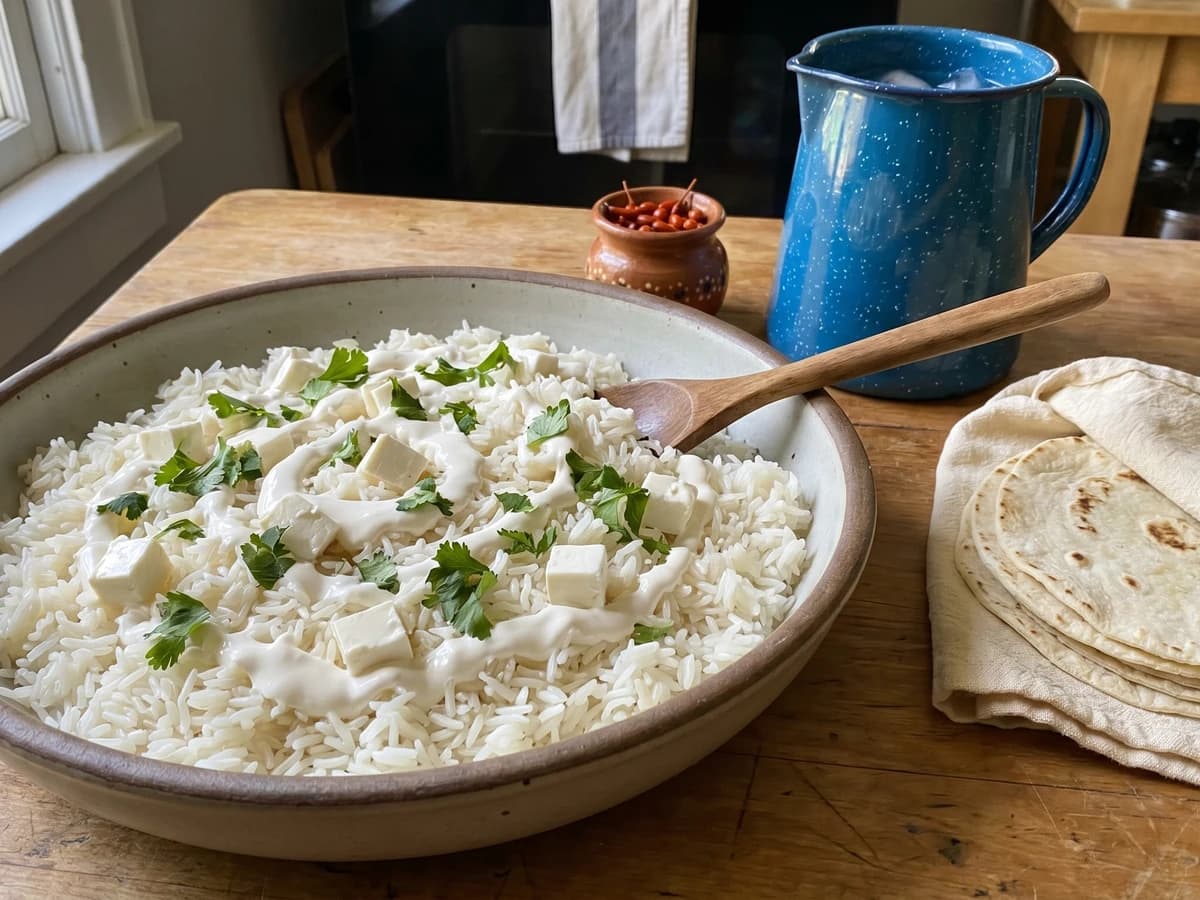
Sinaloa's home-cook white rice topped with cold cubes of cream cheese that soften into the warm grain, finished with crema and a sprinkle of chiltepin at the table. The trick that makes a side dish feel like a small luxury.
Chef Lupita
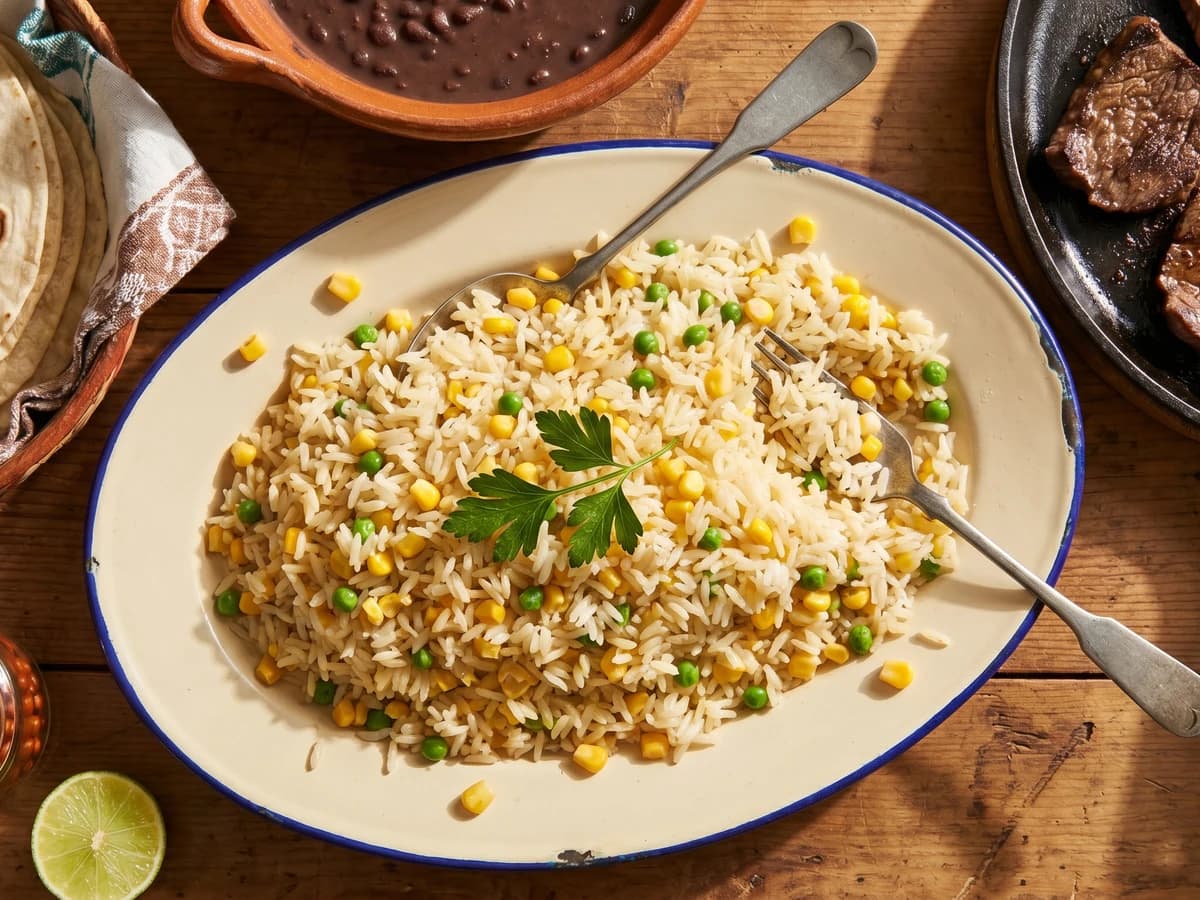
Sonora's white rice, toasted in butter and steamed with sweet corn and tender peas. The clean, quiet partner to a plate of carne asada, not the red rice of central Mexico.

Chef Lupita
Yucatán's white rice with sweet corn kernels, toasted in lard with garlic and onion. The quiet base that holds up against the peninsula's bold achiote-stained stews.