
Chef Lupita
Arroz a la Oaxaqueña
Oaxaca's red rice, stained with tomato and fried in lard, steamed with carrots, ejotes, black beans, and epazote. The side that anchors a Oaxacan family meal and earns its place beside the main.
A cooking platform built around craft, culture, and the stories behind what we eat.
Created by
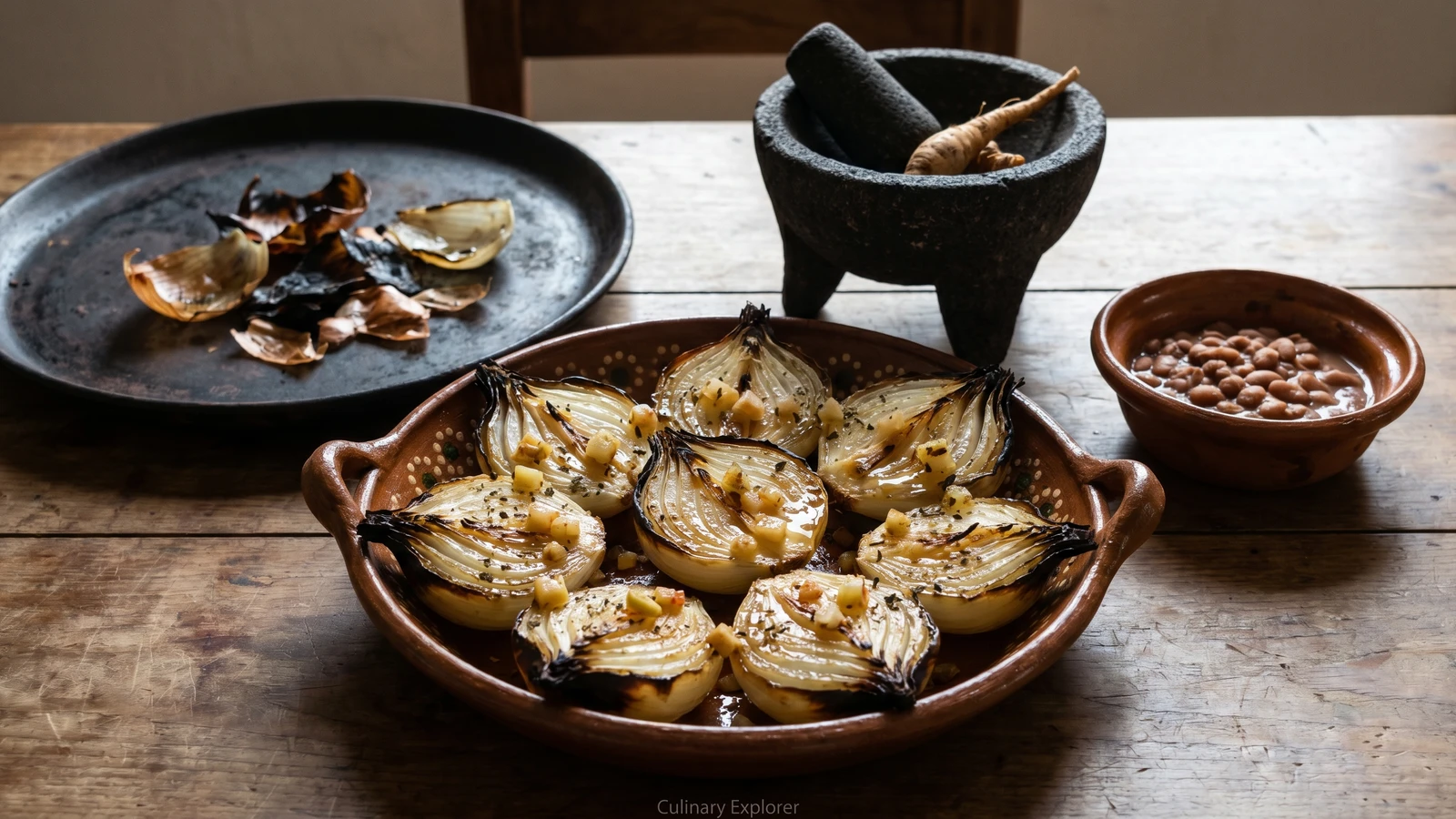
Guanajuato's Bajio onions, blackened whole on a dark comal until the center turns sweet, then dressed with xoconostle, chilcuague, chile ancho, and hot manteca.
Guanajuato, Bajio adentro, is where these cebollas tatemadas belong: on a clay plate beside carnitas, barbacoa de hoyo, pacholas, or frijoles bayos refritos. Dolores Hidalgo knows this food. So does the Mercado de la Cruz in Queretaro. The onion goes whole to the comal, skin and all, because the burned outside protects the heart until it turns soft and sweet.
The acid here is xoconostle, not vinegar. Don't replace it with a squeeze of lime and pretend nothing happened. Xoconostle is the Otomi sour fruit of this region, sharper and earthier than tuna, with a bite that cuts through fat the way a good market cook understands without explaining too much. The chilcuague gives a warm, tingling edge from the Sierra Gorda. Use a little. It speaks loudly.
I learned this kind of side dish from women who cooked around the main pot, not from recipes that treat vegetables like decoration. While the meat rests or the beans thicken in manteca, the onions sit on the comal until they blacken. Then you peel away the burned skin, cut them open, and dress them while they are still glossy and hot. La cocina no es decoracion, es trabajo.
Serve them in barro sencillo, not poblano talavera, not a fine plate pretending to be rancho. Cazuela de barro, tortillas de maiz, frijoles bayos on the side. Cada estado, su propia cocina.
Tatemar, from the Nahuatl practice of cooking directly against fire or hot clay, remains one of central Mexico's oldest vegetable techniques, used for tomatoes, chiles, onions, and cactus fruits before metal pans became common. Xoconostle has long been cultivated and gathered across the semiarid Bajio and Otomi territories, where its acidity seasoned salsas, stews, and roasted foods before cane vinegar became common. Chilcuague, the numbing root of Heliopsis longipes from the Sierra Gorda, appears in colonial-era descriptions of medicinal and culinary plants and remains a regional marker of Guanajuato and Queretaro cooking.
Quantity
6
unpeeled, roots trimmed but left intact
Quantity
2 medium
peeled, seeded, and finely diced
Quantity
2 tablespoons
Quantity
1
stemmed, seeded, toasted, and ground
Quantity
1/2 teaspoon
finely grated
Quantity
1 teaspoon, plus more to taste
Quantity
1/2 teaspoon
crushed between the fingers
Quantity
1 tablespoon
only if the xoconostles are mild
Quantity
for serving
Quantity
for serving
| Ingredient | Quantity |
|---|---|
| small white onionsunpeeled, roots trimmed but left intact | 6 |
| xoconostlespeeled, seeded, and finely diced | 2 medium |
| manteca de cerdo | 2 tablespoons |
| dried chile anchostemmed, seeded, toasted, and ground | 1 |
| fresh chilcuague rootfinely grated | 1/2 teaspoon |
| sal de grano | 1 teaspoon, plus more to taste |
| dried Mexican oreganocrushed between the fingers | 1/2 teaspoon |
| fresh lime juice (optional)only if the xoconostles are mild | 1 tablespoon |
| warm corn tortillas (optional) | for serving |
| frijoles bayos refritos (optional) | for serving |
Set a heavy comal or cast iron skillet over medium heat for five minutes. Do not oil it. The onion needs dry heat against the skin so the outside blackens while the inside softens. This is tatemado, not sauteed.
Place the whole unpeeled onions on the hot comal. Turn them every five minutes with tongs until the outer skins are black in patches and the onions feel soft when pressed near the top, 25 to 30 minutes. Some skin will burn. Good. That burned layer is protecting the sweet center.
While the onions cook, toast the chile ancho on a dry corner of the comal for about 20 seconds per side, just until fragrant and pliable. Do not let it go black. Grind it in a molcajete or spice grinder into coarse powder. Chile ancho gives sweetness and depth, not brute heat. Not all Mexican food is trying to hurt you.
In a small clay bowl, mix the diced xoconostle, ground chile ancho, grated chilcuague, sal de grano, and crushed Mexican oregano. Melt the manteca de cerdo until fluid and glossy, then stir it into the bowl. Taste before adding lime. If the xoconostle is properly sharp, leave the lime alone. Xoconostle is not decoration here. It is the acid.
Move the onions to a board and let them sit for two minutes so you can handle them. Peel away the blackened outer skin, leaving a few charred edges because that flavor belongs there. Split each onion in half from top to root, keeping the layers mostly together.
Lay the onion halves in a shallow barro cazuela or clay plate. Spoon the xoconostle and chilcuague dressing over them while the onion is still hot, pushing some dressing between the layers. The heat wakes the manteca and carries the chile into the onion. No me vengas con atajos. Dress them cold and they taste flat.
Serve immediately or at room temperature with warm corn tortillas and frijoles bayos refritos. These onions belong beside carnitas, barbacoa, or pacholas, not under sour cream, not with cheddar, and not with flour tortillas unless you have crossed north and changed the conversation.
1 serving (about 280g)
Culinary guides, cultural storytelling, and the editorial depth that makes cooking meaningful.
Discover Culinary ExplorerChef Lupita
Oaxaca's red rice, stained with tomato and fried in lard, steamed with carrots, ejotes, black beans, and epazote. The side that anchors a Oaxacan family meal and earns its place beside the main.
Chef Lupita
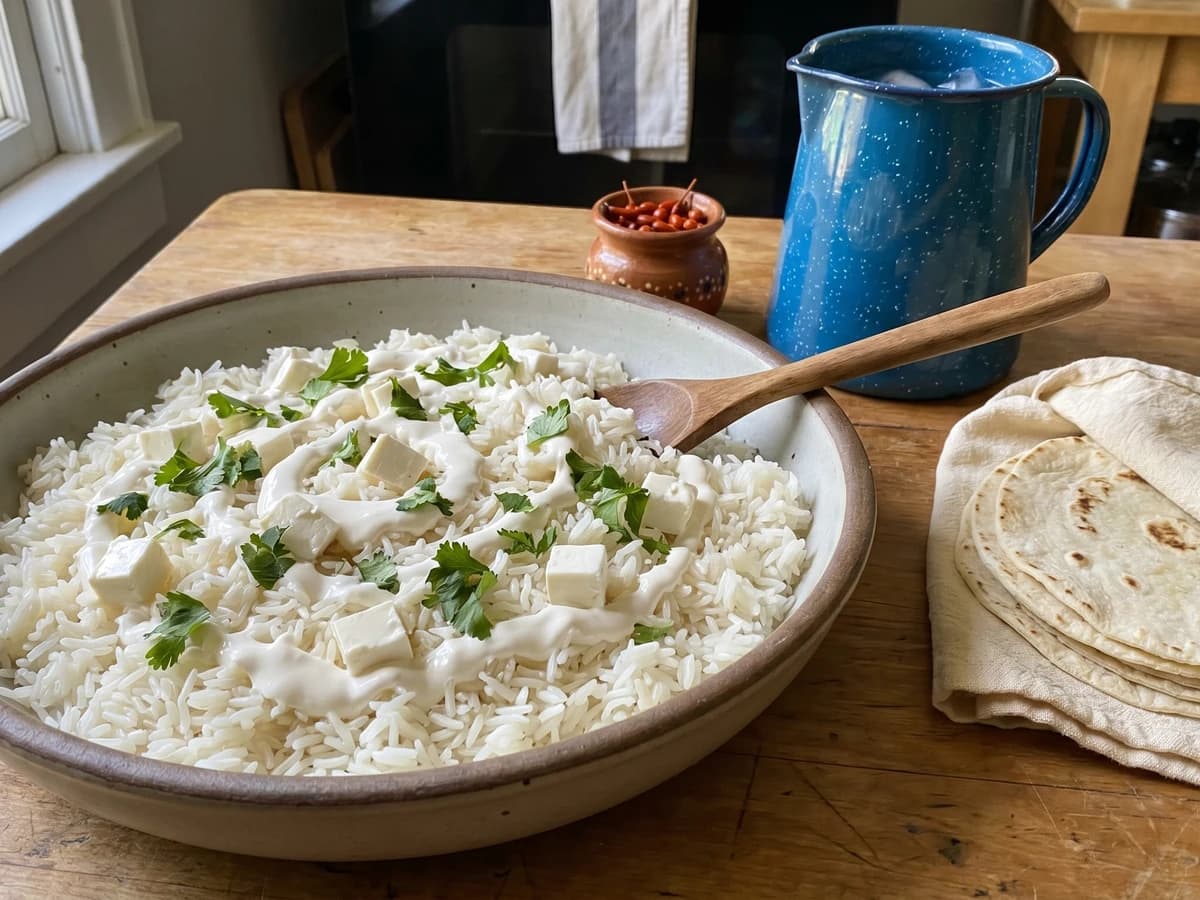
Sinaloa's home-cook white rice topped with cold cubes of cream cheese that soften into the warm grain, finished with crema and a sprinkle of chiltepin at the table. The trick that makes a side dish feel like a small luxury.
Chef Lupita
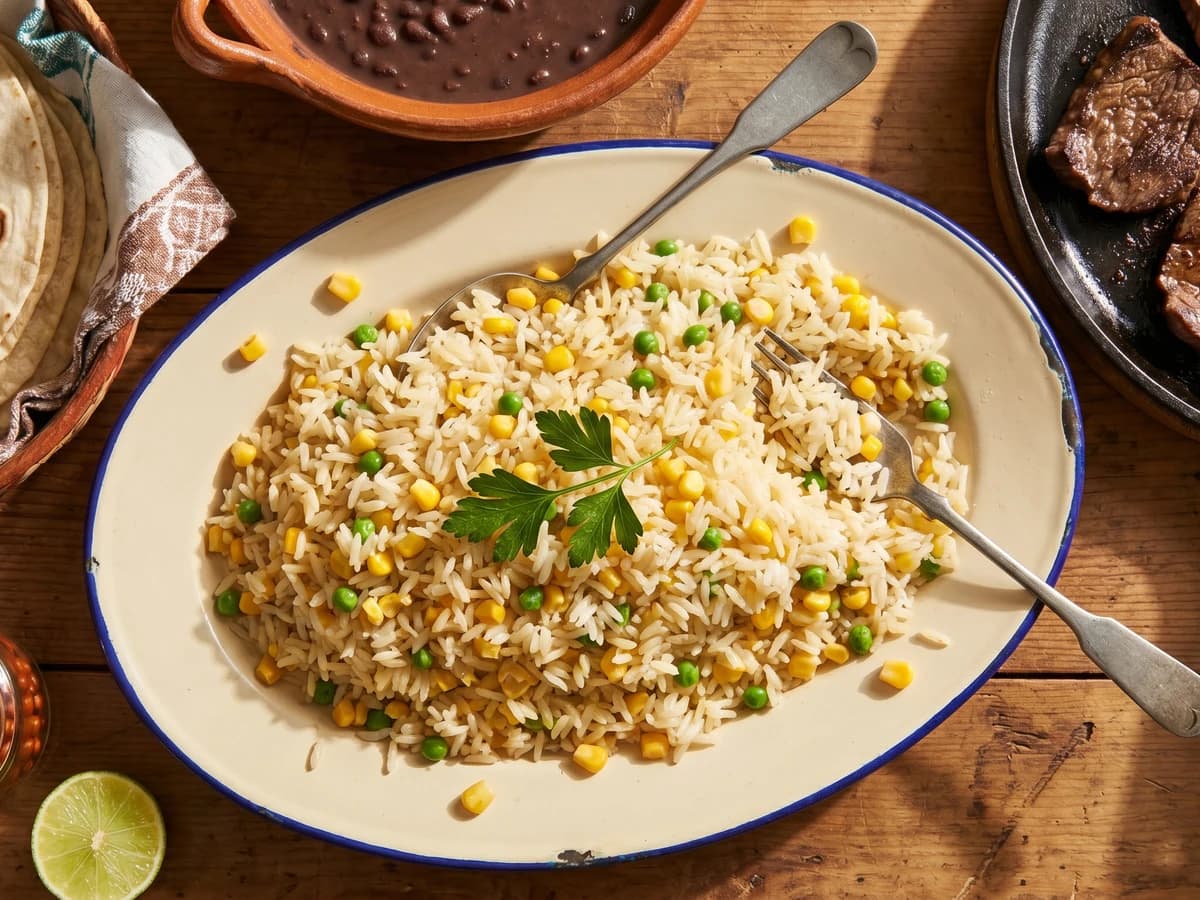
Sonora's white rice, toasted in butter and steamed with sweet corn and tender peas. The clean, quiet partner to a plate of carne asada, not the red rice of central Mexico.

Chef Lupita
Yucatán's white rice with sweet corn kernels, toasted in lard with garlic and onion. The quiet base that holds up against the peninsula's bold achiote-stained stews.