
Chef Lupita
Arroz a la Oaxaqueña
Oaxaca's red rice, stained with tomato and fried in lard, steamed with carrots, ejotes, black beans, and epazote. The side that anchors a Oaxacan family meal and earns its place beside the main.
A cooking platform built around craft, culture, and the stories behind what we eat.
Created by
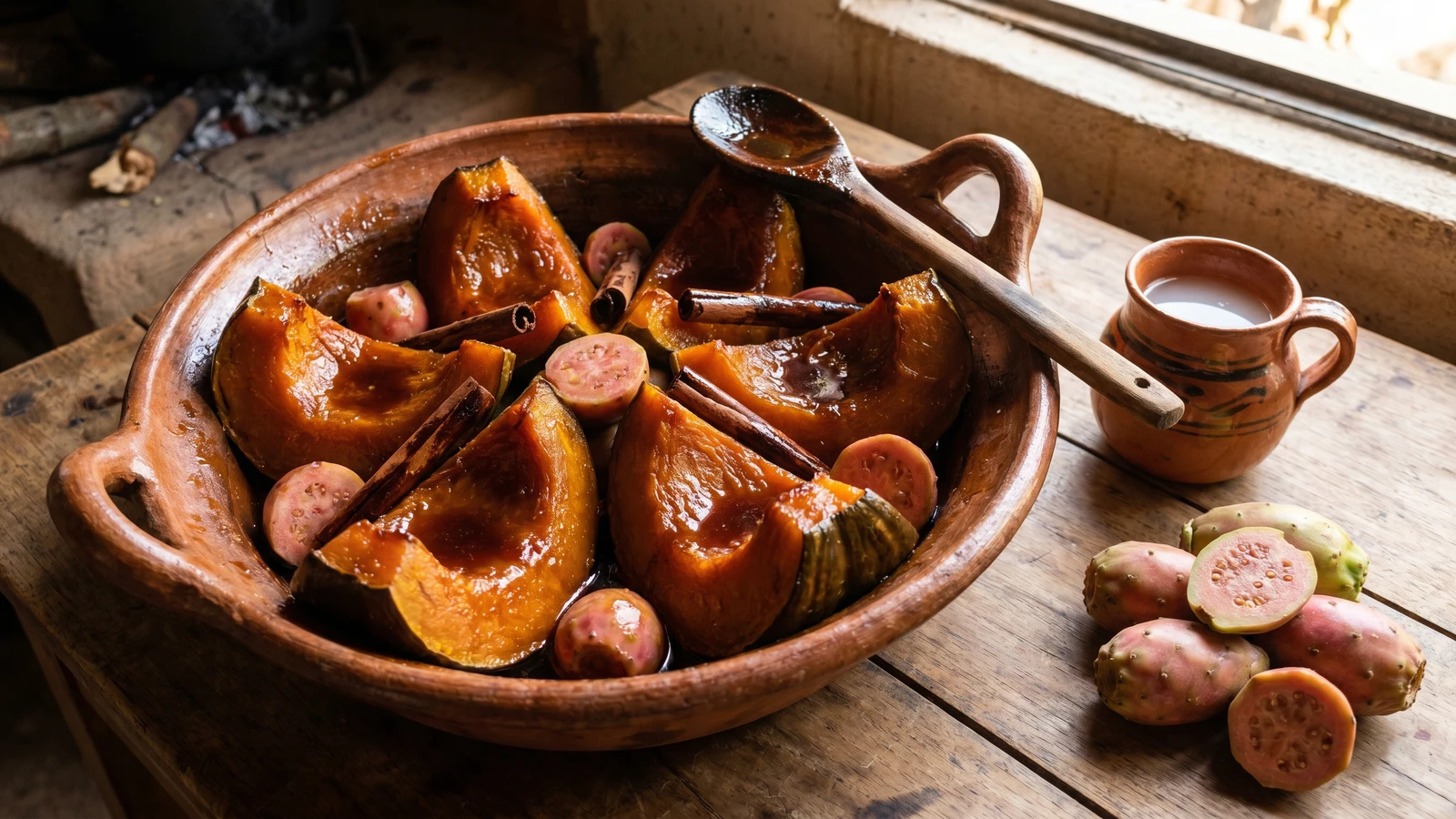
Guanajuato's Bajío harvest calabaza, baked whole in barro with piloncillo, canela, pulque, and xoconostle until the flesh softens and the syrup darkens against the clay.
Guanajuato, Bajío. This is the calabaza you find in the rancho kitchens around Dolores Hidalgo when the harvest is in and the night air starts asking for something sweet from the oven. Not a pie. Not a puree. A whole calabaza de Castilla, cut into heavy wedges, baked in its own shell with piloncillo, canela, pulque, and xoconostle. Cada estado, su propia cocina.
The xoconostle matters. It is the Otomí acidulant of this region, sharp and dry, and it keeps the piloncillo from becoming dull sweetness. People who don't know the Bajío leave it out and wonder why the dish tastes flat. Pregúntale a las señoras del mercado. They know the syrup needs that bite.
There is no chile here. Don't force one in because you think Mexican food has to burn. This dish is about sugarcane, squash, fermented maguey, and clay heat. The oven does the patient work: the piloncillo melts, the pulque sharpens, the canela perfumes, and the calabaza collapses just enough to hold its shape. La cocina no es decoración, es trabajo.
My mother didn't make this every year, she was jalisciense, but she wrote one line in her notebook from a woman in Guanajuato: 'hornear hasta que el jarabe pinte el barro.' Bake it until the syrup stains the clay. That is the instruction. Recetas probadas y garantizadas.
Calabaza de Castilla has pre-Columbian roots in central Mexico, where squash, maize, beans, maguey, and xoconostle formed part of the agricultural base long before sugarcane arrived. Piloncillo entered Mexican kitchens after the Spanish introduced sugarcane production in the 16th century, and regional cooks folded it into older squash preparations that had once been sweetened with honey or maguey sap. In the Bajío, especially Guanajuato and Querétaro, pulque and xoconostle tie the dish to maguey country and Otomí cooking practice rather than to the custard-style pumpkin sweets more common in other parts of Mexico.
Quantity
1 medium, about 5 to 6 pounds
scrubbed, seeded, and cut into 8 wedges
Quantity
1 pound
chopped or broken into small pieces
Quantity
1 cup
Quantity
2
peeled, seeded, and cut into thin wedges
Quantity
2
Quantity
4
Quantity
1 wide strip
white pith removed
Quantity
1/2 teaspoon
Quantity
2 tablespoons
only if the pulque is very thick
| Ingredient | Quantity |
|---|---|
| calabaza de Castillascrubbed, seeded, and cut into 8 wedges | 1 medium, about 5 to 6 pounds |
| piloncillochopped or broken into small pieces | 1 pound |
| pulque natural | 1 cup |
| xoconostlespeeled, seeded, and cut into thin wedges | 2 |
| Mexican cinnamon sticks (canela) | 2 |
| whole cloves | 4 |
| orange peelwhite pith removed | 1 wide strip |
| kosher salt | 1/2 teaspoon |
| water (optional)only if the pulque is very thick | 2 tablespoons |
Heat the oven to 350F. Scrub the calabaza well because the skin stays on. Cut it into 8 heavy wedges and scrape out the seeds and stringy center. Do not peel it. The skin protects the flesh during the long bake and gives the syrup something to cling to.
Arrange the calabaza wedges skin side down in a wide clay cazuela or heavy baking dish. Scatter the piloncillo between the pieces, then tuck in the xoconostle wedges, canela, cloves, and orange peel. Sprinkle the salt over everything. The salt is not there to make it salty. It wakes up the piloncillo.
Pour the pulque into the bottom of the cazuela. If your pulque is very thick, add 2 tablespoons water so it starts moving before the squash releases its own liquid. Use pulque natural, not curado with fruit. Curado belongs in a glass, not in this dish.
Cover the cazuela tightly with a lid or foil and bake for 1 hour. The calabaza should begin to soften, the piloncillo should melt into a dark syrup, and the xoconostle should look glossy and tender. Covered heat softens the squash first. If you uncover it too early, the edges dry before the flesh is ready.
Uncover the cazuela. Spoon the syrup over each wedge, getting into the hollows where the seeds were. Return to the oven uncovered for 35 to 45 minutes, basting every 15 minutes, until the calabaza is tender but still holds its shape and the syrup is dark brown and shiny. The edges should look lacquered, not burned.
Let the calabaza rest for 15 minutes before serving. The syrup thickens as it cools slightly and settles into the flesh. Serve family-style from the same cazuela, with extra syrup spooned over the top. Así se hace y punto.
1 serving (about 280g)
Culinary guides, cultural storytelling, and the editorial depth that makes cooking meaningful.
Discover Culinary ExplorerChef Lupita
Oaxaca's red rice, stained with tomato and fried in lard, steamed with carrots, ejotes, black beans, and epazote. The side that anchors a Oaxacan family meal and earns its place beside the main.
Chef Lupita
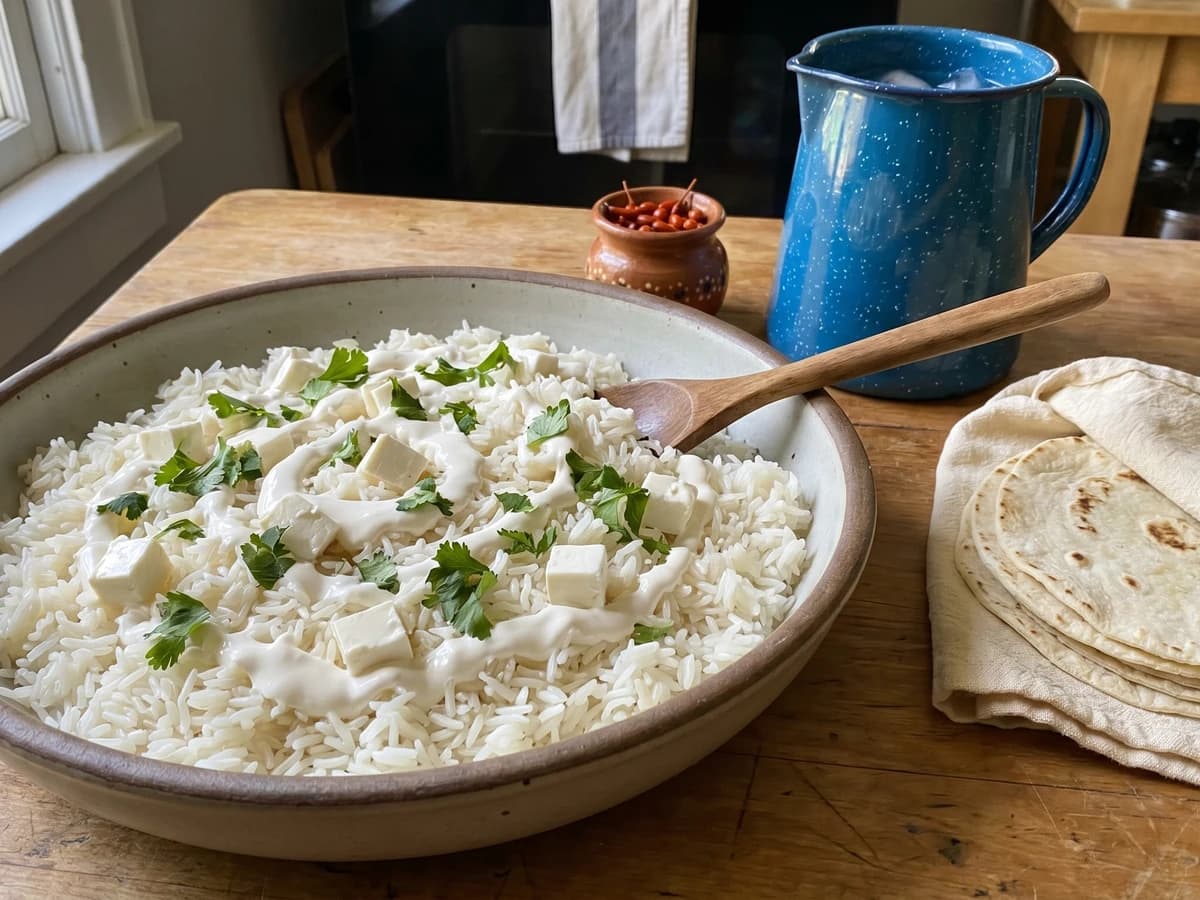
Sinaloa's home-cook white rice topped with cold cubes of cream cheese that soften into the warm grain, finished with crema and a sprinkle of chiltepin at the table. The trick that makes a side dish feel like a small luxury.
Chef Lupita
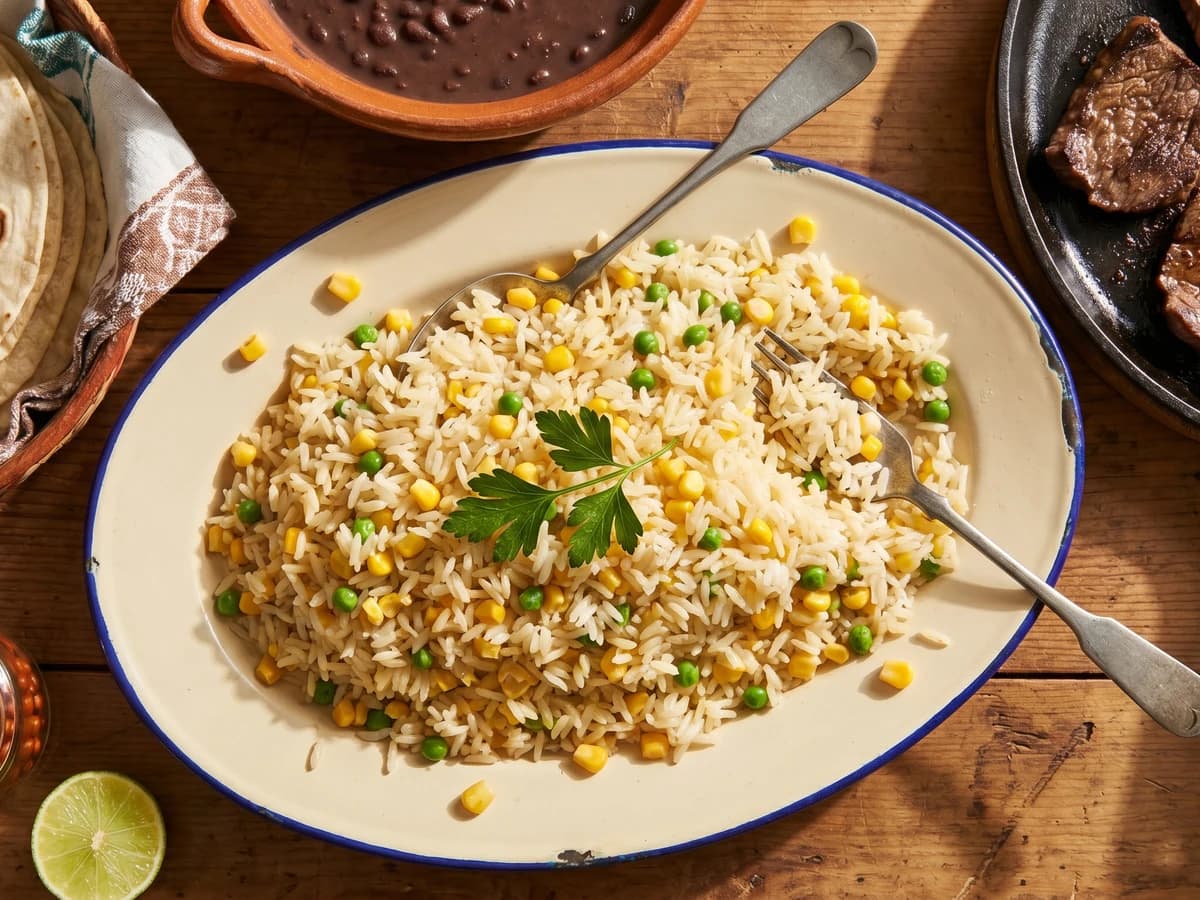
Sonora's white rice, toasted in butter and steamed with sweet corn and tender peas. The clean, quiet partner to a plate of carne asada, not the red rice of central Mexico.

Chef Lupita
Yucatán's white rice with sweet corn kernels, toasted in lard with garlic and onion. The quiet base that holds up against the peninsula's bold achiote-stained stews.