
Chef Lupita
Calabacitas con Queso Bajío
Guanajuato's Bajío calabacitas, sautéed in manteca with corn, jitomate, xoconostle, chile poblano, epazote, and queso ranchero, the rancho side dish that belongs beside frijoles bayos and warm corn tortillas.
A cooking platform built around craft, culture, and the stories behind what we eat.
Created by
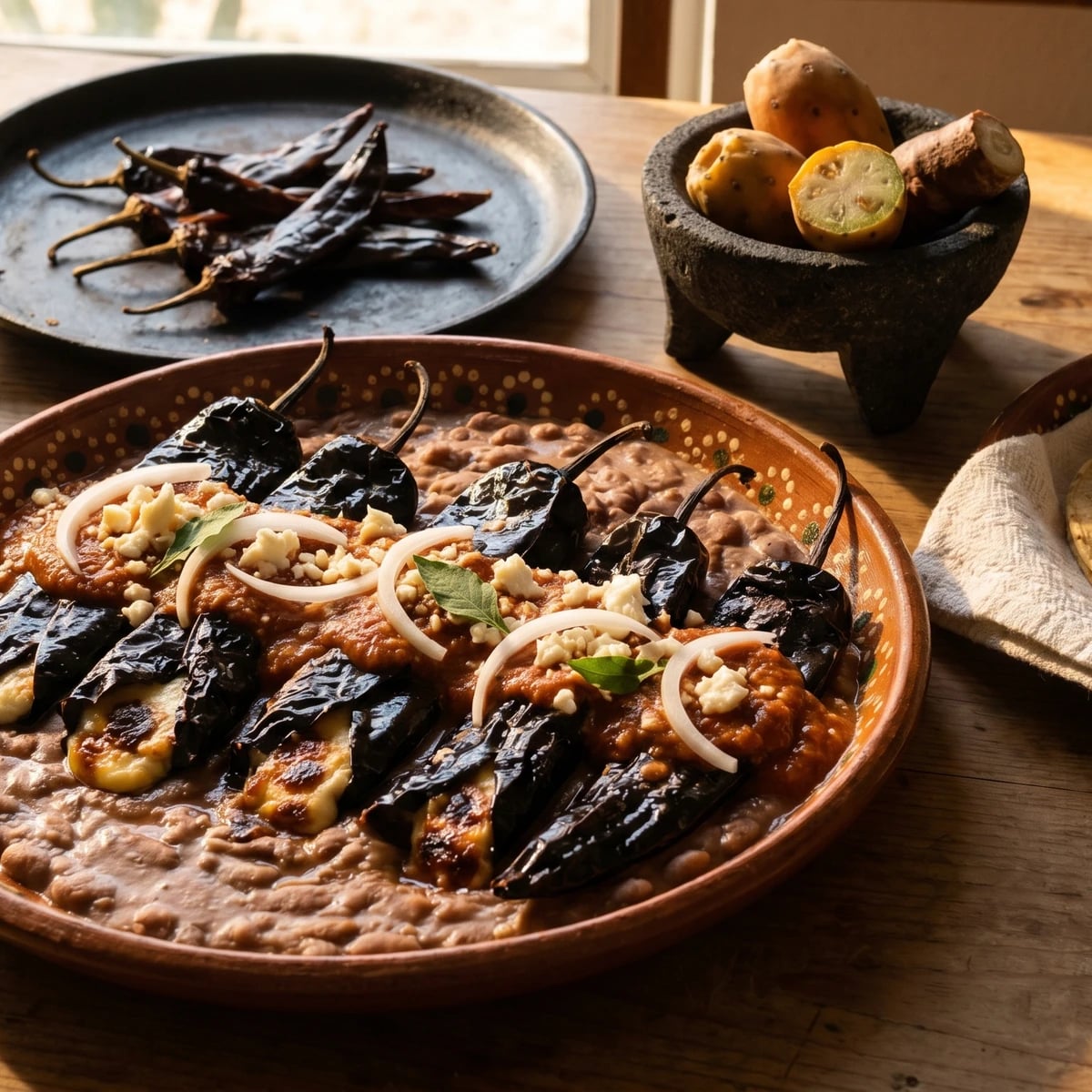
Guanajuato's Bajío side dish of chile pasilla toasted on a dark comal, softened just enough to fill with queso ranchero, then served with xoconostle and chilcuague salsa instead of a tomato-heavy sauce.
Guanajuato, in the Bajío around Dolores Hidalgo, San Miguel de Allende, and the road toward Querétaro, is where this chile belongs. The chile is pasilla mexicano, the dried chilaca, long, wrinkled, almost black, with a raisin smell after the comal wakes it up. This is not a fresh poblano called pasilla by a careless supermarket. Pregúntale a las señoras del mercado.
The filling is queso ranchero, not yellow cheese, not Oaxaca cheese, and not a creamy filling that leaks out like a mistake. The cheese is griddled first, asado over the flame on a dark comal, so it takes a browned skin before it sits inside the softened chile. The sauce needs xoconostle for that dry, semiarid acid of the Bajío, with a touch of chilcuague from the Sierra Gorda if you can get it. Without that tartness, the chile tastes heavy.
I learned this style from a woman outside Dolores Hidalgo who served it in a low barro cazuela beside frijoles bayos refritos in manteca. She didn't call it a main course. It was the side that made the table serious, the chile you took with grilled meat, beans, and corn tortillas. Cada estado, su propia cocina. Saber cocinar es saber vivir.
The chile pasilla is the dried chilaca of central Mexico, long, wrinkled, and almost black, and it appears in Bajío cooking as a table chile rather than only a sauce chile. After the 16th century, Guanajuato and Querétaro hacienda kitchens folded Spanish cattle and dairy into older corn, nopal, xoconostle, and chile systems, which is why a fresh ranch cheese belongs inside this dried chile. Chilcuague, the tingling root of the Sierra Gorda documented in the Códice Florentino, keeps the salsa tied to the semiarid Otomí and Chichimeca landscape instead of turning it into another generic tomato caldillo.
Quantity
8 large
pliable and glossy
Quantity
3 cups
for soaking the chiles
Quantity
12 ounces
cut into 8 thick batons, plus 2 tablespoons crumbled for finishing
Quantity
3 tablespoons
divided
Quantity
1 small
half finely chopped and half sliced into thin crescents
Quantity
4
roasted, peeled, seed cores removed, and chopped
Quantity
2
roasted
Quantity
3
unpeeled
Quantity
1/4 teaspoon
finely grated, or a small pinch dried ground chilcuague
Quantity
1/2 teaspoon
Quantity
10 leaves, plus 1 small sprig
leaves for filling and finishing, sprig for the beans
Quantity
2 cups
with 1/2 cup of their cooking broth
Quantity
1 teaspoon, plus more to taste
Quantity
for serving
| Ingredient | Quantity |
|---|---|
| dried chile pasilla mexicano (dried chilaca)pliable and glossy | 8 large |
| hot waterfor soaking the chiles | 3 cups |
| queso ranchero oreadocut into 8 thick batons, plus 2 tablespoons crumbled for finishing | 12 ounces |
| manteca de cerdodivided | 3 tablespoons |
| white onionhalf finely chopped and half sliced into thin crescents | 1 small |
| xoconostlesroasted, peeled, seed cores removed, and chopped | 4 |
| jitomates guaje or Roma tomatoesroasted | 2 |
| garlic clovesunpeeled | 3 |
| fresh chilcuague rootfinely grated, or a small pinch dried ground chilcuague | 1/4 teaspoon |
| dried Mexican oregano | 1/2 teaspoon |
| fresh epazote leavesleaves for filling and finishing, sprig for the beans | 10 leaves, plus 1 small sprig |
| cooked frijoles bayoswith 1/2 cup of their cooking broth | 2 cups |
| kosher salt | 1 teaspoon, plus more to taste |
| warm hand-pressed corn tortillas (optional) | for serving |
Heat a dry comal over medium. Wipe the chile pasilla with a clean towel, then toast each chile for 8 to 12 seconds per side, pressing lightly with tongs so the skin touches the comal. They should turn fragrant, with a dark raisin smell, not blacken. Pasilla is thin. Look away and you will burn it.
Place the toasted chiles in a bowl and cover with the hot water. Set a small plate on top to keep them submerged. Soak 15 to 18 minutes, until they bend like soft leather but are not falling apart. Lift them out, pat dry, then cut a slit from the shoulder to the tip of each chile. Remove the seeds and thick veins gently. Keep the stems attached when you can. Reserve 1/2 cup of the soaking liquid and taste it. If it tastes bitter, use fresh hot water in the salsa instead.
On the same comal, roast the xoconostles whole, the jitomates, the garlic cloves, and a few slices of onion. Turn them as they blister. The jitomates should slump, the garlic skins should spot brown, and the xoconostle skin should dull and loosen. Peel the xoconostles, halve them, scrape out the seed cores, and chop the flesh. Peel the garlic. Xoconostle is the acid here. Lime is not the same thing.
In a molcajete, pound the chilcuague with 1/2 teaspoon salt until it breaks down. Add the peeled garlic and oregano, then grind to a paste. Add the roasted jitomates, roasted onion, and chopped xoconostle. Work it into a rough salsa, loosening with a few spoonfuls of the reserved chile soaking liquid if needed. The chilcuague should tingle at the edge of the mouth, not take over the salsa. No me vengas con atajos. If you use a blender, pulse briefly and leave texture.
Melt 1 tablespoon of manteca de cerdo in a clay cazuela or heavy skillet over medium heat. Add the chopped onion and cook until translucent. Add the frijoles bayos with their broth and the epazote sprig. Mash until thick but not dry, then salt to taste. Bayos are beige-tan and earthy. Pintos and negros are not the Bajío bean. La manteca es el sabor.
Pat the queso ranchero batons dry. Rub the hot comal with a thin film of manteca. Set the cheese on the comal and brown it 30 to 45 seconds per side, just until it forms golden freckles and a firmer skin. Move it once. If your cheese collapses into a puddle, it is too fresh for stuffing. Use queso ranchero oreado next time, cheese dried overnight in the refrigerator so it behaves.
Open each softened pasilla carefully. Tuck in one epazote leaf, one baton of asado queso ranchero, and a few onion crescents. Close the chile around the filling without forcing it. This is a side dish from the rancho table, not a swollen battered main course. The chile should still look like a chile.
Melt the remaining 2 tablespoons manteca in a wide skillet or clay cazuela over medium-low heat. If using clay over direct flame, use a diffuser. Lay the stuffed chiles seam side down and cook 2 minutes, then turn once. Spoon the xoconostle salsa over and around them, cover, and cook 3 to 4 minutes more, just until the chile skins are glossy and the cheese is hot at the center. No capeado. That belongs to another family of chiles rellenos.
Spread the frijoles bayos refritos in a low barro cazuela. Nest the stuffed pasillas over the beans and spoon more xoconostle salsa across the top. Finish with the crumbled queso ranchero, a few raw onion crescents, and small epazote leaves. Serve family-style with warm corn tortillas. Flour tortillas are a northern tradition. This table is Guanajuato. Recetas probadas y garantizadas.
1 serving (about 235g)
Culinary guides, cultural storytelling, and the editorial depth that makes cooking meaningful.
Discover Culinary Explorer
Chef Lupita
Guanajuato's Bajío calabacitas, sautéed in manteca with corn, jitomate, xoconostle, chile poblano, epazote, and queso ranchero, the rancho side dish that belongs beside frijoles bayos and warm corn tortillas.

Chef Lupita
Guanajuato's Bajío harvest calabaza, baked whole in barro with piloncillo, canela, pulque, and xoconostle until the flesh softens and the syrup darkens against the clay.

Chef Lupita
Guanajuato's Bajio onions, blackened whole on a dark comal until the center turns sweet, then dressed with xoconostle, chilcuague, chile ancho, and hot manteca.

Chef Lupita
Guanajuato's bayo beans cooked low in a clay olla with manteca de cerdo, epazote, xoconostle, and a careful touch of chilcuague from the Sierra Gorda.