
Chef Lupita
Arroz a la Oaxaqueña
Oaxaca's red rice, stained with tomato and fried in lard, steamed with carrots, ejotes, black beans, and epazote. The side that anchors a Oaxacan family meal and earns its place beside the main.
A cooking platform built around craft, culture, and the stories behind what we eat.
Created by
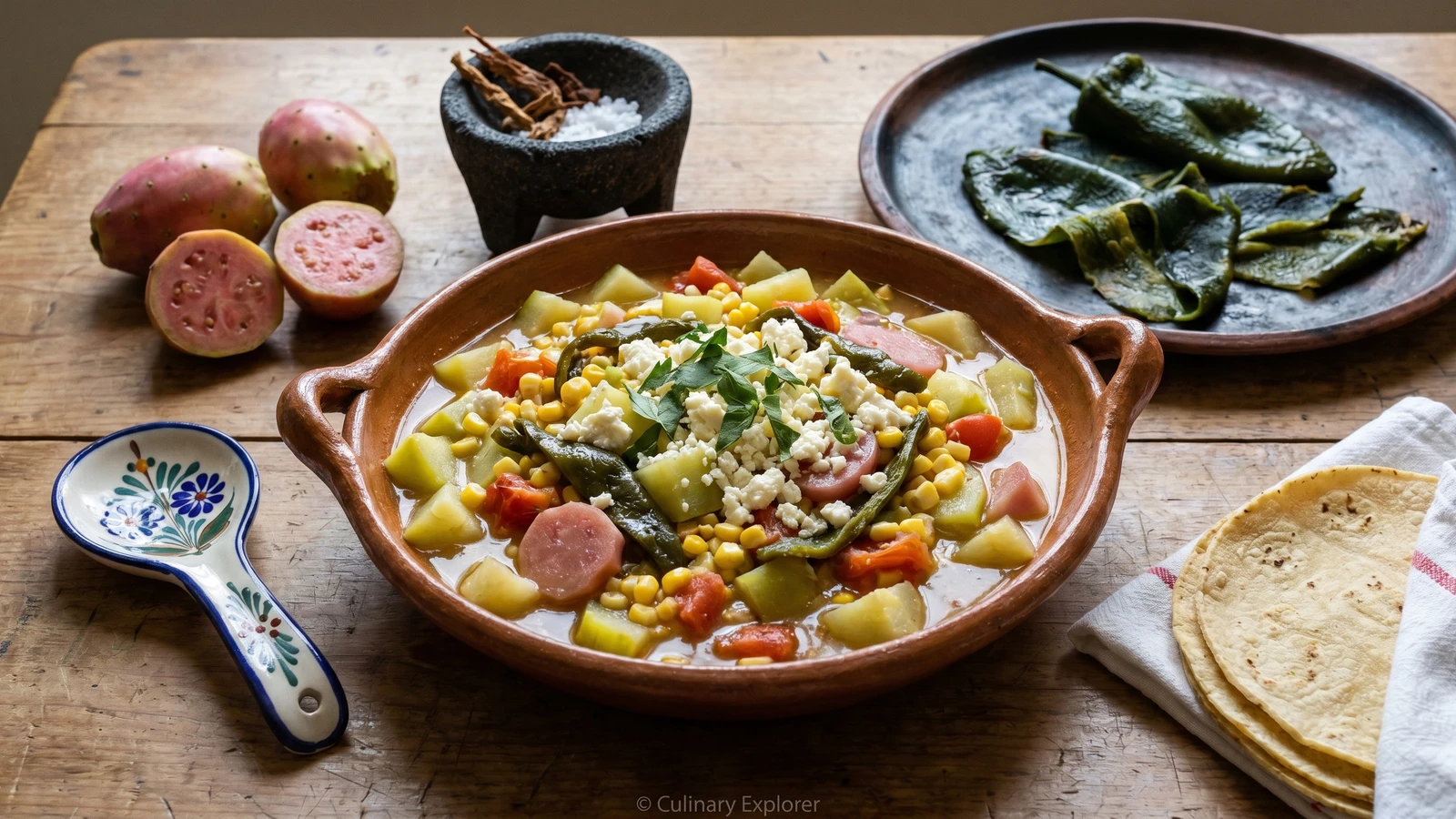
Guanajuato's Bajío calabacitas, sautéed in manteca with corn, jitomate, xoconostle, chile poblano, epazote, and queso ranchero, the rancho side dish that belongs beside frijoles bayos and warm corn tortillas.
Guanajuato, in the heart of the Bajío, is where this dish lives. Think Dolores Hidalgo, Celaya, the ranchos outside Irapuato, kitchens that know both the milpa and the dairy pail. This is the Granero de la República on a weekday table: calabacita, corn, jitomate, and queso ranchero, all cooked in one cazuela until the vegetables taste like they came from the same field.
The xoconostle is not decoration. It is the Otomí acid in the dish, tart and firm, the bite that keeps the squash and corn from becoming sweet and sleepy. The chile poblano gives roasted green depth. The epazote keeps the guiso honest. The chilcuague, used carefully, brings the Sierra Gorda into the pan with that small electric tingle on the tongue.
I learned a version of this from a señora near Dolores Hidalgo who kept her queso wrapped in cloth and her calabacitas in a basket under the table. She did not stir them to death. She let the tomato thicken in manteca, added the squash late, and covered the cazuela only long enough for tenderness. That is the difference between calabacitas and vegetable mush.
Serve it in clay. Put frijoles bayos beside it if supper needs more weight. Warm corn tortillas, never flour here. This is not food from a single Mexico. Saber cocinar es saber vivir.
The Bajío's identity as the Granero de la República grew from the 16th- and 17th-century hacienda system that supplied the mining cities of Guanajuato and Querétaro with corn, wheat, livestock, and dairy. Calabacitas con queso sits in that meeting point: milpa vegetables, cattle-ranch cheese, and the central Mexican habit of softening a guiso with tomato and onion before it goes to the table. Xoconostle was used by Otomí and Chichimeca communities as an acidulant before cane vinegar became common, and Sahagún's 16th-century Códice Florentino recorded chilcuague among the pungent roots and seasonings of central Mexico.
Quantity
1 1/2 pounds
trimmed and cut into 1/2-inch dice
Quantity
2 medium
peeled, seeds removed, flesh cut into small dice
Quantity
2 ears
kernels cut from the cob, about 1 1/2 cups
Quantity
1 large
roasted, peeled, seeded, and cut into small dice
Quantity
2 tablespoons
Quantity
1/2 medium
finely diced
Quantity
2
minced
Quantity
2 medium
seeded and diced
Quantity
1/2 teaspoon
freshly grated, or use 1/4 teaspoon dried chilcuague powder
Quantity
1 sprig
leaves chopped
Quantity
1/2 teaspoon, plus more to taste
Quantity
1/4 cup
only if the cazuela dries out
Quantity
5 ounces
crumbled
Quantity
for serving
Quantity
for serving
| Ingredient | Quantity |
|---|---|
| calabacita mexicana (Mexican gray squash)trimmed and cut into 1/2-inch dice | 1 1/2 pounds |
| xoconostlepeeled, seeds removed, flesh cut into small dice | 2 medium |
| fresh white cornkernels cut from the cob, about 1 1/2 cups | 2 ears |
| chile poblanoroasted, peeled, seeded, and cut into small dice | 1 large |
| manteca de cerdo (pork lard) | 2 tablespoons |
| white onionfinely diced | 1/2 medium |
| garlic clovesminced | 2 |
| jitomates guaje or Roma tomatoesseeded and diced | 2 medium |
| fresh chilcuague rootfreshly grated, or use 1/4 teaspoon dried chilcuague powder | 1/2 teaspoon |
| fresh epazoteleaves chopped | 1 sprig |
| kosher salt | 1/2 teaspoon, plus more to taste |
| wateronly if the cazuela dries out | 1/4 cup |
| queso ranchero de leche de vacacrumbled | 5 ounces |
| warm corn tortillas (optional) | for serving |
| frijoles bayos de olla (optional) | for serving |
Peel the xoconostles with a small sharp knife. Cut them open, scoop out the hard seeds, and dice the firm pink flesh. Do not confuse xoconostle with sweet tuna. Xoconostle is the acid of the Bajío, the way vinegar works in another kitchen. It cuts the sweetness of the corn and squash.
Set the chile poblano on a hot comal and turn it until the skin blisters on all sides. Put it in a covered bowl for 10 minutes, then peel, seed, and dice it. The poblano gives a green, roasted flavor, not a blast of heat. Not all Mexican food is trying to burn your mouth. That is lazy thinking.
Pound the grated chilcuague root with a pinch of the salt in a molcajete until it becomes a damp paste. Use a small amount. Chilcuague tingles on the tongue, and in the Sierra Gorda it is respected because it is powerful. This is seasoning, not a dare.
Heat a wide clay cazuela or heavy skillet over medium heat. Add the manteca de cerdo and let it melt until glossy. Add the onion and the remaining salt. Cook for 3 to 4 minutes, stirring with a wooden spoon, until the onion softens without browning. Add the garlic and cook 30 seconds more. La manteca es el sabor. Oil will cook the vegetables, but it will not give you the same rancho taste.
Add the diced jitomate and cook for 5 minutes, stirring often, until the juices thicken and the lard starts to show in small orange freckles around the edges. Add the roasted poblano, corn, and diced xoconostle. Cook for 4 minutes more. The corn should brighten, the xoconostle should soften slightly, and the base should smell like a market fonda before lunch.
Stir in the diced calabacitas. Cover and cook for 6 to 8 minutes, stirring once or twice, until the squash is tender but still holds its shape. If the pan dries out, add water one tablespoon at a time. Do not drown it. Calabacita gives off its own liquid, and a careful cook waits before reaching for water.
Stir in the epazote and the chilcuague paste. Cook for 1 minute so the herb opens and the root settles into the vegetables. Taste for salt. Remove the cazuela from the heat, fold in half the queso ranchero, and scatter the rest over the top. Cover for 2 minutes. The cheese should soften and cling to the squash, not disappear into a cream sauce.
Serve the calabacitas directly from the cazuela, with warm corn tortillas and frijoles bayos de olla if you want a full Bajío meal. No cheddar, no sour cream, no flour tortillas here. This is Guanajuato's table. Cada estado, su propia cocina.
1 serving (about 355g)
Culinary guides, cultural storytelling, and the editorial depth that makes cooking meaningful.
Discover Culinary ExplorerChef Lupita
Oaxaca's red rice, stained with tomato and fried in lard, steamed with carrots, ejotes, black beans, and epazote. The side that anchors a Oaxacan family meal and earns its place beside the main.
Chef Lupita
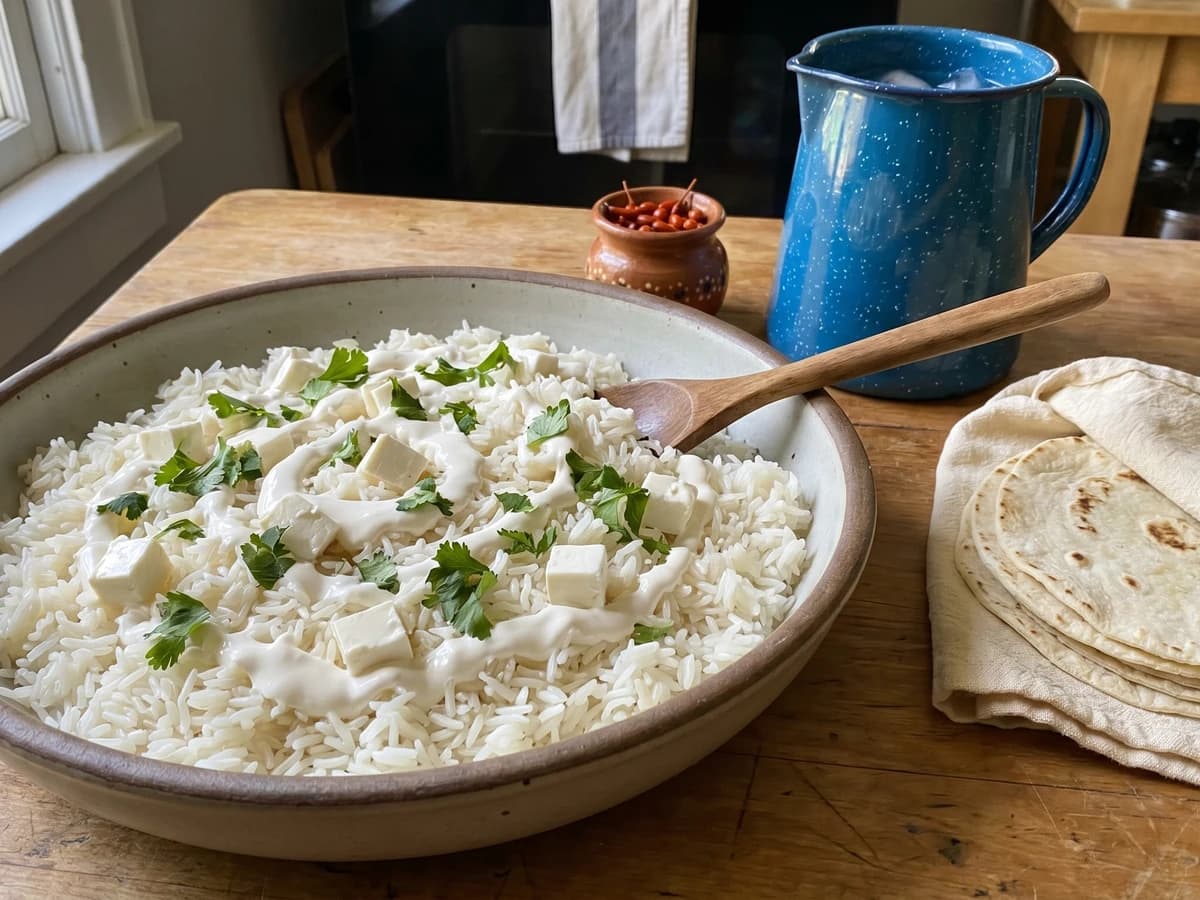
Sinaloa's home-cook white rice topped with cold cubes of cream cheese that soften into the warm grain, finished with crema and a sprinkle of chiltepin at the table. The trick that makes a side dish feel like a small luxury.
Chef Lupita
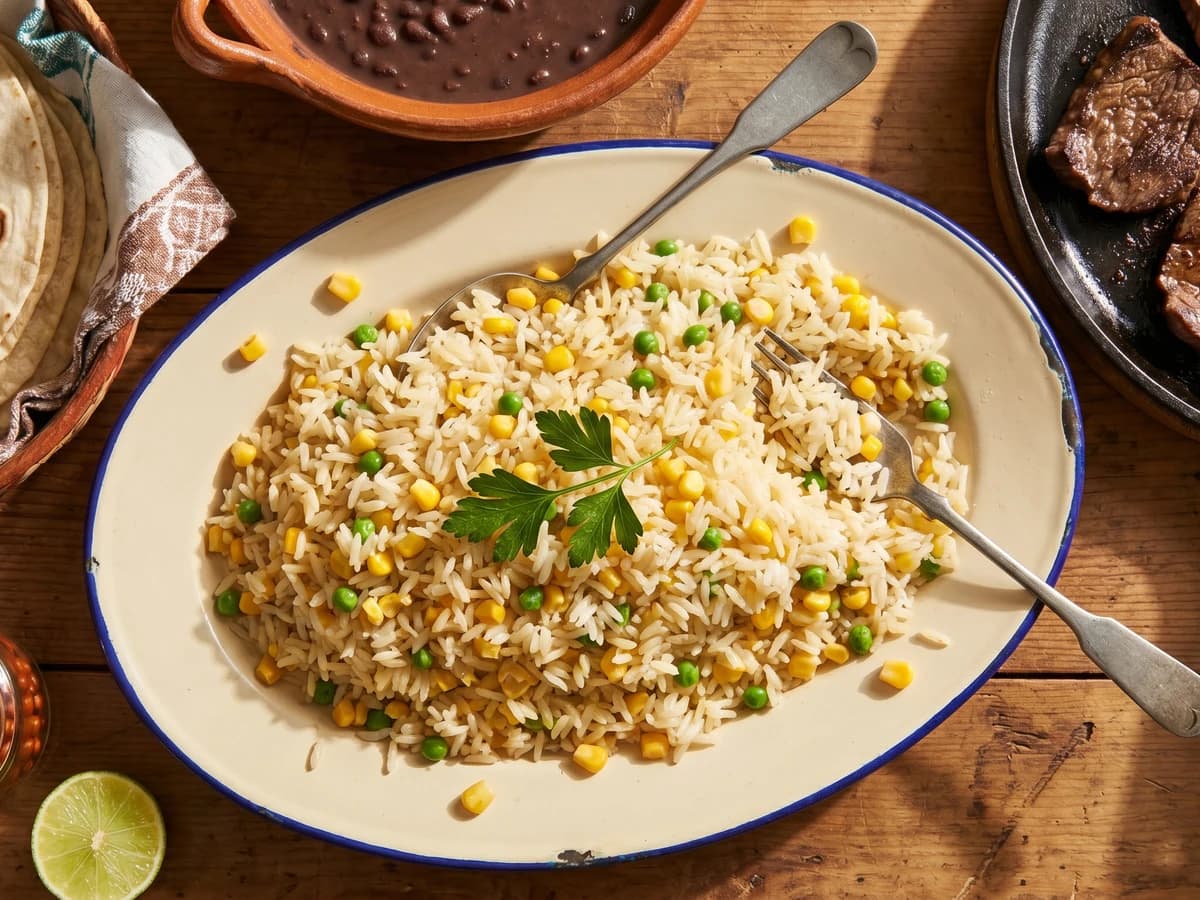
Sonora's white rice, toasted in butter and steamed with sweet corn and tender peas. The clean, quiet partner to a plate of carne asada, not the red rice of central Mexico.

Chef Lupita
Yucatán's white rice with sweet corn kernels, toasted in lard with garlic and onion. The quiet base that holds up against the peninsula's bold achiote-stained stews.