
Chef Lupita
Arroz a la Oaxaqueña
Oaxaca's red rice, stained with tomato and fried in lard, steamed with carrots, ejotes, black beans, and epazote. The side that anchors a Oaxacan family meal and earns its place beside the main.
A cooking platform built around craft, culture, and the stories behind what we eat.

Created by
Guanajuato's bayo beans cooked low in a clay olla with manteca de cerdo, epazote, xoconostle, and a careful touch of chilcuague from the Sierra Gorda.
Guanajuato sits in the Bajio, the old granary country, where beans, corn, squash, and chile built the daily table before anyone cared about restaurant menus. These frijoles bayos de la olla belong to ranch kitchens around Dolores Hidalgo, San Miguel, and the roads toward the Sierra Gorda. Beige-tan bayo beans, not pintos, not negros. That matters.
The pot is plain because the technique is the point. Beans, water, onion, garlic, manteca de cerdo, epazote. Then the Bajio shows its hand: xoconostle for acidity and chilcuague for that small electric warmth that belongs to the Sierra Gorda. My mother didn't cook this version in Colonia Roma. I learned it from a señora near Dolores Hidalgo who told me, without smiling, that beans without their broth are only half a meal. She was right.
La manteca es el sabor. You need only two tablespoons here, but they round the broth and carry the garlic into the beans. No me vengas con atajos. Cook them slowly, keep them covered, salt them when they begin to soften, and serve them in clay if you have it. Saber cocinar es saber vivir.
Frijoles de la olla descend from pre-Columbian bean cookery, but the addition of pork lard entered central Mexican kitchens after Spanish pigs became common in the 16th century. Guanajuato's Bajio was called the Granero de la Republica in the colonial and early national periods because its grain and legume production fed mining towns, ranches, and trade roads across central Mexico. Chilcuague, Heliopsis longipes, is associated with the Sierra Gorda region and appears in colonial-era descriptions of native medicinal and culinary plants, including references tied to the Códice Florentino tradition.
Quantity
1 pound
picked over and rinsed
Quantity
10 cups, plus more as needed
Quantity
2 tablespoons
Quantity
1 medium
halved
Quantity
4
lightly crushed
Quantity
1, about 6 inches long
Quantity
2 medium
peeled, seeded, and cut into wedges
Quantity
1 small piece, about 1 inch
lightly crushed
Quantity
1 1/2 teaspoons, plus more to taste
Quantity
2 tablespoons
Quantity
1 tablespoon
Quantity
for serving
| Ingredient | Quantity |
|---|---|
| dried frijoles bayospicked over and rinsed | 1 pound |
| water | 10 cups, plus more as needed |
| manteca de cerdo | 2 tablespoons |
| white onionhalved | 1 medium |
| garlic cloveslightly crushed | 4 |
| fresh epazote sprig | 1, about 6 inches long |
| xoconostlespeeled, seeded, and cut into wedges | 2 medium |
| chilcuague rootlightly crushed | 1 small piece, about 1 inch |
| kosher salt | 1 1/2 teaspoons, plus more to taste |
| finely chopped white onion (optional) | 2 tablespoons |
| chopped cilantro (optional) | 1 tablespoon |
| warm corn tortillas (optional) | for serving |
Spread the frijoles bayos on a tray and pick out stones, broken beans, and field dust. Rinse them until the water runs clear. These are bayo beans, beige-tan and creamy when cooked. Do not use pintos and call it Guanajuato. Cada estado, su propia cocina.
Put the beans in a clay olla or heavy pot with the water, manteca de cerdo, onion, and garlic. Bring to a gentle simmer over medium heat, then lower the heat. The surface should move quietly, not jump like a washing machine. Clay cooks evenly and keeps the broth round. If you use metal, watch the heat more closely.
Cook uncovered for 1 hour and 30 minutes, adding hot water as needed to keep the beans covered by about an inch. Do not salt yet. Old beans need more time, new beans need less. The test is the skin: it should wrinkle softly and the center should give when pressed between two fingers.
Add the epazote, xoconostle wedges, chilcuague root, and salt. Simmer 45 minutes to 1 hour more, until the beans are tender and the broth turns beige and slightly thick. The xoconostle gives a clean sour edge. The chilcuague gives a small numbing warmth from the Sierra Gorda. Use too much and it takes over. Respect the root.
Turn off the heat and let the beans rest in their broth for 20 minutes. Remove the onion, garlic skins, epazote stem, and chilcuague root. Taste for salt after the rest. Beans absorb seasoning slowly. This pause is not laziness, it is part of the cooking.
Ladle the beans and broth into clay bowls, with a wedge of xoconostle in each serving. Add a little chopped white onion and cilantro if you want it, and serve with warm corn tortillas. No cheddar. No sour cream. This is a Guanajuato bean pot, not a plate from somewhere confused.
1 serving (about 350g)
Culinary guides, cultural storytelling, and the editorial depth that makes cooking meaningful.
Discover Culinary ExplorerChef Lupita
Oaxaca's red rice, stained with tomato and fried in lard, steamed with carrots, ejotes, black beans, and epazote. The side that anchors a Oaxacan family meal and earns its place beside the main.
Chef Lupita
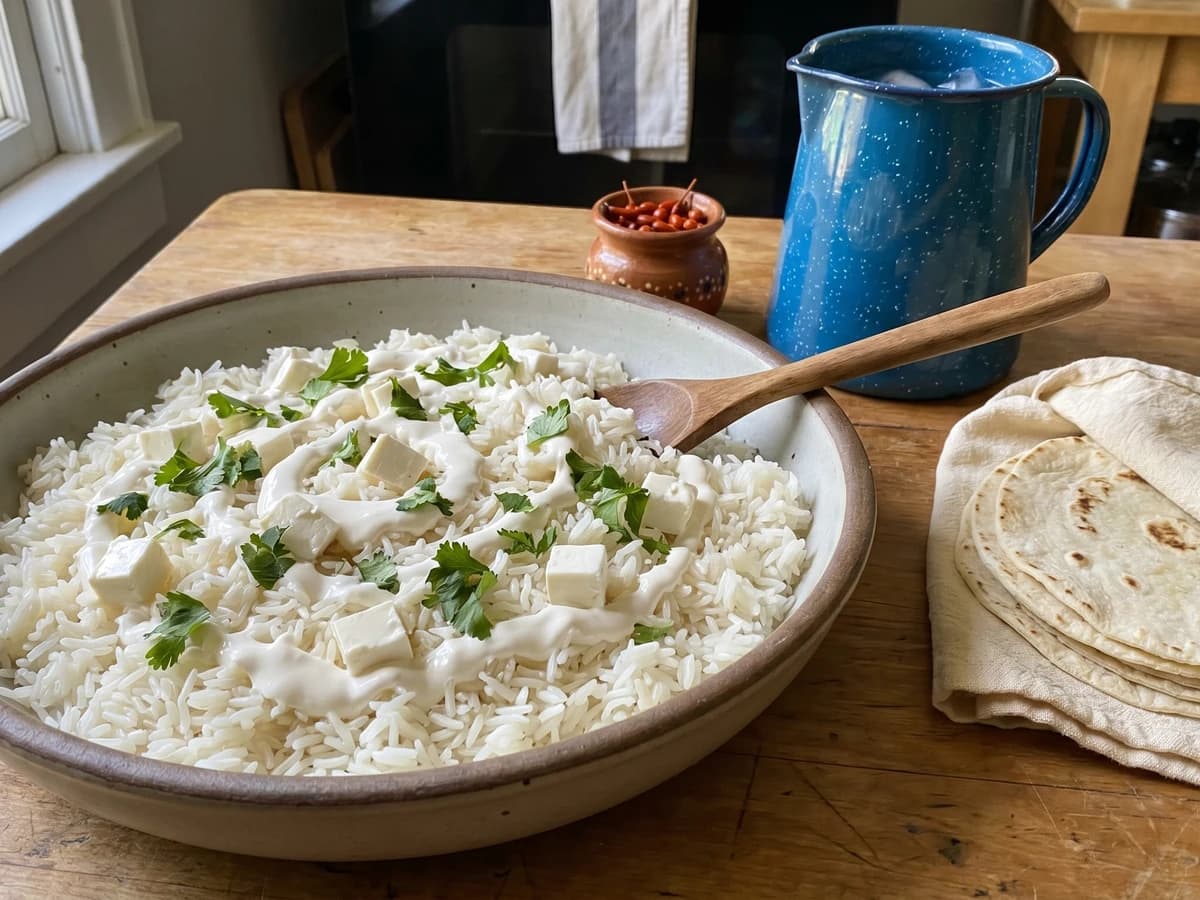
Sinaloa's home-cook white rice topped with cold cubes of cream cheese that soften into the warm grain, finished with crema and a sprinkle of chiltepin at the table. The trick that makes a side dish feel like a small luxury.
Chef Lupita
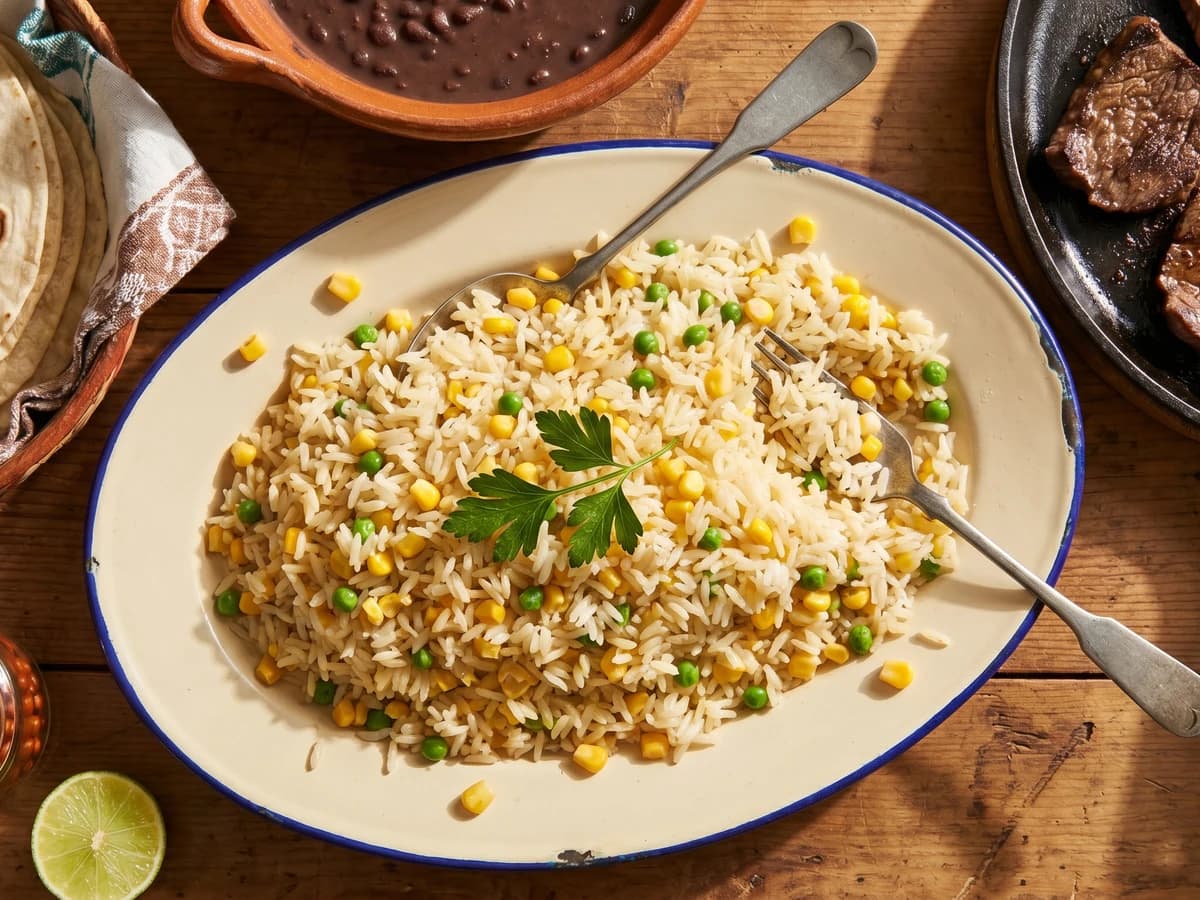
Sonora's white rice, toasted in butter and steamed with sweet corn and tender peas. The clean, quiet partner to a plate of carne asada, not the red rice of central Mexico.

Chef Lupita
Yucatán's white rice with sweet corn kernels, toasted in lard with garlic and onion. The quiet base that holds up against the peninsula's bold achiote-stained stews.