
Chef Lesia
Buzhenyna (буженина, garlic-studded roast pork)
A whole pork neck takes garlic into little knife pockets, roasts until the crust goes dark and fragrant, then rests overnight so every cold slice tastes better than shop ham.
A cooking platform built around craft, culture, and the stories behind what we eat.

Created by
All the cabbage-roll comfort is here, but the leaves give up their ceremony: chopped cabbage, rice, mushrooms, and tomato bake together until the edges catch and the sauce turns sweet.
The honest thing about lazy holubtsi is that they admit what every tired cook already knows: some nights you want the taste of cabbage rolls and you do not want to wrestle a cabbage leaf. So the cabbage goes straight under the knife, the rice swells in tomato, the mushrooms darken the pan, and the whole dish settles into itself until the top catches in little bronze patches.
This is not a lesser holubets. It is the weeknight cousin, the one that comes to the table in a baking dish with a big spoon and no apology. The trick is giving the cabbage time in the pan before it bakes. Raw cabbage can taste thin and watery; softened first with onion and carrot, it turns sweet, almost buttery, and the tomato has something to hold onto.
Aunt Nadia wrote this kind of thing as if everyone had been born knowing it: "cook until it smells cooked." Comedy, yes, but also correct. Wait until the cabbage stops smelling sharp and starts smelling round. Then bake it until it sounds right at the edges, a quiet sticky bubbling, not a wet slosh. Make enough for eight guests or one hungry Ukrainian.
Holubtsi, cabbage rolls, are old winter food across Ukraine, especially in regions where whole cabbage heads were soured in barrels and the fermented leaves became both wrapper and seasoning. Lazy holubtsi are a later home-kitchen answer to the same appetite: the filling and cabbage are mixed, layered, or shaped into cutlets, keeping the tomato-braised flavour while saving the careful rolling for holidays. Mushroom and grain versions are especially at home in fast-day and vegetarian cooking, where buckwheat, rice, and forest mushrooms have carried plenty of meals without meat.
Quantity
250g
rinsed until the water runs mostly clear
Quantity
500ml
Quantity
1 small, about 900g
cored and finely sliced
Quantity
350g
finely chopped
Quantity
2 large
finely diced
Quantity
2 large
coarsely grated
Quantity
3 tablespoons, plus more for the baking dish
Quantity
3 cloves
finely grated
Quantity
2 tablespoons
Quantity
500ml
Quantity
150ml
Quantity
1 teaspoon
Quantity
1
Quantity
1 teaspoon, plus more to taste
Quantity
1/2 teaspoon
Quantity
1 small bunch
finely chopped
Quantity
to serve
| Ingredient | Quantity |
|---|---|
| short-grain or medium-grain ricerinsed until the water runs mostly clear | 250g |
| vegetable stock or water | 500ml |
| white cabbagecored and finely sliced | 1 small, about 900g |
| mushroomsfinely chopped | 350g |
| onionsfinely diced | 2 large |
| carrotscoarsely grated | 2 large |
| unrefined sunflower oil | 3 tablespoons, plus more for the baking dish |
| garlicfinely grated | 3 cloves |
| tomato paste | 2 tablespoons |
| tomato passata or crushed tomatoes | 500ml |
| cabbage brine, sauerkraut brine, or water with lemon juice | 150ml |
| sweet paprika | 1 teaspoon |
| bay leaf | 1 |
| sea salt | 1 teaspoon, plus more to taste |
| black pepper | 1/2 teaspoon |
| dillfinely chopped | 1 small bunch |
| smetana or vegan sour cream (optional) | to serve |
Put the rinsed rice in a small pan with the vegetable stock or water and a pinch of salt. Bring it to a low bubble, cover, and cook until the grains have swollen but still keep a little bite. Drain if needed. It will finish in the tomato sauce, so do not cook it soft now.
Heat one tablespoon of sunflower oil in a wide pan and add the chopped mushrooms with a pinch of salt. Let them give off their water, then keep cooking until the pan goes quiet and the mushrooms smell deep and nutty. This is where the meatless filling gets its backbone.
Add another tablespoon of oil, then the onions and carrots. Cook gently until the onion turns glassy and the carrot stains the oil orange. Add the sliced cabbage by handfuls, salting lightly as you go, and turn it through the pan until it slumps, shines, and stops smelling sharp.
Stir in the garlic, tomato paste, paprika, bay leaf, black pepper, and the teaspoon of salt. Let the paste darken against the bottom of the pan until the smell changes from tinny to sweet. Pour in the passata and cabbage brine, scraping up anything stuck to the pan.
Oil a large baking dish. Fold the rice and most of the dill through the cabbage mixture, then spoon everything into the dish and press it level without packing it hard. Cover tightly and bake at 190C until the rice is tender and the sauce is bubbling at the edges, then uncover until the top catches in little browned patches.
Let the dish sit for at least fifteen minutes before serving. It should spoon out softly, not pour, with glossy tomato clinging to the rice and cabbage. Scatter with the remaining dill and bring smetana or vegan sour cream to the table for anyone who wants that cold-white spoonful against the tomato.
1 serving (about 400g)
Culinary guides, cultural storytelling, and the editorial depth that makes cooking meaningful.
Discover Culinary ExplorerChef Lesia
A whole pork neck takes garlic into little knife pockets, roasts until the crust goes dark and fragrant, then rests overnight so every cold slice tastes better than shop ham.
Chef Lesia
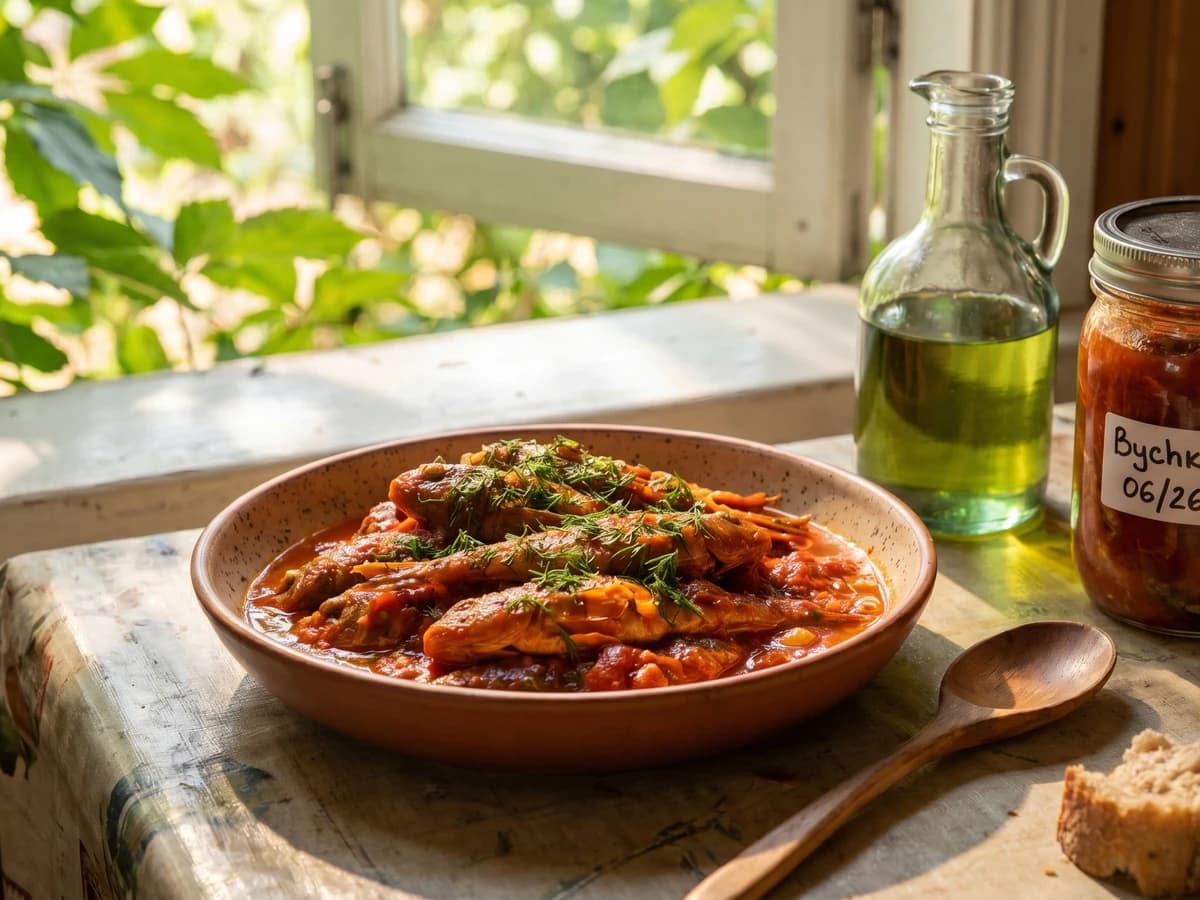
Small Azov gobies go into tomato bright as market cloth and come out soft enough that the bones give up. This is Mariupol food: cheap, red, generous, and better tomorrow.

Chef Lesia
The first sound is the meat against the board: flat, sharp, changing as the fibres loosen. Fry the cutlets fast, then let onion gravy do the soft finishing.

Chef Lesia
A heap of tiny silver fish becomes supper by the oldest Odesa trick: clean them, press them together, fry until the edges crackle, and let lemon and dill do the talking.