
Chef Lesia
Adzhyka po-Ukrainsky (аджика, tomato-pepper relish)
The tomatoes go from garden-red to brick-red while the peppers slump and the garlic waits. By the end, the spoon leaves a path and the whole south fits in one jar.
A cooking platform built around craft, culture, and the stories behind what we eat.
Created by
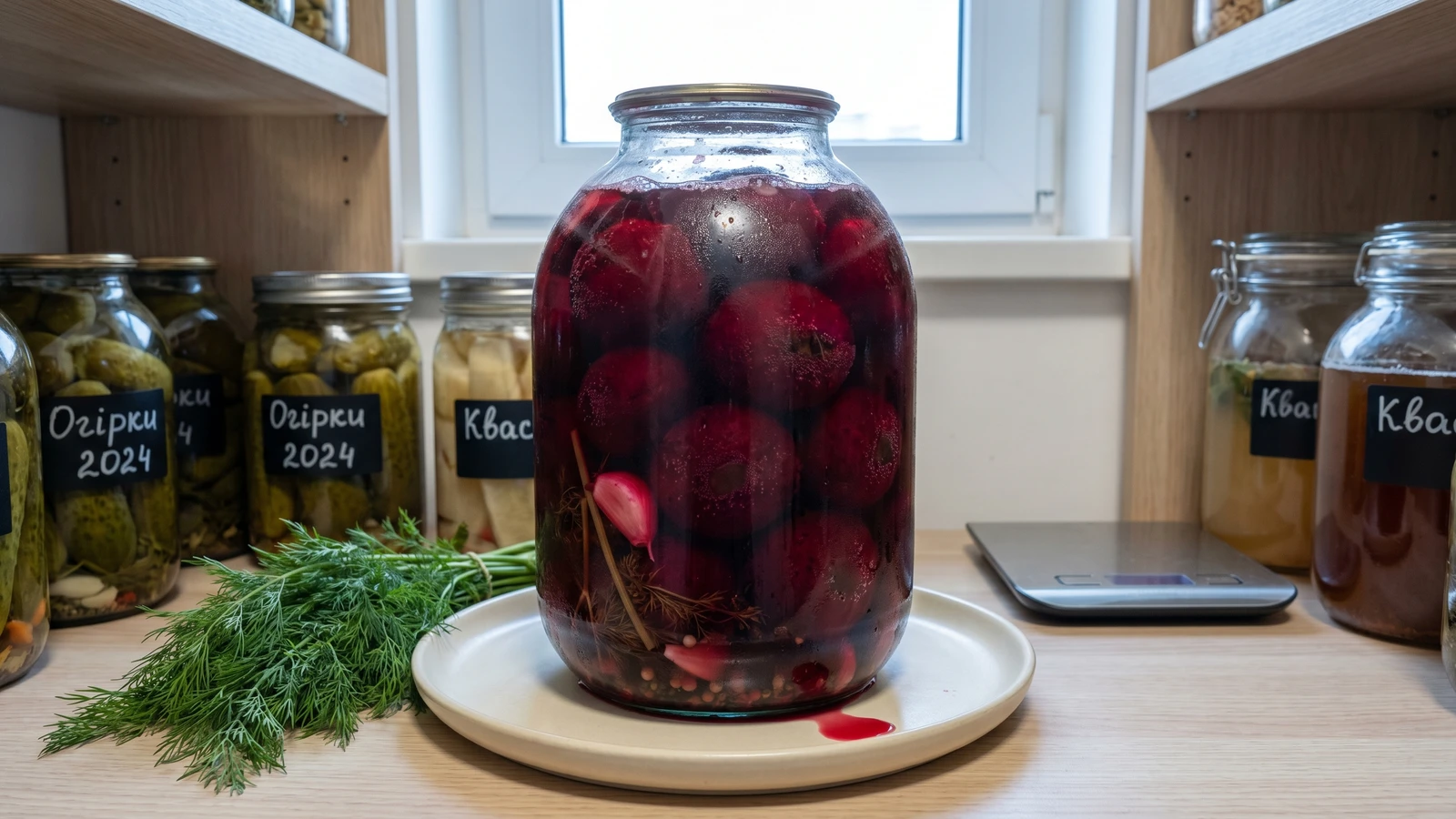
The beets stain the brine first like spilled ink, then slowly turn it sour, ruby-deep, and useful enough to carry a whole winter pot of borshch.
The first thing the beets do is bleed. Not politely. They turn the water dark as pomegranate skins, stain the garlic pink, creep up the jar in a crimson tide, and then the quiet work begins. A week later the brine clouds, the lid gives a little sigh, and the sharp-sweet smell tells you this is no boiled beet salad. This is kvashenyi buryak, whole beets made alive in salt water.
Fermented beets belong to the same Ukrainian kvashennia tradition as soured tomatoes, cucumbers, cabbage, and whole watermelons, especially in the garden-heavy south where the litnya kuhnia turned summer and autumn glut into winter food. Beet brine, often called buryakovyi kvas or beet zakwas in neighbouring traditions, became one of the old souring agents for borshch before vinegar made the shortcut easier. Soviet standard recipes pushed many regional souring habits into the margins, but jars like this kept working on pantry shelves.
Quantity
1 kg
scrubbed well, tails left on
Quantity
1.2 litres, or enough to cover
Quantity
42g, 3.5 percent of the water weight
Quantity
4
lightly smashed
Quantity
2
Quantity
1 small piece
peeled
Quantity
1
Quantity
1 teaspoon
Quantity
1
for tannin
| Ingredient | Quantity |
|---|---|
| small raw beetsscrubbed well, tails left on | 1 kg |
| cool non-chlorinated water | 1.2 litres, or enough to cover |
| fine sea salt | 42g, 3.5 percent of the water weight |
| garlic cloveslightly smashed | 4 |
| dill stalks with flowers or seed heads | 2 |
| horseradish root (optional)peeled | 1 small piece |
| bay leaf | 1 |
| black peppercorns | 1 teaspoon |
| blackcurrant, cherry, or oak leaf (optional)for tannin | 1 |
Scrub the beets under cool water, but don't peel them and don't cut off the tails. Trim only the leafy tops if they are still attached. The skins and tails keep the color and sweetness inside while the brine works its way in slowly.
Weigh the water, then weigh the salt at 3.5 percent: 35 grams salt for every litre of water. Stir until the salt disappears completely. This is the one place I want your scale more than your instinct, because the brine is the safety.
Put the garlic, dill, bay, peppercorns, horseradish if using, and tannin leaf into a clean 2-litre jar. Pack in the beets firmly but without crushing them, smaller ones low and larger ones high, like stacking stones in a riverbed.
Pour in enough brine to cover the beets fully, then set a fermentation weight or a small clean jar on top so nothing rises above the surface. Set the jar on a plate. It may leak, because ferments have no manners once they wake up.
Leave the jar at cool room temperature, out of direct sun. In a few days the brine will turn cloudy and smell sweet, earthy, and sharp at the edges. Open the lid briefly each day if it is tightly sealed, then close it again. Taste after one week; two to three weeks gives a deeper sour and a beet that still has its bite.
When the brine tastes bright and tangy to you, move the jar to the fridge. Slice the beets into salads with unrefined sunflower oil and dill, grate them into relish, or use the brine to sour borshch instead of vinegar. That is the whole point: sourness with memory in it.
1 serving (about 100g)
Culinary guides, cultural storytelling, and the editorial depth that makes cooking meaningful.
Discover Culinary ExplorerChef Lesia
The tomatoes go from garden-red to brick-red while the peppers slump and the garlic waits. By the end, the spoon leaves a path and the whole south fits in one jar.

Chef Lesia
A jar of grated beets turns ordinary water into sour red light, the kind that wakes borshch from inside instead of shouting over it.

Chef Lesia
Raw garlic, salt, and green sunflower oil turn into a sauce that announces itself from the doorway, sharp enough for pampushky, potatoes, grilled meat, and any tired Tuesday plate.

Chef Lesia
The gravy should start dark as wet bark, then soften when smetana goes in. Spoon it over buckwheat, potatoes, or mlyntsi and nobody asks where the meat went.