
Chef Makoa
Boil-Up (Māori Pork, Pūhā, and Doughboys)
Aotearoa's whānau pot: pork bones simmered until the broth turns deep, pūhā or watercress folded through, kūmara soft at the edges, and doughboys floating heavy and tender.
A cooking platform built around craft, culture, and the stories behind what we eat.
Created by
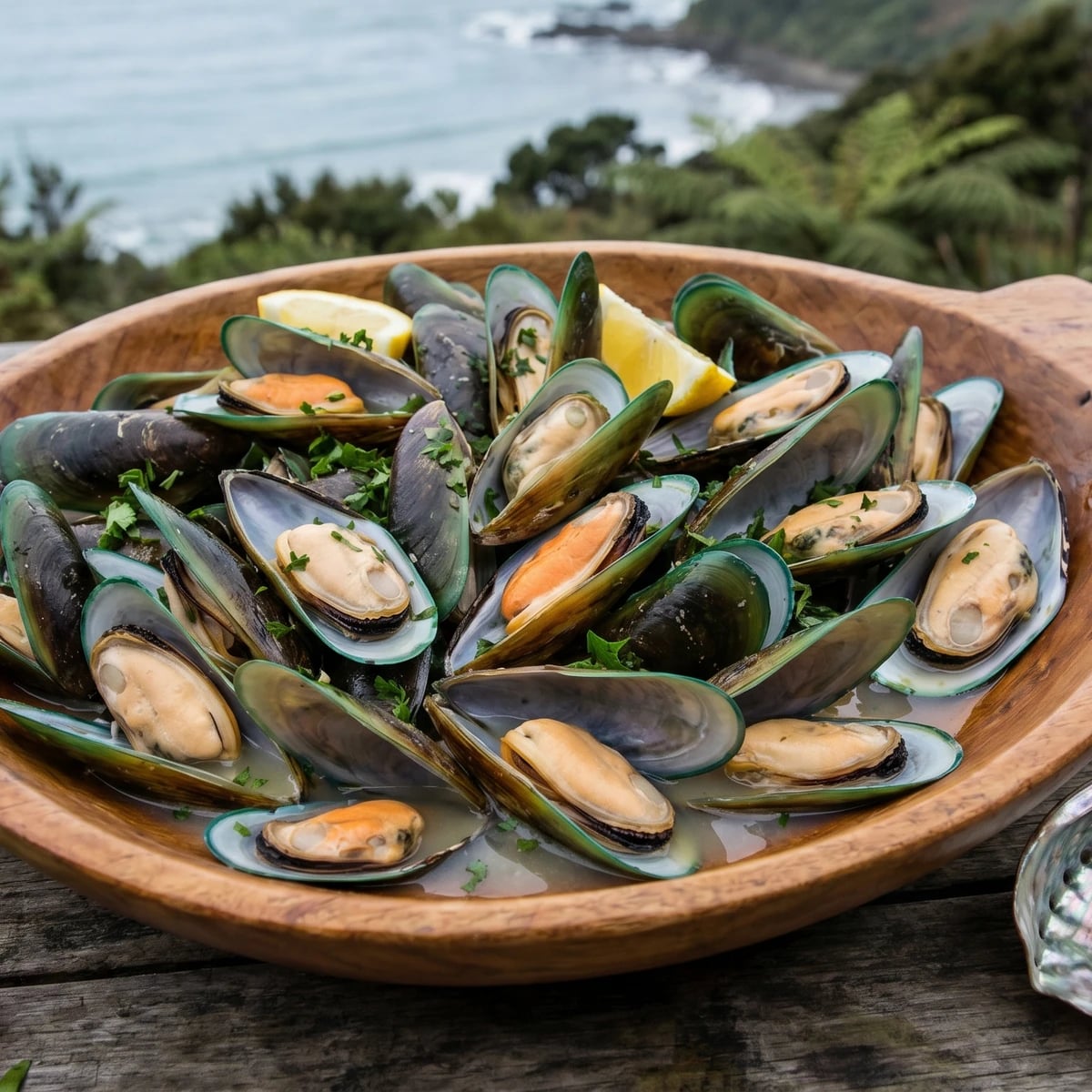
Green-lipped kūtai from Aotearoa's cold coast, steamed plain until the shells open and their own briny liquor gathers, finished with lemon and bread for the whānau table.
The first time I sat at a Māori table for kūtai, I had to quiet my own Hawaiian mouth and listen. Aotearoa is not the tropics. The light is cooler, the coast bites different, and the kai, the food, comes with that cold-water strength. Kūtai, green-lipped mussels, belong to that place and to Māori hands, gathered as kaimoana, seafood, from the rocks and bays and cooked without a big speech around them.
Back home in Hawaiʻi we know the pull of the reef in ʻopihi and limu. Sāmoa and Tonga know their reef shellfish too. Tahiti and the Cooks have their lagoon bowls. Same ocean family, but not the same dish. This one is Aotearoa's, black-and-jade shells, orange flesh, a pot on the stove, bread on the table, whānau, family, close enough to reach across and take another.
So I cook this open-handed. The deep tikanga, the right practice and meaning around gathering, place, and ceremony, belongs to Māori elders to teach. I can tell you the kitchen part: buy them alive, cook them just until they open, trust the liquor they give, and don't cover the sea with too many clever ideas. Eat what you have. Let the coast speak.
Māori ancestors reached Aotearoa by the 13th century and adapted tropical Polynesian foodways to a temperate land, where kūmara, fernroot, birds, fish, and kaimoana carried much of the table while breadfruit was absent and taro was more limited than in the northern islands. Kūtai, the green-lipped mussel, is native to Aotearoa and long gathered from rocks, estuaries, and bays under local tikanga, including restraint, sharing, and rāhui, temporary closures that let a place recover. Commercial green-lipped mussel farming grew strongly in the 20th century, but the home pot of plain steamed kūtai still sits close to the older gathered-kai line.
Quantity
2 pounds
scrubbed and debearded
Quantity
1/4 cup
only if the pot is very dry
Quantity
1
cut into wedges
Quantity
for serving
Quantity
1 small handful
chopped
Quantity
only if needed after tasting
| Ingredient | Quantity |
|---|---|
| live green-lipped mussels (kūtai)scrubbed and debearded | 2 pounds |
| cold water (optional)only if the pot is very dry | 1/4 cup |
| lemoncut into wedges | 1 |
| fresh bread or rēwena bread | for serving |
| flat-leaf parsley (optional)chopped | 1 small handful |
| sea salt (optional) | only if needed after tasting |
Tip the kūtai, the green-lipped mussels of Aotearoa, onto a tray and look them over like gathered kai, not product from a shelf. Scrub the shells, pull away the beards, and throw out any cracked mussels or any open ones that don't close when tapped. The sea already did most of the work here. Your job is to keep it clean.
Set a heavy kōhua, a big pot, over medium-high heat. If the bottom is bone dry, add the quarter cup of cold water, just enough to wake the pot. Don't drown the mussels. Kūtai carry their own liquor, and that briny broth is the whole reason this simple dish tastes like the coast.
Add the mussels, cover tight, and cook for 3 to 5 minutes, shaking the pot once or twice, until the shells open and the meat sits plump and glossy inside the black-and-jade shell. Stop when most have opened. Overcook them and they tighten up, same as any seafood. No need make it complicated.
Lift the open mussels into a wide bowl and let the broth settle a moment. Taste that liquor before you add salt, because the moana, the sea, usually seasoned it already. If there is grit at the bottom, pour the broth through a fine sieve or leave the last spoonful behind.
Pour the clean broth back over the kūtai, squeeze lemon across the shells, and scatter parsley only if you want that fresh green note. Bring the bowl to the table with bread for dragging through the liquor. This is Māori kaimoana, seafood, at its plainest and strongest: shell, sea, lemon, bread, and enough for one more.
1 serving (about 115g)
Culinary guides, cultural storytelling, and the editorial depth that makes cooking meaningful.
Discover Culinary Explorer
Chef Makoa
Aotearoa's whānau pot: pork bones simmered until the broth turns deep, pūhā or watercress folded through, kūmara soft at the edges, and doughboys floating heavy and tender.

Chef Makoa
Green-lipped mussels from Aotearoa, chopped through a simple batter with onion and parsley, fried crisp at the edges and eaten with lemon while the whānau is still reaching.

Chef Makoa
Aotearoa's karengo, native seaweed gathered from the cold rocks, dried for keeping, then rehydrated and pan-simmered until dark, tender, salty, and shining.

Chef Makoa
Cold-coast kaimoana from Aotearoa: kina cracked open at the table, golden roe lifted from the shell, briny and rich, eaten simply because the reef already did the seasoning.