
Chef Takumi
Agar Jelly with Anko and Fruit (あんみつ, Anmitsu)
Anmitsu looks like a tray of small tasks, but the work is calm: dissolve the kanten fully, chill the pieces clean, then let fruit, anko, and kuromitsu do the speaking.
A cooking platform built around craft, culture, and the stories behind what we eat.

Created by
Kusamochi is spring pressed into rice: young yomogi, hot steamed mochigome, and sweet anko wrapped while the mochi is still soft enough to listen.
The first yomogi tips are small, green, and easy to miss if you're walking too quickly. That is their lesson. Kusamochi belongs to early spring, when the herb is tender enough to scent the rice without turning bitter, and the color is a deep honest green, not the green of a shop window trying too hard.
People fear mochi because it seems to require a great wooden mortar and heroic arms. The real work is simpler. Steam glutinous rice until each grain is fully tender, then pound it while it is hot, because hot rice starch stretches and joins. Wait too long and it stiffens under your hands, sulking a little. A proper usu and kine, the mortar and mallet, are beautiful tools. A stand mixer or heavy pestle will still get you there if you work cleanly and with purpose.
The one detail that decides this dish is the yomogi. Use young mugwort at its shun, blanch it briefly to tame the rough edge, squeeze it hard, then pound it into the rice as a paste. Too much stem gives bitterness. Too much water loosens the mochi. Get the herb right and the rest is only rhythm: press, turn, fold, wrap. Nothing hidden. Just rice, spring, and a spoonful of anko at the center.
Kusamochi has long been tied to Jōshi no Sekku, the third-day, third-month seasonal observance that later became associated with Hinamatsuri. Earlier forms used hahakogusa, Jersey cudweed and one of the seven spring herbs, but yomogi became common by the Edo period for its stronger fragrance, medicinal associations, and deeper green color. The word kusa simply means grass or herb, a plain name for a confection that marks the first edible growth of spring.
Quantity
2 cups
rinsed and soaked 6 to 8 hours
Quantity
50g
leaves and tender tips only, tough stems removed
Quantity
1/4 teaspoon
for blanching
Quantity
1/4 teaspoon
Quantity
1 tablespoon
Quantity
300g
divided into 12 balls
Quantity
as needed
for dusting
| Ingredient | Quantity |
|---|---|
| mochigome (Japanese glutinous rice)rinsed and soaked 6 to 8 hours | 2 cups |
| young fresh yomogi (Japanese mugwort)leaves and tender tips only, tough stems removed | 50g |
| baking sodafor blanching | 1/4 teaspoon |
| fine sea salt | 1/4 teaspoon |
| sugar | 1 tablespoon |
| anko (sweet red bean paste)divided into 12 balls | 300g |
| katakuriko or potato starchfor dusting | as needed |
Rinse the mochigome until the water runs mostly clear, then soak it in plenty of fresh water for 6 to 8 hours. Glutinous rice needs that soak so the grains steam evenly to the center. Drain it well for 20 minutes before steaming, because excess surface water makes the mochi slack instead of elastic.
Divide the anko into 12 portions of about 25g each and roll them into balls. Chill them while you prepare the mochi. Cold anko holds its shape under the warm rice dough, which makes wrapping calmer and keeps the filling centered.
Bring a small pot of water to a boil and add the baking soda. Blanch the yomogi for 45 to 60 seconds, just until the leaves turn deep green and soften, then lift them into cold water. The brief blanch takes away the raw harshness and fixes the color. Leave it too long and the spring scent goes dull, which would be a sad bargain.
Squeeze the cooled yomogi hard in your hands until no water runs from it, then chop it finely and pound or grind it to a coarse paste. The squeeze matters. Water trapped in the leaves thins the mochi and weakens its chew, while a dry paste stains the rice cleanly and leaves little green flecks of the herb.
Line a steamer with a damp cloth, spread in the drained rice, cover, and steam over steady heat for 35 to 40 minutes. Taste a grain from the center. It should be tender all the way through, with no chalky core. Steaming, rather than boiling, keeps the rice concentrated so it can become mochi instead of porridge.
While the rice is very hot, transfer it to an usu, a sturdy mortar, or the bowl of a stand mixer fitted with the paddle. Dissolve the salt and sugar in 1 tablespoon hot water, sprinkle it over the rice, and pound or beat until the grains begin to disappear into a sticky mass. Add the yomogi paste and continue pounding until the mochi is even green, glossy, and elastic, with only fine flecks of herb showing.
Dust a tray lightly with katakuriko and turn the mochi onto it. Dust your hands, not the whole dough, and divide it into 12 pieces. Too much starch on the inside edge keeps the mochi from sealing, so use just enough to keep your fingers from sticking.
Flatten one piece of mochi into a round about 3 inches across, set an anko ball in the center, and draw the edges up around it. Pinch the seam closed, then set it seam-side down and cup it gently into a low dome. If the mochi fights you, dampen your fingers. Water helps the surface stretch; starch only keeps it apart.
Brush away excess starch and let the kusamochi rest 10 minutes before serving. The surface settles, the anko warms slightly from the rice, and the mugwort scent comes forward. Serve in odd numbers with room around them. A crowded plate makes even spring look tired.
1 serving (about 100g)
Culinary guides, cultural storytelling, and the editorial depth that makes cooking meaningful.
Discover Culinary ExplorerChef Takumi
Anmitsu looks like a tray of small tasks, but the work is calm: dissolve the kanten fully, chill the pieces clean, then let fruit, anko, and kuromitsu do the speaking.

Chef Takumi
A cool square of almond-scented milk, set softly and served with mikan in thin syrup, is dinner-party food without theater. The only stern demand is restraint with the fragrance.

Chef Takumi
Azuki bar asks for patience twice: once while the beans soften, and once while the frozen bar yields. That hardness is not a flaw. It is the character of the thing.
Chef Takumi
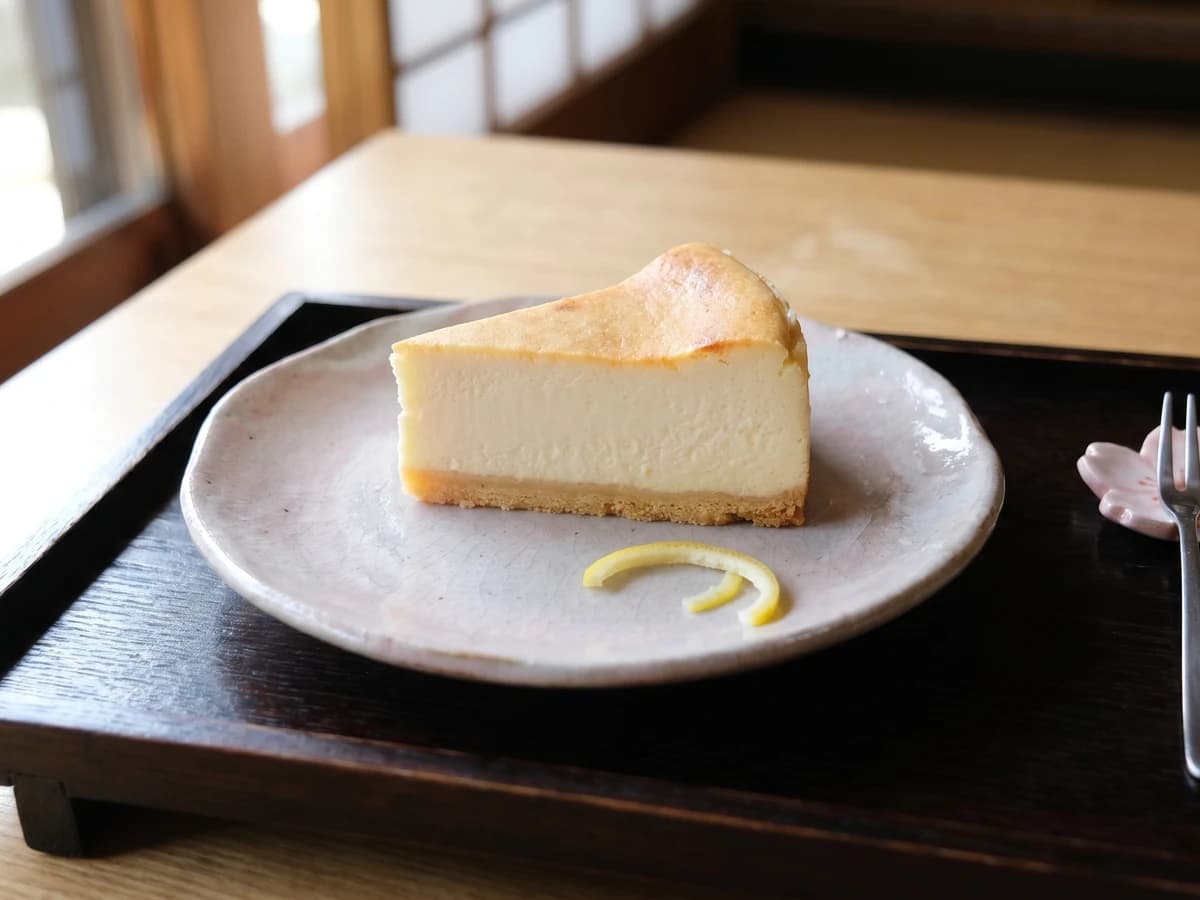
A Japanese baked cheesecake is not trying to float away. It is dense, smooth, and quietly tart, with a clean slice doing the work of decoration.