Chef Lupita
Acúmara Tatemada al Comal
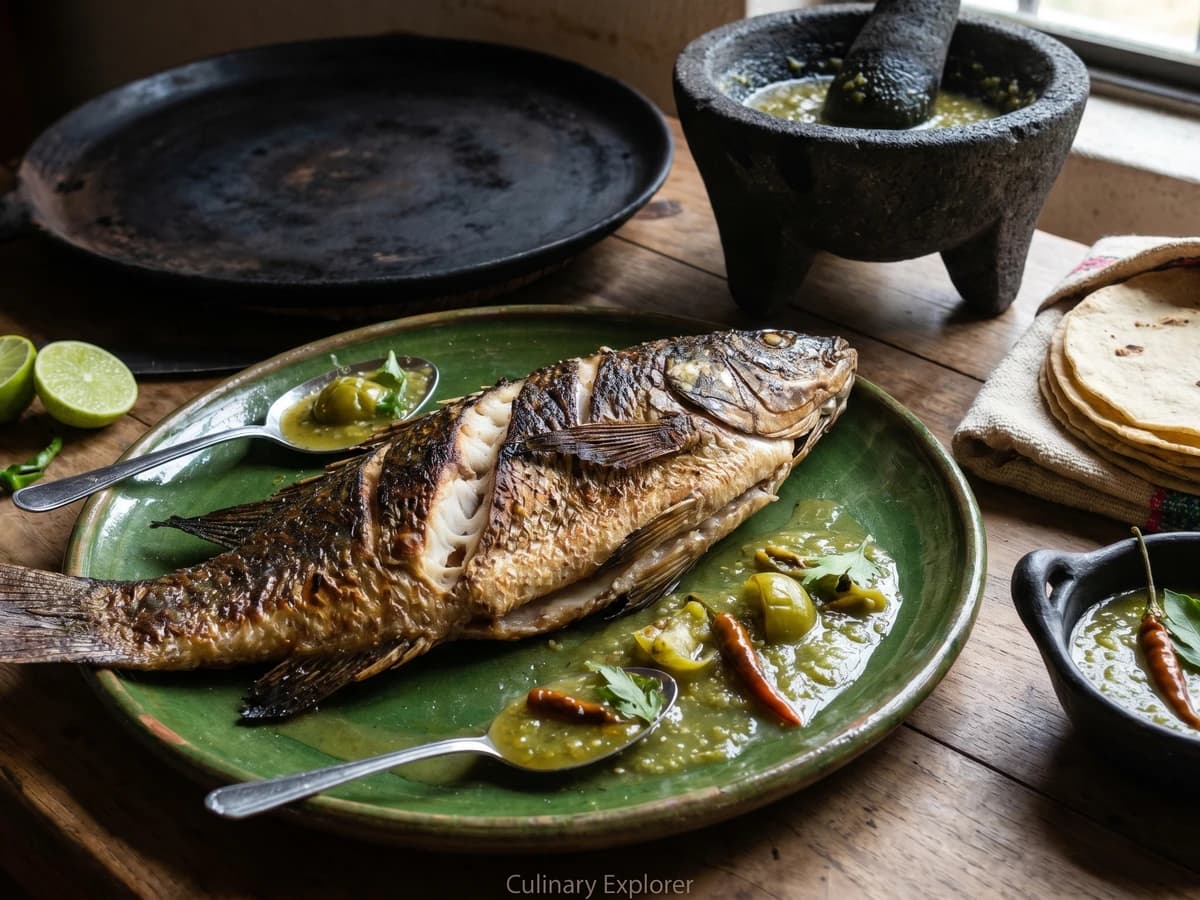
Michoacán's Lake Pátzcuaro acúmara, a whole kurucha from the lago tatemada on a comal de leña and served with chile perón atápakua, corn tortillas, and P'urhépecha discipline.
A cooking platform built around craft, culture, and the stories behind what we eat.
Created by
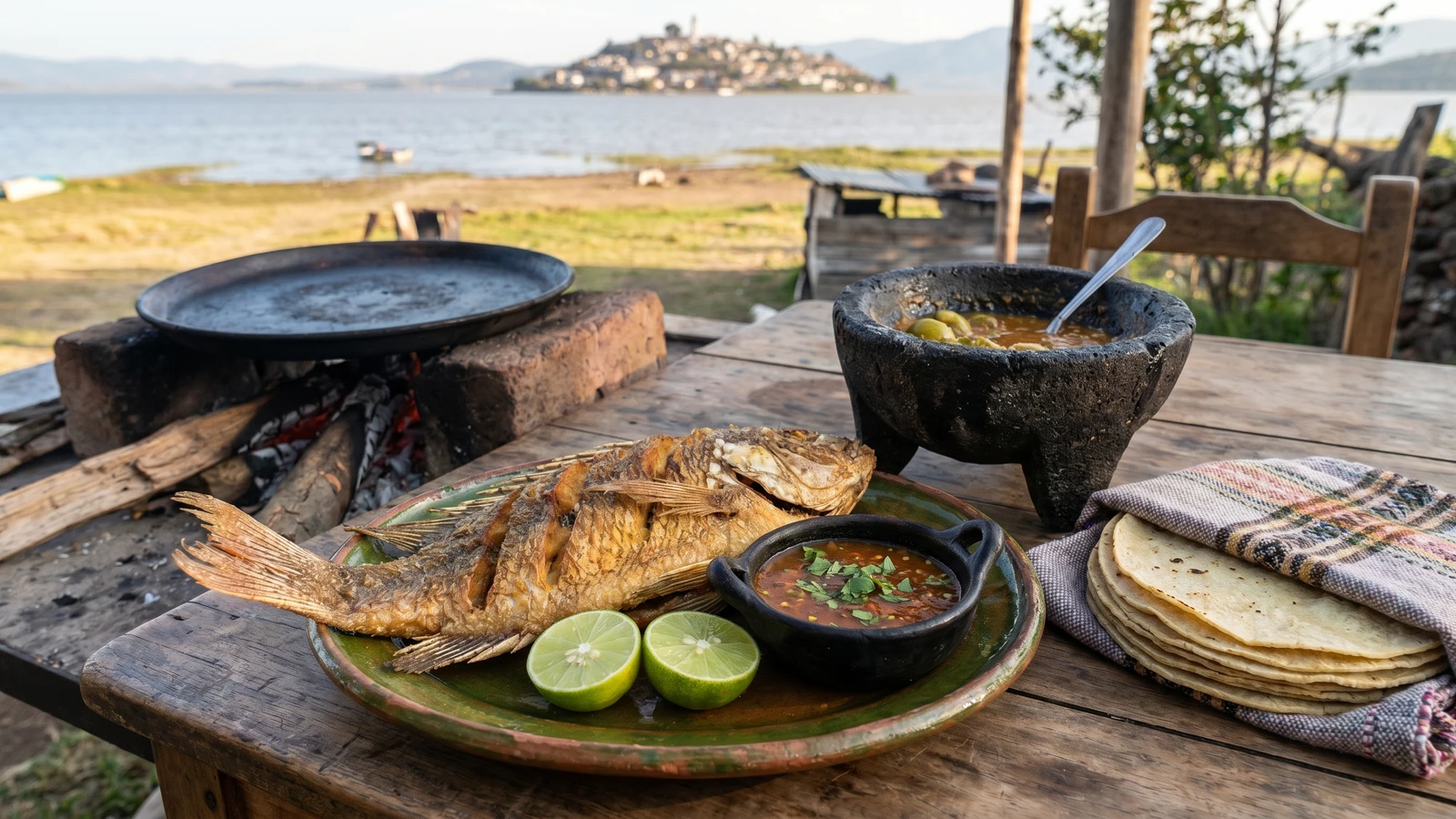
Michoacán's Lake Pátzcuaro white fish, cleaned whole, salted, dusted with flour, and fried over leña until the skin crisps while the flesh stays pearly, served with chile perón salsa and warm corn tortillas.
Michoacán, Lake Pátzcuaro: this is kurucha urapiti, the white fish that lives in the cold high water around Janitzio, Tzintzuntzan, and the old shore villages. It is not a coastal fish and it is not a fillet hidden under sauce. It is the lake on a plate, fried whole, bones and tail and all, with the flesh still pearly when you open it at the spine.
The method is disciplined. Salt the fish, dry it well, dust it with harina de trigo, and fry it in clean manteca de cerdo over leña. The tomatillo and chile perón salsa comes from the milpa. The epazote comes from the milpa too, just a few leaves, because this fish is delicate and a heavy hand would be disrespectful. The firewood comes from the monte. The kurucha comes from the lago. Cada estado, su propia cocina.
I learned this dish by watching cocineras tradicionales in Janitzio work around a fogón with the calm of women who have fed families and fiestas longer than any restaurant has had a menu. The same living school runs through Zacán, Cocucho, Cherán, and Uruapan, through women who teach atápakua, acúmara, corundas, uchepos, and the fish dishes of the lake. They are the archive. They are the institution. This is a 32-state cuisine, and Michoacán speaks for itself here.
My mother was from Jalisco, so her notebook did not have this recipe. I wrote it into the back pages after my first long stay in Pátzcuaro, with one line underlined twice: the fish must be dry before it touches the lard. That is the kind of instruction that sounds small until you ignore it. Then the crust falls off and a señora from Janitzio looks at you without saying a word. Saber cocinar es saber vivir.
Kurucha urapiti is P'urhépecha, a language isolate unrelated to Nahuatl, and the phrase names the white fish of Lake Pátzcuaro, generally identified as Chirostoma estor, an endemic silverside long tied to the lake economy and remembered locally as the Cazonci's fish. After the 16th century, wheat flour and pork lard entered lake kitchens through colonial exchange, which is why a pre-Hispanic fish can now be served in a flour crust without losing its Pátzcuaro identity. UNESCO's 2010 inscription of Traditional Mexican Cuisine named the Michoacán paradigm, with P'urhépecha communities and cocineras tradicionales as a model of living transmission through the milpa, the monte, the lago, and the family kitchen.
Quantity
4 fish, 8 to 10 ounces each
scaled, gutted, gills removed, rinsed, and patted very dry
Quantity
2 teaspoons, divided
Quantity
4 small leaves
one for each fish cavity
Quantity
1 cup
Quantity
1/2 teaspoon
Quantity
2 1/2 to 3 cups
enough for 1/2 inch depth in the pan
Quantity
2
lightly crushed
Quantity
5
husked and rinsed
Quantity
3
roasted, then stemmed
Quantity
1/4 small
Quantity
1
unpeeled, for roasting
Quantity
3 leaves
finely chopped for the salsa
Quantity
2 tablespoons
as needed for the salsa
Quantity
for serving
warmed on the comal
Quantity
for serving
Quantity
for serving
| Ingredient | Quantity |
|---|---|
| whole pescado blanco de Pátzcuaroscaled, gutted, gills removed, rinsed, and patted very dry | 4 fish, 8 to 10 ounces each |
| fine sea salt | 2 teaspoons, divided |
| fresh epazote leavesone for each fish cavity | 4 small leaves |
| harina de trigo, all-purpose wheat flour | 1 cup |
| freshly ground black pepper | 1/2 teaspoon |
| clean pork lard (manteca de cerdo)enough for 1/2 inch depth in the pan | 2 1/2 to 3 cups |
| garlic cloveslightly crushed | 2 |
| tomatillos milperos (miltomates)husked and rinsed | 5 |
| fresh chile perón or chile manzanoroasted, then stemmed | 3 |
| white onion | 1/4 small |
| garlic cloveunpeeled, for roasting | 1 |
| fresh epazote leavesfinely chopped for the salsa | 3 leaves |
| warm wateras needed for the salsa | 2 tablespoons |
| hand-pressed corn tortillas made from nixtamalized maíz criollo (optional)warmed on the comal | for serving |
| lime halves (optional) | for serving |
| coarse salt (optional) | for serving |
Build a small leña fire and let it burn down to steady coals. You want firm, even heat, not flames licking the pan. Set a wide heavy skillet over the fogón and keep a cooler spot nearby where you can move the pan if the lard gets too hot. If you are cooking indoors, use a heavy cast iron skillet over medium heat. The technique belongs to the lake, but the principle is the same: steady fat, dry fish, no panic.
Set a comal over the coals or over medium heat. Roast the tomatillos milperos, chile perón, onion, and unpeeled garlic until the tomatillos blister and soften, the chiles darken in spots, and the garlic gives under your fingers. Turn everything often. Chile perón is from the Michoacán table, fruity and sharp, not just hot for the sake of showing off. The miltomate comes from the milpa. The fish comes from the lago. Learn where your ingredients live before you cook them.
Peel the roasted garlic. In a molcajete, grind 1/2 teaspoon salt with the garlic first, then add the chile perón, onion, and tomatillos. Work it into a rough salsa, not a blender puree. Stir in the finely chopped epazote and loosen with one or two tablespoons of warm water if needed. Taste for salt. The salsa should bite, but it should not bury the fish. Not all Mexican food is a punishment of chile. This dish is about kurucha.
Make two shallow diagonal cuts on each side of each fish, just through the skin. Season inside and out with 1 teaspoon of the salt. Tuck one small epazote leaf into each cavity. Let the fish sit for 15 minutes, then pat it dry again with a clean towel. Do not marinate this fish in lime. Lime belongs at the table here. If you soak the flesh first, the crust will fight you and the fish will lose its clean lake flavor.
Add the manteca de cerdo to the skillet to a depth of about 1/2 inch. Add the two crushed garlic cloves and warm the lard until the garlic turns pale gold, then remove and discard the garlic. A pinch of flour should dance immediately on the surface. If it sinks, the fat is too cold. If it darkens in seconds, move the pan to a cooler part of the fogón. La manteca es el sabor, but only if you control it.
Mix the harina de trigo with the remaining 1/2 teaspoon salt and the black pepper on a wide plate. Lay each fish in the flour, coat both sides, and shake off every bit of excess. You want a thin dry coat, not a batter. No me vengas con atajos and no beer batter here. This is pescado blanco frito, not a fairground fish fry.
Lower one or two fish into the hot lard, depending on the size of your pan. Do not crowd them. Fry 3 to 4 minutes on the first side, spooning hot lard over the thicker parts and tail, then turn once and fry 2 to 3 minutes more. The skin should be crisp and lightly golden, the flour crust thin, and the flesh near the spine pearly and just pulling away from the bone. With true small pescado blanco, those signs matter. With a larger substitute fish, check that the thickest part reaches 145F.
Lift the fish onto a wire rack set over a tray and salt it lightly while the crust is still glossy from the lard. Do not stack the fish and do not cover it. Serve whole on loza de barro from Capula or Tzintzuntzan with the chile perón salsa in a small cazuelita, lime halves, coarse salt, and warm corn tortillas from the comal. The salsa goes beside the fish, not poured over it. The lake fish earned the center of the plate. Recetas probadas y garantizadas.
1 serving (about 310g)
Culinary guides, cultural storytelling, and the editorial depth that makes cooking meaningful.
Discover Culinary ExplorerChef Lupita
Michoacán's Lake Pátzcuaro acúmara, a whole kurucha from the lago tatemada on a comal de leña and served with chile perón atápakua, corn tortillas, and P'urhépecha discipline.

Chef Lupita
Puebla's weekday adobo of pork shoulder braised in a thick guajillo and ancho sauce sharpened with vinegar, cumin, and clove. The deep red of a market spice stall, the dish a poblana cooks without thinking.

Chef Lupita
Loreto's pit-roasted clams, planted hinge-up in beach sand and tatemadas under a fast fire of dried romerillo brush, the resinous Baja desert shrub that gives this dish its smoke.

Chef Lupita
Oaxaca's eighth mole, the silky, almond-and-cinnamon almendrado, served over poached chicken. Mild, sweet, restrained, and a quiet rebuttal to anyone who thinks Mexican food has to be hot to be Mexican.