
Chef Makoa
Dough Boys (Māori Boil-Up Dumplings from Aotearoa)
Soft Māori boil-up dumplings from Aotearoa, dropped over pork, kūmara, and pūhā so they steam tender on top and drink in the broth underneath.
A cooking platform built around craft, culture, and the stories behind what we eat.
Created by
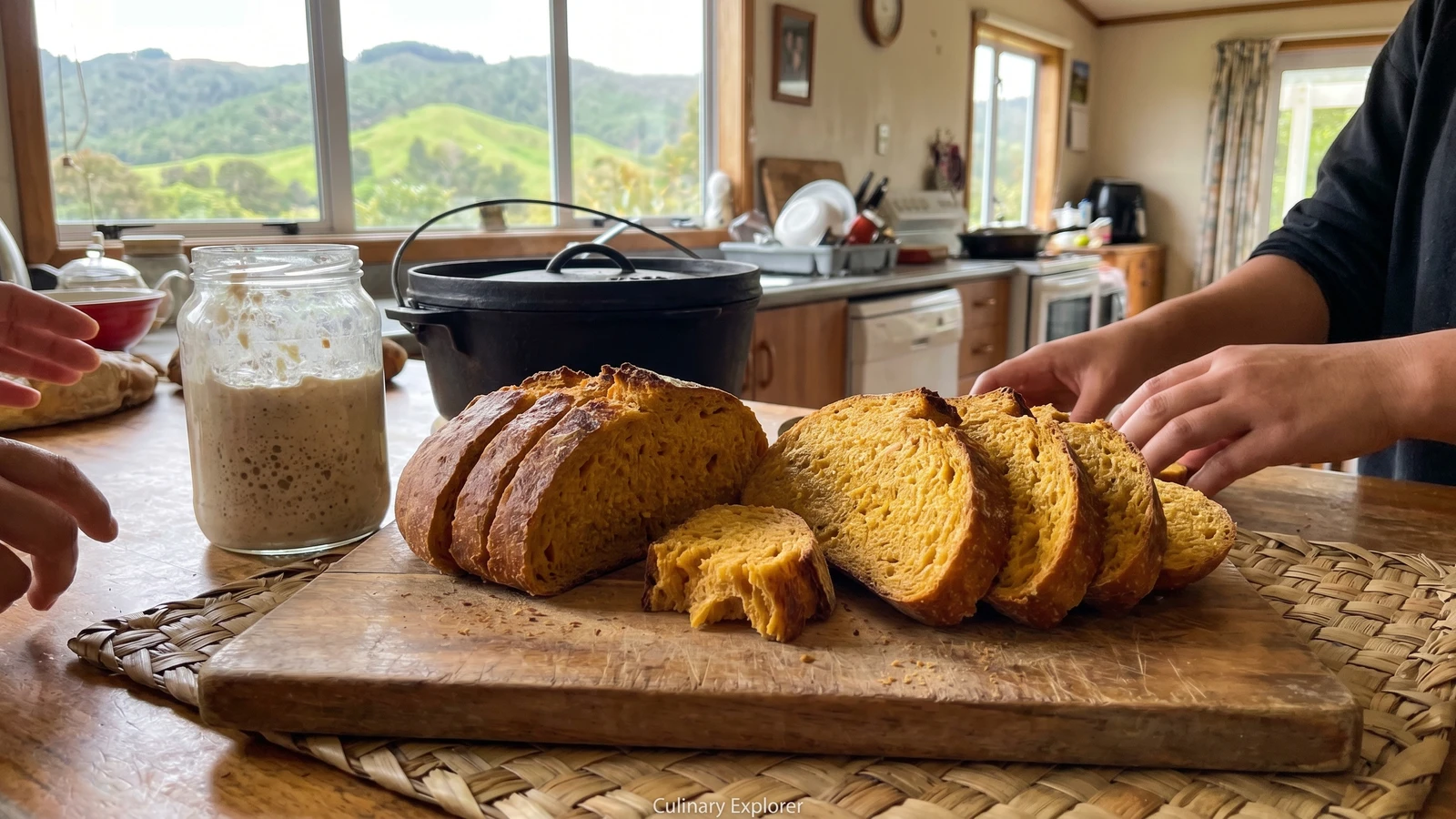
Māori rēwena parāoa from Aotearoa, raised by a living kūmara bug instead of commercial yeast, folded with mashed sweet potato and wholemeal until the loaf bakes tangy, tender, and ready for a shared table.
The canoe came south carrying relatives, not cargo. In Aotearoa, this is Māori kai, Māori food, and the carried relative here is kūmara, sweet potato, coaxed into cooler whenua, land, by people who knew how to read a slope, a frost, a storage pit. Hawaiʻi calls its cousin ʻuala. The Cook Islands and Rapa Nui keep close cousins of that name too. One ocean, one canoe, one root.
Rēwena parāoa, fermented bread, came later, when flour entered the house and Māori cooks made a living bug do the lifting. No packet yeast here. The rēwena bug is the starter, a jar that bubbles and smells gently sour, a little sweet, a little earthy, and if you treat it right it keeps going from loaf to loaf. Like any living thing, it tells on you. Too cold, it sulks. Too hot, it dies. No blame the bug. Feed it, warm it, wait.
I cook this one open-handed because Aotearoa is not my home seat. My hands learned kalo on Oʻahu, but this bread belongs to Māori whānau, family, and to the marae, the communal meeting ground, where food carries relationship as much as hunger. For the deep tikanga, the right customs, of the marae table, sit with Māori elders and tradition-bearers. They should tell their own story.
In your kitchen, keep it simple. Let the bug get lively, fold in the mashed kūmara and wholemeal, and give the dough the time it asks for. The loaf should come out with a brown crust, a soft golden crumb, and that quiet sour edge that says somebody kept the line alive.
Long before flour entered Māori kitchens, kūmara had already traveled a remarkable road: from the Americas into Eastern Polynesia, then south to Aotearoa with Māori ancestors, where storage pits and warm north-facing gardens helped it live in a cooler whenua. Rēwena parāoa grew later, in the nineteenth century, after wheat flour and introduced potatoes moved through mission and settler economies; Māori cooks made a potato ferment, the rēwena bug, lift bread without commercial yeast. This kūmara loaf brings the older canoe crop into that later Māori sourdough, deep food and mission-era bread meeting on one family table.
Quantity
1 small (about 8 ounces / 225 g)
peeled and diced
Quantity
1 1/2 cups
for cooking the kūmara, reserved after simmering
Quantity
1 tablespoon
Quantity
1 cup
Quantity
1 cup
bubbly and pleasantly sour
Quantity
1 cup
roasted or steamed, cooled
Quantity
2 to 2 1/2 cups
use the last 1/2 cup only as needed
Quantity
1 cup
Quantity
2 tablespoons
Quantity
1 1/2 teaspoons
Quantity
2 tablespoons
plus a little for greasing
Quantity
1/2 to 3/4 cup
Quantity
1 tablespoon
for brushing the crust
Quantity
1/4 cup flour, 1/4 cup water, pinch sugar
for feeding the saved bug
| Ingredient | Quantity |
|---|---|
| kūmara (sweet potato)peeled and diced | 1 small (about 8 ounces / 225 g) |
| waterfor cooking the kūmara, reserved after simmering | 1 1/2 cups |
| raw sugar | 1 tablespoon |
| strong bread flour or all-purpose flour | 1 cup |
| active rēwena bugbubbly and pleasantly sour | 1 cup |
| mashed kūmararoasted or steamed, cooled | 1 cup |
| strong bread flouruse the last 1/2 cup only as needed | 2 to 2 1/2 cups |
| wholemeal flour | 1 cup |
| raw sugar | 2 tablespoons |
| fine sea salt | 1 1/2 teaspoons |
| neutral oil or melted butterplus a little for greasing | 2 tablespoons |
| lukewarm kūmara cooking water or plain water | 1/2 to 3/4 cup |
| melted butter (optional)for brushing the crust | 1 tablespoon |
| flour, lukewarm water, and raw sugarfor feeding the saved bug | 1/4 cup flour, 1/4 cup water, pinch sugar |
Peel and dice the kūmara, then simmer it with 1 1/2 cups water until a fork slides through with no fight, 12 to 15 minutes. Save the cooking water, mash the kūmara smooth, and let both cool until just warm to the touch. Hot mash kills the life you are trying to wake up.
In a 1-quart glass jar, stir 1/2 cup mashed kūmara, 1 cup lukewarm kūmara cooking water, 1 tablespoon raw sugar, and 1 cup flour into a thick batter. Cover with cloth or a loose lid. Do not seal it tight; the rēwena bug, the living starter, needs air and room.
Leave the jar in a warm spot for 24 to 72 hours, stirring once a day, until it bubbles through the top, smells gently sour and sweet, and lifts a little after feeding. If the kitchen is cold, wrap the jar in a towel and give it more time. No blame the bug. Feed it, warm it, wait.
Before you mix the loaf, spoon 2 tablespoons active bug into a clean small jar. Feed it with 1/4 cup flour, 1/4 cup lukewarm water, and a pinch of sugar, then refrigerate once it bubbles. That's how a rēwena line stays alive, not owned, just carried.
In a wide bowl, combine 1 cup active rēwena bug, 1 cup cooled mashed kūmara, 2 tablespoons raw sugar, oil or melted butter, and 1/2 cup lukewarm kūmara cooking water. Stir in the wholemeal flour, 2 cups of the bread flour, and the salt until a shaggy dough gathers. It should feel soft and a little tacky, not pourable and not stiff like clay.
Knead 8 to 10 minutes, adding the remaining 1/2 cup bread flour only as needed, until the dough smooths out and pushes back under your palm. The kūmara makes it tender and a little sticky, so don't bury it in flour. When the surface turns satin and the dough holds its shape, stop.
Oil the bowl lightly, set the dough back in, cover, and let it rise 4 to 8 hours, until swollen, airy, and nearly doubled. Rēwena keeps its own time. In a warm whānau kitchen it may move fast; in a cold Aotearoa morning it may ask for the whole day.
Press the dough down gently, shape it into a tight loaf, and set it seam-side down in a greased 9 by 5-inch tin or a floured cloth-lined basket for a round. Cover and proof 1 1/2 to 3 hours, until puffy and slow to spring back when touched.
Heat the oven to 375F. Bake the tin loaf 40 to 45 minutes, or bake a round in a covered Dutch oven 25 minutes covered and 15 to 20 minutes uncovered, until the crust is deep brown, the loaf sounds hollow, and the center reaches about 200F. Brush with butter if you like, then cool at least 45 minutes before slicing so the crumb sets instead of smearing under the knife.
Slice it thick, not precious. Eat it with butter, honey, soup, stew, or whatever is on the table that day. This is comfort food and make-ahead food, good for a potluck, good for the lunch bag, good for the one more person who always seems to arrive when bread is warm.
1 serving (about 85g)
Culinary guides, cultural storytelling, and the editorial depth that makes cooking meaningful.
Discover Culinary ExplorerChef Makoa
Soft Māori boil-up dumplings from Aotearoa, dropped over pork, kūmara, and pūhā so they steam tender on top and drink in the broth underneath.
Chef Makoa
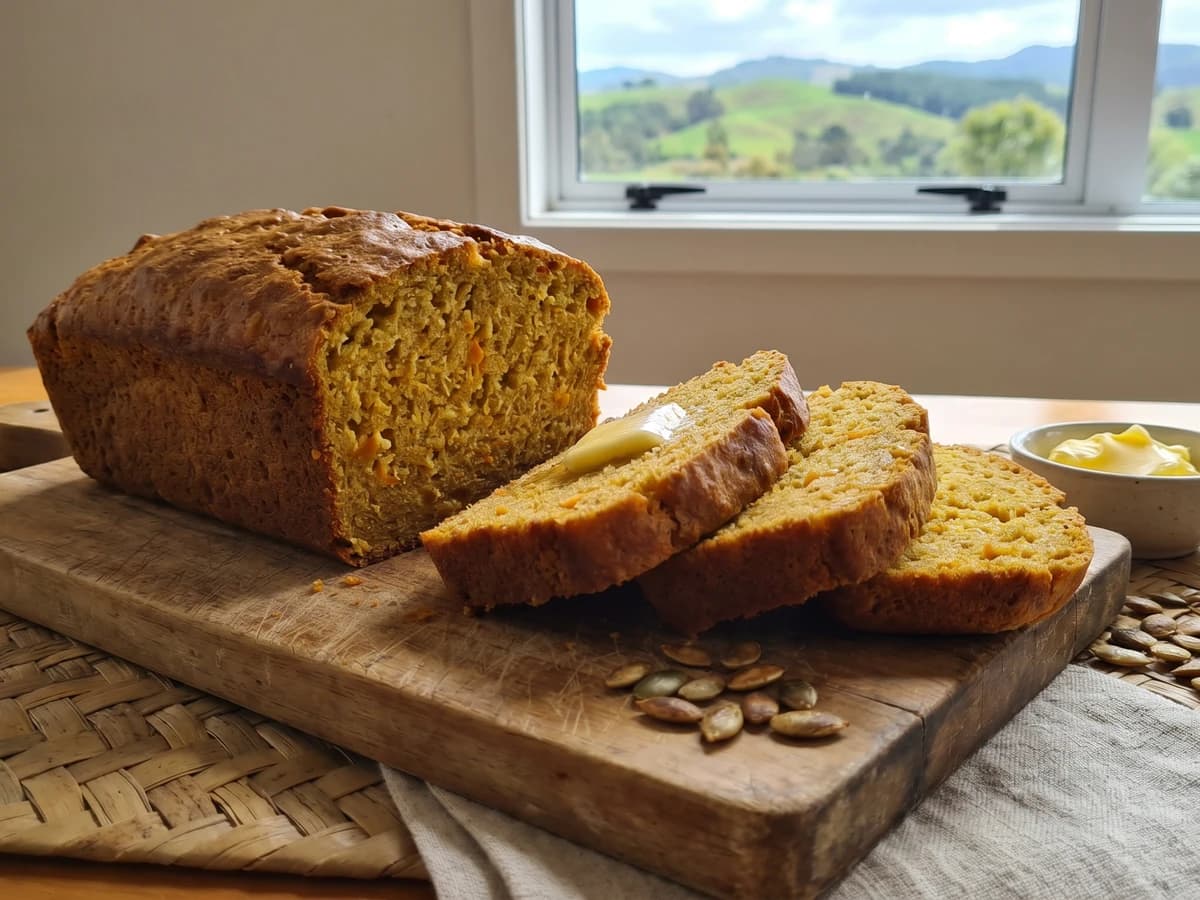
Māori kūmara, the sweet potato of Aotearoa, folded into a soft quick bread with a tender crumb, a little sweetness, and enough loaf for the whānau table.
Chef Makoa
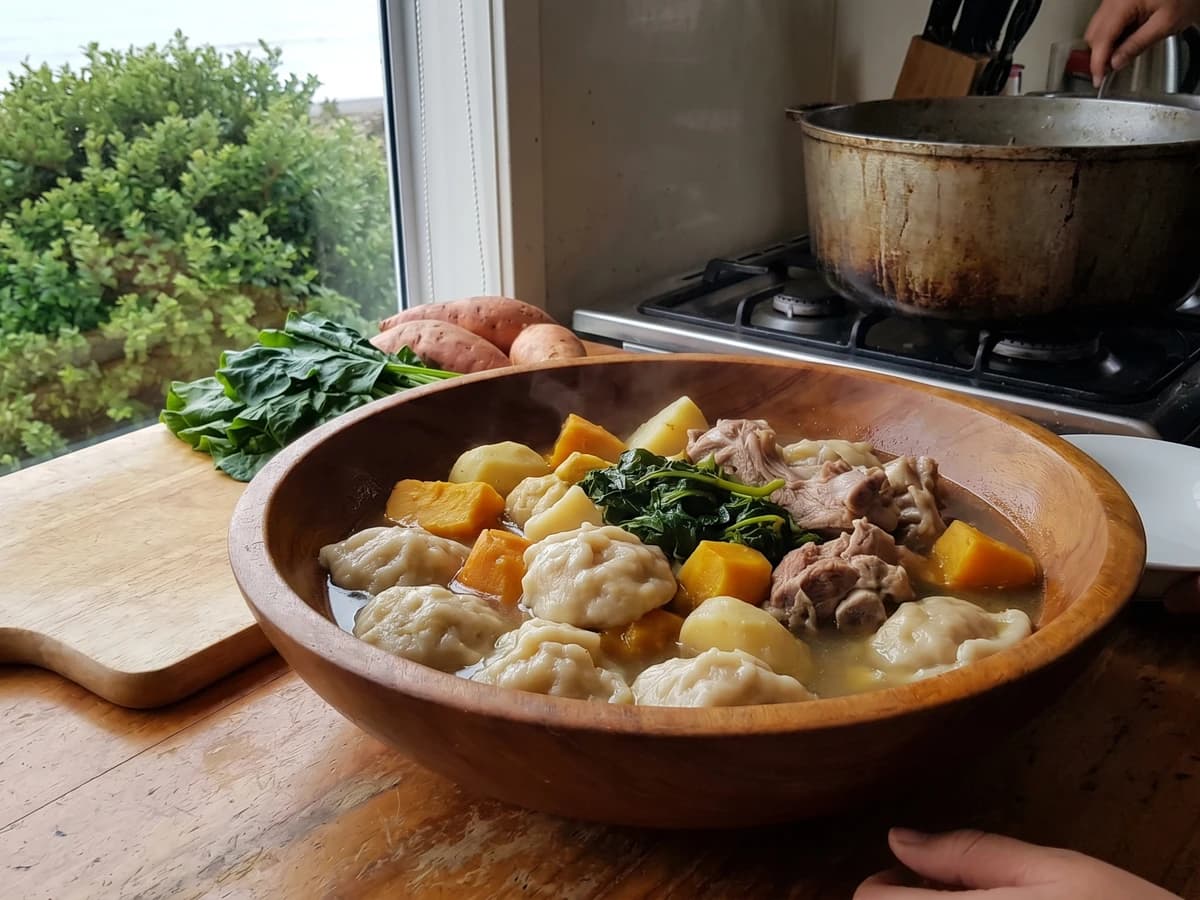
Soft Māori doughboys dropped into the boil-up pot, where flour, fat, and broth turn into tender motumotu beside pork bones, kūmara, and greens from Aotearoa.
Chef Makoa
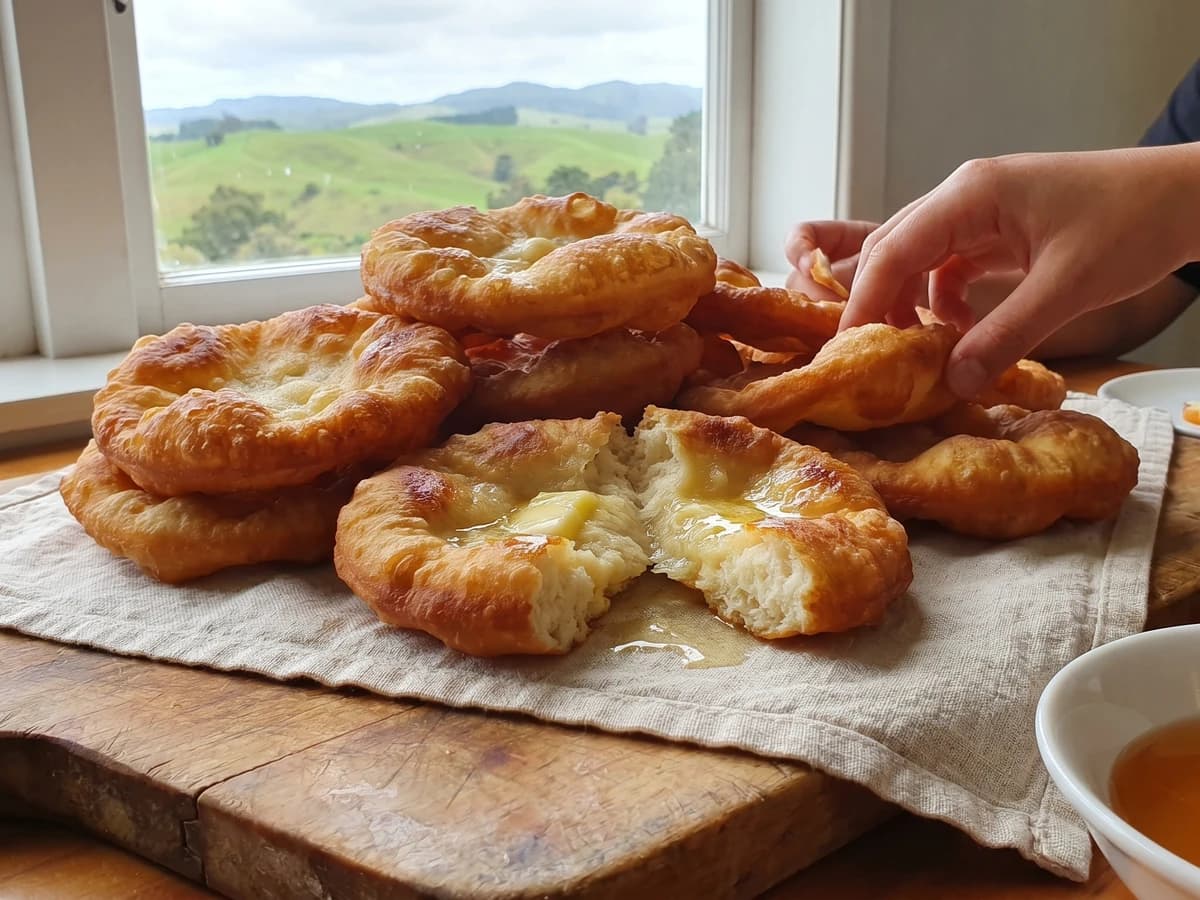
Aotearoa's parāoa parai is kai Māori for the marae table and the whānau kitchen, risen dough fried golden, split warm, and eaten with butter.