
Chef Makoa
Purini Mamaoa (Aotearoa Māori Burnt-Sugar Steamed Pudding)
Aotearoa Māori purini mamaoa, dark from burnt sugar and slow in the pudding basin, turned out for Christmas or the hāngī table and finished with warm custard.
A cooking platform built around craft, culture, and the stories behind what we eat.
Created by
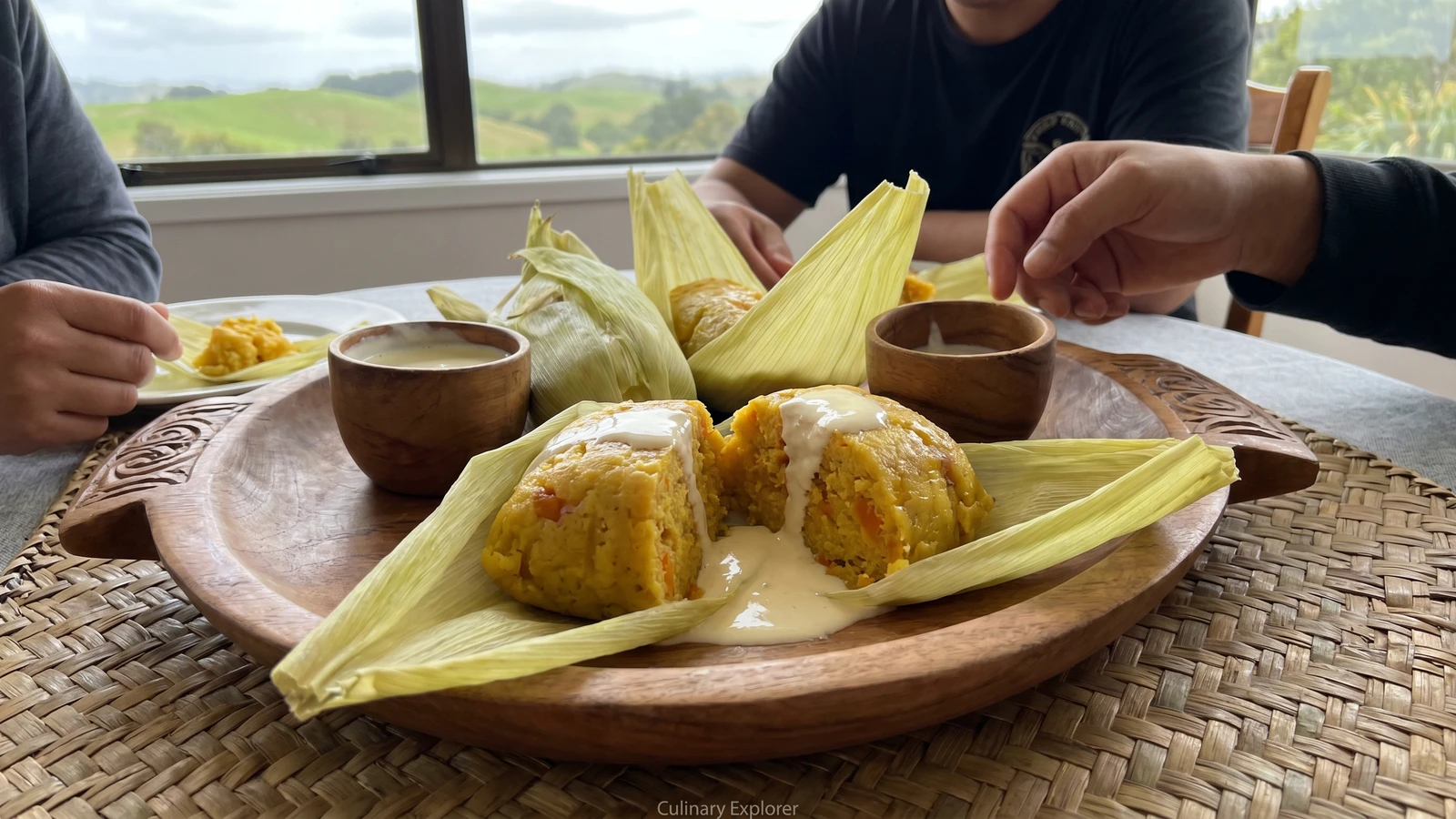
Aotearoa's kānga waru, grated corn and kūmara folded back into corn husks, steamed until dense and sweet, then served warm with cream for Matariki or the whānau table.
The first time a Māori auntie put kānga waru in my hand, she didn't explain it like a dessert. She just said, eat, boy. The pudding was wrapped in its own husk, warm and heavy, corn and kūmara pressed together until it felt almost like holding the field itself. This is kai Māori, food of Aotearoa, the south point of our Triangle, where the whenua, the land, keeps a colder rhythm than my home island and the people know how to make sweetness out of patience.
Kūmara, the sweet potato, is the old traveler here, one of those crops carried and guarded across the Moana until it rooted in Aotearoa and became central to Māori gardening, storage, and feasting. Kānga, corn, came later and Māori hands made it their own. That matters. Deep food and later food can sit at the same table when the people keep the relationship straight. One ocean, one canoe, one root, and then the living kitchen keeps adapting.
Kānga waru has cousins in feeling more than in exact form: the pounded starches of Hawaiʻi poi and paʻiʻai, the Tahitian poʻe, the Cook Islands' soft starch puddings, the leaf-and-coconut parcels of Sāmoa, Tonga, and the Cooks. Different hands, same law. Grate the crop, wrap it, let heat and time do the work. No hurry the pudding. If you rush it, it stays loose and raw-tasting. Let it go dense, golden, and set, then pour the cream like somebody in the kitchen loves you.
For the deep tikanga, the right practice of marae, tangi, and Matariki, I send you to Māori elders and tradition-bearers. That's their story to carry. I can cook this open-handed with you, name whose island it belongs to, and keep the table wide enough.
Kānga waru belongs to Māori kitchens of Aotearoa, where corn introduced after European contact was adopted into local kai and worked into older patterns of wrapping, boiling, and communal feeding. Kūmara had already been a treasured Polynesian crop in Aotearoa for centuries, stored in rua kūmara, underground pits, and tied to seasonal work and ceremony. The dish shows how Māori foodways hold both deep canoe-crop knowledge and later ingredients without blurring either one.
Quantity
8 large ears
Quantity
2 cups
peeled and finely grated
Quantity
1/2 cup
Quantity
1/3 cup
plus more to taste
Quantity
1 teaspoon
Quantity
1/2 teaspoon
Quantity
3 tablespoons
Quantity
1/2 cup
as needed
Quantity
for serving
| Ingredient | Quantity |
|---|---|
| fresh sweet corn in husks | 8 large ears |
| kūmara (Māori sweet potato)peeled and finely grated | 2 cups |
| all-purpose flour | 1/2 cup |
| sugarplus more to taste | 1/3 cup |
| baking powder | 1 teaspoon |
| fine sea salt | 1/2 teaspoon |
| melted butter or neutral oil | 3 tablespoons |
| whole milkas needed | 1/2 cup |
| cream, custard, or lightly sweetened pouring cream (optional) | for serving |
Peel the corn husks back carefully and save the widest clean inner leaves for wrapping. Soak them in warm water while you make the filling so they bend without splitting. The husk is not decoration here. It is the cooking skin, the way this pudding remembers the plant it came from.
Grate the corn kernels from the cobs into a wide bowl, catching the milk that runs from them, then scrape the cobs with the back of the knife. Fold in the grated kūmara. The mixture should look wet, golden, and a little rough, not smooth like cake batter.
Stir in the flour, sugar, baking powder, salt, and melted butter. Add milk a little at a time only if the mixture is too stiff to spoon. You want a thick batter that mounds softly, because the kūmara and corn will loosen as they cook, then settle into a dense pudding.
Lay two soaked husks crossed or slightly overlapped, spoon about half a cup of filling into the center, then fold the sides in and the ends over to make a snug parcel. Tie with thin strips of husk or kitchen string. No need make them perfect. Just seal them well enough that the pudding holds its shape.
Set the parcels seam-side down in a large steamer or a pot fitted with a rack over simmering water. Cover tight and steam for 2 to 2 1/2 hours, topping up the water as needed, until the parcels feel firm and heavy when lifted and the filling has gone dense all the way through.
Let the kānga waru rest 10 minutes before opening. The pudding should slice or spoon dense and tender, yellow-gold with orange flecks of kūmara, glossy where the corn milk has set. If the center is still loose, wrap it back up and keep steaming. No shame. No blame the pudding.
Serve warm in the opened husks with cold cream, custard, or a lightly sweetened pouring cream. Put the extras in the middle of the table. This is celebration food, Matariki food, holiday food, but it still eats like home.
1 serving (about 225g)
Culinary guides, cultural storytelling, and the editorial depth that makes cooking meaningful.
Discover Culinary ExplorerChef Makoa
Aotearoa Māori purini mamaoa, dark from burnt sugar and slow in the pudding basin, turned out for Christmas or the hāngī table and finished with warm custard.

Chef Juliette
Five almond preparations, one discipline: remove the skins cleanly, dry every kernel through, then cut, toast, or cloak it in pale caramel without letting its fragrant oils escape.

Chef Juliette
A pastry pantry lesson in one tray: filberts warmed only until their red skins release, rubbed clean, cooled, and chopped into a fragrant mise-en-place for cakes, creams, pralines, and petits fours.

Chef Juliette
The smallest pâtisserie discipline decides whether a cake leaves its mould intact: clarified butter in every corner, followed by the lightest veil of dry flour or fécule.