Chef Makoa
Kūmara Bread (Māori Sweet-Potato Loaf from Aotearoa)
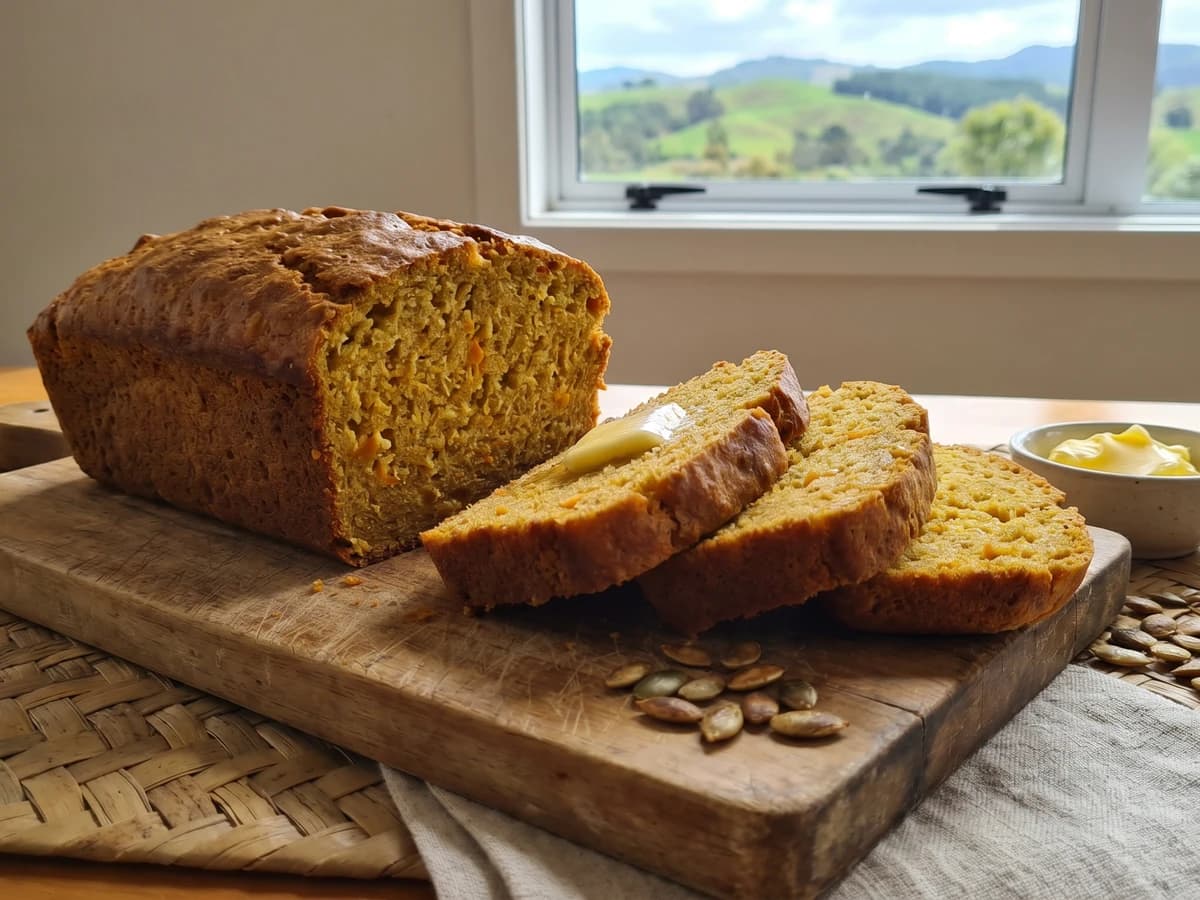
Māori kūmara, the sweet potato of Aotearoa, folded into a soft quick bread with a tender crumb, a little sweetness, and enough loaf for the whānau table.
A cooking platform built around craft, culture, and the stories behind what we eat.
Created by
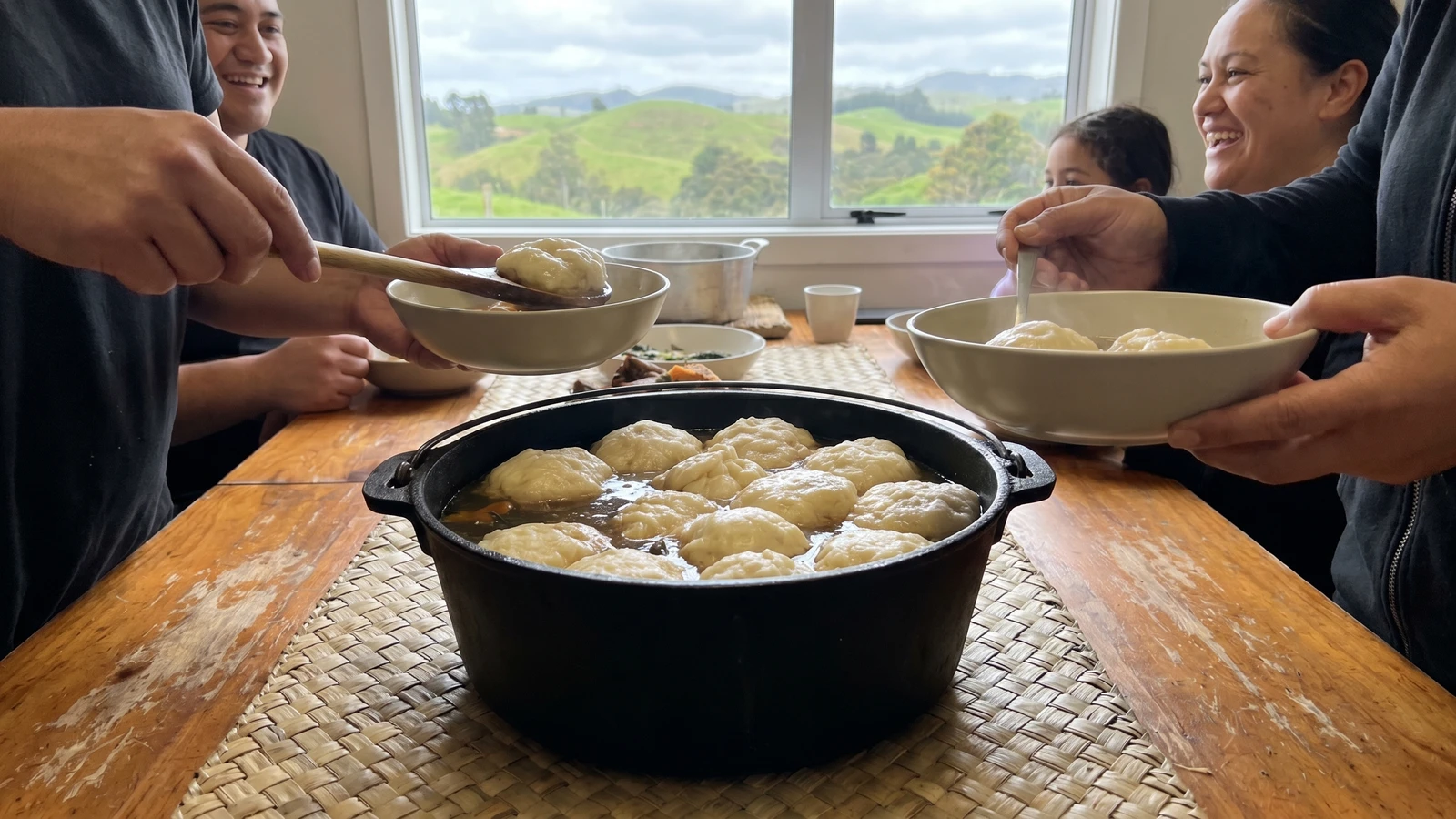
Soft Māori boil-up dumplings from Aotearoa, dropped over pork, kūmara, and pūhā so they steam tender on top and drink in the broth underneath.
Aotearoa sits down at the south of the Triangle, cool hills and cold rivers, not coconut palms and postcard heat, and the kai, the food, speaks that place. These dough boys belong there, to Māori tables, dropped over a boil-up pot with pork bones, kūmara, pūhā, and whatever the whānau has that week. I cook them open-handed, because the deep tikanga, the proper ways of marae and tangi, are for Māori elders and tradition-bearers to teach. I can stand at the stove with you. They should tell their own story.
What I love is how humble the thing is. Flour came later, after contact, same as so many everyday foods across the ocean came through rupture and trade and hard times, then the people made them feed family. Back home in Hawaiʻi we have our own post-contact comforts, plate lunch, rice, Spam, all of it sitting beside the deep foods. In Aotearoa, dough boys sit in the boil-up and turn broth into bread you can hold on a spoon.
The cousins across the Triangle show up by feeling, not by pretending they're the same dish. Sāmoa has sapasui on the modern table, Tonga has lū and corned beef, Hawaiʻi has stew over rice, and Aotearoa has this pot with pūhā and soft dumplings riding on top. One ocean, one canoe, one root, but every island's hand stays its own.
So mix gently. Drop them soft. Cover the pot and leave it alone. The dumpling should come out light, but not fancy, swollen with broth at the bottom and tender through the middle. That's comfort food doing its job.
Boil-up is kai Māori from Aotearoa, shaped after contact when pork, wheat flour, and potatoes entered Māori kitchens and met older foodways built around kūmara, greens, and communal cooking. Dough boys are part of that living post-contact table: not pre-European deep food like kūmara gardens or hāngī, but a practical dumpling that helped stretch a pot for whānau. The dish is often tied to home, marae kitchens, and tangi tables, and the deeper tikanga around those places belongs with Māori elders and cooks who carry it.
Quantity
2 cups
Quantity
4 teaspoons
Quantity
1 teaspoon
Quantity
2 tablespoons
rubbed into the flour
Quantity
3/4 cup, plus 1 to 2 tablespoons more if needed
Quantity
1 pot
with pork bones, kūmara, potato, pumpkin, and pūhā or watercress
| Ingredient | Quantity |
|---|---|
| all-purpose flour | 2 cups |
| baking powder | 4 teaspoons |
| fine sea salt | 1 teaspoon |
| cold butterrubbed into the flour | 2 tablespoons |
| cold water | 3/4 cup, plus 1 to 2 tablespoons more if needed |
| simmering Māori boil-upwith pork bones, kūmara, potato, pumpkin, and pūhā or watercress | 1 pot |
Have your boil-up already simmering, the pork soft, the kūmara, the Māori sweet potato, nearly tender, and the pūhā, the sow thistle greens, or watercress tucked down in the broth. The dough boys cook from the pot's own breath, so the surface should be moving gently, not boiling hard like it's angry.
Whisk the flour, baking powder, and salt together in a bowl, then rub in the cold butter with your fingertips until the flour feels sandy and a little rich. No need make it precious. These are weeknight dumplings, the kind that stretch a pot so the whole whānau, the family, gets fed.
Pour in the cold water and stir with a fork until a soft, shaggy dough comes together. It should hold its shape on a spoon but still look tender and a little rough. If dry flour is sitting at the bottom, add water a tablespoon at a time. If you beat it smooth, the dumplings get tough, and that's on us, not the dough.
Use two spoons or wet hands to drop walnut-to-egg-size pieces of dough over the top of the simmering boil-up, leaving a little room between them. Some can sit on the greens and meat, some can kiss the broth. That's the good part, the bottom drinks while the top steams.
Cover the pot tight and cook 15 to 18 minutes without lifting the lid, until the dough boys are puffed, matte on top, and cooked through when split. Don't keep peeking. The trapped heat is doing the work, same patience that rules the hāngī, the Māori earth oven, though this is the everyday pot, not the ceremony.
Lift the dough boys into bowls with pork, greens, kūmara, and plenty broth spooned over. The outside should be soft and glossy where it touched the soup, the inside light and warm, ready to soak up the pot. Eat what you have, and feed one more if they walk in.
1 serving (about 55g)
Culinary guides, cultural storytelling, and the editorial depth that makes cooking meaningful.
Discover Culinary ExplorerChef Makoa
Māori kūmara, the sweet potato of Aotearoa, folded into a soft quick bread with a tender crumb, a little sweetness, and enough loaf for the whānau table.

Chef Makoa
Māori rēwena parāoa from Aotearoa, raised by a living kūmara bug instead of commercial yeast, folded with mashed sweet potato and wholemeal until the loaf bakes tangy, tender, and ready for a shared table.
Chef Makoa
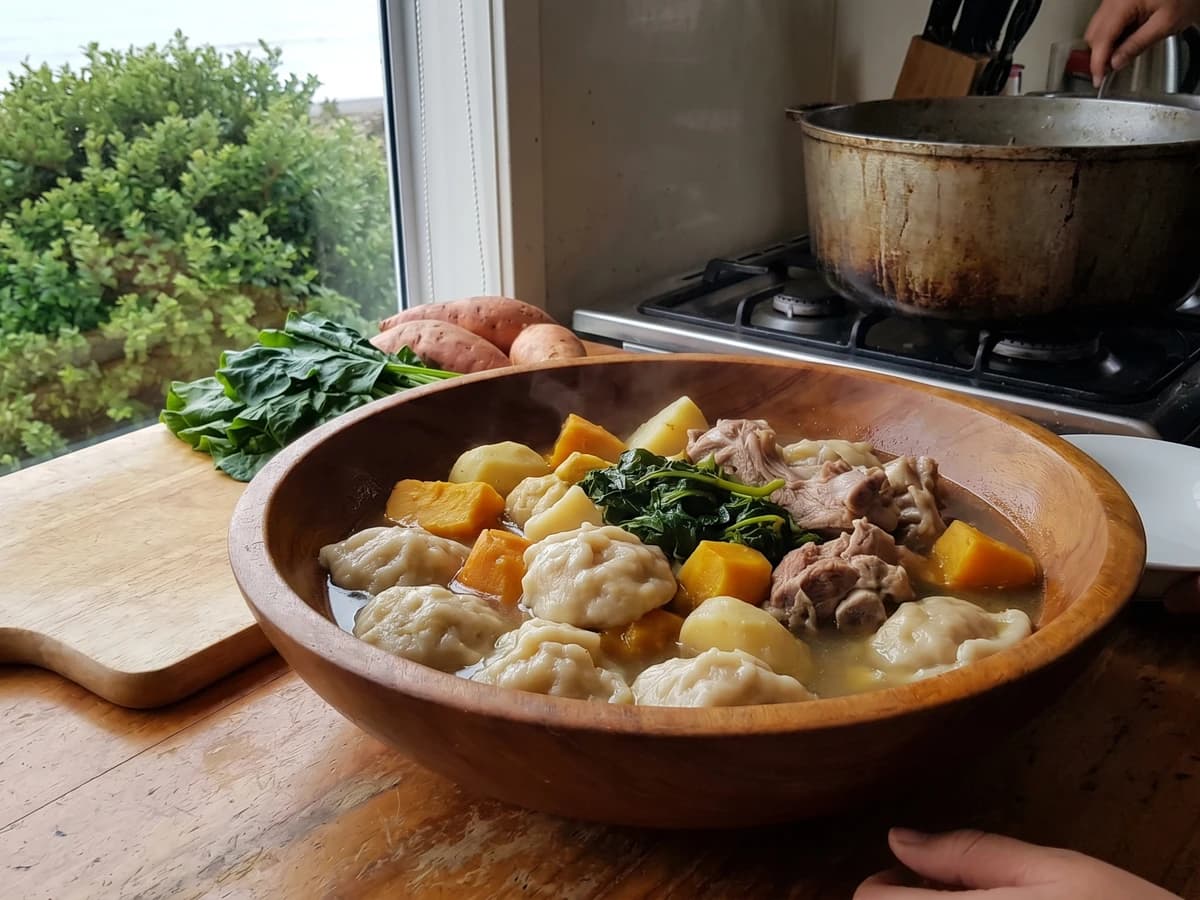
Soft Māori doughboys dropped into the boil-up pot, where flour, fat, and broth turn into tender motumotu beside pork bones, kūmara, and greens from Aotearoa.
Chef Makoa
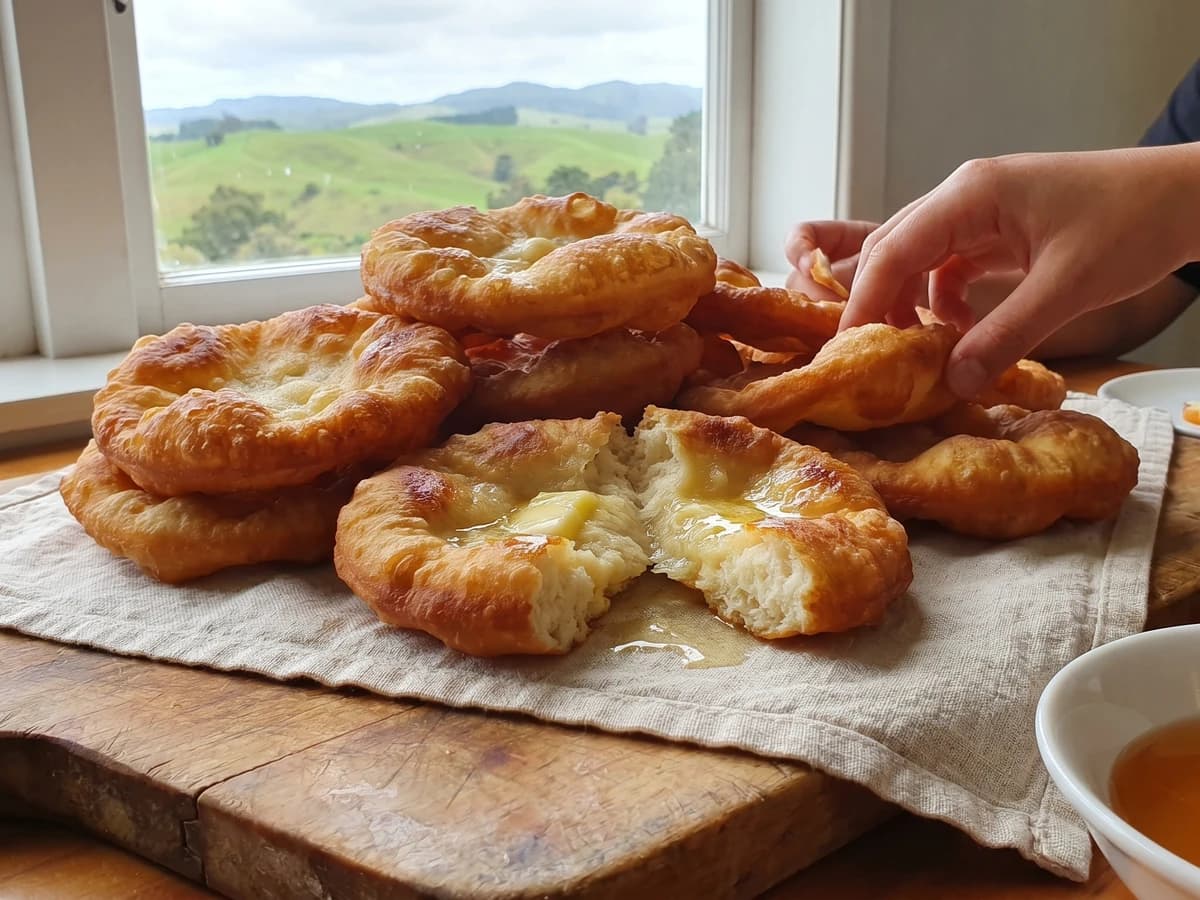
Aotearoa's parāoa parai is kai Māori for the marae table and the whānau kitchen, risen dough fried golden, split warm, and eaten with butter.