
Chef Makoa
Baked ʻUlu Coconut Pudding (Hawaiian Ripe Breadfruit Custard)
Very ripe Hawaiian ʻulu, the canoe-crop breadfruit, mashed soft with coconut milk and sugar, then baked until the middle sets like a quiet custard.
A cooking platform built around craft, culture, and the stories behind what we eat.
Created by
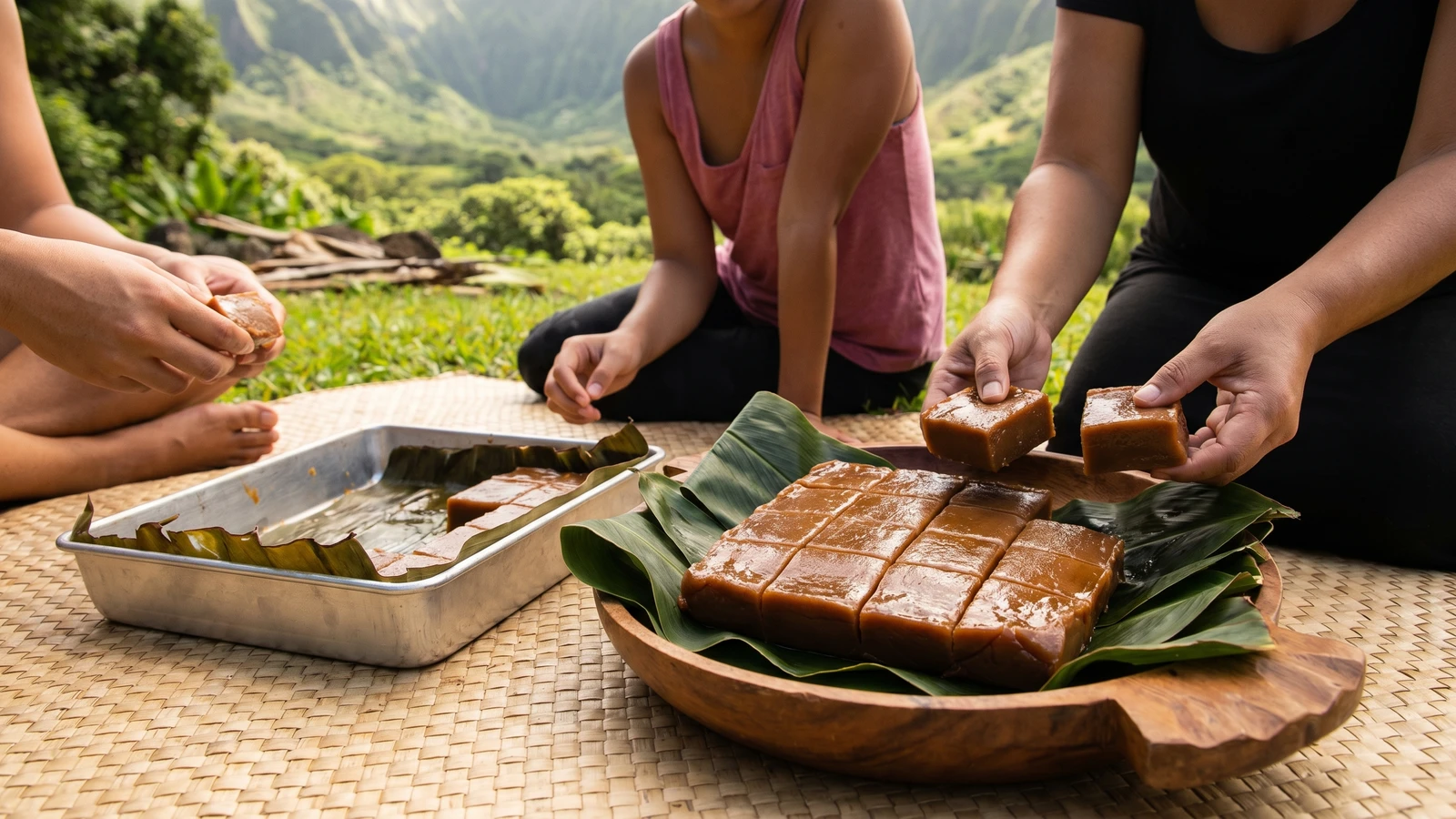
Kauaʻi's kalo country gives us kūlolo: grated taro, coconut cream, and sugar baked slow in ti leaves until dark, glossy, and firm enough to slice.
Hāloa is our elder brother, and in Hawaiʻi we don't forget that just because the food is sweet. Kūlolo belongs to Hawaiʻi, and Kauaʻi especially carries the name with pride, from Hanalei and Wailua taro country to family tables where somebody always knows which aunty makes the good one. Grated kalo, coconut cream, sugar, ti leaf, and time. That's the whole thing, and still it takes care.
My kumu would say, "No blame the taro." If kūlolo comes out pale, gritty, or thin, the kalo didn't fail you. You rushed the cook, grated it too coarse, or didn't seal the pan tight enough. The slow heat is what turns that wet grey root into something dark and sweet, almost fudge, with a little chew and a coconut gloss that catches the light when you cut it.
Across the Triangle, the cousins know this same root under their own names: talo in Sāmoa and Tonga, taro in the Cook Islands, and the pounded poʻo or popoi of the east. Some islands wrap the leaf with coconut cream, like Sāmoan palusami or Tongan lū. Hawaiʻi also pounds kalo into paʻiʻai and poi, and here we grate it for kūlolo. One ocean, one canoe, one root, but each island keeps its own hand.
Most of us aren't opening an imu, the Hawaiian earth oven, for dessert on a weeknight. So we bring it into the oven, line the pan with lāʻī, ti leaves, and cover it tight so the kitchen holds a little of that old patience. Eat what you have. Use good canned coconut cream if fresh isn't in reach. Just cook it long enough that the elder brother gives, and serve it like family food, cut in squares, enough for one more.
Kūlolo is a Hawaiian deep food, tied to kalo culture and especially remembered through Kauaʻi's taro-growing districts, where loʻi, irrigated taro patches, shaped whole valleys and family economies. Before wheat flour cakes and plantation sweets became common, canoe crops like kalo, niu (coconut), ʻulu (breadfruit), and ʻuala (sweet potato) formed the older dessert grammar, cooked in the imu or wrapped in leaf and sweetened when sugar became available. The modern foil-wrapped, oven-baked kūlolo keeps the same old method alive in a contemporary kitchen: grated root, coconut, leaf, and long heat.
Quantity
6 cups
peeled and finely grated
Quantity
1 1/2 cups
Quantity
1 cup
Quantity
1 1/2 cups
Quantity
1/2 cup
or 1/2 cup additional brown sugar
Quantity
1 teaspoon
Quantity
6 to 8
center ribs removed
Quantity
as needed
for the pan
| Ingredient | Quantity |
|---|---|
| raw kalo (taro)peeled and finely grated | 6 cups |
| thick coconut cream | 1 1/2 cups |
| coconut milk | 1 cup |
| packed brown sugar | 1 1/2 cups |
| honeyor 1/2 cup additional brown sugar | 1/2 cup |
| fine sea salt | 1 teaspoon |
| ti leaves (lāʻī) or banana leavescenter ribs removed | 6 to 8 |
| neutral oil or coconut oilfor the pan | as needed |
Heat the oven to 325F. Wipe the lāʻī, the ti leaves, clean, then pass them briefly over a burner or dip them in hot water until they soften and bend without cracking. Cut out the hard center ribs. Lightly oil a 9 by 13-inch pan and line it with overlapping leaves, shiny side down, leaving enough overhang to fold across the top.
Peel the kalo and grate it fine, almost pulpy, into a large bowl. Wear gloves if your skin is sensitive, because raw kalo can itch before the long cook settles it down. You want small shreds that will melt together, not big hard pieces that stay separate.
Stir the coconut cream, coconut milk, brown sugar, honey, and salt into the grated kalo until the mixture is thick, wet, and evenly streaked tan-grey. It should look loose enough to spread but not soupy. Scrape the bottom of the bowl well, because dry pockets of kalo make dry bites later.
Spread the kūlolo mixture into the leaf-lined pan and smooth the top with wet hands or a spatula. Fold the ti leaves over the surface, then cover the pan tightly with parchment and heavy foil. Seal every edge. The old imu held its heat and moisture with earth; your oven needs that foil to do the same work.
Bake for 3 1/2 to 4 hours, until the kūlolo is dark caramel-brown at the edges, glossy on top, and firm when pressed in the center. Don't judge it too early. The kalo needs the long heat to cook fully and lose its raw bite. If the center still feels loose, cover it again and give it another 30 minutes.
Let the pan cool at least 1 hour, then chill until firm if you want clean squares. Lift back the leaves and cut the kūlolo into small pieces with a lightly oiled knife. The best texture is dense and chewy, with a coconut sheen and a deep sweet smell, not fluffy, not cake.
Serve kūlolo at room temperature or lightly warmed, laid out in squares for the table. It belongs beside laulau, kālua puaʻa, poi, or a simple plate lunch just as easily as it belongs at a celebration. Deep food is not fancy. It's family.
1 serving (about 105g)
Culinary guides, cultural storytelling, and the editorial depth that makes cooking meaningful.
Discover Culinary ExplorerChef Makoa
Very ripe Hawaiian ʻulu, the canoe-crop breadfruit, mashed soft with coconut milk and sugar, then baked until the middle sets like a quiet custard.

Chef Makoa
A chewy, golden Hawaiʻi Local square from mochiko, butter, and coconut milk, baked in one pan until the edges pull crisp and the middle stays tender.

Chef Makoa
Soft squares of Hawaiʻi Local chichi dango, pale pink and white from the mochi-shop counter, baked with mochiko, milk, and coconut milk, then dusted until every sticky edge turns friendly.
Chef Makoa
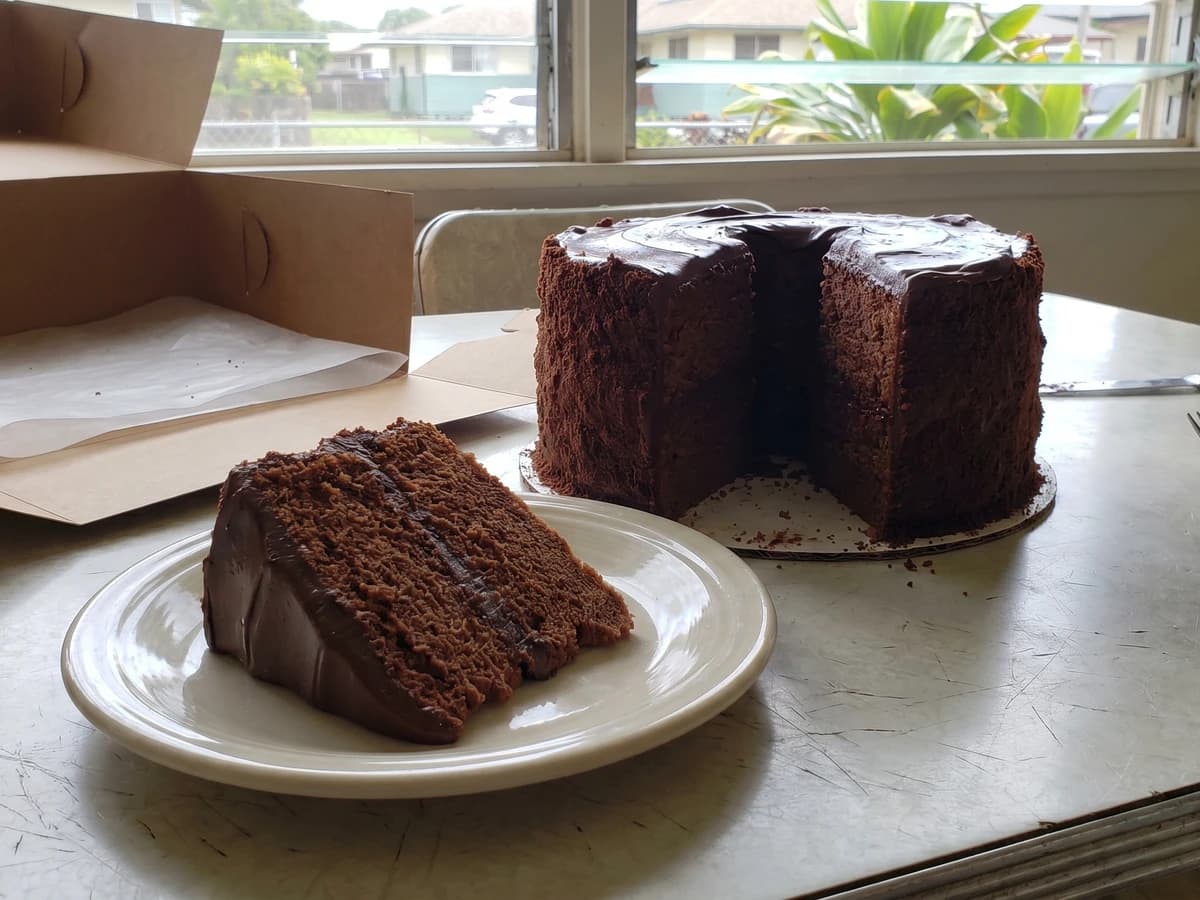
A Hawaiʻi Local chocolate-on-chocolate birthday cake: soft chiffon, cooked pudding icing, and cake crumbs pressed around the sides like the bakery case knew you were coming.