
Chef Lesia
Buzhenyna (буженина, garlic-studded roast pork)
A whole pork neck takes garlic into little knife pockets, roasts until the crust goes dark and fragrant, then rests overnight so every cold slice tastes better than shop ham.
A cooking platform built around craft, culture, and the stories behind what we eat.

Created by
These little Lenten dumplings look modest until you cut one open: sweet cabbage, creamy bean, black pepper, and onion oil doing the work meat usually gets praised for.
The filling is nearly colorless at first, pale cabbage and pale beans, and then the onions catch in sunflower oil and everything changes. The cabbage goes glossy and sweet, the beans break just enough to hold it together, and black pepper wakes the whole bowl. This is fasting food, yes. It is not punishment.
Kreplyky are folded small, smaller than most varenyky, because they belong to the kind of table where people eat by the bowlful. The dough is simple, flour and hot water, soft enough to roll thin but strong enough to keep the filling in. My aunt would write, "make them neat," which is a terrible measurement and also perfectly clear once you've made the first twenty.
The one thing that decides the dish is the onion oil. Sweat the onions slowly until the smell changes from sharp to sweet, then spoon them over the boiled dumplings at the end. If you stir all that sweetness into the filling too early, it disappears. Let it sit brightly on top, with dill, where everyone can see what kept the fast generous.
Kreplyky are a western Ukrainian fasting dumpling, especially known in Halychyna and neighboring Carpathian kitchens, where Christmas Eve and Lenten tables rely on beans, cabbage, mushrooms, poppy seed, and oil instead of meat or dairy. Their small fold and bean-cabbage filling mark them as a close cousin of varenyky, but the serving style is more frugal and communal: a deep bowl, onion oil, dill, and enough for everyone to take more.
Quantity
300g
soaked overnight, or use 700g cooked beans
Quantity
1
Quantity
1
halved, for the beans
Quantity
1 teaspoon, plus more to taste
Quantity
700g
finely shredded
Quantity
3 medium
finely diced
Quantity
5 tablespoons, plus more for tossing
Quantity
2 cloves
finely grated
Quantity
1 teaspoon
Quantity
1 tablespoon
Quantity
small bunch
finely chopped
Quantity
500g, plus more for dusting
Quantity
1 teaspoon
for the dough
Quantity
250ml
Quantity
2 tablespoons
for the dough
| Ingredient | Quantity |
|---|---|
| dried white beanssoaked overnight, or use 700g cooked beans | 300g |
| bay leaf | 1 |
| small onionhalved, for the beans | 1 |
| sea salt | 1 teaspoon, plus more to taste |
| white cabbagefinely shredded | 700g |
| onionsfinely diced | 3 medium |
| unrefined sunflower oil | 5 tablespoons, plus more for tossing |
| garlicfinely grated | 2 cloves |
| freshly ground black pepper | 1 teaspoon |
| sauerkraut brine or lemon juice (optional) | 1 tablespoon |
| dillfinely chopped | small bunch |
| plain flour | 500g, plus more for dusting |
| fine sea saltfor the dough | 1 teaspoon |
| just-boiled water | 250ml |
| sunflower oilfor the dough | 2 tablespoons |
Drain the soaked beans, cover with fresh water, and add the bay leaf and halved onion. Simmer gently until the beans are soft enough to crush between finger and thumb, then salt them and let them sit in their liquor for a few minutes. Drain well. If you're using cooked beans, warm them briefly with the bay leaf so they taste like they belonged here all along.
Warm 3 tablespoons sunflower oil in a wide pan and add two thirds of the diced onions with a pinch of salt. Let them soften slowly until the smell changes from sharp to sweet. Add the cabbage by handfuls, stirring as it wilts, then cook until it is glossy, tender, and beginning to turn pale gold at the edges.
Mash half the beans roughly with a fork and leave the rest whole. Stir them into the cabbage with the garlic, black pepper, and a spoon of sauerkraut brine or lemon juice if the filling tastes too flat. It should be savory, sweet, peppery, and firm enough to mound on a spoon. Cool completely before filling, or the dough will sulk and tear.
Put the flour and salt in a bowl, pour in the just-boiled water and oil, and stir with a spoon until shaggy. When it is cool enough to touch, knead until smooth and elastic. Cover and rest for at least thirty minutes. Hot-water dough rolls thin without getting brittle, which is exactly what these small dumplings need.
Dust the table lightly and roll half the dough thin enough that you can see the shadow of your fingers through it. Cut small rounds, about 6cm across. Keep the scraps covered, because dumpling dough dries faster than you think and then argues with your hands.
Put a small teaspoon of filling in the center of each round. Fold into a half-moon or a small triangle, pressing the edges firmly so no bean pushes through the seam. My hands remember triangles, but a half-moon feeds people just as well. Lay the finished kreplyky on a floured tray without letting them touch.
Bring a big pot of salted water to a lively boil. Drop in the kreplyky in batches and stir once so they don't catch on the bottom. When they float, give them another short minute, then lift them out with a slotted spoon into a warm bowl slicked with sunflower oil. Listen for the change: they stop sounding heavy against the spoon and start tapping lightly.
While the dumplings boil, cook the remaining onion in 2 tablespoons sunflower oil until soft, gold-edged, and sweet. Spoon the hot onion oil over the kreplyky, scatter with dill, and turn them gently so every fold shines. Serve in deep bowls, enough for eight guests or one hungry Ukrainian.
1 serving (about 315g)
Culinary guides, cultural storytelling, and the editorial depth that makes cooking meaningful.
Discover Culinary ExplorerChef Lesia
A whole pork neck takes garlic into little knife pockets, roasts until the crust goes dark and fragrant, then rests overnight so every cold slice tastes better than shop ham.
Chef Lesia
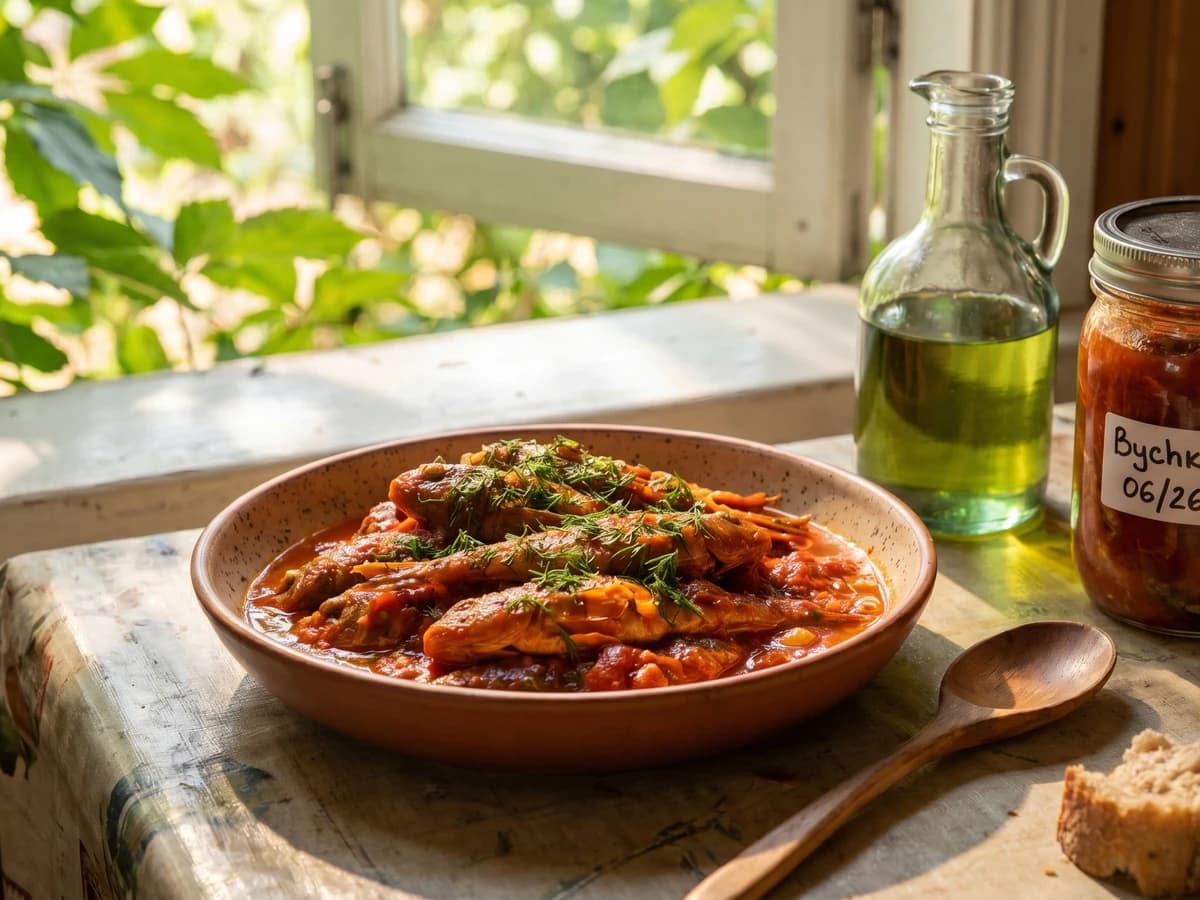
Small Azov gobies go into tomato bright as market cloth and come out soft enough that the bones give up. This is Mariupol food: cheap, red, generous, and better tomorrow.

Chef Lesia
The first sound is the meat against the board: flat, sharp, changing as the fibres loosen. Fry the cutlets fast, then let onion gravy do the soft finishing.

Chef Lesia
A heap of tiny silver fish becomes supper by the oldest Odesa trick: clean them, press them together, fry until the edges crackle, and let lemon and dill do the talking.