
Chef Jeong-sun
Andong Geonjin-guksu (Rinsed Banquet Noodles)
Andong's guest noodles, wheat and roasted soybean flour rolled thin, boiled and rinsed cold, then set in a clear chilled anchovy broth with careful strips of beef, egg, and cucumber.
A cooking platform built around craft, culture, and the stories behind what we eat.
Created by
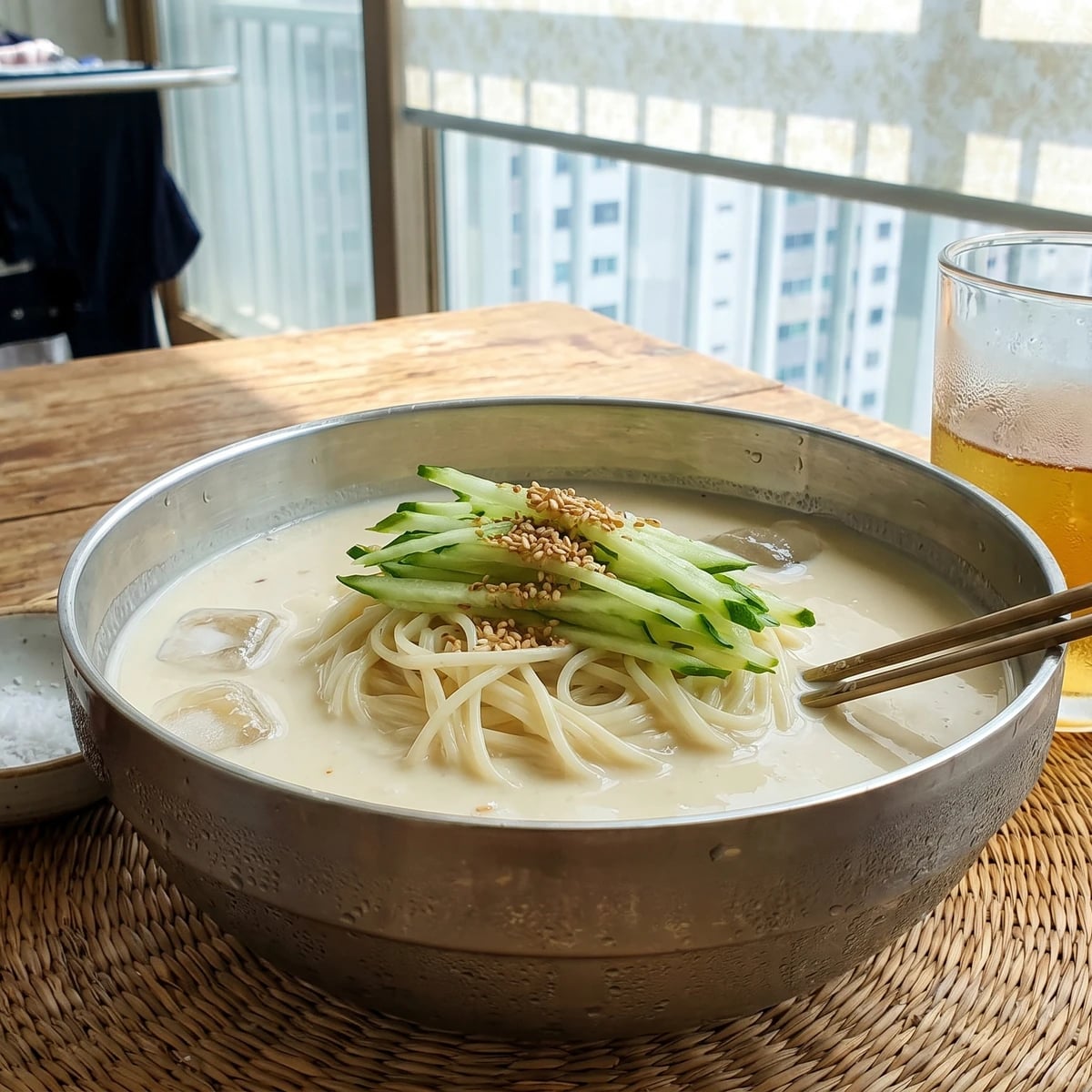
Wheat noodles in chilled, freshly ground soybean broth, creamy without dairy, quiet enough for a summer weeknight and exacting enough to punish a lazy blender.
Kong-guksu belongs to the hottest part of summer, when the market cucumbers are firm and the soybeans have to do the work of a whole meal. Cook the month you're standing in. This is not a bowl for winter longing. It is what you make when the room is warm before the stove is even lit.
The dish lives or dies by the kongmul, the soybean milk. Soak the beans until they swell, cook them just enough to lose the raw smell, then rinse off the skins if you have patience and grind them with cold water until the broth turns pale and heavy. I won't tell you this is difficult, but I will tell you where people ruin it: they overcook the beans until the flavor goes flat, or they season the whole pitcher before the noodles are in the bowl.
Salt at the table, not in the pot. Cold dulls seasoning, noodles change the balance, and every diner wants a slightly different hand. 손맛 is real. I still measure it, so it can be handed on: start with 1/4 teaspoon fine sea salt per bowl, stir, taste, then add a pinch more only if the soybean still tastes sleepy. The bowl should taste like soybeans first, sesame second, salt last.
Kong-guksu is a summer noodle dish long tied to Korea's soybean-growing home table, especially in central and southern regions where wheat noodles and cold ground bean broth made a practical meal in the heat. Written recipes became common in twentieth-century household cookbooks, but the method is older than the printed record: soaked soybeans were boiled, ground on a stone mill or in a mortar, then served cold with noodles. Its seasoning custom still divides tables, with some cooks adding sugar, especially in parts of Jeolla, while many Seoul and Gyeonggi homes keep to salt.
Quantity
1 1/2 cups (about 300g)
rinsed
Quantity
8 cups
Quantity
6 cups
Quantity
3 cups, plus more to adjust
Quantity
2 tablespoons, plus more for serving
Quantity
2 tablespoons
Quantity
400g
fresh or dried
Quantity
1 small
julienned
Quantity
8
Quantity
1 teaspoon, divided, plus more at the table
Quantity
to finish
| Ingredient | Quantity |
|---|---|
| dried yellow soybeansrinsed | 1 1/2 cups (about 300g) |
| water for soaking | 8 cups |
| water for boiling | 6 cups |
| cold filtered water | 3 cups, plus more to adjust |
| toasted sesame seeds | 2 tablespoons, plus more for serving |
| roasted peanuts or pine nuts (optional) | 2 tablespoons |
| somyeon or thin wheat noodlesfresh or dried | 400g |
| Korean cucumber or Persian cucumberjulienned | 1 small |
| ice cubes (optional) | 8 |
| fine sea salt | 1 teaspoon, divided, plus more at the table |
| toasted sesame seeds (optional) | to finish |
Put the soybeans in a large bowl and cover with 8 cups water. Soak 8 to 12 hours at room temperature, until the beans are plump and split cleanly when pressed. Do not shorten this with hard boiling from dry. A soaked bean cooks evenly, and even cooking is what keeps the broth clean instead of chalky.
Drain the soaked beans and put them in a pot with 6 cups fresh water. Bring to a boil, then reduce to a steady simmer and cook 12 to 15 minutes, skimming the foam, until the raw bean smell is gone and the beans crush softly between your fingers. Stop there. Overcooked beans taste tired, and kong-guksu has nowhere to hide that.
Drain the beans and rinse under cold water until cool enough to handle. Rub them between your palms in a bowl of water to loosen the skins, then pour off the floating skins. Repeat 3 or 4 times. You do not need to catch every skin, but removing most of them makes the broth smoother and cleaner on the tongue.
Blend the cooked beans with 3 cups cold filtered water, 2 tablespoons toasted sesame seeds, and the peanuts or pine nuts if using. Work in batches if your blender is small. Blend 2 full minutes per batch, until the kongmul is pale, thick, and pourable. Add cold water 1/4 cup at a time if it is too heavy; it should coat a spoon lightly, not sit like porridge.
Pour the soybean broth into a covered container and chill at least 1 hour, or set the container in an ice bath for 20 minutes if dinner is close. Do not add all the salt now. Stir in only 1/4 teaspoon salt to wake the soybean flavor, then leave the real seasoning for the bowls.
Bring a large pot of water to a hard boil. Add the somyeon and stir so the strands do not cling. Cook according to the package, usually 3 to 4 minutes, adding a small cup of cold water when the foam rises. That old habit calms the boil and helps the noodles cook through without breaking.
Drain the noodles and rinse under cold running water, rubbing them firmly between your hands until they feel cold and slippery no longer. This washes away surface starch. If you leave the starch on, the noodles muddy the soybean broth before the bowl reaches the table. Drain very well.
Divide the cold noodles among 4 chilled bowls and pour about 3/4 cup chilled soybean broth over each portion. Add 1 or 2 ice cubes if the day is truly hot. Top with julienned cucumber and a small pinch of toasted sesame seeds. Serve immediately with fine sea salt on the side, telling each person to begin with 1/4 teaspoon, stir, taste, and adjust by the pinch.
1 serving (about 460g)
Culinary guides, cultural storytelling, and the editorial depth that makes cooking meaningful.
Discover Culinary Explorer
Chef Jeong-sun
Andong's guest noodles, wheat and roasted soybean flour rolled thin, boiled and rinsed cold, then set in a clear chilled anchovy broth with careful strips of beef, egg, and cucumber.

Chef Jeong-sun
Cold somyeon tossed fast with chopped kimchi, cucumber, and a measured sweet-tart gochujang sauce; the summer noodle that asks for hard rinsing, quick hands, and no leftovers.

Chef Jeong-sun
Hamhung's chewy starch noodles tossed cold in a measured sweet-hot gochujang sauce, not drowned in it, finished with crisp pear, cucumber, sesame, and either skate hoe or cold beef.

Chef Jeong-sun
Dark acorn and buckwheat noodles in a cold anchovy-kelp broth, set with separately seasoned greens and cucumber so the acorn's faint bitterness stays honest and clear.