
Chef Takumi
Aji Fry (アジフライ, panko-fried horse mackerel)
Aji fry is weeknight fish with no mystery: fresh horse mackerel opened cleanly, breaded lightly, and fried until the panko crackles while the flesh stays sweet.
A cooking platform built around craft, culture, and the stories behind what we eat.

Created by
Kisu is the quiet fish on a tempura plate: small, sweet, and best in summer, opened neatly so the flesh cooks before the batter has time to grow heavy.
Kisu looks more delicate than it behaves. That is kind of it. A small summer fish, butterflied open and fried for less than a minute, becomes the quietest piece on a tempura plate: sweet, clean, and pale, with no need for a loud sauce to announce itself.
The first secret is not the batter. It is the fish. Kisu, Japanese sand whiting, should be glistening fresh, firm, and faintly sweet-smelling, never strong. This is 旬 (shun), the fish at its prime in warm months, and the season does more work than the cook. If the fish is tired, don't make tempura of it. Nothing hidden means nothing rescued under batter.
Then comes the cut. We open the fish from the belly, remove the backbone, and leave the two fillets joined like a small fan. This shape is not decoration for its own sake. It gives the oil a thin, even piece to cook, so the flesh sets quickly while the batter stays light. Let the knife do some of the seasoning before the oil ever sees it.
Tempura frightens people because oil has a reputation for mischief. Here the rule is plain: cold batter, hot oil, and no fussing. Mix the batter only until streaky, because a smooth batter has been worked too much and turns bready. Fry the kisu once, briefly, and serve it at once with tentsuyu, grated daikon, and lemon or sudachi. 本物 (honmono) is often only this: the right fish, cut cleanly, given room.
Tempura took shape in Japan after Portuguese contact in the sixteenth century, but by the Edo period it had become a distinctly Japanese fried food sold at street stalls in Edo, today's Tokyo. Kisu became a favored summer tane, or tempura item, because the small fish could be opened flat and fried quickly while keeping its clean sweetness. In Edo-style tempura, lighter fish such as kisu often appear before richer items, a sequence built by method and weight rather than by a fixed menu.
Quantity
8 small fish
scaled, gutted, and butterflied
Quantity
as needed
for lightly salting the fish
Quantity
1/2 cup
for dusting
Quantity
1 large
Quantity
1 cup
Quantity
1 cup
for batter
Quantity
as needed
for deep-frying
Quantity
2 cups
for dashi
Quantity
1 piece (about 5g)
Quantity
10g
Quantity
1/2 cup
for tentsuyu
Quantity
2 tablespoons
Quantity
2 tablespoons
Quantity
1/4 cup
lightly drained
Quantity
for serving
| Ingredient | Quantity |
|---|---|
| kisu (sand whiting)scaled, gutted, and butterflied | 8 small fish |
| sea saltfor lightly salting the fish | as needed |
| all-purpose flourfor dusting | 1/2 cup |
| cold egg | 1 large |
| ice-cold water | 1 cup |
| cold all-purpose flourfor batter | 1 cup |
| vegetable oil or rice bran oilfor deep-frying | as needed |
| cold waterfor dashi | 2 cups |
| konbu (dried kelp) | 1 piece (about 5g) |
| katsuobushi (bonito flakes) | 10g |
| dashifor tentsuyu | 1/2 cup |
| soy sauce | 2 tablespoons |
| mirin | 2 tablespoons |
| grated daikonlightly drained | 1/4 cup |
| lemon wedges or sudachi halves (optional) | for serving |
Wipe the konbu with a damp cloth, but don't wash it. Put it in 2 cups cold water and warm it slowly over low heat. Pull the konbu when the water trembles and small bubbles climb the sides, before it boils. Boiling the kelp gives the stock a dull bitterness, and this sauce needs a clean base.
Bring the konbu water just to a gentle boil, add the katsuobushi all at once, and take the pot off the heat. Let the flakes sink for two minutes, then strain through a cloth without squeezing. Measure 1/2 cup dashi into a small pot with the soy sauce and mirin, warm just until the raw edge of the mirin softens, and set aside.
If your fishmonger has not done it, lay each kisu belly-side up and open it along the belly with a small sharp knife. Press it flat, lift out the backbone, and leave the two sides joined at the back so the fish opens like a fan. Trim any small rib bones you can feel. The shape matters because thin, even flesh cooks before the batter darkens.
Pat the fish dry, inside and out, then sprinkle very lightly with sea salt and leave for 5 minutes. Wipe away any moisture that beads on the surface. Salt tightens the flesh a little and draws off surface water, and dry fish takes a cleaner coat of flour than wet fish ever will.
Pour oil into a deep pot to a depth of about 5cm and heat to 175 to 180 C. If you don't have a thermometer, drop in a little batter: it should sink slightly, rise quickly, and float with small lively bubbles. Too cool and the fish drinks oil. Too hot and the batter colors before the flesh has set.
Beat the cold egg lightly with the ice-cold water, then add the cold flour and stir with chopsticks only a few times. Leave lumps and streaks. A smooth batter means you have worked the flour too much, and tempura batter punishes industry by turning heavy.
Dust each butterflied kisu lightly with flour and shake off the excess, especially along the cut face. This dry veil helps the batter cling in a thin coat. Too much flour gives you paste between fish and batter, which is not a prize anyone should pursue.
Dip one kisu into the batter, let the excess drip for a breath, and lower it into the oil skin-side down. Fry for 40 to 60 seconds, turning once if needed, until the batter is pale and crisp and the fish has just set. Work in small batches so the oil stays hot and the pieces have room.
Lift the kisu to a rack or folded paper and let it drain for a few seconds. Serve at once with warm tentsuyu, grated daikon, and lemon or sudachi. Tempura waits badly, so bring people to the table before the fish goes into the oil, not after.
1 serving (about 150g)
Culinary guides, cultural storytelling, and the editorial depth that makes cooking meaningful.
Discover Culinary ExplorerChef Takumi
Aji fry is weeknight fish with no mystery: fresh horse mackerel opened cleanly, breaded lightly, and fried until the panko crackles while the flesh stays sweet.
Chef Takumi
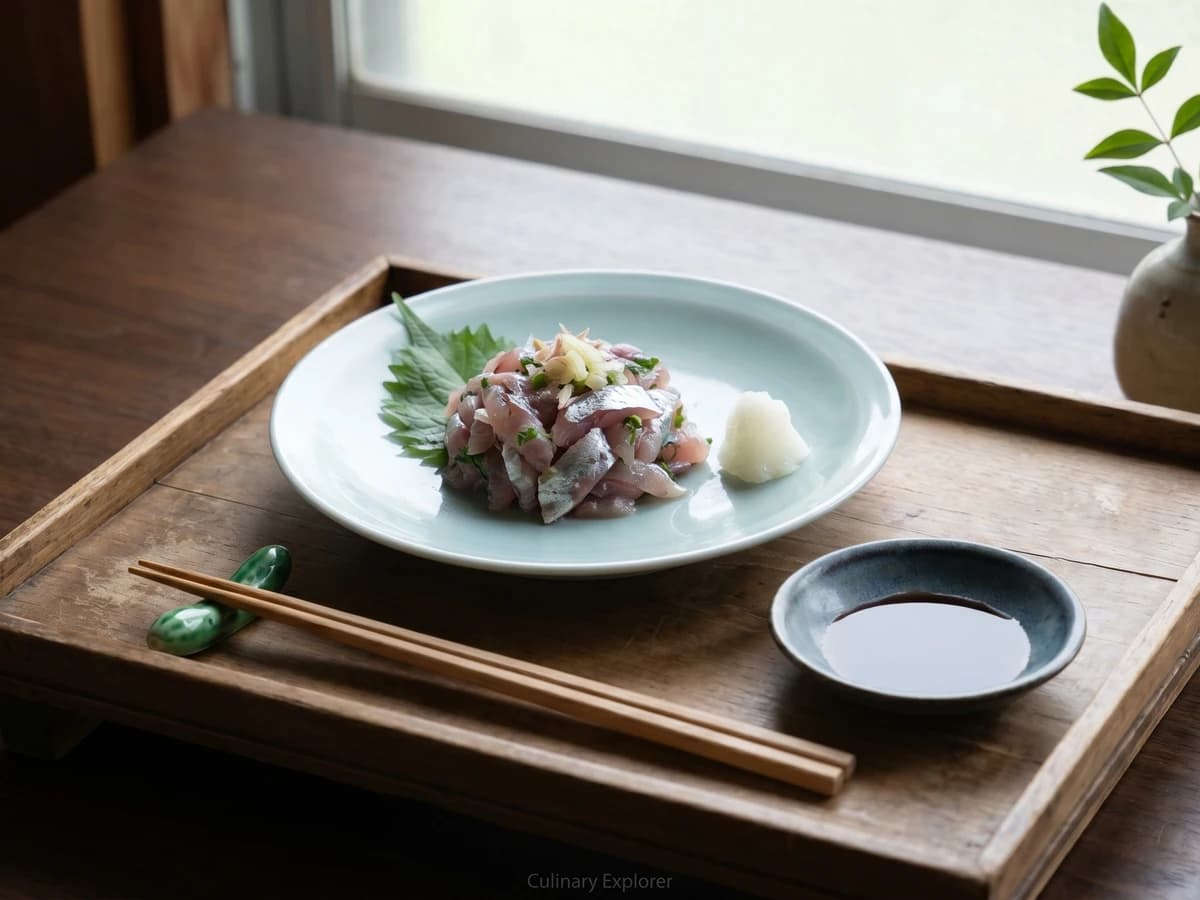
Summer horse mackerel, chopped just enough to catch ginger and scallion, becomes a cool, clean main dish with rice. The secret is fresh fish and a knife that does not bruise it.
Chef Takumi
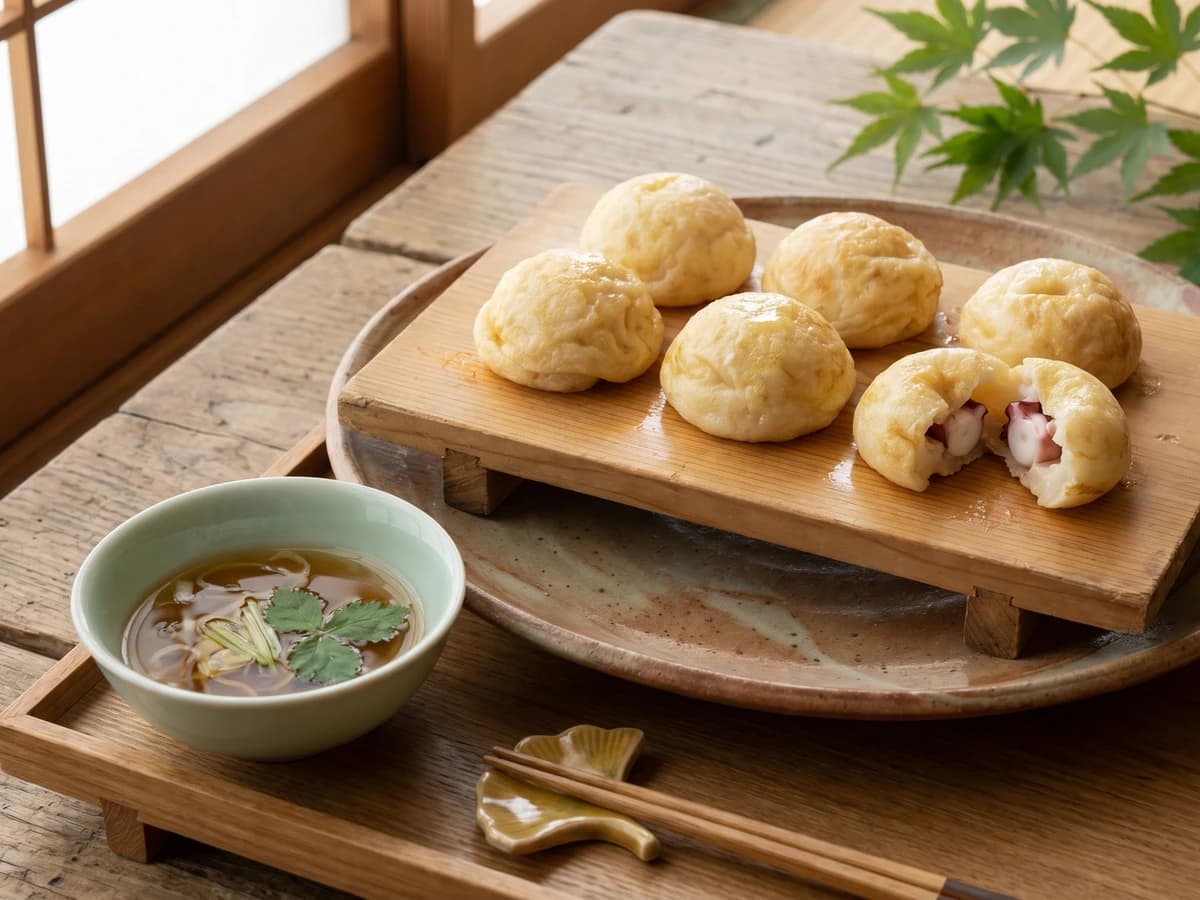
Akashi-yaki is not sauced takoyaki. It is egg-rich batter, tender octopus, and clear dashi, cooked pale and soft so each ball can be dipped like a small custard dumpling.

Chef Takumi
A whole anago looks like a test of nerve. It is mostly good sourcing, a dry skin, cold batter, and oil hot enough to leave the eel sweet under its lace.