
Chef Zohra
Baghrir (بغرير)
The lacy Moroccan pancake of fine semolina, cooked on one side only so every little hole stays open for warm butter and honey.
A cooking platform built around craft, culture, and the stories behind what we eat.
Created by
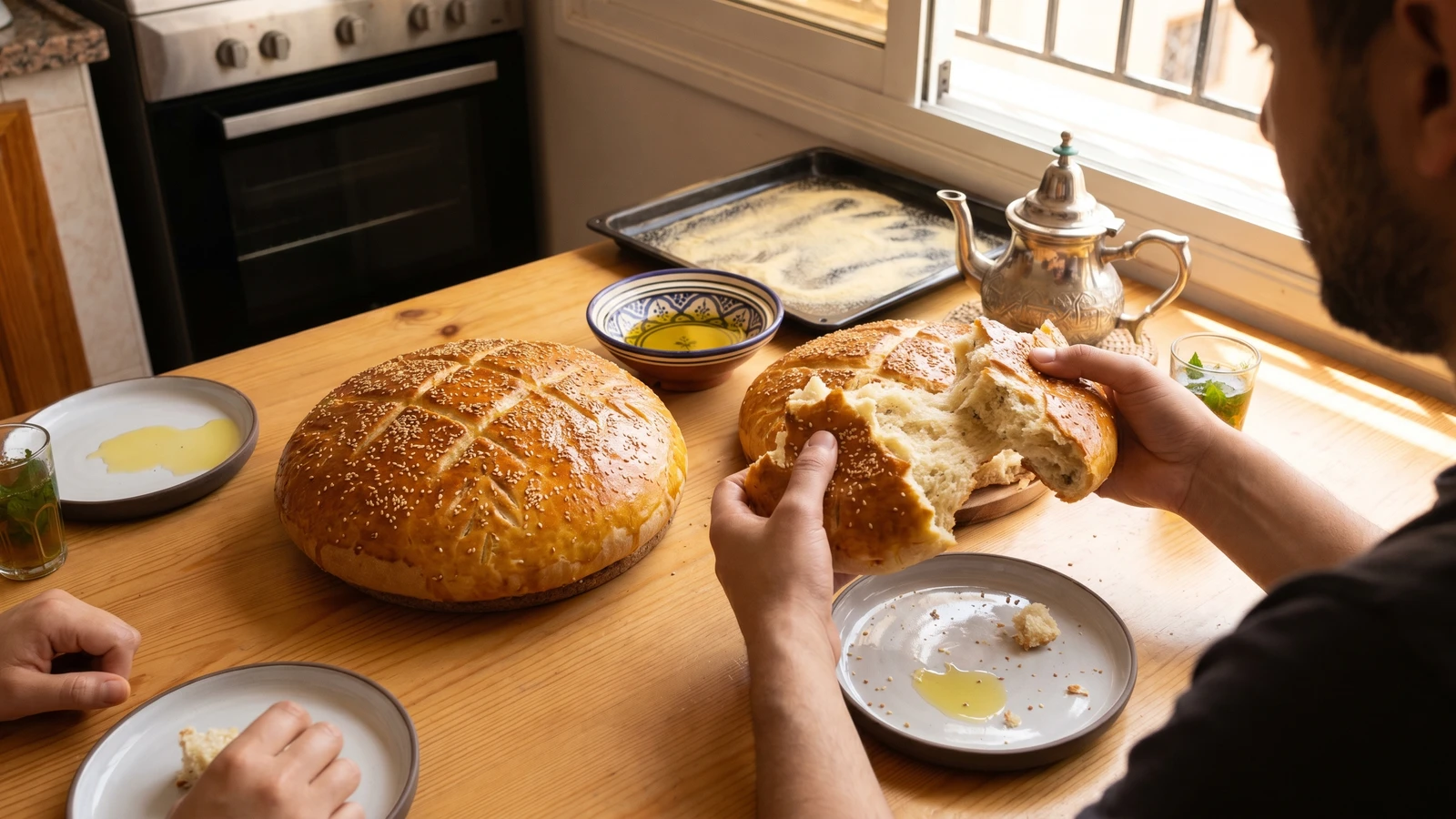
A Rabati celebration loaf, golden with egg wash, freckled with sesame and anise, and scored before baking so the table sees at once: today is not an ordinary day.
The gesture is the decoration. Before this loaf goes into the oven, you mark it with the point of a knife, little cuts and lines that open into pattern as the bread swells. Too shallow and the design disappears. Too deep and the loaf loses its proud round shape. La balance est dans les yeux, the scale is in the eyes, and here the eye is also in the hand.
Khobz mzouweq is tied especially to Rabat and its urban festive bread repertoire, where decorated loaves were made for weddings, circumcisions, and holiday tables rather than weekday meals. Rabat's kitchens carry Andalusi and Atlantic trade influences from the 17th century onward, including the festive use of orange-flower water, sesame, and anise in enriched doughs. The exact dating of this loaf is not cleanly documented, but its place in Rabati ceremonial baking is well remembered.
Quantity
500g
plus more for dusting
Quantity
100g
plus more for the tray
Quantity
7g dry or 10g fresh
Quantity
2 tbsp
Quantity
1 1/2 tsp
Quantity
2 tbsp
lightly toasted
Quantity
1 tbsp
lightly crushed
Quantity
1 large
Quantity
60ml
Quantity
2 tbsp
Quantity
260ml
plus more if needed
Quantity
1 yolk with 1 tbsp milk
for glazing
Quantity
1 tbsp
for finishing
| Ingredient | Quantity |
|---|---|
| strong white bread flourplus more for dusting | 500g |
| fine semolinaplus more for the tray | 100g |
| active dry yeast or fresh yeast | 7g dry or 10g fresh |
| sugar | 2 tbsp |
| fine sea salt | 1 1/2 tsp |
| sesame seedslightly toasted | 2 tbsp |
| anise seedslightly crushed | 1 tbsp |
| egg | 1 large |
| mild olive oil or melted butter | 60ml |
| orange-flower water | 2 tbsp |
| warm waterplus more if needed | 260ml |
| egg yolk mixed with milkfor glazing | 1 yolk with 1 tbsp milk |
| sesame seedsfor finishing | 1 tbsp |
Stir the yeast with the sugar and half the warm water, then leave it for 10 minutes until the surface looks creamy and alive. Sourcing comes before technique: if the yeast does nothing here, don't ask the dough to rise later.
In a wide bowl, mix the flour, semolina, salt, toasted sesame, and crushed anise. Add the egg, oil or butter, orange-flower water, the yeast mixture, and enough remaining warm water to make a soft dough that holds together without sticking heavily to your fingers.
Knead for 10 to 12 minutes by hand, pushing the dough away and folding it back until it turns smooth, elastic, and lightly fragrant. The anise should meet you before the orange flower does. If the dough feels tight, wet your hand and knead that moisture in, a little at a time.
Shape the dough into a ball, set it in a lightly oiled bowl, cover it, and let it rise 1 to 1 1/2 hours, until it has doubled and feels airy under your palm. This first rise gives the crumb its tenderness; rush it and the loaf eats heavy.
Turn the dough out gently and divide it in two. Shape each piece into a smooth round loaf, about 3 cm thick, and set them on semolina-dusted trays. Cover and rest 35 to 45 minutes, until the dough has puffed but still holds its roundness.
Heat the oven to 230C with a baking stone or heavy tray inside if you have one. In the ferran, the baker reads the heat by hand and by habit; at home, give the oven a full 30 minutes so the base is truly hot before the bread goes in.
Brush the loaves with the egg yolk and milk, then score shallow patterns with a sharp knife or clean razor: diamonds, leaves, radiating lines, whatever your hand can keep even. Sprinkle with sesame. The cuts are not decoration after the fact, they guide how the crust opens in the oven.
Bake for 20 to 25 minutes, lowering the oven to 210C after the first 10 minutes if the tops color too quickly. The loaves are ready when the crust is deep gold, the scoring has opened cleanly, and the bottom sounds hollow when tapped.
Let the loaves cool on a rack for at least 20 minutes before tearing or slicing. The crumb finishes settling as it rests. Bring it to the table whole if you can, because khobz mzouweq should arrive like an announcement: there is room for one more.
1 serving (about 490g)
Culinary guides, cultural storytelling, and the editorial depth that makes cooking meaningful.
Discover Culinary ExplorerChef Zohra
The lacy Moroccan pancake of fine semolina, cooked on one side only so every little hole stays open for warm butter and honey.

Chef Zohra
Small rounds of Moroccan bread puffed on a hot pan, tender inside with a pocket ready for sauce, olives, honey, or whatever the table has made room for.

Chef Zohra
A Chaouia griddle bread halfway between loaf and light beignet, made from a loose semolina dough spread by hand, fried gold, and eaten warm with butter, honey, or olive oil.

Chef Zohra
A pan-cooked semolina galette, golden at the edges and tenderly crumbly inside, called harcha in much of Morocco and mbesses in the Oujda east.