
Chef Zohra
Baghrir (بغرير)
The lacy Moroccan pancake of fine semolina, cooked on one side only so every little hole stays open for warm butter and honey.
A cooking platform built around craft, culture, and the stories behind what we eat.
Created by
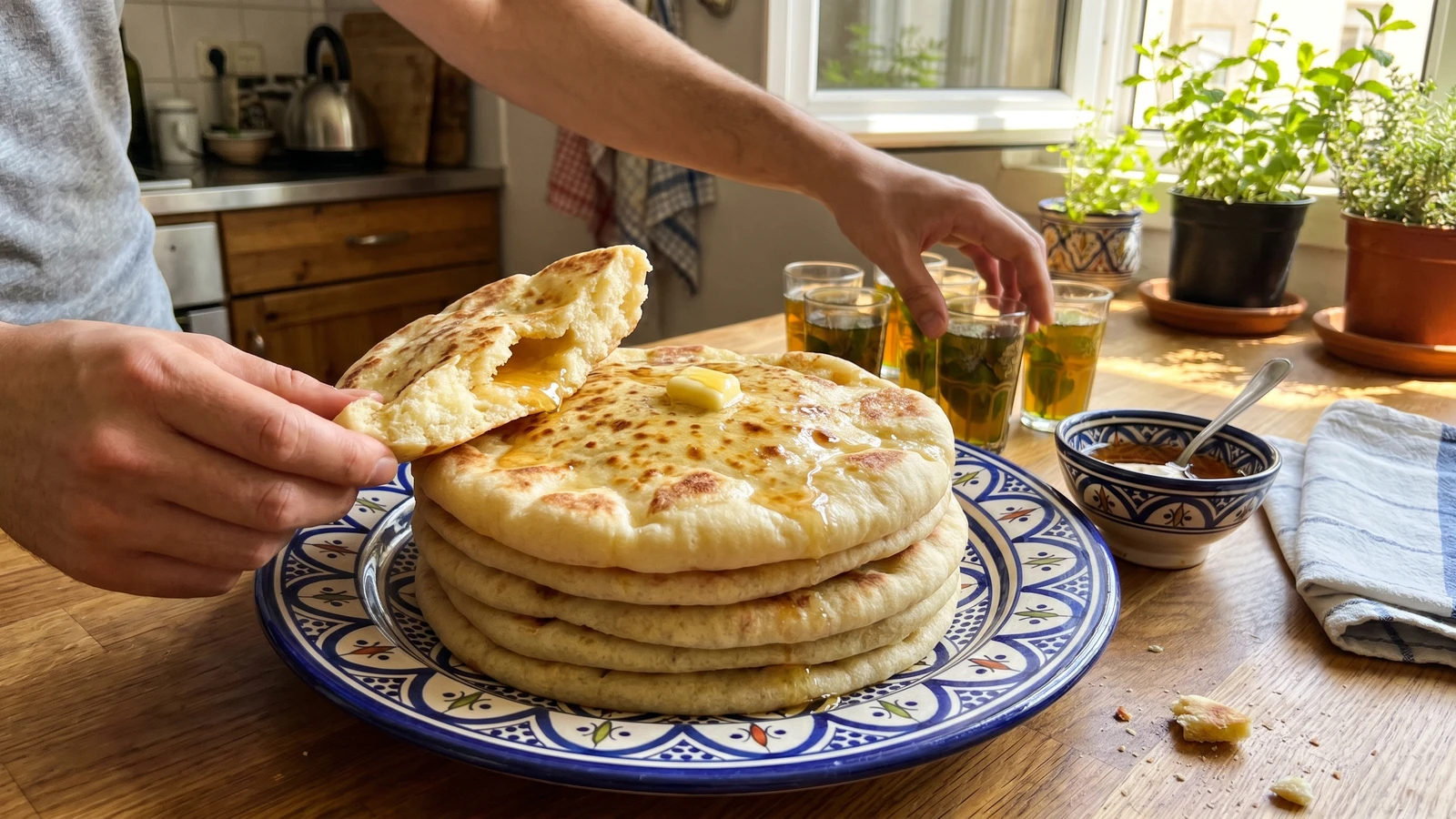
A Chaouia griddle bread halfway between loaf and light beignet, made from a loose semolina dough spread by hand, fried gold, and eaten warm with butter, honey, or olive oil.
Bouchiar begins with a hand hovering over the pan, not with a rolling pin. The dough is too loose to stand like bread and too alive to pour like beghrir; you oil your palm, spread it quickly on the hot iron, and let it blush gold. That looseness is the point. It gives you a bread tender enough to fold, with the little chew of semolina and the pleasure of frying without heaviness.
Chaouia gave this bread its own character, so we leave it its name. Il n'y a pas une cuisine marocaine, mais des cuisines marocaines, not one Moroccan cuisine, but many, and a bread from the plains between Casablanca and Settat doesn't need to pretend it came from Fez or the mountains. It is weeknight food, budget food, the kind that saves a tired evening when there is flour in the house and mint tea on the table.
Quicker than msemen, yes, but not careless. Beat the dough until it stretches, let the yeast wake it, and keep the heat moderate so the center cooks before the surface darkens. La balance est dans les yeux, the scale is in the eyes: add water until the dough slumps from your hand in a heavy ribbon, not until it runs like soup.
Bring the bouchiar out under a clean cloth, tear one while it is still warm, and pass honey, butter, olive oil, or nothing at all. A table is a door you leave open. Make the last round for the person who says they are not hungry; they usually take it.
Bouchiar, also called chiar in some Chaouia households, is tied to the Chaouia plain between Casablanca, Settat, and Berrechid, one of Morocco's major cereal regions in the nineteenth and early twentieth centuries. Its exact date is not fixed in written sources; it belongs to oral household cooking rather than palace manuscripts, a quick griddle bread shaped by semolina, yeast, and the flat pan. Placed beside harcha, msemen, and beghrir, it shows des cuisines marocaines in miniature: each region keeps its own bread grammar.
Quantity
300g
Quantity
200g
Quantity
2 tsp
Quantity
1 tsp
Quantity
1 tsp
to help the yeast in a cool kitchen
Quantity
450-500ml
added gradually
Quantity
60ml
for hands and griddle
Quantity
to serve
| Ingredient | Quantity |
|---|---|
| fine semolina | 300g |
| all-purpose flour | 200g |
| active dry yeast or instant yeast | 2 tsp |
| fine sea salt | 1 tsp |
| sugar (optional)to help the yeast in a cool kitchen | 1 tsp |
| warm wateradded gradually | 450-500ml |
| neutral oil or mild olive oilfor hands and griddle | 60ml |
| butter, honey, or olive oil (optional) | to serve |
In a wide basin, stir together the semolina, flour, yeast, salt, and sugar if using. Keep everything moving through the flour before the water goes in, so no sharp pocket of salt or bitter pocket of yeast lands in one bite.
Pour in 400ml warm water and beat with your hand for 6-8 minutes, lifting and slapping the dough against the basin until it turns elastic and sticky. Add the remaining water little by little. You want it softer than bread dough, thicker than beghrir batter, falling from your fingers in a heavy ribbon.
Cover the basin and let the dough rest 45-60 minutes, until puffy, dotted with small bubbles, and smelling gently yeasty. If your kitchen is cold, give it more time. The rest matters because the grain hydrates and the yeast lightens the bread before it meets the pan.
Set a heavy cast-iron skillet or flat griddle over medium heat and wipe it with a thin film of oil. It is ready when a tiny smear of dough sizzles at once and colors slowly, not when it scorches.
Oil your palm and fingers. Scoop about 90-100g dough onto the hot pan and pat it quickly from the center outward into a 16-18cm round, about 5-7mm thick. If your hand drags, touch a little oil. Work quickly because the first side begins setting as soon as it touches the pan.
Cook 2-3 minutes, until the top loses its wet shine, the edges set, and the bottom is freckled gold. Slide a thin spatula underneath, flip, and cook the second side about 2 minutes more, pressing only where the center looks pale.
Move each bouchiar to a cloth-lined plate and cover while you cook the rest. Serve warm with honey, butter, olive oil, or lben. Tear, don't fuss. This bread belongs to hands.
1 serving (about 195g)
Culinary guides, cultural storytelling, and the editorial depth that makes cooking meaningful.
Discover Culinary ExplorerChef Zohra
The lacy Moroccan pancake of fine semolina, cooked on one side only so every little hole stays open for warm butter and honey.

Chef Zohra
Small rounds of Moroccan bread puffed on a hot pan, tender inside with a pocket ready for sauce, olives, honey, or whatever the table has made room for.

Chef Zohra
A pan-cooked semolina galette, golden at the edges and tenderly crumbly inside, called harcha in much of Morocco and mbesses in the Oujda east.

Chef Zohra
The barley loaf of Amazigh and rural tables, darker than wheat khobz, faintly bitter, and built for tearing by hand beside soup, olive oil, or a small tagine.