
Chef Zohra
Batbout (بطبوط)
Small rounds of Moroccan bread puffed on a hot pan, tender inside with a pocket ready for sauce, olives, honey, or whatever the table has made room for.
A cooking platform built around craft, culture, and the stories behind what we eat.
Created by
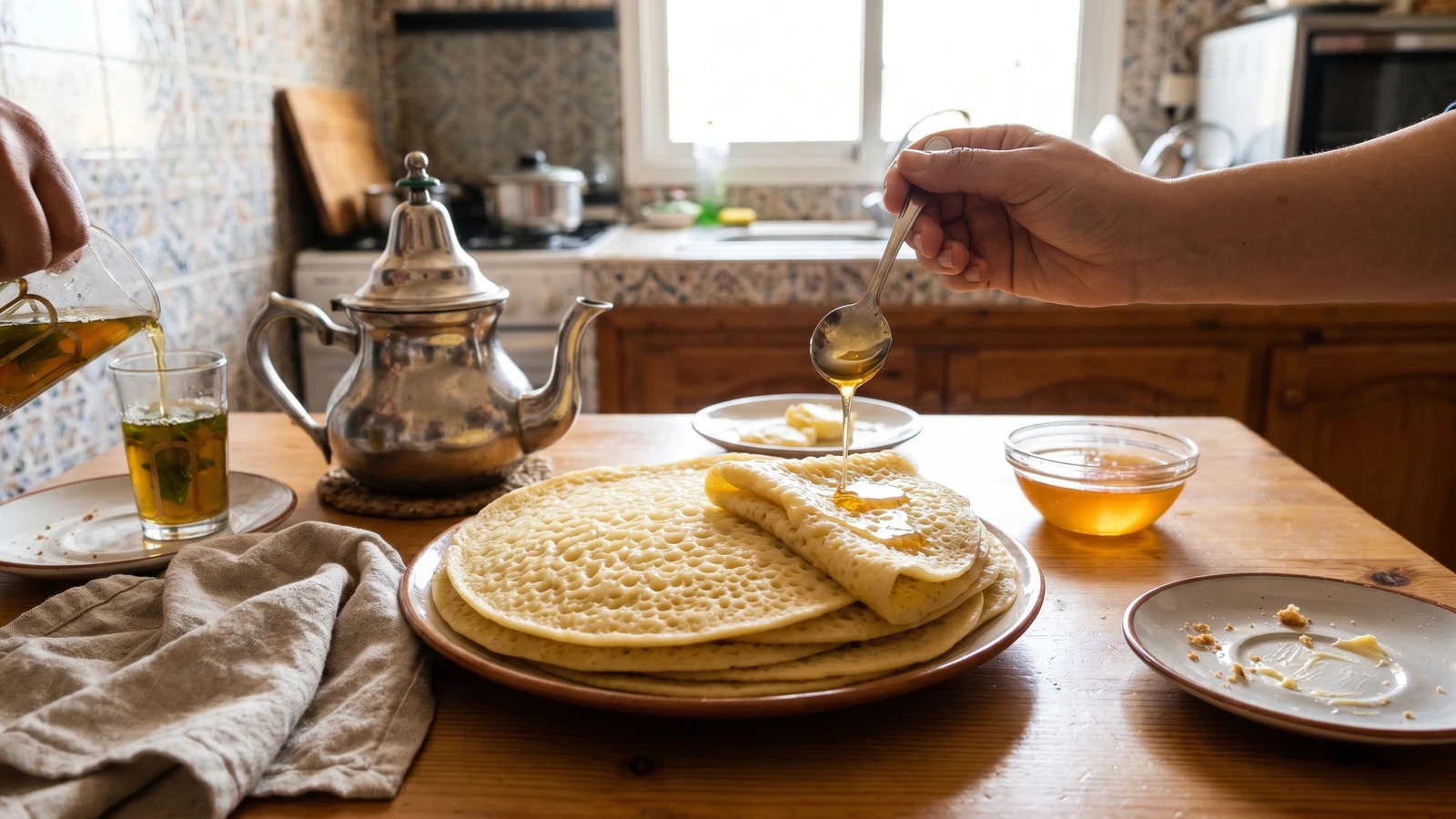
The lacy Moroccan pancake of fine semolina, cooked on one side only so every little hole stays open for warm butter and honey.
Everything here turns on the bubbles. The batter must be loose enough to spread itself, alive enough to rise, and rested just long enough that the yeast begins its work. When it hits the pan, the surface should open into tiny wells, one after another, until the whole pancake looks like a little honeycomb.
Do not flip baghrir. That is the rule that protects the dish. The top cooks from the heat rising through the batter, so the holes stay open instead of being crushed against the pan. Those holes are not decoration. They are where the warm butter and honey settle, and this is why a good baghrir drinks its sauce instead of wearing it.
Baghrir belongs to breakfast, to an afternoon table with tea, and very often to Ramadan when people want something soft, warm, and generous after the fast. Make a stack and keep it covered in a cloth. Someone will ask for one more. Une table, c'est une porte qu'on laisse ouverte, a table is a door you leave open.
Baghrir belongs to the semolina flatbread family of the Maghreb, with strong roots in Amazigh home cooking and a life shared across Morocco, Algeria, and beyond. Durum wheat and semolina were already central to Moroccan foodways by the medieval Almoravid and Almohad periods, carried through inland markets and caravan routes, but baghrir itself lives mostly in oral household practice rather than courtly recipe books. Its exact dating is contested, and that uncertainty is honest: this is a pan bread kept alive by repetition more than by archives.
Quantity
300g
Quantity
75g
Quantity
1 tsp
Quantity
1 tbsp
Quantity
2 tsp
Quantity
2 tsp
Quantity
650ml
about body temperature
Quantity
1 tsp
Quantity
100g
Quantity
120g
| Ingredient | Quantity |
|---|---|
| fine semolina | 300g |
| plain flour | 75g |
| fine salt | 1 tsp |
| sugar | 1 tbsp |
| instant yeast | 2 tsp |
| baking powder | 2 tsp |
| warm waterabout body temperature | 650ml |
| orange blossom water (optional) | 1 tsp |
| unsalted butter | 100g |
| honey | 120g |
Put the fine semolina, flour, salt, sugar, yeast, baking powder, and warm water in a blender. Blend for a full minute, until the batter is smooth and pourable, thinner than crepe batter but not watery. The blender matters because dry pockets of semolina stop the holes from opening evenly.
Pour the batter into a bowl, cover it, and let it rest 25 to 35 minutes in a warm corner. It should look slightly foamy on top and smell gently yeasty, not sour. La balance est dans les yeux, the scale is in the eyes: if your kitchen is cold, give it a little more time.
Warm a nonstick or well-seasoned pan over medium heat. Wipe it with the barest film of oil for the first pancake, then leave it dry after that. Too much fat closes the surface and the thousand holes sulk instead of opening.
Stir the batter once, then pour a small ladle into the center of the pan and let it spread by itself. Do not swirl the pan and do not flip the pancake. Watch the surface: bubbles should appear quickly, then set into open holes while the top changes from glossy wet to matte and tender.
Lift the baghrir out when the top is fully set and the bottom is pale gold. Lay it on a clean cloth, hole-side up, and keep cooking the rest. Do not stack them while hot or the holes will stick together; let them cool a little first, then cover with a cloth.
Melt the butter gently with the honey until glossy and loose. Do not boil it hard. Spoon the warm butter and honey over the baghrir just before serving, letting it sink into the holes. Serve with mint tea and enough pancakes for whoever comes to the table.
1 serving (about 75g)
Culinary guides, cultural storytelling, and the editorial depth that makes cooking meaningful.
Discover Culinary ExplorerChef Zohra
Small rounds of Moroccan bread puffed on a hot pan, tender inside with a pocket ready for sauce, olives, honey, or whatever the table has made room for.

Chef Zohra
A Chaouia griddle bread halfway between loaf and light beignet, made from a loose semolina dough spread by hand, fried gold, and eaten warm with butter, honey, or olive oil.

Chef Zohra
A pan-cooked semolina galette, golden at the edges and tenderly crumbly inside, called harcha in much of Morocco and mbesses in the Oujda east.

Chef Zohra
The barley loaf of Amazigh and rural tables, darker than wheat khobz, faintly bitter, and built for tearing by hand beside soup, olive oil, or a small tagine.