
Chef Takumi
Aji Fry (アジフライ, panko-fried horse mackerel)
Aji fry is weeknight fish with no mystery: fresh horse mackerel opened cleanly, breaded lightly, and fried until the panko crackles while the flesh stays sweet.
A cooking platform built around craft, culture, and the stories behind what we eat.

Created by
Hinase's winter okonomiyaki is cabbage, batter, and oysters at their prime, grilled until the edges crisp and the oysters stay plump under their gloss.
Oysters decide this dish. Kakioko belongs to winter, when the oysters from the Inland Sea are fat, sweet, and clean-tasting, and that shun does more work than any clever hand at the griddle. If the oysters are tired, choose another supper. Nothing hidden.
The dish looks rowdy, all cabbage and sauce and iron plate, but it is not difficult. The first secret is restraint with the batter. Use just enough to bind the shredded cabbage, then lay the oysters where the heat can reach them cleanly. Too much batter makes a heavy cake and buries the one thing you came for.
We cook it slowly enough for the cabbage to soften and sweeten, then turn it once with conviction. The oysters need contact with the hot surface, but not punishment. They should set, glisten, and stay plump inside, because a dry oyster in okonomiyaki is a small public sadness.
Kakioko is comfort food, yes, but it sits honestly in the method, not the menu: raw ingredient, griddle heat, simple seasoning, and a finish that leaves the sea-sweet oyster in command. Brush with sauce, add a modest thread of mayonnaise if you like, and scatter aonori and katsuobushi. Leave it room on the plate. Even a griddle cake deserves manners.
Kakioko is closely associated with Hinase, a fishing town in Bizen, Okayama Prefecture, where oyster farming in the sheltered Seto Inland Sea expanded after the Second World War. The name is a local contraction of kaki, oyster, and okonomiyaki, and it became widely promoted as a Hinase specialty in the early 2000s through local food tourism groups. Unlike Hiroshima-style okonomiyaki, which layers ingredients, Hinase kakioko is commonly mixed in the Kansai manner, then packed generously with local winter oysters.
Quantity
250g
rinsed and drained well
Quantity
250g
finely shredded
Quantity
80g
peeled and grated
Quantity
100g
Quantity
160ml
Quantity
1
Quantity
1 teaspoon
Quantity
1/4 teaspoon
Quantity
2 tablespoons
Quantity
2
thinly sliced
Quantity
2 tablespoons
for grilling
Quantity
for brushing
Quantity
to taste
Quantity
for finishing
Quantity
for finishing
| Ingredient | Quantity |
|---|---|
| fresh shucked oystersrinsed and drained well | 250g |
| green cabbagefinely shredded | 250g |
| nagaimo or yamaimopeeled and grated | 80g |
| all-purpose flour | 100g |
| cold dashi | 160ml |
| large egg | 1 |
| soy sauce | 1 teaspoon |
| sea salt | 1/4 teaspoon |
| tenkasu (tempura bits) | 2 tablespoons |
| scallionsthinly sliced | 2 |
| neutral oilfor grilling | 2 tablespoons |
| okonomiyaki sauce | for brushing |
| Japanese mayonnaise (optional) | to taste |
| aonori | for finishing |
| katsuobushi | for finishing |
Put the oysters in a bowl of cold salted water, swish them gently, then lift them out and drain on paper towels. Do not soak them. You are loosening grit and shell chips, not washing away the sea-sweet liquor that gives kakioko its character.
Whisk the flour, cold dashi, grated nagaimo, egg, soy sauce, and salt until just combined. A few small lumps are harmless. Overmixing wakes the gluten and gives you a tough cake, when what you want is a tender one that lets the cabbage and oysters speak.
Add the shredded cabbage, tenkasu, and scallions to the batter and fold until the cabbage is lightly coated. It should look like too much cabbage and barely enough batter. That is correct. The batter binds; it should not drown.
Heat a teppan or wide heavy skillet over medium heat and film it with oil. Divide the cabbage mixture into two rounds, each about 2cm thick. Keep the edges tidy with a spatula so the cakes cook evenly instead of thinning out and scorching at the rim.
Lay half the oysters over each round, pressing them lightly into the surface without burying them. This gives the oysters direct heat after the turn, while the cabbage underneath softens first. Cook for 5 to 6 minutes, until the underside is browned and the cake moves as one piece.
Slide two spatulas under the cake and turn it in one steady motion, oyster-side down. Press very lightly, only to settle it against the hot surface. Heavy pressing squeezes out the oyster juices and gives you dryness where there should be gloss.
Cook 5 to 7 minutes more, lowering the heat if the oysters brown too fast. The cake should feel set when nudged, the cabbage tender, and the oysters just firm and glistening. Turn it once more briefly if you want to brush the smoother side.
Brush the top with okonomiyaki sauce, add a thin line of Japanese mayonnaise if using, then finish with aonori and katsuobushi. Serve at once on a warm plate. The sauce belongs on the surface, not as a hiding place.
1 serving (about 420g)
Culinary guides, cultural storytelling, and the editorial depth that makes cooking meaningful.
Discover Culinary ExplorerChef Takumi
Aji fry is weeknight fish with no mystery: fresh horse mackerel opened cleanly, breaded lightly, and fried until the panko crackles while the flesh stays sweet.
Chef Takumi
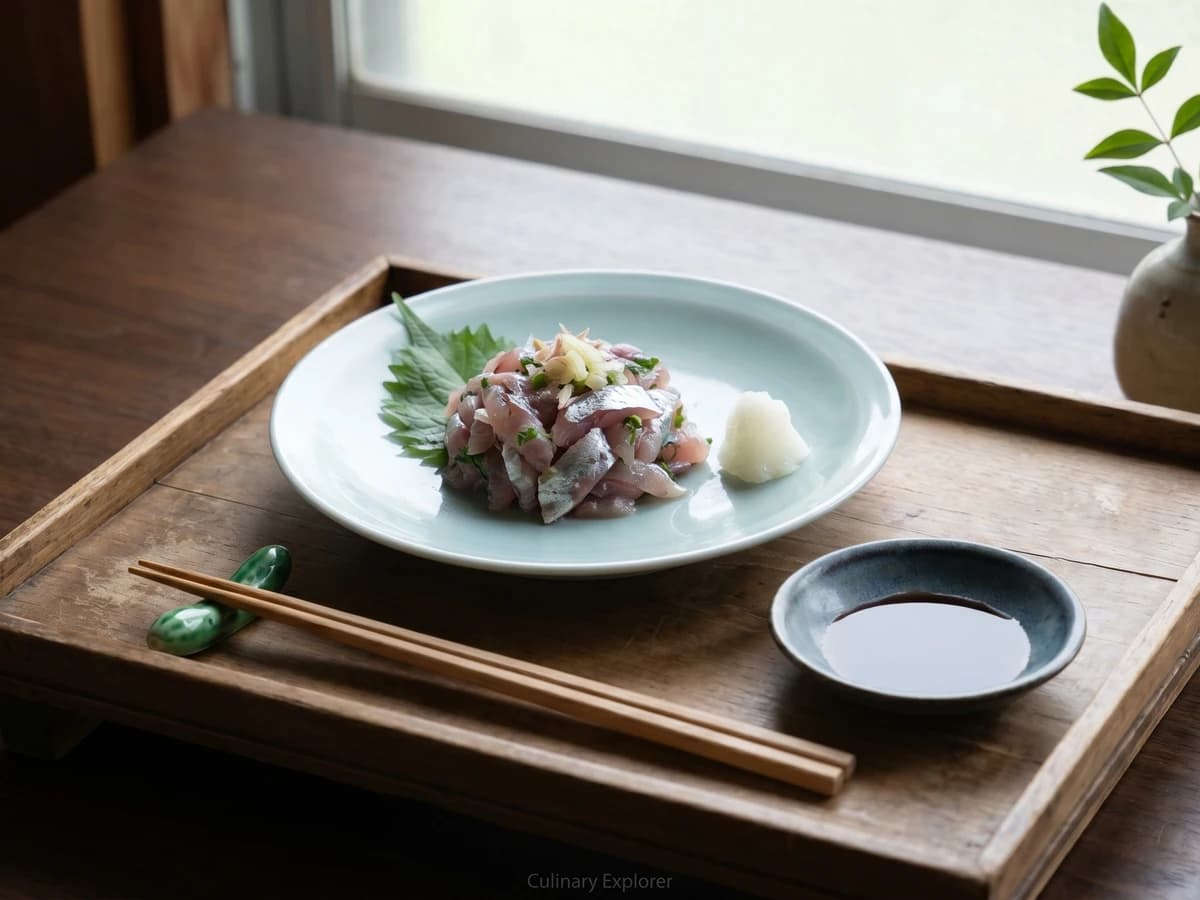
Summer horse mackerel, chopped just enough to catch ginger and scallion, becomes a cool, clean main dish with rice. The secret is fresh fish and a knife that does not bruise it.
Chef Takumi
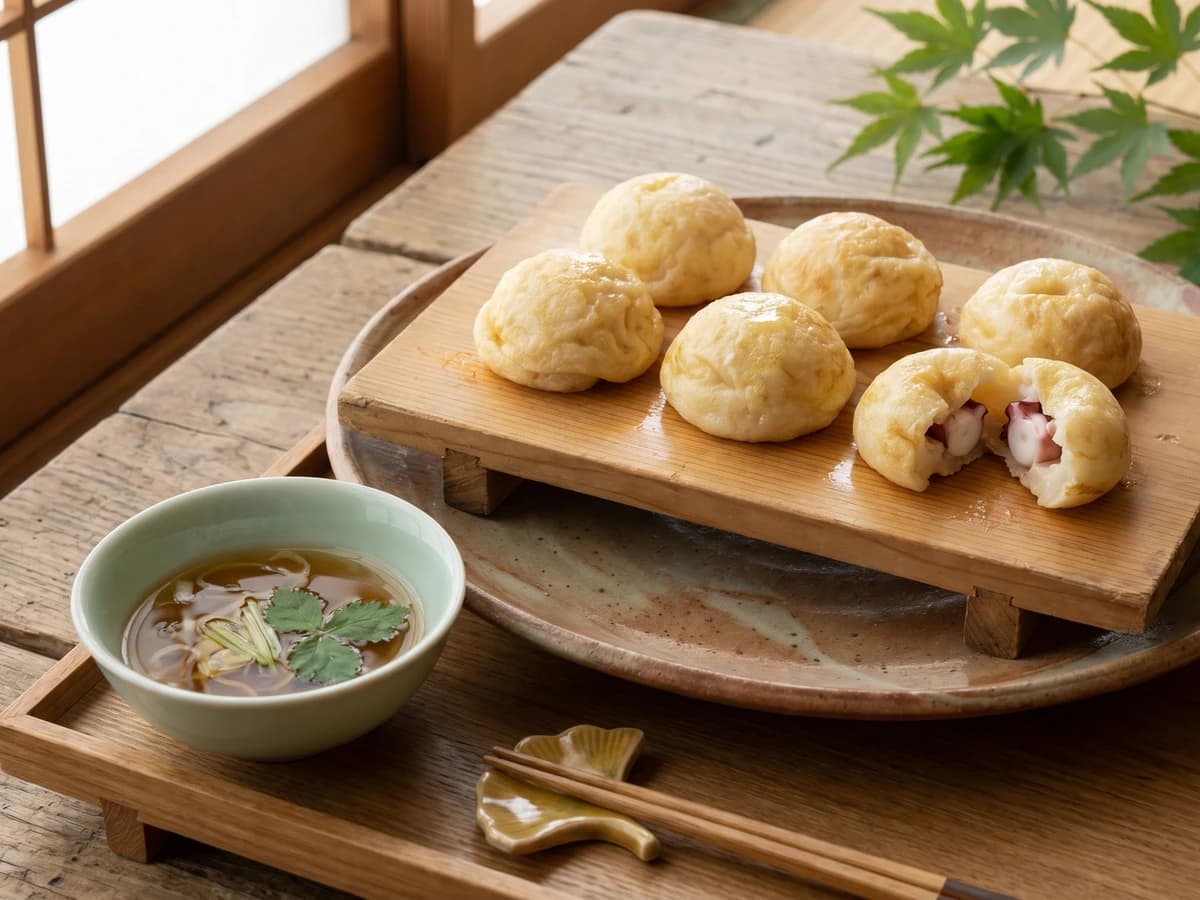
Akashi-yaki is not sauced takoyaki. It is egg-rich batter, tender octopus, and clear dashi, cooked pale and soft so each ball can be dipped like a small custard dumpling.

Chef Takumi
A whole anago looks like a test of nerve. It is mostly good sourcing, a dry skin, cold batter, and oil hot enough to leave the eel sweet under its lace.