
Chef Takumi
Ago Dashi (あごだし, grilled flying fish stock)
Ago dashi is quiet luxury: roasted flying fish, konbu, and patient water. Steep it slowly and you get a clear stock that tastes sweet, clean, and full without heaviness.
A cooking platform built around craft, culture, and the stories behind what we eat.
Created by
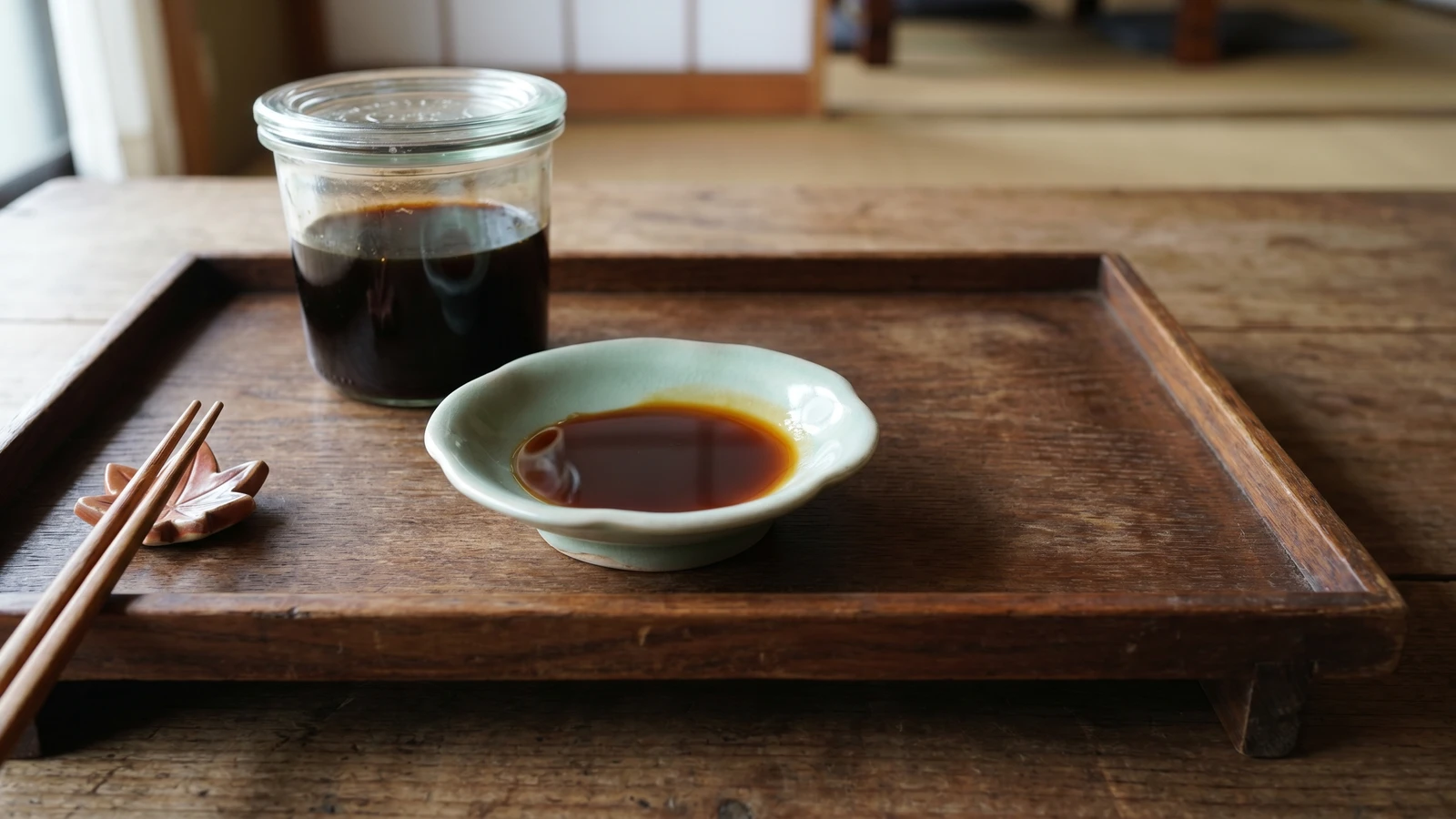
Kaeshi is not a sauce yet. It is the dark, patient base: shōyu, mirin, and sugar warmed gently, then rested until it is ready to meet dashi.
Kaeshi looks almost too plain to matter. Soy sauce, mirin, sugar. Three things in a pan, then a jar in the refrigerator. But this is one of those small foundations that makes the cook seem wiser than the work deserves.
The one detail that decides it is restraint with heat. Warm the mirin enough to soften its alcohol edge, dissolve the sugar fully, then bring in the shōyu and stop before a hard boil. Soy sauce has fragrance as well as salt. Boil it like laundry and you chase off the part you wanted to keep.
We use kaeshi as the stored seasoning base for noodle sauces: mentsuyu for noodles, soba tsuyu for dipping soba, tentsuyu for tempura. It is not meant to shout by itself. Diluted with clear dashi, it becomes balanced and useful, dark enough to give shape, gentle enough to let the stock speak.
Rest it. That is the part impatient cooks distrust, because nothing dramatic happens in the jar. Still, overnight matters, and three days is better. The sharp soy edge rounds, the sweetness settles, and the mixture becomes honmono in the quietest way: nothing hidden, nothing hurried.
Kaeshi is closely tied to Edo-period soba culture, when specialist soba shops developed concentrated soy seasoning bases that could be stretched with dashi as needed. The word kaeshi means "returning" or "turning back," often explained as the soy mixture being heated, rested, and brought back into service after maturing. Soba shops still distinguish styles such as hon-gaeshi, in which soy is warmed with sugar and mirin, and nama-gaeshi, in which the soy is not heated in the same way.
Quantity
1 1/2 cups
Quantity
1/2 cup
Quantity
1/3 cup
| Ingredient | Quantity |
|---|---|
| koikuchi shōyu (Japanese dark soy sauce) | 1 1/2 cups |
| hon mirin | 1/2 cup |
| sugar | 1/3 cup |
Put the mirin in a small saucepan and bring it just to a gentle simmer over medium heat. Let it bubble quietly for one minute. This takes off the raw alcohol edge, so the finished kaeshi tastes round instead of sharp.
Add the sugar and stir until the liquid turns clear again and no grains scrape under the spoon. Sugar needs the mirin's heat to dissolve cleanly; if it sits gritty at the bottom, it will season unevenly later.
Lower the heat and add the shōyu. Warm it until the surface trembles and a few small bubbles gather at the edge, then stop. Don't boil it hard. Boiling drives off the soy's fragrance and leaves the salt standing alone, which is a poor bargain.
Take the pan off the heat and let the kaeshi cool uncovered until it is no longer hot. Pour it into a clean jar, cover, and refrigerate. It will taste a little pointed now. That is not failure, only youth.
Rest the jar at least overnight, and three days is better. Time lets the soy, mirin, and sugar stop tasting like three separate things. To use, dilute with dashi: about 1 part kaeshi to 3 parts dashi for cold soba tsuyu, 1 to 5 or 6 for warm noodle broth, and 1 to 3 for tentsuyu.
1 serving (about 18g)
Culinary guides, cultural storytelling, and the editorial depth that makes cooking meaningful.
Discover Culinary ExplorerChef Takumi
Ago dashi is quiet luxury: roasted flying fish, konbu, and patient water. Steep it slowly and you get a clear stock that tastes sweet, clean, and full without heaviness.
Chef Takumi
Akamiso dengaku-miso is plain work: bean miso, sweetness, sake, and patient stirring until the glaze turns dark, glossy, and thick enough to cling to the grill.
Chef Takumi
Snow-country takuan begins with smoke. Hang the daikon, dry it gently, then let rice bran, salt, and time turn it into Akita's amber pickle.

Chef Takumi
Aso takanazuke is spring caught in salt: sharp mustard greens pressed until they soften, fermented until their edge turns round, then fried briefly with sesame for rice.