Chef Lesia
Baklazhanna Ikra (баклажанна ікра, eggplant caviar)
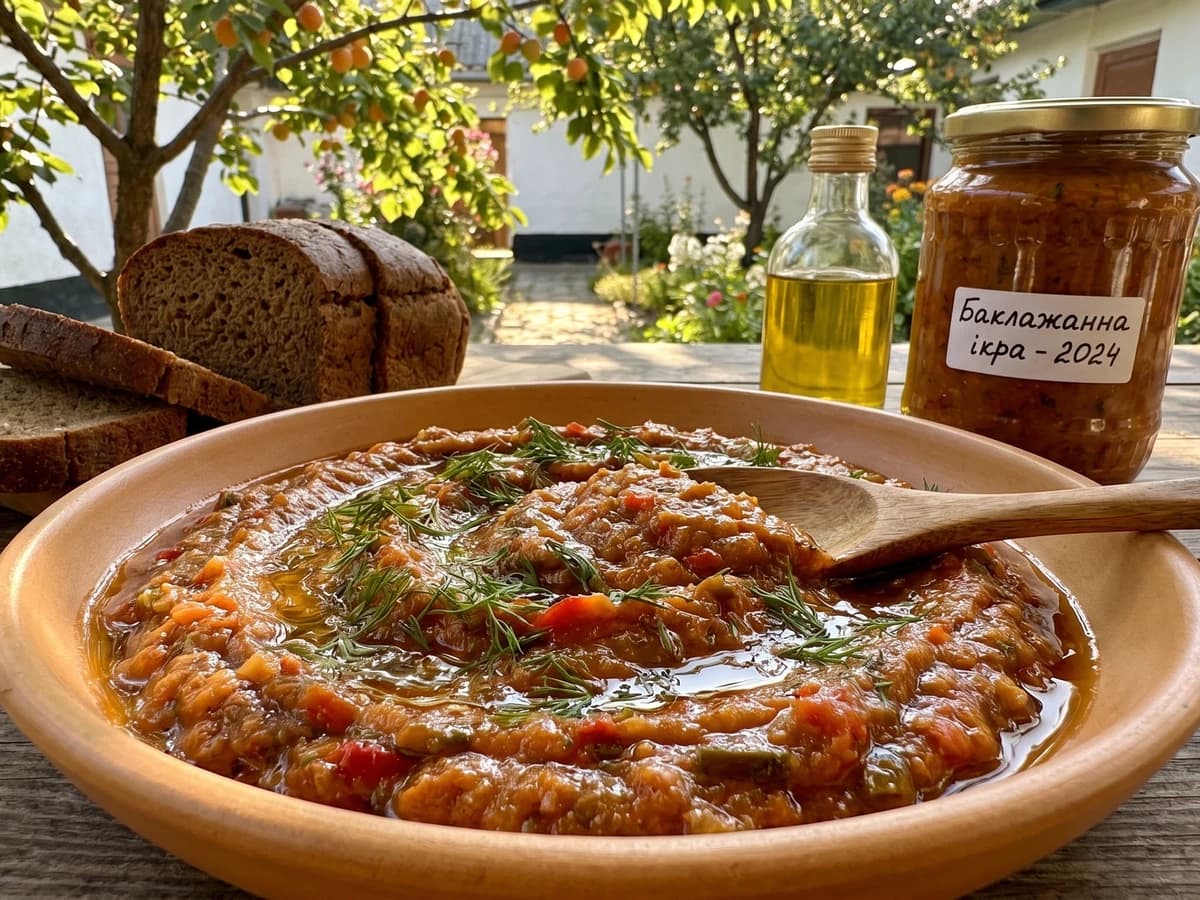
Eggplants collapse into silk, tomatoes give up their summer, and the pan turns sweet and smoky enough that a spoon dragged through leaves a clean path.
A cooking platform built around craft, culture, and the stories behind what we eat.
Created by
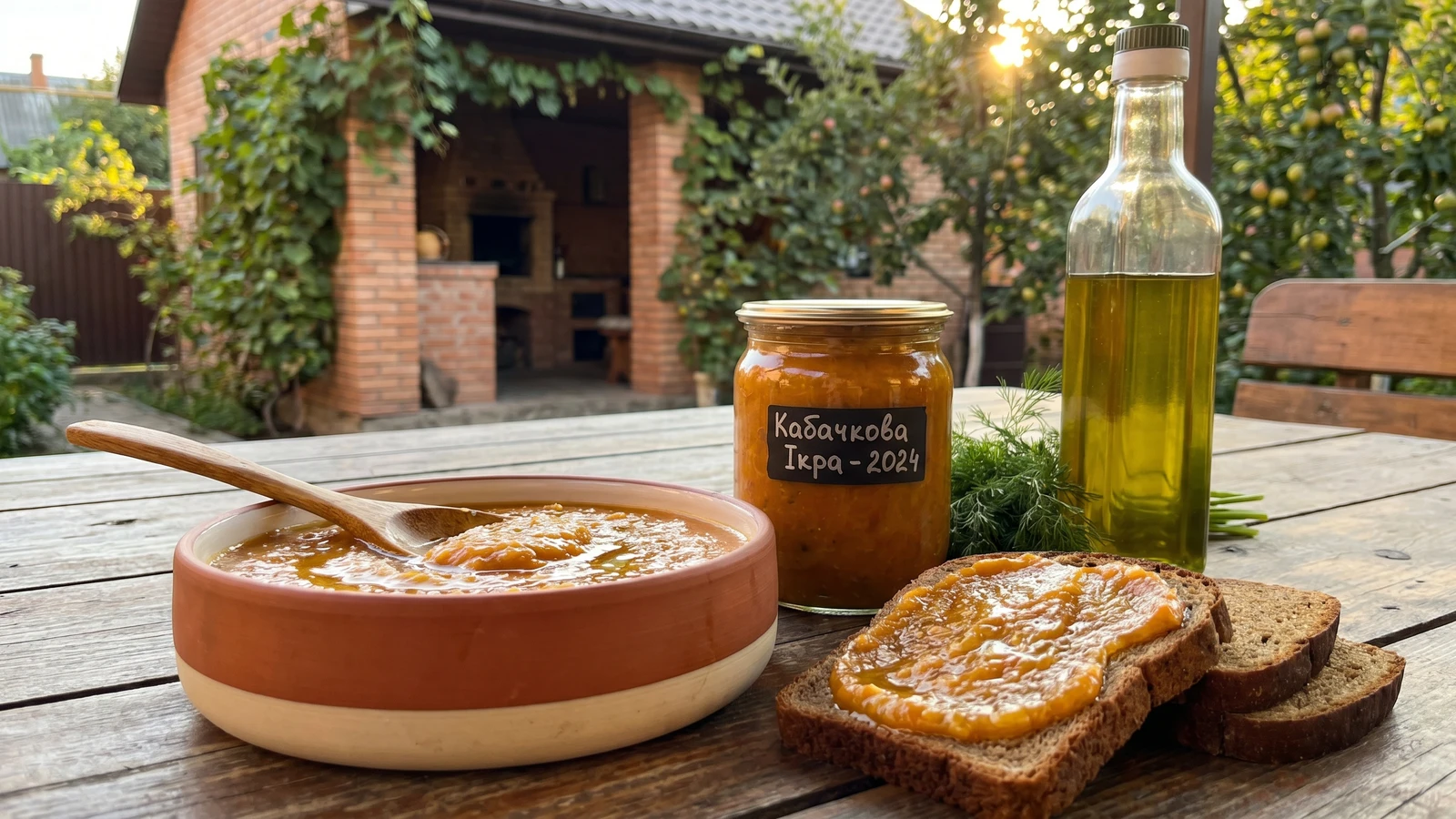
A mountain of watery zucchini collapses into a glossy orange spread, sweet with carrot and tomato, loud with sunflower oil, made for thick bread and the second day.
At first it looks impossible: a mountain of pale grated kabachky, all squeak and water, collapsing into a pot smaller than your courage. Then the water cooks away, the sunflower oil turns the carrot gold-orange, the tomato darkens, and what began as the cheapest summer vegetable becomes a glossy spread that drags thickly behind the spoon. This is the joke inside ikra: no fish eggs, no luxury, just the garden reduced until it tastes generous.
On the southern steppe this belongs to the litnya kuhnia, the summer kitchen, when courgettes grow into beasts if you turn your back for two days. You grate, salt, squeeze, sweat onion and carrot slowly, then let the pot mutter uncovered until the smell changes from raw green to sweet and sun-warmed. The oil matters. Use unrefined sunflower oil if you can, green-gold and nutty, Ukraine in a bottle of oil.
The one thing is water. Get it out before the tomato goes in. If the zucchini is still flooding the pot, the tomato only traps that thinness and you end with vegetable sauce, not ikra. Aunt Nadia's version in the shoebox gives no time, of course, only "until it sounds right," which is annoying until you hear it: wet hiss first, then soft thick blips.
Make a big pot. Eat it on bread, spoon it beside potatoes, tuck a jar in the fridge for tomorrow. There is no tradition of a small one.
Kabachkova ikra belongs to the vegetable-preserving belt of southern Ukraine, especially the market-garden regions around Kherson, Mykolaiv, and Odesa, where courgettes, carrots, and tomatoes arrive too fast for one household to eat fresh. In the mid-twentieth century Soviet factories standardized it into tinned squash caviar, but the home version stayed brighter: sunflower oil, garden tomato, and a pot reduced until the oil shines at the edges. The playful word ikra means roe; here it names a fine vegetable spread, a kitchen joke made delicious.
Quantity
1.5 kg
coarsely grated, peeled and seeded if large
Quantity
2 teaspoons
divided
Quantity
2 large
finely diced
Quantity
3 medium
coarsely grated
Quantity
90ml
plus more to finish
Quantity
1
finely diced
Quantity
400g grated tomatoes or 300g passata
Quantity
2 tablespoons
Quantity
2
Quantity
3 cloves
finely grated or smashed
Quantity
1 teaspoon
only if the tomatoes are sharp
Quantity
1 tablespoon
to lift
Quantity
to taste
Quantity
small bunch
chopped, to serve
| Ingredient | Quantity |
|---|---|
| zucchini or young marrowcoarsely grated, peeled and seeded if large | 1.5 kg |
| fine sea saltdivided | 2 teaspoons |
| onionsfinely diced | 2 large |
| carrotscoarsely grated | 3 medium |
| unrefined sunflower oilplus more to finish | 90ml |
| red sweet pepper (optional)finely diced | 1 |
| ripe tomatoes or passata | 400g grated tomatoes or 300g passata |
| tomato paste | 2 tablespoons |
| bay leaves | 2 |
| garlicfinely grated or smashed | 3 cloves |
| sugar (optional)only if the tomatoes are sharp | 1 teaspoon |
| fermented tomato brine or cider vinegar (optional)to lift | 1 tablespoon |
| freshly ground black pepper | to taste |
| dillchopped, to serve | small bunch |
Coarsely grate the zucchini into a colander and toss it with 1 teaspoon of the salt. If you're using a large marrow, peel away the tough skin and scoop out the seedy middle first; it has already lived its life. Leave the grated flesh until it gives up a little puddle, then squeeze it hard by the handful. You are not drying it to punishment, just taking out the water that would turn your ikra thin.
Warm the sunflower oil in a wide heavy pot and add the onions, carrots, sweet pepper if using, and the remaining salt. Cook slowly, stirring often, until the onions lose their sharp smell, the carrot softens, and the oil turns orange-gold. This is a kind of zasmazhka, the slow-sweated flavour base, and you're not browning it. You're coaxing sweetness out of cheap vegetables until the kitchen smells as if supper has already forgiven you.
Add the squeezed zucchini and stir it through the orange oil. Keep the pot uncovered. At first it will hiss like rain and look disappointing; leave it alone for a minute at a time, then stir from the bottom so nothing catches. Cook until the raw green smell changes to something rounder and sweeter, and the sound in the pot turns from wet sputtering to soft thick blips.
Stir in the grated tomatoes or passata, tomato paste, bay leaves, and black pepper. Let it bubble gently, uncovered, scraping the sides and bottom often, until the colour deepens from carrot-orange to amber and the spoon leaves a path that holds for a breath before closing. Oil should shine at the edges. If it looks like sauce, keep going; ikra should sit on bread, not run through it.
Fish out the bay leaves. Blend the ikra with an immersion blender until mostly smooth, or leave it a little nubbly if that's how your table likes it. Return it to the low heat for a few more thick blips, then stir in the garlic. Taste. If the tomatoes are flat, add the fermented tomato brine or cider vinegar; if they're sharp, a pinch of sugar will calm them. Aunt Nadia would have written only, "until it sounds right," and here the pot really does tell you.
Spoon the ikra into clean jars or a bowl and let it cool before refrigerating. Serve it cold or at room temperature, spread thick on dark bread, with dill and a thin thread of green sunflower oil over the top. It is better the second day, once the carrot, tomato, and oil have stopped speaking separately and become one thing.
1 serving (about 135g)
Culinary guides, cultural storytelling, and the editorial depth that makes cooking meaningful.
Discover Culinary ExplorerChef Lesia
Eggplants collapse into silk, tomatoes give up their summer, and the pan turns sweet and smoky enough that a spoon dragged through leaves a clean path.

Chef Lesia
The salt hits first, then the pasture: sheep's milk turned into a white, crumbly cheese that tastes of grass, weather, and the mountain air that made it.

Chef Lesia
The first cheese from the mountain vat is barely cheese yet: sweet milk caught into a warm springy round, unsalted, alive with whey, waiting to become brynza if you let it.

Chef Lesia
Roasted beets turn almost black at the edges, then grind with garlic and walnuts into a crimson spread so dense the spoon leaves a path through it.