Chef Joost
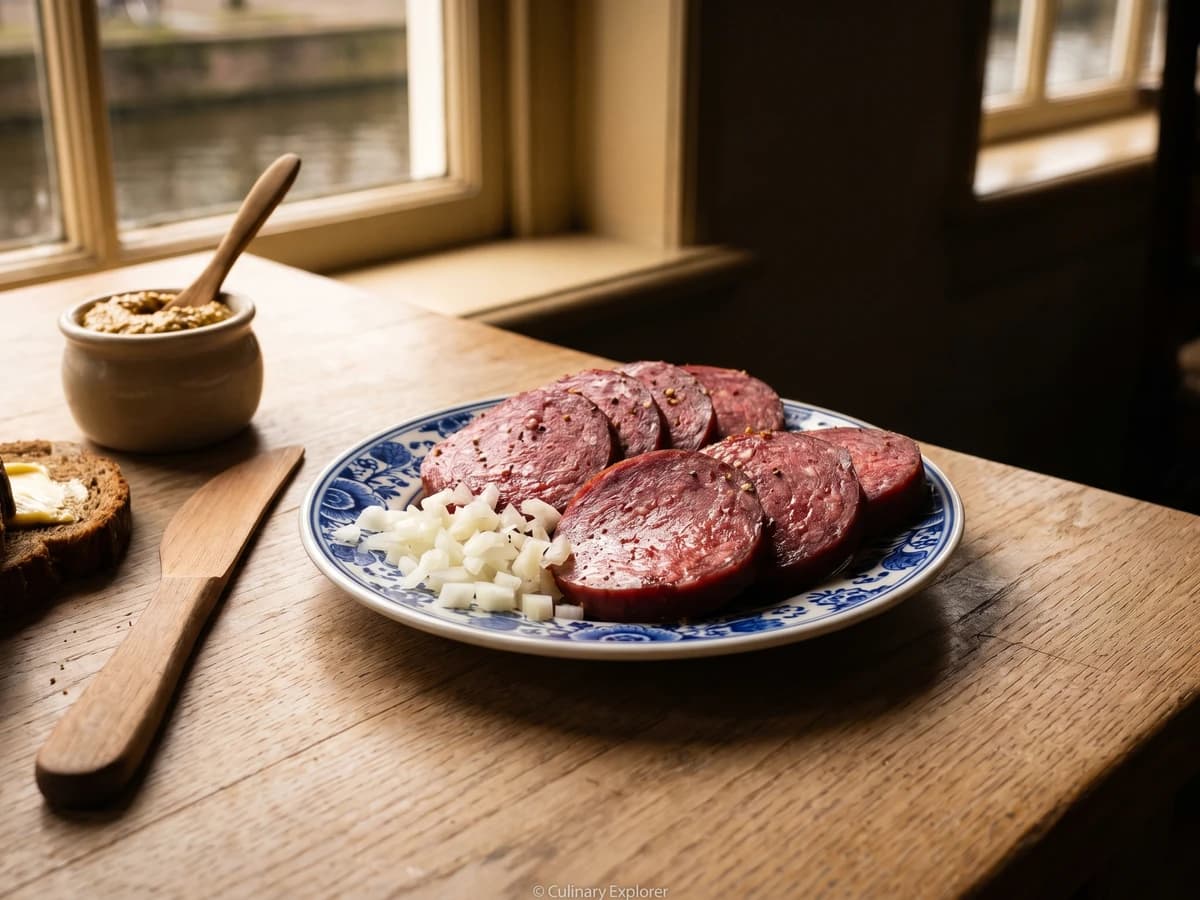
Amsterdamse Ossenworst
The name means ox sausage, but the real story is Amsterdam itself: cattle trade, Jewish butchers, VOC spices, and raw beef sliced thin with onion.
A cooking platform built around craft, culture, and the stories behind what we eat.
Created by
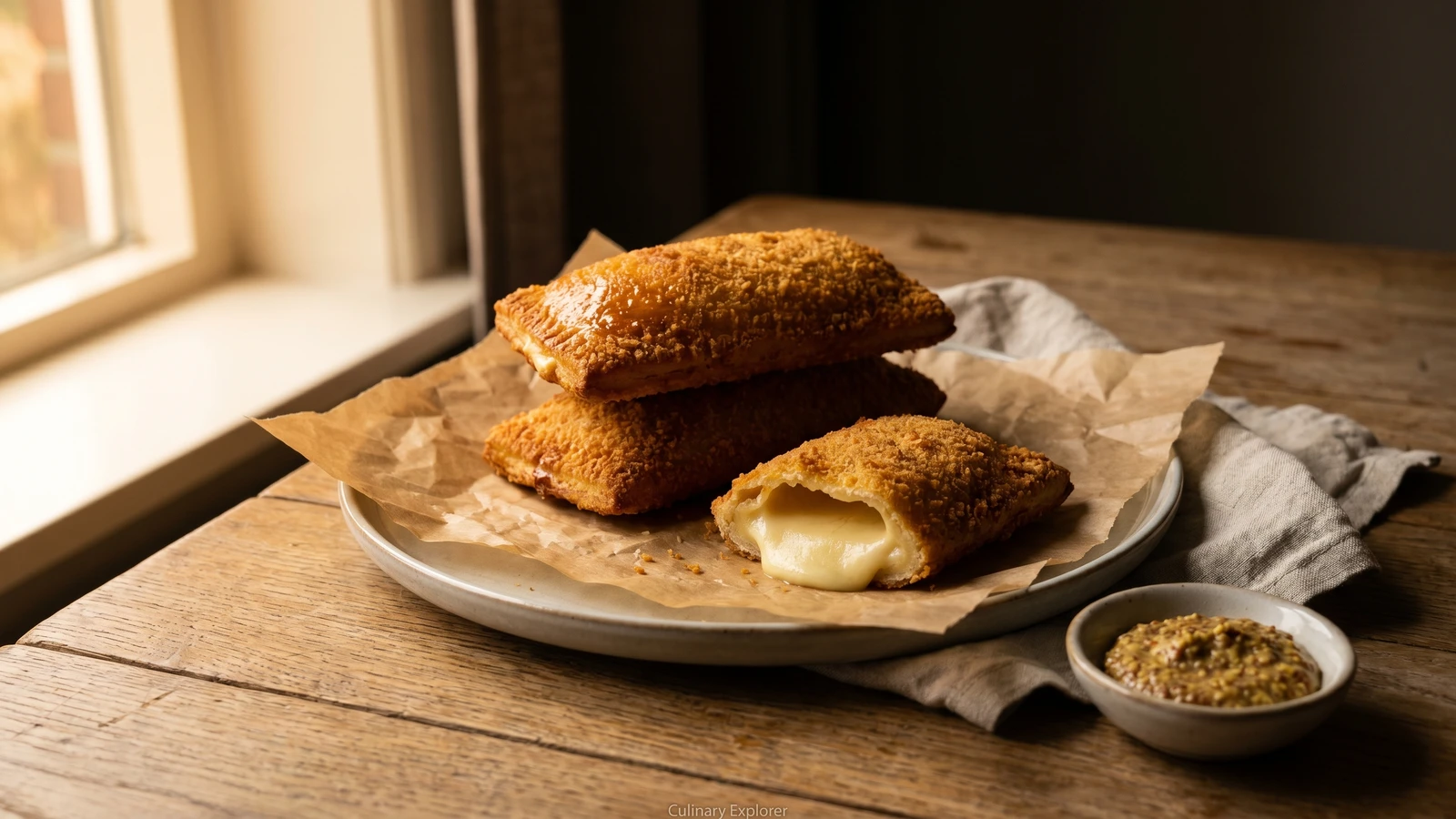
The name borrows French grandeur and then walks straight into the Dutch snack bar: a square of Gouda in crumbed pastry, crisp at the edges, molten enough to demand patience.
Kaassoufflé is a grand French hat on a Dutch paper napkin. The name already tells you the joke: kaas is cheese, and soufflé comes from French souffler, to blow or puff. But nobody at the snack bar counter is whisking egg whites with a worried face. We are in the kingdom of the frituur (deep fryer), where the pastry swells, the breadcrumbs darken, and the cheese begins making plans.
My first serious argument about kaassoufflé happened at a verjaardag (birthday) table, not an archive. Half the family claimed it belonged beside the bitterballen; the other half said a meatless snack deserved its own plate so nobody would mistake it for a croquette. But let me tell you a secret: this modest square is one of the cleverest Dutch answers to the snack bar. It lets the cheese country eat from the fryer without pretending to be sausage.
The cooking asks for less bravado than restraint. Use belegen Gouda, matured enough to taste like itself but young enough to melt; oude kaas, old Gouda, turns oily and stubborn. Seal the pastry as if the cheese is trying to escape, because it is. Then chill the parcels before they hit the oil so the crumb can crisp before the centre runs. Hou het altijd simpel, always keep it simple: good cheese, cold parcels, hot oil, and two quiet minutes before the first bite.
The kaassoufflé belongs to the postwar Dutch snackbar and automatiek (vending-wall snack bar), a culture that expanded rapidly from the 1950s into the 1970s as frozen croquettes, frikandellen, and fried pastries moved from factories into neighborhood counters. Its name combines Dutch kaas, cheese, with French soufflé, from souffler, to blow or puff; the link is not the baked egg dish but the way sealed pastry swells around melting cheese. No single province can claim it, and by the 1970s it had become the standard meatless choice in the frituur (deep fryer), proof that modern Dutch food history includes factory ingenuity as well as farm kitchens.
Quantity
200g
cut into 8 rectangles about 7 x 3 cm and 5mm thick
Quantity
8 squares, 10 x 10 cm
thawed but cold
Quantity
75g
Quantity
2 large
beaten
Quantity
1 tablespoon
Quantity
150g
Quantity
about 1.5 liters
Quantity
to serve
| Ingredient | Quantity |
|---|---|
| belegen Gouda (matured but not old)cut into 8 rectangles about 7 x 3 cm and 5mm thick | 200g |
| frozen puff pastry (bladerdeeg) squaresthawed but cold | 8 squares, 10 x 10 cm |
| plain flour | 75g |
| eggsbeaten | 2 large |
| milk | 1 tablespoon |
| fine dry breadcrumbs | 150g |
| neutral frying oil | about 1.5 liters |
| sharp Dutch mustard (optional) | to serve |
Cut the Gouda into eight neat rectangles, each small enough to leave at least 1.5 cm of pastry border all around once folded. Pat the cheese dry with kitchen paper. A damp surface is a poor guest inside pastry; it weakens the seal before the oil has even seen it.
Lay one cold pastry square on a lightly floured board and roll it just a little thinner, about 11 x 11 cm. Brush the edges with a little beaten egg, set one piece of cheese on the lower half, fold the pastry over, and press out the air as you seal. Pinch firmly with your fingers, then crimp with a fork. You want a flat pillow, not a balloon; trapped air expands and bursts a seam.
Put the flour in one shallow dish, beat the eggs with the milk in a second, and put the breadcrumbs in a third. Dust each sealed parcel lightly with flour, dip it through the egg, then coat it in breadcrumbs, pressing gently along the seams. Lay the parcels on a tray and freeze for 20 minutes, or refrigerate for 40 minutes, until firm. Cold parcels give the crust time to set before the Gouda starts roaming.
Pour the oil into a deep fryer or a heavy pan, never filling a pan more than halfway, and heat it to 175C. Set a wire rack over a tray for draining. A thermometer is not fussiness here; oil that is too cool makes the crust greasy and gives the cheese time to escape.
Fry two kaassoufflés at a time for 3 to 4 minutes, turning once if they are not fully submerged, until the crumbs are deep golden and crisp. Lift them out carefully and drain on the rack. If one opens, remove it at once; leaked cheese burns quickly and leaves a bitter taste in the oil.
Let the kaassoufflés rest for 2 minutes before serving. This is not politeness, it's protection. The filling should be molten enough to pull softly when opened, but not so fierce that it punishes the first eager bite. Serve plain, or with a small spoon of sharp mustard.
1 serving (about 100g)
Culinary guides, cultural storytelling, and the editorial depth that makes cooking meaningful.
Discover Culinary ExplorerChef Joost
The name means ox sausage, but the real story is Amsterdam itself: cattle trade, Jewish butchers, VOC spices, and raw beef sliced thin with onion.

Chef Joost
The little yellow onion on the Amsterdam borrel board looks modest, until vinegar, turmeric, and patience turn it into the sharp bite that wakes cheese, herring, and sausage.

Chef Joost
The bear's claw of the northern snackbar: a seasoned gehaktbal, Dutch meatball, cut into thick discs, skewered with onion, fried until the edges catch, then dragged through peanut sauce.

Chef Joost
The name points to the drink, not the mood: bitterballen are crisp little balls of beef ragout made for the borrel table, mustard beside them, fingers slightly burned by impatience.