
Chef Jeong-sun
Agwi-jjim (Braised Monkfish with Bean Sprouts)
Firm monkfish buried under crisp soybean sprouts, minari, and a red gochugaru sauce thickened at the end; Masan's market dish asks for heat, timing, and a steady hand.
A cooking platform built around craft, culture, and the stories behind what we eat.
Created by
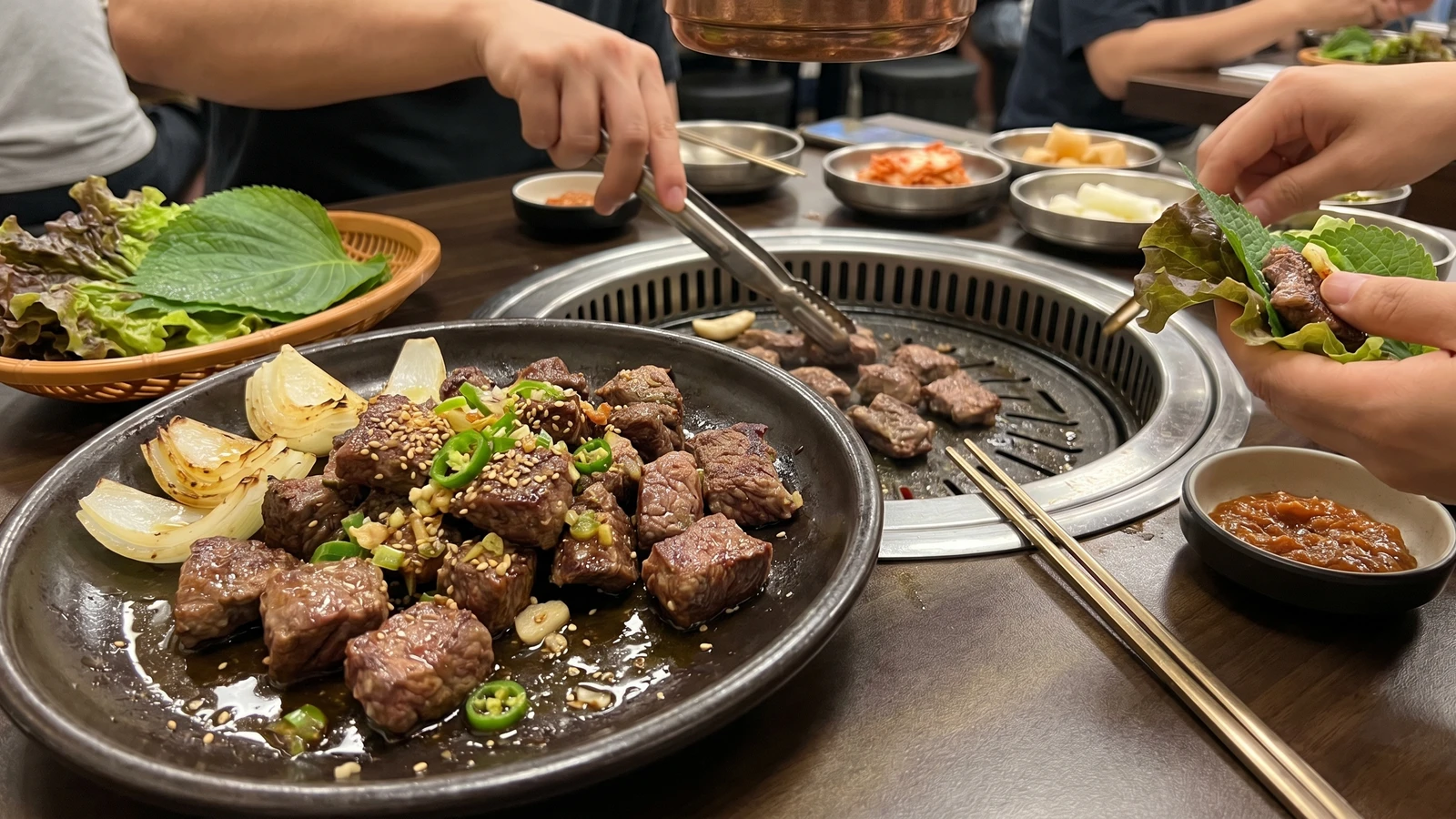
Mapo's quick grilled beef, cut into honest chunks and worked by hand with sesame oil, garlic, salt, and pepper, so the seasoning enters the meat without hiding it.
Jumulleok lives or dies in the hands. The name comes from 주무르다, to knead or massage, and that is not poetry. You press the sesame oil, garlic, salt, and pepper into the beef with your fingers until the surface turns glossy and tacky, then you stop. Too much sauce and it becomes another marinated meat. This one should still taste like beef.
My teacher used to watch our hands before she tasted the food. 눈동냥, 귀동냥, borrowing with the eyes and ears. She said you could see impatience in meat before it ever hit the grill. If the pieces are uneven, some dry while others bleed. If the salt is tossed on carelessly, one bite shouts and the next says nothing. Cut evenly, season evenly, grill fiercely.
This is a weeknight barbecue dish, especially good when the table wants meat without waiting through a long marinade. The safe shortcut is the pan: a heavy skillet will do if it is hot enough. The corner you cannot cut is resting the seasoned beef for 20 minutes, because salt needs that small time to move inward. 손맛 is real; I measure it anyway, so it can be handed on.
Jumulleok takes its name from the Korean verb 주무르다, meaning to knead or massage, and it belongs to modern Korean grill-house cooking rather than older palace records. Mapo became known in the twentieth century for practical charcoal-grilled meats served to workers, merchants, and later office diners near the Han River and rail lines, and jumulleok fits that quick, lightly seasoned table. Unlike long-marinated bulgogi or galbi, its identity is the hand-worked seasoning and short rest before grilling.
Quantity
700g
cut into 2.5cm bite-size chunks
Quantity
1 1/2 tablespoons
Quantity
1 tablespoon
Quantity
4 cloves
very finely minced
Quantity
1 1/4 teaspoons
Quantity
1/2 teaspoon
freshly ground
Quantity
1 teaspoon
Quantity
1 teaspoon
Quantity
1/2 teaspoon
Quantity
2
white and pale green parts finely minced
Quantity
1 teaspoon, plus more for serving
Quantity
1/2 medium
sliced into thick wedges
Quantity
1
thinly sliced
Quantity
to serve
| Ingredient | Quantity |
|---|---|
| beef sirloin, ribeye, or chuck flap tailcut into 2.5cm bite-size chunks | 700g |
| toasted sesame oil | 1 1/2 tablespoons |
| neutral oil | 1 tablespoon |
| garlicvery finely minced | 4 cloves |
| fine sea salt | 1 1/4 teaspoons |
| black pepperfreshly ground | 1/2 teaspoon |
| soy sauce | 1 teaspoon |
| rice wine or soju | 1 teaspoon |
| sugar | 1/2 teaspoon |
| scallionswhite and pale green parts finely minced | 2 |
| toasted sesame seeds | 1 teaspoon, plus more for serving |
| onion (optional)sliced into thick wedges | 1/2 medium |
| green chili (optional)thinly sliced | 1 |
| lettuce leaves, perilla leaves, ssamjang, and sliced raw garlic (optional) | to serve |
Trim only the hard silver skin and leave thin seams of fat, because they keep the beef juicy over high heat. Cut the meat into even 2.5cm chunks, about the size of the top joint of your thumb. Uneven pieces are not a small thing here; the small ones dry before the larger ones brown.
In a wide bowl, stir together the sesame oil, neutral oil, garlic, salt, pepper, soy sauce, rice wine, sugar, scallions, and sesame seeds. The soy sauce and sugar are measured small on purpose. They round the seasoning, but they should not turn this into bulgogi.
Add the beef and use your fingers to press and fold the seasoning into every piece for 2 full minutes. Do not just toss it. Massage until the meat looks glossy and the minced garlic clings to the surface. This is the dish's name and its technique, so give it the time.
Let the seasoned beef rest at room temperature for 20 minutes. That short rest lets the salt move inward and keeps the center from staying refrigerator-cold on the grill. Do not marinate it for hours; the garlic gets loud and the beef loses its clean taste.
Heat a charcoal grill, tabletop grill, grill pan, or heavy cast-iron skillet until very hot. Brush the grate or pan lightly with oil. If using onion wedges, set them near the edges where they can soften without stealing the hottest place from the beef.
Lay the beef in one layer with space between pieces. Cook 2 minutes without fussing, turn, then cook another 2 to 3 minutes until browned outside and still juicy inside. Work in batches if using a skillet. Crowding makes liquid pool, and then you are boiling good beef after all that hand work.
Move the beef to a warm platter and scatter with a little more sesame seed and sliced green chili if using. Serve with rice, lettuce, perilla leaves, ssamjang, and sliced garlic. Eat it in ssam, a wrapped bite, while the edges are still glossy and the seasoning is clear.
1 serving (about 205g)
Culinary guides, cultural storytelling, and the editorial depth that makes cooking meaningful.
Discover Culinary ExplorerChef Jeong-sun
Firm monkfish buried under crisp soybean sprouts, minari, and a red gochugaru sauce thickened at the end; Masan's market dish asks for heat, timing, and a steady hand.

Chef Jeong-sun
A quick Korean rice bowl built on contrast: warm rice, cold popping flying-fish roe, chopped vegetables, gim, sesame oil, and the crisp rice bottom a hot stone bowl gives you.
Chef Jeong-sun
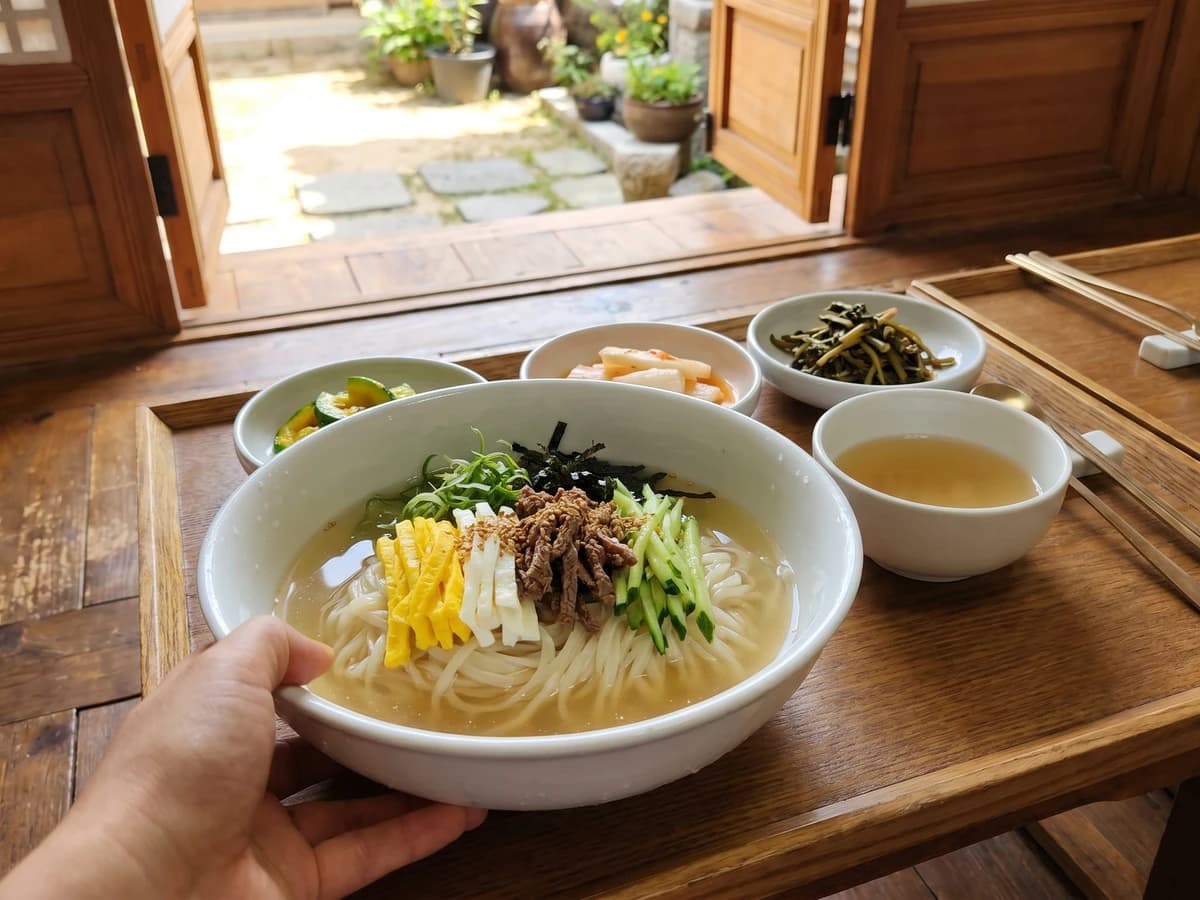
Andong's guest noodles, wheat and roasted soybean flour rolled thin, boiled and rinsed cold, then set in a clear chilled anchovy broth with careful strips of beef, egg, and cucumber.

Chef Jeong-sun
Andong's ritual-table rice served on an ordinary day: separate soy-sesame namul, warm rice, and clear radish soup, mixed without gochujang so every vegetable keeps its own voice.