Chef Lupita
Acúmara Tatemada al Comal
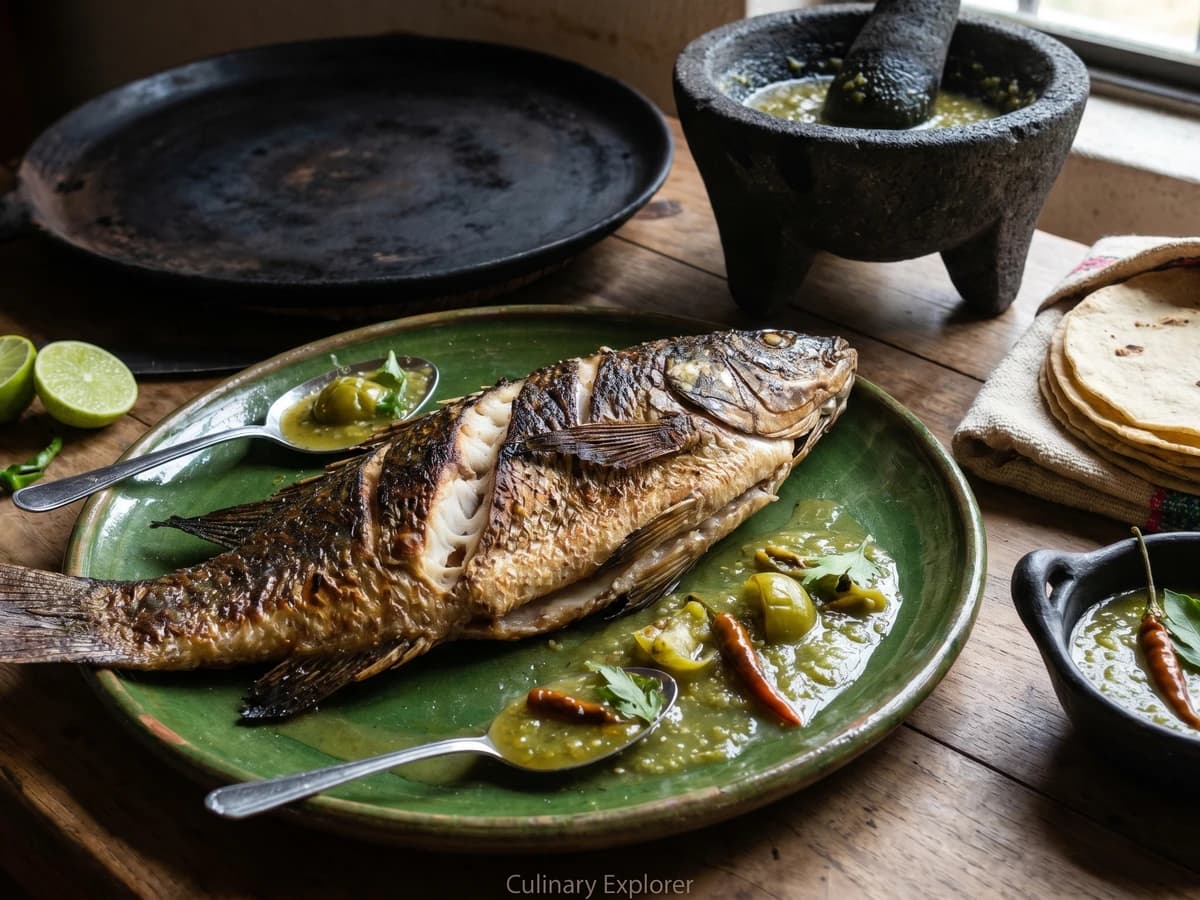
Michoacán's Lake Pátzcuaro acúmara, a whole kurucha from the lago tatemada on a comal de leña and served with chile perón atápakua, corn tortillas, and P'urhépecha discipline.
A cooking platform built around craft, culture, and the stories behind what we eat.

Created by
Guadalajara's pollo a la Valentina is poached chicken fried until crisp, set over golden potatoes, and covered with a mild guajillo-tomato sauce made for the family table.
Jalisco gives you this chicken from Guadalajara, especially from the cenadurias and home kitchens where supper is built from broth, lard, potatoes, and a red sauce that knows its place. This is not fried chicken from the north. This is pollo a la Valentina: simmered first, crisped second, drowned at the end.
The chile is guajillo. Mild, red, clean, a little sweet. It works with jitomate, garlic, white onion, and a touch of Mexican oregano to make a sauce that stains the chicken without trying to burn your mouth. Not all Mexican food is hot. Some of it is balanced, practical, and built for children, grandparents, and tired workers coming home hungry.
The women who perfected dishes like this understood economy. You poach the chicken and keep the broth. You fry potatoes in the same fat that will crisp the chicken. You pour the sauce over everything so the plate eats as one dish, not as separate pieces pretending to be fancy. My mother, jalisciense to the bone, wrote in her notebook: 'La salsa debe bañar, no decorar.' The sauce must bathe, not decorate. She was right.
Use manteca de cerdo if you want the flavor of a Guadalajara kitchen. Use good guajillos, flexible and red, not brittle old chiles that smell like dust. Si no conoces el mercado, no conoces la cocina. Cada estado, su propia cocina.
Pollo a la Valentina is associated with Guadalajara's 20th-century cenaduria culture, where poached meats, fried garnishes, and red chile-tomato sauces became practical evening food for families and workers. The name is usually connected to the popular revolutionary-era figure of La Valentina, though no single inventor is documented. Its technique reflects a Jalisco habit found in many home dishes: build flavor through broth first, then finish with fat, sauce, and table vegetables.
Quantity
1, 3 1/2 to 4 pounds
cut into 8 pieces
Quantity
8 cups, or enough to cover the chicken
Quantity
1/2 medium
for the broth
Quantity
3
for the broth
Quantity
2
Quantity
1 tablespoon, plus more to taste
Quantity
6
stemmed, seeded, and wiped clean
Quantity
4
Quantity
1/4 medium
for the sauce
Quantity
2
for the sauce
Quantity
1/2 teaspoon
Quantity
1
Quantity
1/4 teaspoon
Quantity
1 tablespoon
Quantity
1 cup, plus more as needed
Quantity
3 large
peeled and sliced into 1/4-inch rounds
Quantity
3/4 cup
divided
Quantity
1/2 cup
Quantity
1 teaspoon
for dredging
Quantity
1/2 teaspoon
for dredging
Quantity
6
washed and dried, for serving
Quantity
6
thinly sliced, for serving
Quantity
for serving
Quantity
for serving
| Ingredient | Quantity |
|---|---|
| whole chickencut into 8 pieces | 1, 3 1/2 to 4 pounds |
| water | 8 cups, or enough to cover the chicken |
| white onionfor the broth | 1/2 medium |
| garlic clovesfor the broth | 3 |
| bay leaves | 2 |
| kosher salt | 1 tablespoon, plus more to taste |
| dried chile guajillostemmed, seeded, and wiped clean | 6 |
| ripe Roma tomatoes | 4 |
| white onionfor the sauce | 1/4 medium |
| garlic clovesfor the sauce | 2 |
| dried Mexican oregano | 1/2 teaspoon |
| whole clove | 1 |
| ground black pepper | 1/4 teaspoon |
| apple cider vinegar | 1 tablespoon |
| chicken broth from poaching | 1 cup, plus more as needed |
| waxy potatoespeeled and sliced into 1/4-inch rounds | 3 large |
| pork lard (manteca de cerdo)divided | 3/4 cup |
| all-purpose flour | 1/2 cup |
| kosher saltfor dredging | 1 teaspoon |
| ground black pepperfor dredging | 1/2 teaspoon |
| romaine lettuce leaves (optional)washed and dried, for serving | 6 |
| radishes (optional)thinly sliced, for serving | 6 |
| lime halves (optional) | for serving |
| warm corn tortillas (optional) | for serving |
Put the chicken pieces in a heavy pot with the water, onion, garlic, bay leaves, and salt. Bring to a gentle simmer over medium heat, skimming the gray foam during the first 10 minutes. Lower the heat and cook 25 to 30 minutes, until the chicken is just cooked through. Do not boil it hard. You want tender meat and clean broth, not tired chicken.
Lift the chicken onto a tray and let it cool until you can handle it. Pat every piece very dry with a clean towel. Strain and reserve the broth. Wet chicken fights the lard and spits at you from the pan. Dry chicken browns. The difference is discipline.
Heat a dry comal or heavy skillet over medium. Toast the chile guajillo pieces for 15 to 20 seconds per side, just until they darken slightly and smell fruity. Do not walk away. Guajillo burns fast, and burned chile makes a bitter sauce. Place the toasted chiles in a bowl and cover with hot water for 15 minutes.
On the same comal, roast the tomatoes, onion, and garlic until the tomatoes are blistered and soft, the onion has browned edges, and the garlic is fragrant. Turn them as they char. This is where the sauce gets its depth. Raw tomato salsa on fried chicken tastes thin, and nobody in Guadalajara needs that.
Drain the softened guajillos and put them in a blender with the roasted tomatoes, onion, garlic, Mexican oregano, clove, black pepper, vinegar, and 1 cup of reserved chicken broth. Blend until completely smooth. Strain through a fine-mesh sieve into a bowl, pressing hard on the solids. The sauce should be red-orange, smooth, and pourable.
Melt 1/2 cup of the lard in a wide skillet over medium heat. Fry the potato rounds in batches until golden on both sides and tender inside, 4 to 5 minutes per side. Salt them while they are hot and set them on a tray. These potatoes are not decoration. They catch the sauce and carry the fat. La manteca es el sabor.
Mix the flour with the teaspoon of salt and the 1/2 teaspoon black pepper. Dust the dried chicken pieces lightly, shaking off the excess. Add the remaining 1/4 cup lard to the skillet if needed and fry the chicken skin side down first until deep golden and crisp, 3 to 5 minutes per side. The chicken is already cooked, so you are building color and texture now.
Pour off excess lard from the skillet, leaving about 2 tablespoons. Add the strained guajillo-tomato sauce carefully. It will sputter because it is hitting hot fat. Stir and simmer 8 to 10 minutes, until the sauce darkens slightly, loses its raw edge, and a red sheen appears on the surface. Taste for salt. If it thickens too much, loosen it with a little reserved broth.
Arrange the fried potatoes on a large platter, then set the crisp chicken pieces on top. Spoon the hot sauce generously over the chicken and potatoes. Tuck romaine leaves and radish slices around the edges, with lime halves on the side. Serve with warm corn tortillas. The sauce should run into the potatoes. That is the point. Recetas probadas y garantizadas.
1 serving (about 390g)
Culinary guides, cultural storytelling, and the editorial depth that makes cooking meaningful.
Discover Culinary ExplorerChef Lupita
Michoacán's Lake Pátzcuaro acúmara, a whole kurucha from the lago tatemada on a comal de leña and served with chile perón atápakua, corn tortillas, and P'urhépecha discipline.

Chef Lupita
Puebla's weekday adobo of pork shoulder braised in a thick guajillo and ancho sauce sharpened with vinegar, cumin, and clove. The deep red of a market spice stall, the dish a poblana cooks without thinking.

Chef Lupita
Loreto's pit-roasted clams, planted hinge-up in beach sand and tatemadas under a fast fire of dried romerillo brush, the resinous Baja desert shrub that gives this dish its smoke.

Chef Lupita
Oaxaca's eighth mole, the silky, almond-and-cinnamon almendrado, served over poached chicken. Mild, sweet, restrained, and a quiet rebuttal to anyone who thinks Mexican food has to be hot to be Mexican.