
Chef Lupita
Aporreadillo Michoacano con Huevo
Michoacán's Tierra Caliente almuerzo, where salted beef is softened, pounded, fried in lard, folded with egg and chile perón salsa, then served beside morisqueta like a proper working table.
A cooking platform built around craft, culture, and the stories behind what we eat.
Created by
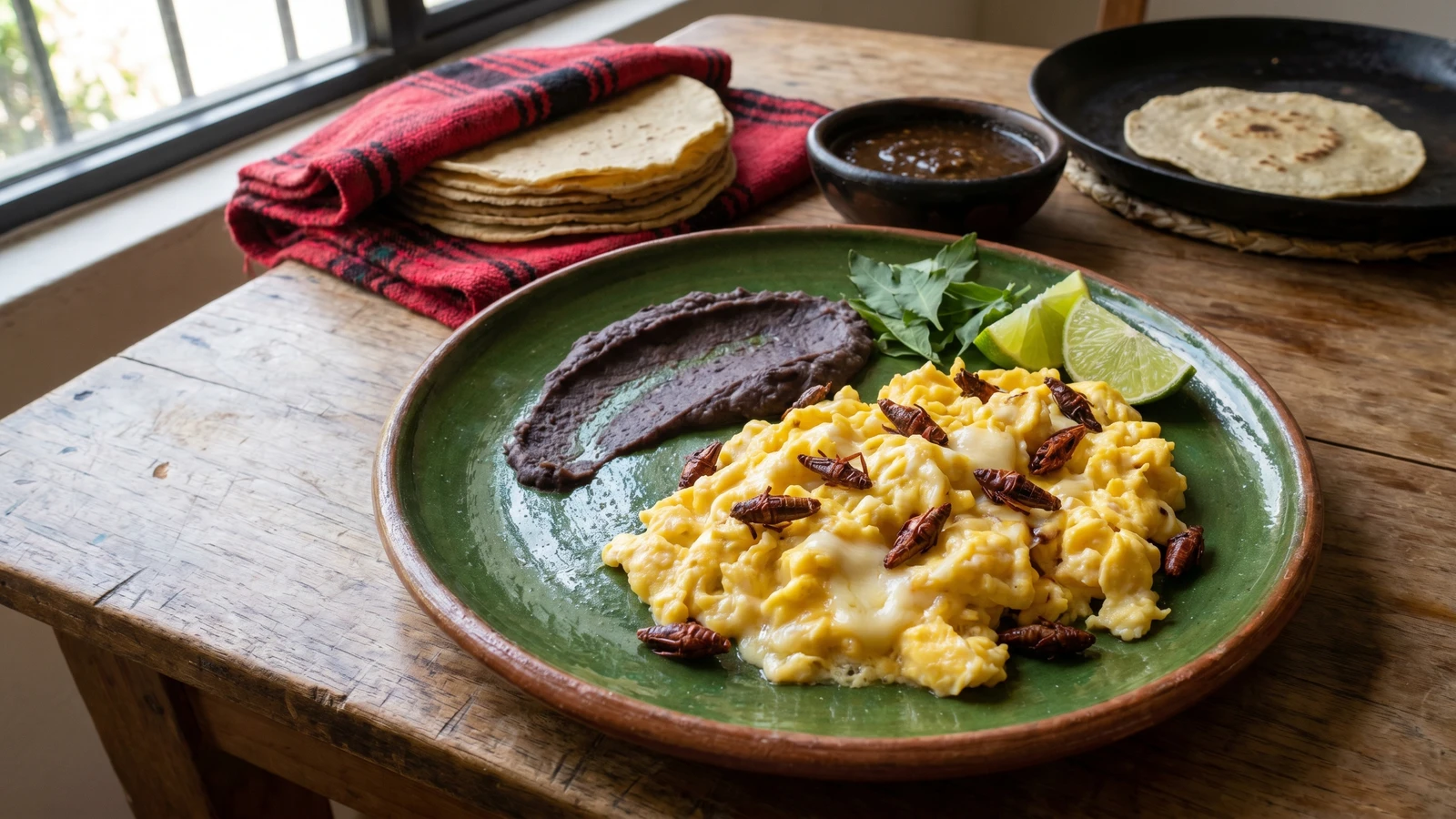
Oaxaca's morning eggs, scrambled with chapulines toasted in asiento until brick-red and crisp, threaded with hand-pulled quesillo from the Etla valley, and served alongside frijoles negros refritos and tortillas warm from the comal.
This is an Oaxacan breakfast. Not a novelty dish, not an exotic protein experiment for food tourists with cameras. This is what a family in the Valles Centrales eats on a Tuesday morning when the chapulines are fresh at the Mercado 20 de Noviembre and the quesillo arrived that day from Etla.
Chapulines are sold by the kilo in Oaxaca's markets, piled in wide baskets, sorted by size: chicos, medianos, grandes. The small ones are what you want for eggs. They're toasted in asiento, the dark, concentrated pork sediment from the bottom of the chicharron cazo, with garlic and a hard squeeze of lime until they turn brick-red and crunch between your teeth. Asiento carries a deeper, smokier flavor than plain manteca. It tastes like Oaxaca smells on a market morning. The quesillo comes from the Etla valley, pulled by hand into long ribbons by the quesilleras who have been making it since before their grandmothers taught them. You don't chop it. You pull it apart into thin strings and fold it into the warm eggs so it melts unevenly. Some bites stretch. Some don't. That's how it's supposed to be.
The dish takes fifteen minutes. The technique is scrambled eggs. But the ingredients carry a thousand years of Oaxacan food culture in every bite: the pre-Columbian chapulin, the colonial-era pork fat, the 19th-century cheese. Three layers of history in one clay plate. I first ate this at a fonda near the Mercado Benito Juarez at seven in the morning, four tables and a woman behind a comal who didn't ask what you wanted because you were going to eat what she was making. She served it on green-glazed Atzompa clay with a mound of frijoles negros refritos and a stack of tortillas she pressed and cooked to order. I wrote the recipe in my notebook before I finished eating. Saber cocinar es saber vivir.
Entomophagy in Mesoamerica predates the Spanish conquest by millennia, and the chapulin (Sphenarium purpurascens), a short-horned grasshopper harvested from alfalfa and corn fields in the Valles Centrales de Oaxaca, has been a significant protein source in the Zapotec and Mixtec diet since the pre-Classic period. The harvest season runs from May through November, peaking during the summer rains when the insects are most abundant. Quesillo, Oaxaca's signature string cheese, was reportedly developed in the Etla valley in the late 19th century when a young cheesemaker named Leobarda Castellanos Garcia left curds in hot water too long and discovered the stretching technique that defines the cheese; the Etla valley remains the center of artisanal quesillo production today, and the cheese carries a denominacion de origen claim that Oaxacan producers defend fiercely.
Quantity
6
Quantity
1/2 cup
cleaned
Quantity
150 grams (about 5 ounces)
pulled into thin ribbons
Quantity
2 tablespoons
Quantity
2 cloves
finely minced
Quantity
1
juiced
Quantity
3 to 4
torn
Quantity
to taste
Quantity
for serving
Quantity
for serving
warm from the comal
Quantity
for serving
| Ingredient | Quantity |
|---|---|
| large eggs | 6 |
| chapulines chicos (small grasshoppers)cleaned | 1/2 cup |
| quesillo (Oaxacan string cheese)pulled into thin ribbons | 150 grams (about 5 ounces) |
| asiento (or manteca de cerdo) | 2 tablespoons |
| garlicfinely minced | 2 cloves |
| limejuiced | 1 |
| fresh epazote leaves (optional)torn | 3 to 4 |
| kosher salt | to taste |
| frijoles negros refritos (optional) | for serving |
| hand-pressed corn tortillas (optional)warm from the comal | for serving |
| salsa de pasilla oaxaqueno (optional) | for serving |
Take the ball of quesillo and pull it apart into long, thin ribbons the way the quesilleras in Etla do: peel it along its natural grain, strand by strand, until you have a loose tangle of cheese strings. Do not chop it. Do not shred it. The uneven ribbons are the point. Some will melt into the eggs. Some will stretch when you lift a forkful. Set the ribbons aside on a plate.
Heat the asiento in a wide skillet or on a comal over medium heat. When the fat is hot and shimmering, add the garlic and stir for fifteen seconds, just until it smells sharp. Add the chapulines in a single layer. Toss them in the fat for two to three minutes. They will darken from dusty brown to brick-red and the kitchen will smell nutty, toasted, faintly smoky from the asiento. Squeeze the lime juice over them and toss once more. The lime sizzles on contact. Season with a pinch of salt. Transfer half the chapulines to a small bowl and set aside for garnish. Leave the rest in the skillet.
Crack the eggs into a bowl. Add a pinch of salt and the torn epazote leaves if using. Beat with a fork until the yolks and whites are just combined. Do not overbeat. You are not making an omelet. You want streaks of white and yellow visible in the bowl. That unevenness gives the scramble texture.
Return the skillet with the remaining chapulines to medium-low heat. If the pan looks dry, add another half tablespoon of asiento. Pour in the beaten eggs. Let them sit untouched for twenty seconds until the edges barely begin to set. Then push them gently with a wooden spoon or spatula, folding the cooked edges toward the center in slow, wide strokes. You are not stirring. You are folding. The chapulines will distribute through the curds as you work. Keep the heat low. Scrambled eggs cooked fast over high heat turn rubbery and dry. This takes patience. Three minutes of slow folding.
When the eggs are soft, creamy, and just barely set, scatter the quesillo ribbons across the top. Fold them in with two or three gentle strokes. No more. The cheese should soften and begin to melt from the heat of the eggs but not disappear entirely. You want visible strings of quesillo pulling through the curds when you serve. Remove from heat immediately.
Spoon the eggs onto a warm clay plate or green-glazed Atzompa dish. Scatter the reserved toasted chapulines over the top so they sit on the surface, visible and crisp. Serve with a generous mound of frijoles negros refritos, a stack of warm hand-pressed tortillas, and salsa de pasilla oaxaqueno on the side. This is a breakfast that does not wait. Eat it the moment it leaves the comal. Asi se hace y punto.
1 serving (about 195g)
Culinary guides, cultural storytelling, and the editorial depth that makes cooking meaningful.
Discover Culinary ExplorerChef Lupita
Michoacán's Tierra Caliente almuerzo, where salted beef is softened, pounded, fried in lard, folded with egg and chile perón salsa, then served beside morisqueta like a proper working table.

Chef Lupita
Guerrero's Costa Grande aporreado is salted cecina pounded soft, scrambled with egg, and finished in a red guajillo and chile de árbol salsa loud with garlic and cilantro.

Chef Lupita
Los Altos de Chiapas turns two-night fermented white corn into a tart-sweet atole, cooked with canela and piloncillo, then poured hot into jícaras for desayuno.

Chef Lupita
Oaxaca's Mixteca region ferments nixtamalized masa for days until it turns tart and alive, then simmers it with piloncillo and canela into a thick, warm atole served at first light in clay.