
Chef Lupita
Aporreadillo Michoacano con Huevo
Michoacán's Tierra Caliente almuerzo, where salted beef is softened, pounded, fried in lard, folded with egg and chile perón salsa, then served beside morisqueta like a proper working table.
A cooking platform built around craft, culture, and the stories behind what we eat.
Created by
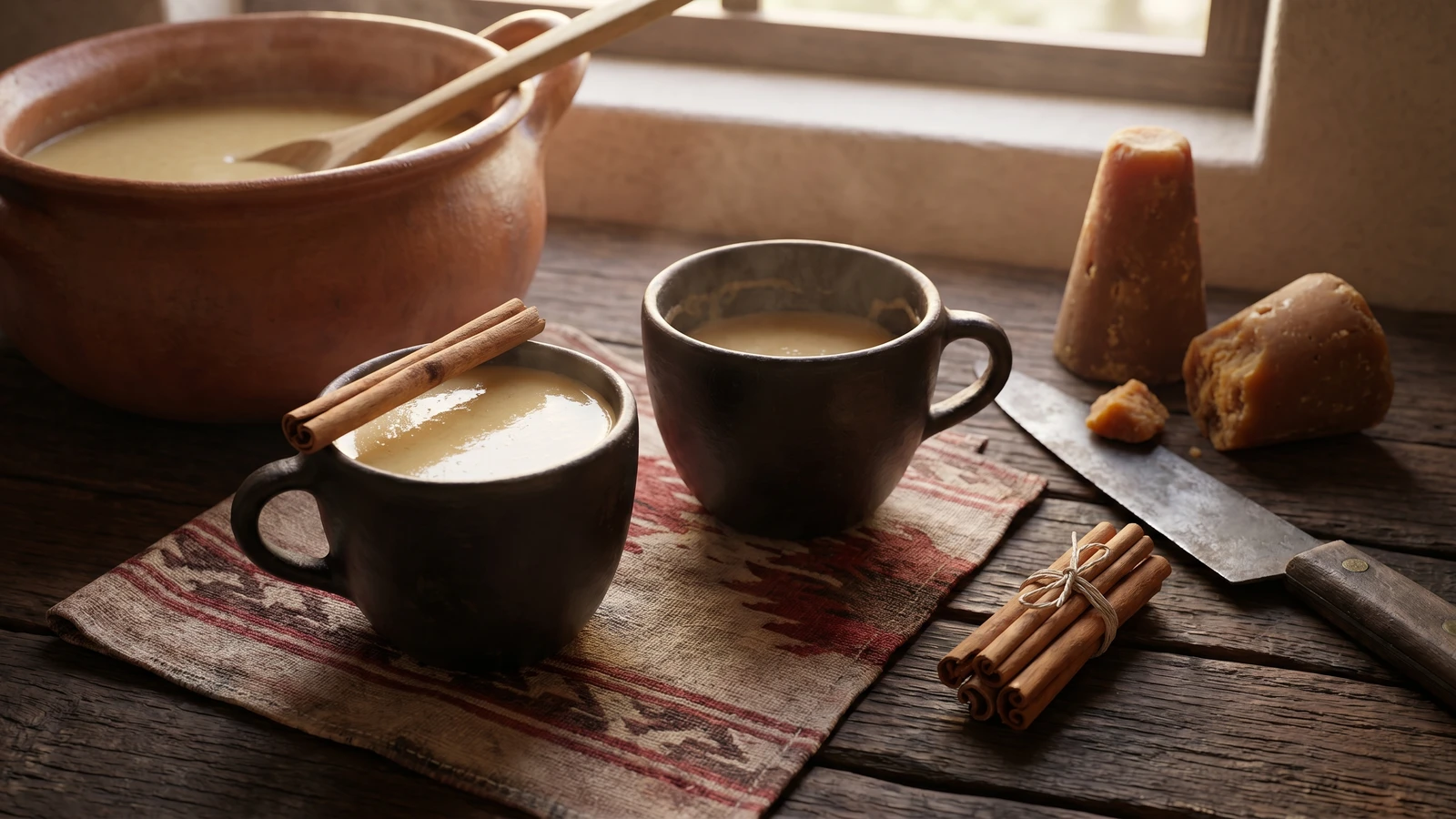
Oaxaca's Mixteca region ferments nixtamalized masa for days until it turns tart and alive, then simmers it with piloncillo and canela into a thick, warm atole served at first light in clay.
This is from the Mixteca of Oaxaca. Not the Valles Centrales, not the Istmo, not the coast. The Mixteca: the dry, mountainous region in the northwest of the state where the Mixtec people have been fermenting corn into something extraordinary for longer than anyone can date. In towns like Huajuapan de León, Juxtlahuaca, and Tlaxiaco, atole agrio is what the morning starts with. Not coffee. Not chocolate de metate. Fermented corn, simmered slow.
The technique is the dish. You dissolve fresh nixtamalized masa in water and then you leave it alone. Two days. Three. The masa sours, the wild bacteria and yeasts do their work, and it develops a tang that no amount of lime juice or vinegar could replicate because this is a living process. Your job is patience. When the mixture smells like sourdough and small bubbles rise to the surface, it is ready. You strain it, cook it with piloncillo and canela, and stir until it thickens into something that sits between a drink and a porridge. Tart, warm, gently sweet, deeply corn.
I collected this recipe in Huajuapan de León from a senora who told me her mother fermented the masa in a clay olla that had been in the family for three generations. The olla itself held the cultures, she said. Every batch started faster than the last because the clay remembered. She served the atole in jícaras before dawn, before anyone left for the fields. When I asked her to write the recipe down, she looked at me like I had asked her to write down how to breathe. There was no recipe. There was what you knew.
That is what I put in my notebook. Not measurements, at first. Just the process, the timing, the way the masa smelled on day two versus day three. The measurements came later, after I made it a dozen times in my own kitchen and understood the ratios. Saber cocinar es saber vivir, and this atole is proof that the simplest ingredients (corn, water, sugar, cinnamon) can produce something no factory has ever replicated.
Atole agrio belongs to the family of fermented corn beverages documented across Mesoamerica since before the Spanish conquest, with the Mixtec people of western Oaxaca practicing controlled maize fermentation for both ritual and daily sustenance for centuries. The technique of souring nixtamalized masa in clay vessels relies on lactofermentation driven by naturally occurring Lactobacillus bacteria, a process that predates European understanding of microbiology by hundreds of years and that converts the corn starches into lactic acid, improving digestibility and nutrient availability. The drink remains central to Mixtec ceremonial life, appearing at weddings, Día de Muertos altars, and patron saint festivals throughout the Mixteca Alta and Mixteca Baja, where it functions as an offering to the ancestors as much as a morning meal.
Quantity
1 pound
from a molino or tortillería
Quantity
10 cups, divided
Quantity
4 to 6 ounces (about half a small cone)
roughly chopped or grated
Quantity
2 sticks, about 4 inches each
Quantity
1/4 teaspoon
| Ingredient | Quantity |
|---|---|
| fresh nixtamalized masafrom a molino or tortillería | 1 pound |
| water, at room temperature | 10 cups, divided |
| piloncilloroughly chopped or grated | 4 to 6 ounces (about half a small cone) |
| Mexican canela (Ceylon cinnamon) | 2 sticks, about 4 inches each |
| fine salt | 1/4 teaspoon |
In a large clay olla, glass jar, or food-safe container, crumble the fresh masa into 4 cups of room-temperature water. Work it with your hands or a wooden spoon until the masa dissolves completely and the water turns opaque and milky white. There should be no lumps. Fresh masa from a good molino dissolves easily. If yours has been sitting and gone stiff, it will need more working. Break it apart with your fingers first, then stir. This slurry is the base that wild yeasts and bacteria will feed on for the next two to three days.
Add the remaining 6 cups of water and stir well. Cover the container loosely with a clean cloth or a lid set slightly ajar. You want air circulation, not a sealed environment. Set it in a warm corner of your kitchen, out of direct sunlight, and leave it alone. After 24 hours, give it one stir. By day two, you will notice small bubbles forming on the surface and the smell will shift from raw corn to something tangy and yeasty, like a sourdough starter waking up. By day three, the tang will be unmistakable. Taste it. If it has a clean sourness that makes your mouth pucker slightly, it is ready. If it still tastes flat and starchy, give it another half day. No me vengas con atajos. The fermentation cannot be rushed.
Set a fine-mesh strainer over a large heavy-bottomed pot. Pour the fermented mixture through in batches, pressing gently on the solids with the back of a wooden spoon to extract all the liquid. Discard the gritty residue left in the strainer. What passes through should be smooth, slightly thick, and noticeably tangy. This is your atole base. If it looks thin, do not worry. It will thicken considerably once it hits the heat.
Place the pot over medium-low heat. Add the chopped piloncillo, canela sticks, and salt. Stir constantly with a wooden spoon. The atole will begin to thicken as it heats and the starches activate. Do not stop stirring. Do not answer the phone. Walk away and it will lump on the bottom and scorch, and there is no recovering from scorched atole. Cook for 30 to 40 minutes, stirring the entire time, until the atole coats the back of a spoon and the piloncillo has dissolved completely. The canela will have perfumed the whole pot by now. Taste for balance. The atole should be noticeably tart with a gentle sweetness underneath, not the other way around. The sourness leads. The piloncillo follows. Add more piloncillo a little at a time if you need it, but do not bury the tang. The tang is the whole point of this drink.
Ladle the atole into clay cups, jícaras, or small bowls. Fish out the canela sticks or leave one resting across the rim for the table. Serve immediately. This is a morning drink in the Mixteca, taken warm before the day begins, and it does not improve with waiting. It thickens as it cools, which is natural. If you are reheating leftovers, add a splash of water and stir over low heat until it loosens back to a pourable consistency. Recetas probadas y garantizadas.
1 serving (about 350g)
Culinary guides, cultural storytelling, and the editorial depth that makes cooking meaningful.
Discover Culinary ExplorerChef Lupita
Michoacán's Tierra Caliente almuerzo, where salted beef is softened, pounded, fried in lard, folded with egg and chile perón salsa, then served beside morisqueta like a proper working table.

Chef Lupita
Guerrero's Costa Grande aporreado is salted cecina pounded soft, scrambled with egg, and finished in a red guajillo and chile de árbol salsa loud with garlic and cilantro.

Chef Lupita
Los Altos de Chiapas turns two-night fermented white corn into a tart-sweet atole, cooked with canela and piloncillo, then poured hot into jícaras for desayuno.

Chef Lupita
Tulyehualco's morning atole from the chinampas of Xochimilco, built on amaranto popped on the comal, ground smooth, and simmered with whole milk, piloncillo, and Mexican canela. The huauhtli of pre-Hispanic CDMX in a clay jarro.