
Chef Lupita
Aporreadillo Michoacano con Huevo
Michoacán's Tierra Caliente almuerzo, where salted beef is softened, pounded, fried in lard, folded with egg and chile perón salsa, then served beside morisqueta like a proper working table.
A cooking platform built around craft, culture, and the stories behind what we eat.
Created by
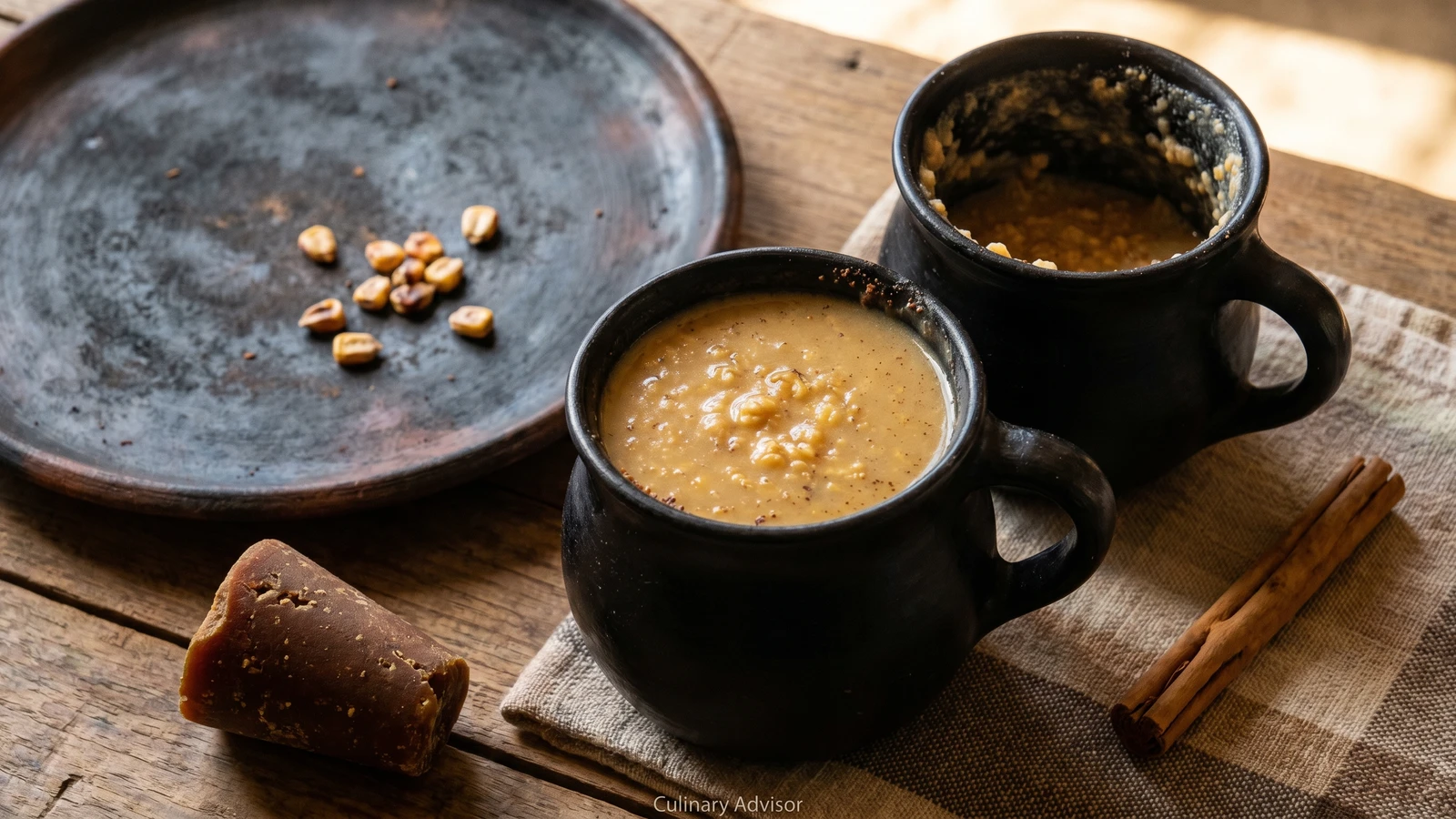
Sierra Sur's coarse-ground toasted corn atole, sweetened with piloncillo and canela, where the granillo texture is the whole point: a Chontal and Zapotec breakfast tradition that refuses to be smooth.
This is from the Sierra Sur of Oaxaca. Not the Valles Centrales, not the Istmo, not the coast. The mountains south of Miahuatlan, where the Chontal and Zapotec communities have been toasting and grinding their own corn for atole long before anyone wrote it down.
Atole de granillo is not smooth. That is the first thing you need to understand. The name tells you everything: granillo, little grains. The dried corn is toasted on a comal until it smells like the inside of a tortilleria at dawn, then ground coarse on a metate or in a hand mill so the starchy heart of the kernel stays in rough pieces while the outer shell breaks down into something that will thicken the water. When you drink it, your teeth find those soft, swollen bits of corn suspended in the liquid. That texture is not a flaw. It is the recipe. If you blend it smooth, you have made a different drink.
I collected this recipe in San Carlos Yautepec from a senora named Dona Fidelia who made it every morning during the cold months. She toasted the corn in small batches on a clay comal so blackened it looked like volcanic rock, and she ground it on a metate that had belonged to her mother-in-law. She told me the granillo should be the size of a pinhead, no finer. "Si lo mueles de mas, ya no es granillo," she said. If you grind it too much, it is no longer granillo. She was right. My mother never made this version. Her notebook has a page for champurrado from Jalisco, but nothing from the Sierra Sur. This recipe I earned on the road. Cada estado, su propia cocina, and within Oaxaca, each sierra, each valley, each coast has its own kitchen too.
Atole predates the conquest by millennia, with Mesoamerican peoples preparing cooked corn beverages from nixtamalized and non-nixtamalized maize documented in Aztec codices and in archaeological residue analysis from Oaxacan sites dating to 1000 BCE. The granillo variant is specific to highland Oaxacan communities, particularly the Chontal (Slijuala Xanuc') and Sierra Zapotec populations of the Sierra Sur, where the coarse grind distinguishes the drink from the smooth atoles of the Valles Centrales and the chocolate-laced champurrado of central Mexico. The technique of toasting dried corn before grinding, rather than nixtamalizing it, preserves a pre-Hispanic preparation method that bypasses the cal treatment, producing a nuttier, more textured drink that reflects the cooking logic of communities where the metate, not the molino de nixtamal, remained the primary grinding tool well into the 20th century.
Quantity
2 cups
whole and uncracked
Quantity
8 cups
Quantity
1 cone (about 8 ounces)
roughly chopped
Quantity
2 sticks, each about 4 inches long
Quantity
1/4 teaspoon
| Ingredient | Quantity |
|---|---|
| dried white corn kernels (maiz criollo blanco)whole and uncracked | 2 cups |
| water | 8 cups |
| piloncilloroughly chopped | 1 cone (about 8 ounces) |
| canela (Ceylon cinnamon) | 2 sticks, each about 4 inches long |
| kosher salt | 1/4 teaspoon |
Heat a dry comal or heavy cast iron skillet over medium heat. Add the dried corn kernels in a single layer, working in batches if needed so they are not crowded. Toast for 8 to 10 minutes, stirring and shaking the pan constantly. The kernels will darken from pale white to a golden tan with brown spots. Some will pop and jump. The kitchen will smell like roasted corn, warm and nutty, like standing outside a tortilleria at five in the morning. Do not stop stirring. Burned corn turns the atole bitter and there is no saving it. Each batch should sound like dry beans rattling in a gourd as you shake the comal. When they are uniformly golden and fragrant, slide them onto a plate to cool.
Let the toasted corn cool until you can handle it. Grind in a hand-crank corn mill set to the coarsest setting, or pulse in short bursts in a blender, three to four pulses of one second each. You are not making flour. You want a coarse, uneven grind: some pieces the sizeof a pinhead, some a bit larger, and a fine starchy dust holding it all together. If you grind it smooth, you have killed the granillo. Si lo mueles de mas, ya no es granillo. Check the texture with your fingers. It should feel gritty and rough, like coarse sand with pebbles in it.
Place the coarse-ground corn in a large bowl. Add 2 cups of the water at room temperature and stir with your hand or a wooden spoon, breaking up any clumps. Let it sit for five minutes. The starchy dust will begin to cloud the water and the larger granillo pieces will settle to the bottom. This brief soak gives the starch a head start before it hits the heat.
Pour the corn mixture and its soaking liquid into a heavy clay olla or a thick-bottomed pot. Add the remaining 6 cups of water, the canela sticks, and the chopped piloncillo. Set over medium heat and stir steadily with a wooden spoon as it comes to a simmer. The piloncillo will dissolve in about ten minutes if you chopped it small enough. Once the liquid begins to bubble gently, reduce the heat to low. The atole needs a lazy simmer, not a boil. A hard boil will push the granillo to the bottom and scorch it.
Cook at a low simmer for 25 to 30 minutes, stirring every few minutes and scraping the bottom of the pot. The starch from the ground corn will thicken the liquid gradually. You will feel it change under the spoon, from watery to silky to the consistency of a thin porridge. The granillo pieces will swell and soften but should still hold their shape and offer a slight chew. If the atole thickens too much before the time is up, add half a cup of hot water and stir it in. Add the salt in the last five minutes. It rounds the sweetness without making the drink taste salty.
Remove the canela sticks. Ladle the atole into clay jarritos or deep mugs. It should be thick enough to coat the back of a spoon but still drinkable. The granillo will settle as it sits, so stir the pot before each ladle. Drink it hot, in the morning, the way the senoras of the Sierra Sur have been drinking it for as long as corn has grown in those mountains. Recetas probadas y garantizadas.
1 serving (about 305g)
Culinary guides, cultural storytelling, and the editorial depth that makes cooking meaningful.
Discover Culinary ExplorerChef Lupita
Michoacán's Tierra Caliente almuerzo, where salted beef is softened, pounded, fried in lard, folded with egg and chile perón salsa, then served beside morisqueta like a proper working table.

Chef Lupita
Guerrero's Costa Grande aporreado is salted cecina pounded soft, scrambled with egg, and finished in a red guajillo and chile de árbol salsa loud with garlic and cilantro.

Chef Lupita
Los Altos de Chiapas turns two-night fermented white corn into a tart-sweet atole, cooked with canela and piloncillo, then poured hot into jícaras for desayuno.

Chef Lupita
Oaxaca's Mixteca region ferments nixtamalized masa for days until it turns tart and alive, then simmers it with piloncillo and canela into a thick, warm atole served at first light in clay.