Chef Lesia
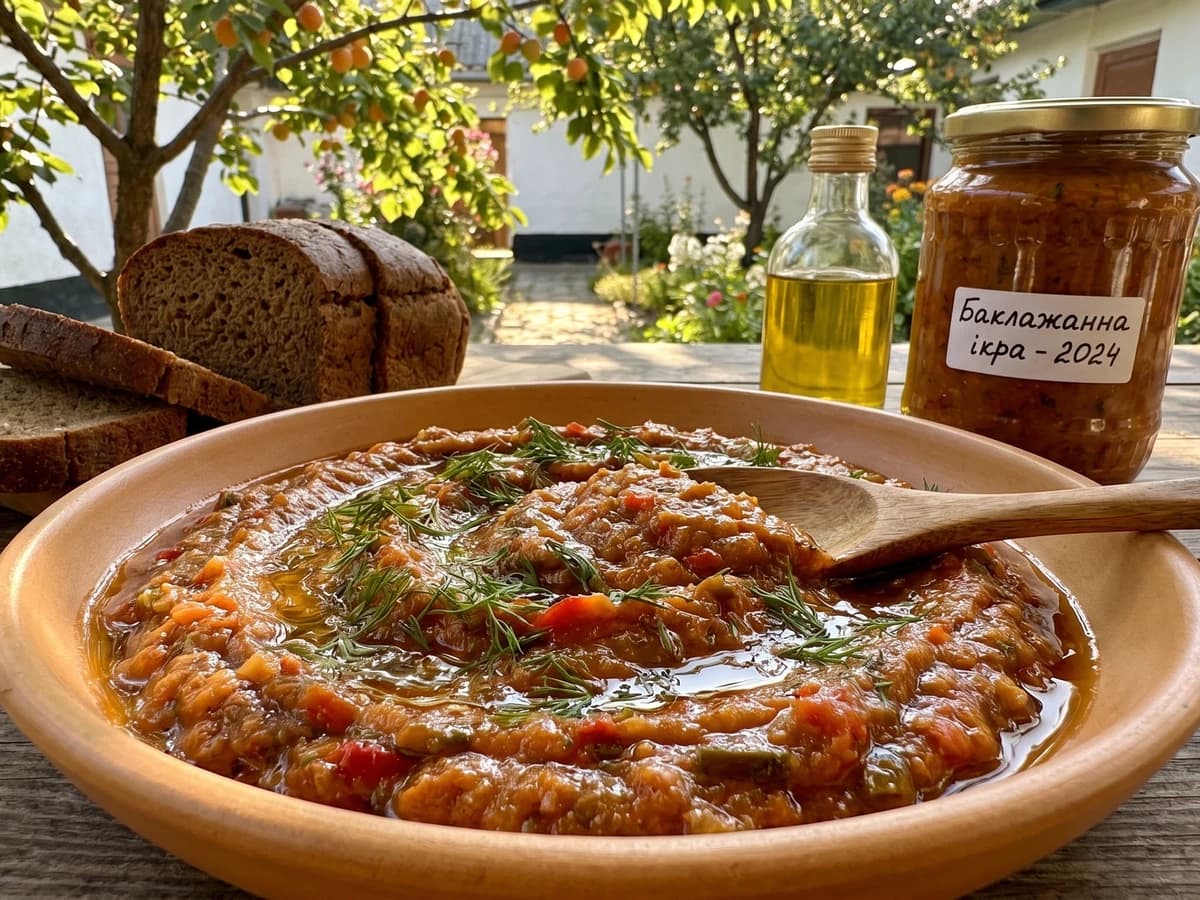
Baklazhanna Ikra (баклажанна ікра, eggplant caviar)
Eggplants collapse into silk, tomatoes give up their summer, and the pan turns sweet and smoky enough that a spoon dragged through leaves a clean path.
A cooking platform built around craft, culture, and the stories behind what we eat.

Created by
Mushrooms begin pale and squeaky, then cook down into something dark, glossy, and spoonable, with the smell of wet forest floor and fried onion in one bite.
The mushrooms start out noisy in the pan, pale and squeaky, all water and complaint. Then the liquid cooks off, the edges darken, the oil begins to shine, and suddenly you have a spread that tastes deeper than its ingredients. That is the moment. Hrybna ikra is not pretty in a polite way. It is dark, earthy, generous, and exactly what you want on rye bread with dill over the top.
This is forest-belt cooking more than my Kherson steppe cooking: Polissia, the Carpathians, the places where people know which basket is for boletus and which mushroom must never come home. In London I make it with chestnut mushrooms and a handful of dried porcini, because cook it anyway is still the rule. The dried mushrooms bring the forest back to the pan, and the fresh ones give you body.
The one thing that decides the dish is patience after the mushrooms give up their water. If you stop too early, you have chopped mushrooms. Keep going until the smell changes, until the sweetness of onion and carrot catches, until the spoon leaves a clean trail through the pan. Aunt Nadia wrote only, "fry until it sounds right," which was not helpful until the fourth batch. She meant quieter. She meant the hiss softens because the water is gone and the oil is doing its work.
Make enough for a jar and a bowl. It keeps well, feeds people quickly, and tastes even better tomorrow, when the garlic has stopped shouting and joined the table.
Hrybna ikra belongs strongly to Ukraine's forested regions, especially Polissia and the Carpathians, where mushroom picking, drying, salting, and cooking for Lenten tables are old household skills rather than a hobby. The word ikra here is a home-kitchen metaphor, meaning a finely chopped spread rather than fish roe, and the same naming appears in aubergine and courgette spreads that became especially common in the twentieth century. Soviet canteens flattened many mushroom dishes into bland paste, but village and family versions kept the sharper character: wild mushrooms, sunflower oil, onion sweetness, garlic, and enough pepper to wake it up.
Quantity
30g
Quantity
250ml
for soaking
Quantity
900g
cleaned and roughly chopped
Quantity
4 tablespoons, plus more to finish
Quantity
2 large
finely diced
Quantity
1 large
coarsely grated
Quantity
4 cloves
finely grated or crushed
Quantity
2 tablespoons
Quantity
1 tablespoon
Quantity
1 teaspoon, plus more to taste
Quantity
1/2 teaspoon
Quantity
1 small bunch
finely chopped, plus more to serve
Quantity
to serve
| Ingredient | Quantity |
|---|---|
| dried porcini or other dried forest mushrooms | 30g |
| boiling waterfor soaking | 250ml |
| chestnut mushrooms or mixed fresh mushroomscleaned and roughly chopped | 900g |
| unrefined sunflower oil | 4 tablespoons, plus more to finish |
| onionsfinely diced | 2 large |
| carrotcoarsely grated | 1 large |
| garlicfinely grated or crushed | 4 cloves |
| tomato paste | 2 tablespoons |
| fermented tomato brine, sauerkraut brine, or lemon juice | 1 tablespoon |
| sea salt | 1 teaspoon, plus more to taste |
| freshly ground black pepper | 1/2 teaspoon |
| dillfinely chopped, plus more to serve | 1 small bunch |
| rye bread or toasted sourdough (optional) | to serve |
Put the dried mushrooms in a bowl, cover with the boiling water, and let them soften until they smell like rain on leaves. Lift them out, squeeze them gently, and chop them fine. Strain the soaking liquid through a fine sieve or coffee filter and keep it; the grit stays behind, the forest goes into the pan.
Warm the sunflower oil in a wide heavy pan and add the onions with a pinch of salt. Let them soften until translucent and sweet-smelling, then add the grated carrot and keep cooking until the oil turns orange and glossy. This is a little zasmazhka, the slow-sweated flavour base, and it gives the dark mushrooms their sweetness.
Add the fresh mushrooms and the chopped soaked mushrooms to the pan. At first they will look like far too much and throw out a flood of liquid. Good. Stir, scrape, and let that water cook away until the pan grows quieter, the pieces shrink, and the smell changes from raw cellar to fried forest floor.
Stir in the tomato paste, garlic, pepper, and half of the reserved mushroom liquid. Cook slowly, scraping the bottom often, until the mixture turns dark brown, glossy, and thick enough that a spoon leaves a clean path through it. Add a splash more mushroom liquid if it catches before it tastes deep.
Take the pan off the heat and let it cool slightly. Pulse the mixture in a food processor until it is fine but not baby food, or chop it by hand if you want the old texture. It should spread easily but still have tiny pieces that tell your teeth what they are eating.
Stir in the fermented tomato brine or lemon juice, then taste for salt and pepper. Fold through most of the dill once the mixture is no longer hot enough to dull it. Spoon into a bowl or clean jar, gloss the top with a little sunflower oil, and let it rest for at least an hour before serving.
1 serving (about 110g spread, without bread)
Culinary guides, cultural storytelling, and the editorial depth that makes cooking meaningful.
Discover Culinary ExplorerChef Lesia
Eggplants collapse into silk, tomatoes give up their summer, and the pan turns sweet and smoky enough that a spoon dragged through leaves a clean path.

Chef Lesia
The salt hits first, then the pasture: sheep's milk turned into a white, crumbly cheese that tastes of grass, weather, and the mountain air that made it.

Chef Lesia
The first cheese from the mountain vat is barely cheese yet: sweet milk caught into a warm springy round, unsalted, alive with whey, waiting to become brynza if you let it.

Chef Lesia
Roasted beets turn almost black at the edges, then grind with garlic and walnuts into a crimson spread so dense the spoon leaves a path through it.