
Chef Takumi
Azuki-gayu (小豆粥, red bean porridge)
Azuki-gayu is deep-winter porridge, rice bloomed in the beans' rosy cooking liquid until soft and quiet. Salt it lightly, or sweeten each bowl, but keep the azuki intact.
A cooking platform built around craft, culture, and the stories behind what we eat.
Created by
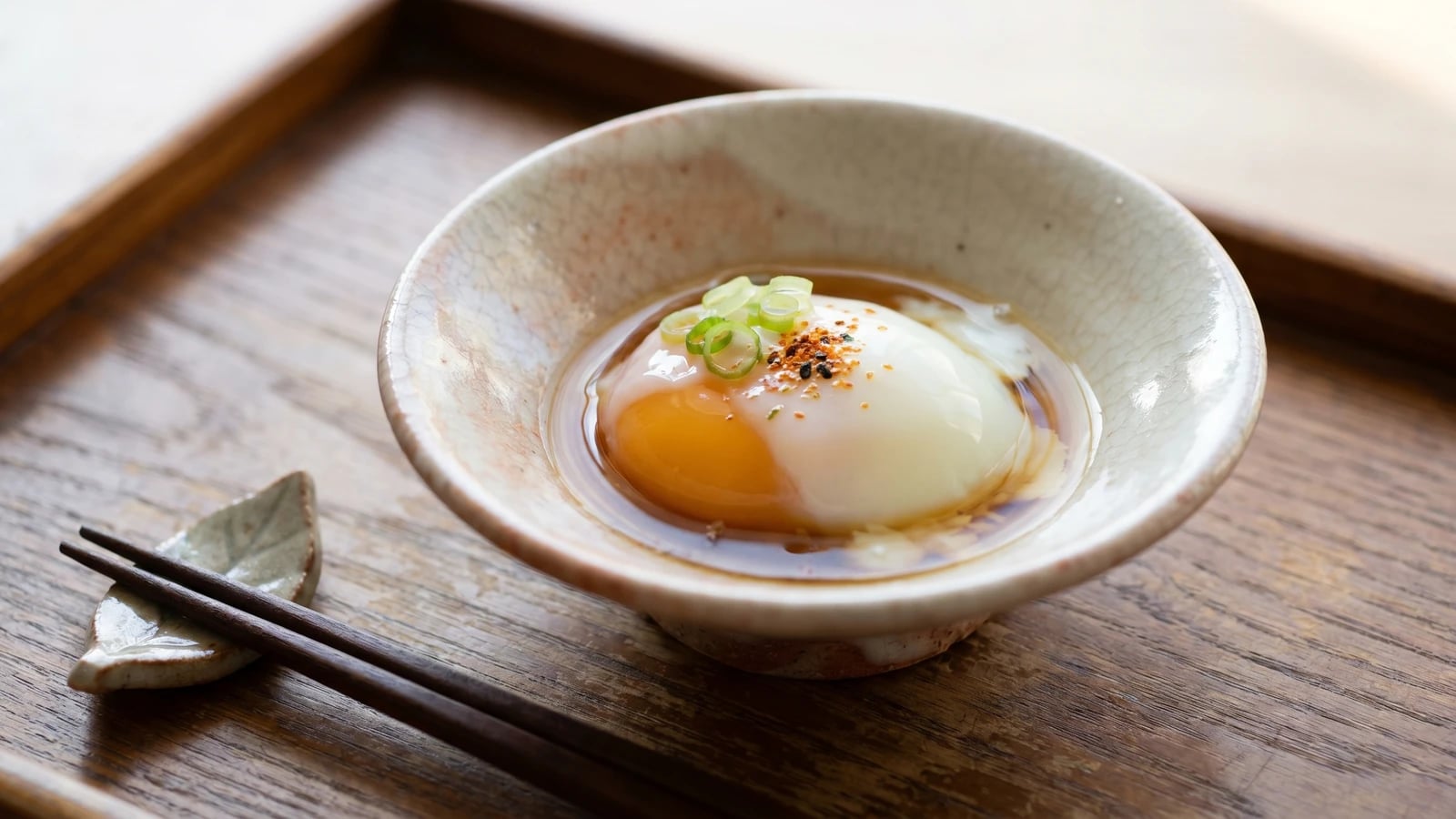
This is an egg taught by warm water: a thick, spoonable yolk, a barely set white, and a little soy-dashi sauce to make breakfast feel calm.
An egg looks simple until you ask it to set in two different ways at once. That is the small joke of onsen tamago. The yolk should turn thick and custard-like, while the white stays soft enough to slip from the shell. People hear this and reach for machinery. You need a thermometer, a pot, and the nerve to keep the water steady.
The first secret is temperature. At about 65°C, the yolk firms before the white fully tightens, which is the opposite of a boiled egg and exactly why the dish works. Too hot, and you've made a soft-boiled egg. Too cool, and the white stays loose and raw-tasting. Hold the warmth, don't chase a boil. The water is doing the cooking, slowly and without argument.
We serve onsen tamago as a small dish in its own right, over rice, or tucked beside breakfast things that need a gentle center. The sauce is simple: dashi, soy, and mirin, clear enough that nothing is hidden. Break the egg with a spoon and let the yolk thicken the sauce in the bowl. It feels more delicate than it is, which is often the way with honmono.
Onsen tamago takes its name from the hot springs where eggs were traditionally cooked in mineral-rich water held below a boil. Hot spring towns such as Beppu in Oita and Iizaka in Fukushima became known for serving these slow-set eggs to travelers, with each place shaped by the temperature of its own spring. The dish later moved easily into home kitchens because its defining method is not the spring itself, but the steady low heat it provides.
Quantity
4
at room temperature
Quantity
4 cups
for the cooking bath
Quantity
1 cup
for stopping the cooking
Quantity
1/2 cup
Quantity
2 tablespoons
Quantity
1 tablespoon
Quantity
1 teaspoon
Quantity
1 small
very thinly sliced
Quantity
a pinch
| Ingredient | Quantity |
|---|---|
| large eggsat room temperature | 4 |
| waterfor the cooking bath | 4 cups |
| ice waterfor stopping the cooking | 1 cup |
| dashi | 1/2 cup |
| soy sauce | 2 tablespoons |
| mirin | 1 tablespoon |
| sugar (optional) | 1 teaspoon |
| scallion (optional)very thinly sliced | 1 small |
| shichimi tōgarashi (optional) | a pinch |
Set the eggs on the counter for about 30 minutes if they came from the refrigerator. A cold egg drops the bath temperature sharply and cooks unevenly, so this small patience gives you a steadier set. Check each shell for cracks. There is nothing heroic about rescuing egg white from a pot.
Combine the dashi, soy sauce, mirin, and sugar if using in a small pan. Bring it just to a simmer, then take it off the heat and cool to room temperature. The brief heating burns off the raw edge of the mirin and lets the seasoning settle into one clear sauce, not three separate tastes.
Fill a medium pot with enough water to cover the eggs by at least 1 inch and warm it to 65°C. Keep the heat low and watch the thermometer, adjusting with small splashes of hot or cool water as needed. The aim is steady warmth, not bubbling water, because the yolk and white set at different temperatures.
Lower the eggs gently into the 65°C water and hold them there for 40 to 45 minutes. Keep the water between 64°C and 66°C. If it wanders a degree now and then, don't scold the pot, just correct it. At this temperature the yolk thickens into a soft custard while the white stays loose and tender.
Lift the eggs into ice water for 3 minutes, then dry the shells. This stops the carryover heat so the white doesn't continue tightening. If you plan to serve them later, chill them in the refrigerator after this brief cooling.
Crack each egg into a small bowl, letting the soft white fall around the yolk. Spoon over a little soy-dashi sauce, then add scallion or a pinch of shichimi tōgarashi if you like. Serve as its own small dish or over warm rice, leaving enough empty space in the bowl for the egg to look settled, not crowded.
1 serving (about 75g)
Culinary guides, cultural storytelling, and the editorial depth that makes cooking meaningful.
Discover Culinary ExplorerChef Takumi
Azuki-gayu is deep-winter porridge, rice bloomed in the beans' rosy cooking liquid until soft and quiet. Salt it lightly, or sweeten each bowl, but keep the azuki intact.

Chef Takumi
This is the softer cousin of tamagoyaki: more dashi, less sugar, and a roll that should tremble a little when sliced. The trick is thin layers and a patient hand.

Chef Takumi
Rice, hojicha, salt, and restraint: Chagayu asks only that you keep the grains loose and the tea clear, so the bowl tastes clean, amber, and quietly steady.

Chef Takumi
Nattō gohan asks only for hot rice, good fermented beans, and the courage to stir until the strands turn glossy and pale. The smell talks first. The flavor is gentler.