
Chef Takumi
Dashimaki Tamago (出汁巻き玉子, dashi-rolled omelet)
This is the softer cousin of tamagoyaki: more dashi, less sugar, and a roll that should tremble a little when sliced. The trick is thin layers and a patient hand.
A cooking platform built around craft, culture, and the stories behind what we eat.
Created by
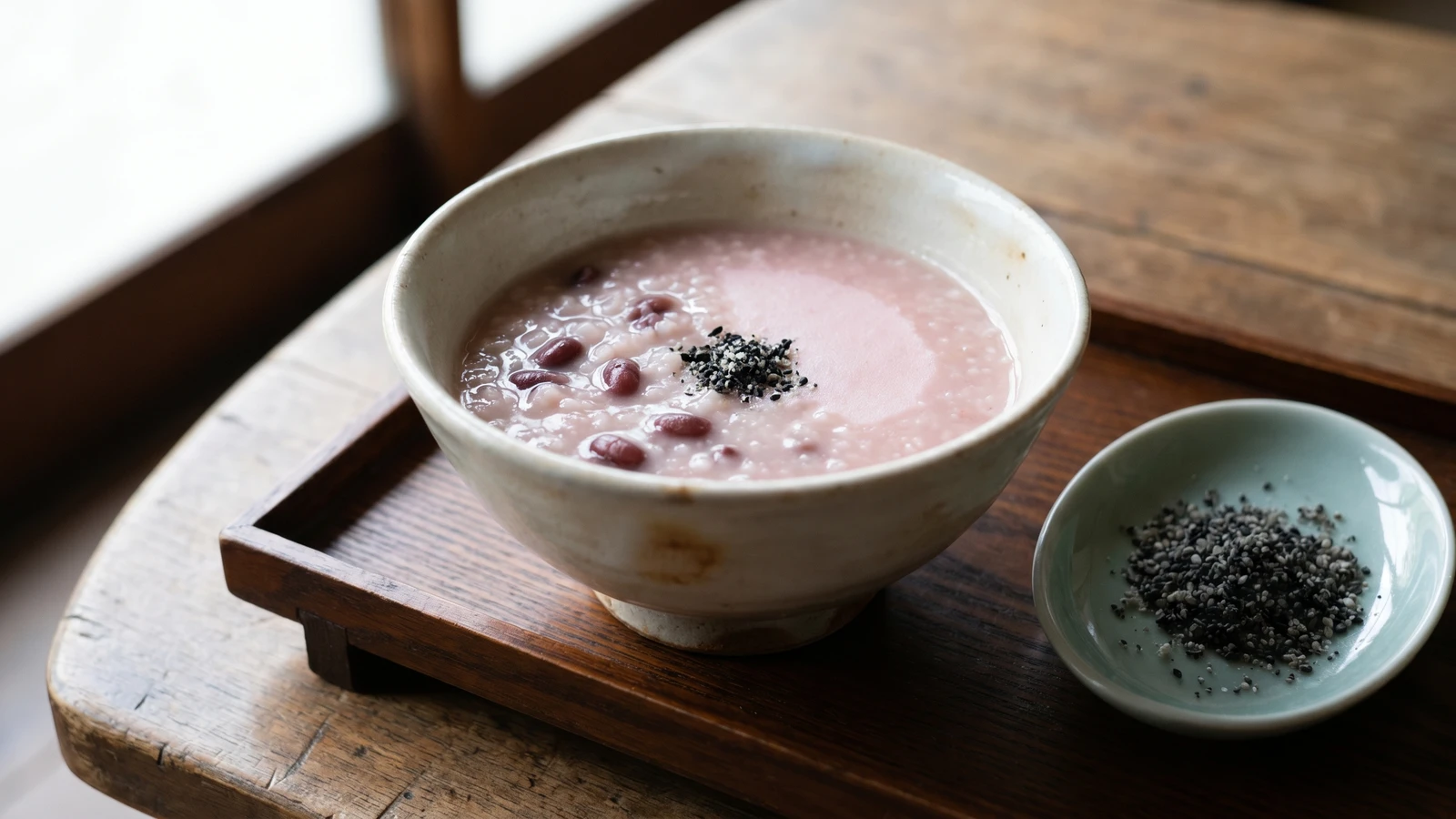
Azuki-gayu is deep-winter porridge, rice bloomed in the beans' rosy cooking liquid until soft and quiet. Salt it lightly, or sweeten each bowl, but keep the azuki intact.
Azuki-gayu is January food. The beans stain the rice a quiet pink, not candy bright, and the bowl looks modest until the cold outside makes its argument for it. On Koshōgatsu, the small New Year on the fifteenth day, we eat it for health and good fortune, which sounds grand for a pot of rice and beans. Grand things often arrive in plain bowls. Japan is sensible that way.
The part that decides it is the bean water. Give azuki one first boil and throw that water away; it carries the harsh edge in the skins. Cook the beans again until just tender, then use that second red liquid for the rice. This keeps the porridge clean-tasting and pink, while the beans stay whole instead of surrendering into paste.
The rice asks for less drama than people give it. Rinse, soak, drain, then simmer gently with the beans and leave it alone. Stirring makes glue. A hard boil breaks the beans. Keep the heat low and the grains open slowly, and you'll have honmono: soft, warm, a little austere, with nothing hidden. Salt is the old way; a little sugar in the bowl is allowed if your table wants comfort with a rounder edge.
Azuki-gayu is closely tied to Koshōgatsu, the small New Year observed on January 15, when many households ate rice porridge with azuki as a prayer for health through the year. The red color of azuki was long treated as protective in Japan and China, so the beans appear in celebratory foods from sekihan to this winter porridge. Some shrines practiced kayuura, porridge divination, reading the amount of grain that lodged inside reed or bamboo tubes to predict the coming harvest.
Quantity
1 Japanese rice cup (180ml, about 150g)
Quantity
1/2 cup (about 100g)
Quantity
about 8 cups
divided, plus more as needed
Quantity
1/2 teaspoon
plus more to taste
Quantity
2 to 3 tablespoons
for sweet bowls
Quantity
to taste
for serving
| Ingredient | Quantity |
|---|---|
| short-grain Japanese rice | 1 Japanese rice cup (180ml, about 150g) |
| dried azuki beans | 1/2 cup (about 100g) |
| waterdivided, plus more as needed | about 8 cups |
| sea saltplus more to taste | 1/2 teaspoon |
| sugar (optional)for sweet bowls | 2 to 3 tablespoons |
| goma shio (black sesame salt) (optional)for serving | to taste |
Put the rice in a bowl, cover it with cool water, and swish gently with your hand. Pour off the cloudy water and repeat until the water is almost clear, then soak the rice in fresh water for 30 minutes. Drain it well. Washing clears away loose surface starch, and soaking lets the grains swell evenly before they meet the pot.
Rinse the azuki and pick out any split or dull beans. Put them in a pot with 3 cups water and bring to a boil. Boil for 5 minutes, then drain and rinse the pot. This first boiling, yudekoboshi, throws away the rough edge from the skins. It is not waste. It is the shortest path to a clean bowl.
Return the drained azuki to the pot with 4 cups fresh water. Bring to a simmer, then cook gently for 25 to 35 minutes, adding a little water if the beans are no longer covered. Stop when a bean yields under your fingers but the skin still holds. Do not add salt or sugar yet, because either one makes the skins slower to soften.
Set a strainer over a bowl and drain the beans, saving every drop of the red cooking liquid. Add fresh water to that liquid to make 5 cups total. This is the color and scent of the porridge. The rice should cook in it, not in plain water with beans tossed in afterward.
Combine the drained rice, cooked azuki, and measured red liquid in a donabe or heavy pot. Bring it just to a simmer over medium heat, stir once from the bottom so nothing catches, then lower the heat and set the lid slightly ajar. Cook for 30 to 35 minutes without stirring, until the grains have swollen and opened and the porridge is soft but not pasty.
Turn off the heat, cover the pot fully, and let the porridge rest for 10 minutes. Resting finishes the grains without rough boiling. Season with the sea salt and taste. If you want a sweet version, stir sugar into individual bowls, or fold it gently into the pot after the rice is fully cooked. Sugar added earlier slows the beans and dulls their shape.
Ladle the porridge into warm bowls, filling each one modestly. Scatter a small pinch of goma shio over the surface if you like, or leave it plain. Serve warm. If it thickens as it waits, loosen it with a spoonful of hot water and stir only enough to bring it back together.
1 serving (about 450g)
Culinary guides, cultural storytelling, and the editorial depth that makes cooking meaningful.
Discover Culinary ExplorerChef Takumi
This is the softer cousin of tamagoyaki: more dashi, less sugar, and a roll that should tremble a little when sliced. The trick is thin layers and a patient hand.

Chef Takumi
This is an egg taught by warm water: a thick, spoonable yolk, a barely set white, and a little soy-dashi sauce to make breakfast feel calm.

Chef Takumi
Rice, hojicha, salt, and restraint: Chagayu asks only that you keep the grains loose and the tea clear, so the bowl tastes clean, amber, and quietly steady.

Chef Takumi
Nattō gohan asks only for hot rice, good fermented beans, and the courage to stir until the strands turn glossy and pale. The smell talks first. The flavor is gentler.