
Chef Klaus
Bauernfrühstück
Yesterday's boiled potatoes, a little ham, onion, and egg. The whole dish works only if the potatoes brown before the egg goes in.
A cooking platform built around craft, culture, and the stories behind what we eat.

Created by
The Berlin and Saxon larder pan: yesterday's potatoes fried hard with sausage and ham, then bound with egg so the edges stay crisp and the middle stays tender.
Hoppel Poppel belongs to Berlin and Saxony first, a leftover pan for a late supper, a quick lunch, or the morning after a roast. It isn't feast food. It's the dish that proves a German kitchen can feed you well from the bowl of cold potatoes and the heel of sausage left in the larder. Weggeworfen wird nichts.
Berlin keeps it direct: fried potato, onion, ham or sausage, egg over the top, sometimes a sour pickle beside it. Saxon cooks may add more onion or smoked meat, and farther north you start seeing sharper pickles and rye on the table with it. Im Norden anders, im Süden anders. This one stays in the middle of the country, quick and useful.
The technique is simple and often ruined. Fry the potatoes first, in a wide pan, until their cut faces are crisp before the egg goes in. Add the egg too soon and you make a soft potato omelette. Good Hoppel Poppel has browned potatoes under the egg, not potatoes boiled twice by impatience.
Beat the eggs only enough to break them, pour them over, then lower the heat. The egg should bind the pan, not bury it. Würzen, Fett, Salz zum Schluss, because ham and sausage already carry salt, and the pan will tell you at the end what it needs.
Hoppel Poppel is tied to Berlin and Saxon household cooking of the 19th and early 20th centuries, when cooked potatoes became the everyday stored staple after Prussian rulers pushed potato cultivation through the 1700s. Frederick II of Prussia issued potato orders in the 1750s to expand planting, and dishes like this show what happened once boiled potatoes sat in every kitchen: the next day they went back into the pan with cured meat and eggs. The name is kitchen language rather than court language, a mixed-up pan from leftovers, which is exactly its sense.
Quantity
600g
peeled and diced
Quantity
150g
diced
Quantity
150g
diced
Quantity
1
finely chopped
Quantity
6
Quantity
3 tablespoons
Quantity
2 tablespoons
Quantity
1 tablespoon
Quantity
1 teaspoon
lightly crushed
Quantity
2 tablespoons
chopped
Quantity
to taste
Quantity
to taste
Quantity
to serve
| Ingredient | Quantity |
|---|---|
| cold cooked waxy potatoespeeled and diced | 600g |
| cooked hamdiced | 150g |
| smoked sausage or cooked Bratwurstdiced | 150g |
| large onionfinely chopped | 1 |
| large eggs | 6 |
| whole milk | 3 tablespoons |
| lard, butter, or neutral oil | 2 tablespoons |
| butter | 1 tablespoon |
| caraway seeds (optional)lightly crushed | 1 teaspoon |
| chiveschopped | 2 tablespoons |
| freshly ground black pepper | to taste |
| salt | to taste |
| sour pickles | to serve |
Spread the diced cold potatoes on a towel and pat them dry. Cold potatoes cut cleanly and hold their shape; wet potatoes hiss, stick, and turn the pan pale instead of crisping.
Heat the lard or oil in a wide heavy pan over medium-high heat, then fry the ham and sausage until the edges darken and the fat wakes up. Take them out with a slotted spoon. The meat gives its salt and smoke to the fat, and that fat is where the potatoes should cook.
Add the potatoes in one layer and leave them alone for three to four minutes before turning. Crowding and stirring make broken potatoes, not fried potatoes. When several faces are golden and crisp, add the onion and caraway if using, then cook until the onion softens and sweetens.
Beat the eggs with the milk, black pepper, and only a small pinch of salt, because the ham and sausage already did some seasoning. Return the meat to the pan, add the butter, then pour in the eggs and lower the heat. Stir once or twice from the edge toward the middle so the egg slips through the potatoes and binds them without covering the crisp pieces.
Cook until the eggs are just set but still soft in the middle, then take the pan off the heat so carryover warmth finishes them gently. Taste before adding salt. Finish with chives and serve straight from the pan with sour pickles. Schön ist, was schmeckt.
1 serving (about 350g)
Culinary guides, cultural storytelling, and the editorial depth that makes cooking meaningful.
Discover Culinary ExplorerChef Klaus
Yesterday's boiled potatoes, a little ham, onion, and egg. The whole dish works only if the potatoes brown before the egg goes in.

Chef Klaus
Brown North Sea shrimp on buttered dark rye, a soft fried egg over the top, and the whole plate decided by one thing: keep the shrimp cool and the yolk running.
Chef Klaus
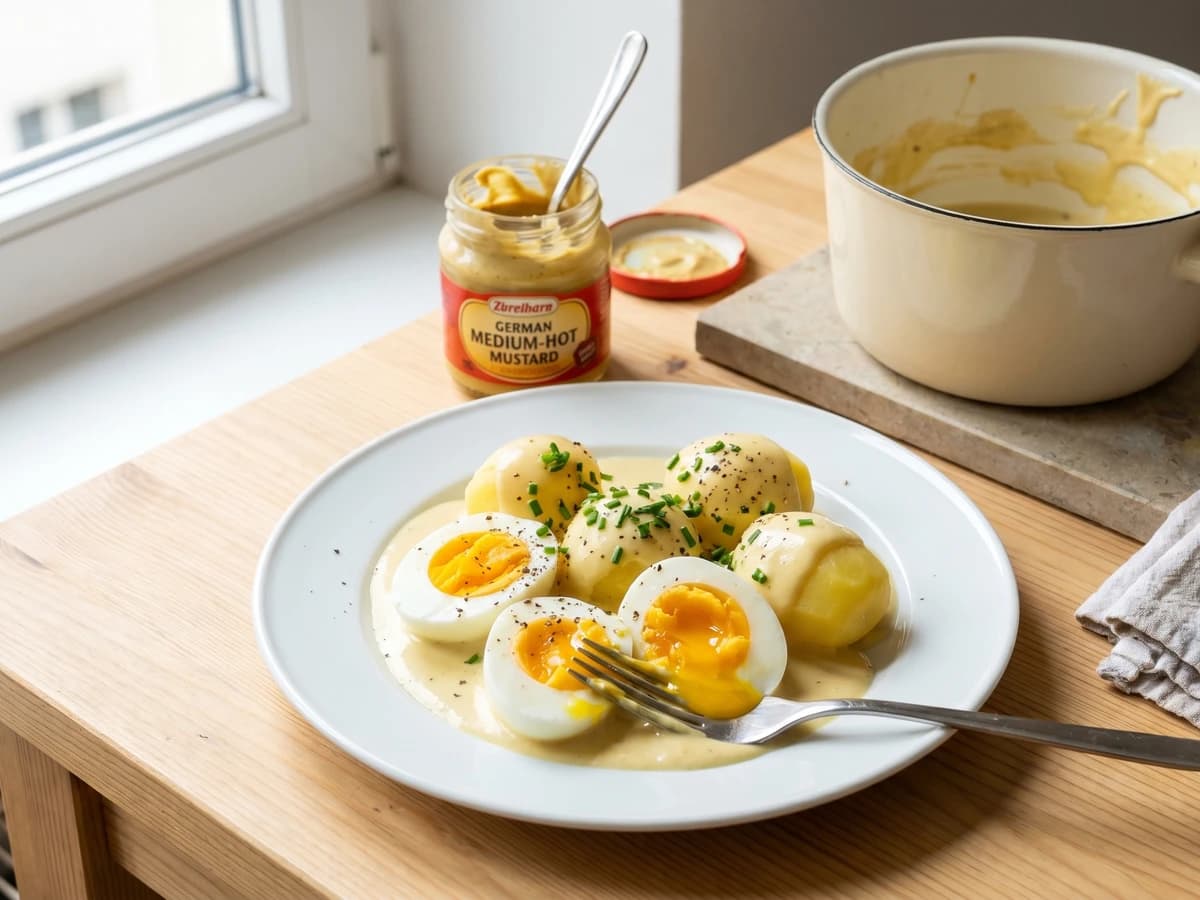
Hard eggs, boiled potatoes, and a mustard sauce made from a proper roux: the quick eastern supper that works because the mustard goes in last.
Chef Klaus
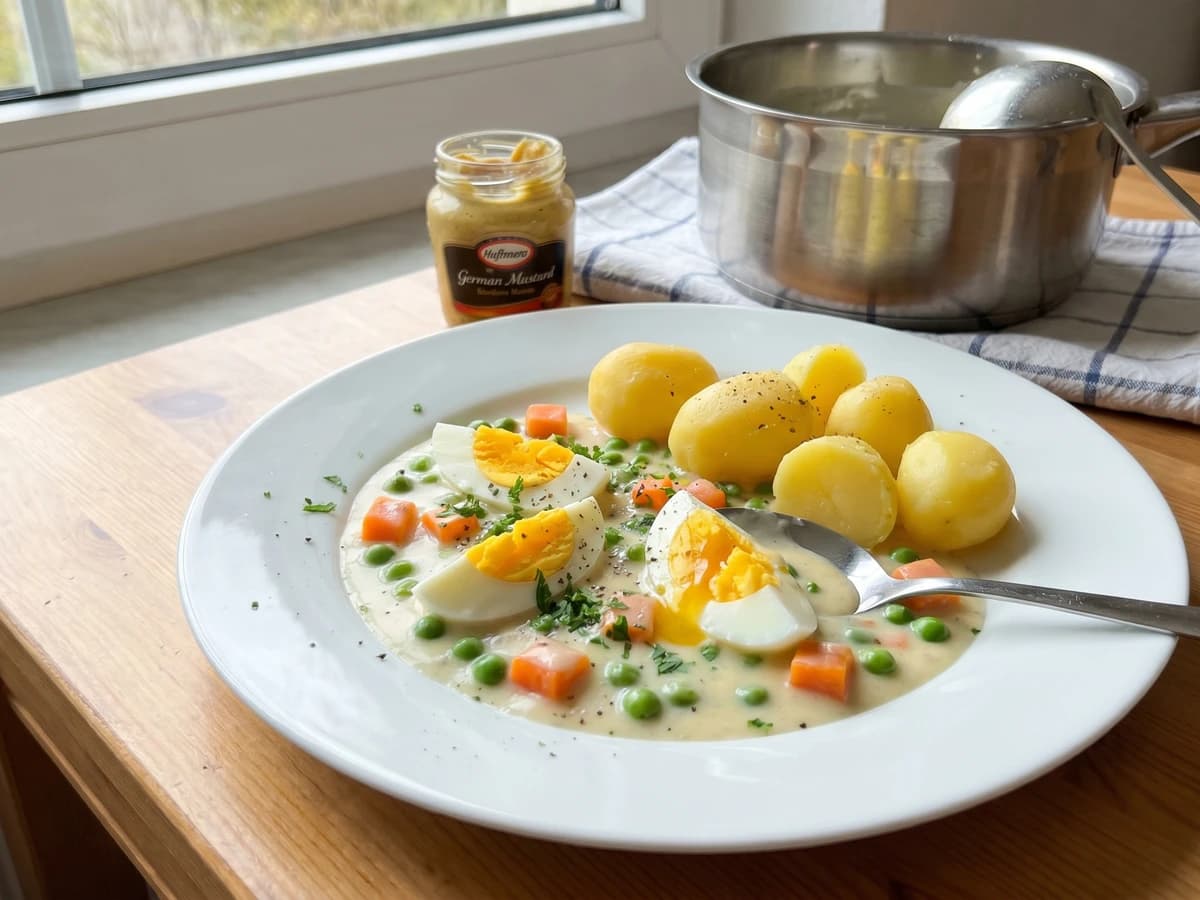
An East German weekday egg dish: hard-boiled eggs warmed gently in a pale sauce with peas, carrots, and lemon, cheap enough for Tuesday and proper enough for the table.