
Chef Lupita
Almendrados Conventuales Poblanos
Puebla's convent almond cookies, made from blanched almonds, sugar syrup, egg yolks, canela, and patient hands, the kind of sweet that belongs beside coffee in talavera, not in a plastic bakery box.
A cooking platform built around craft, culture, and the stories behind what we eat.
Created by
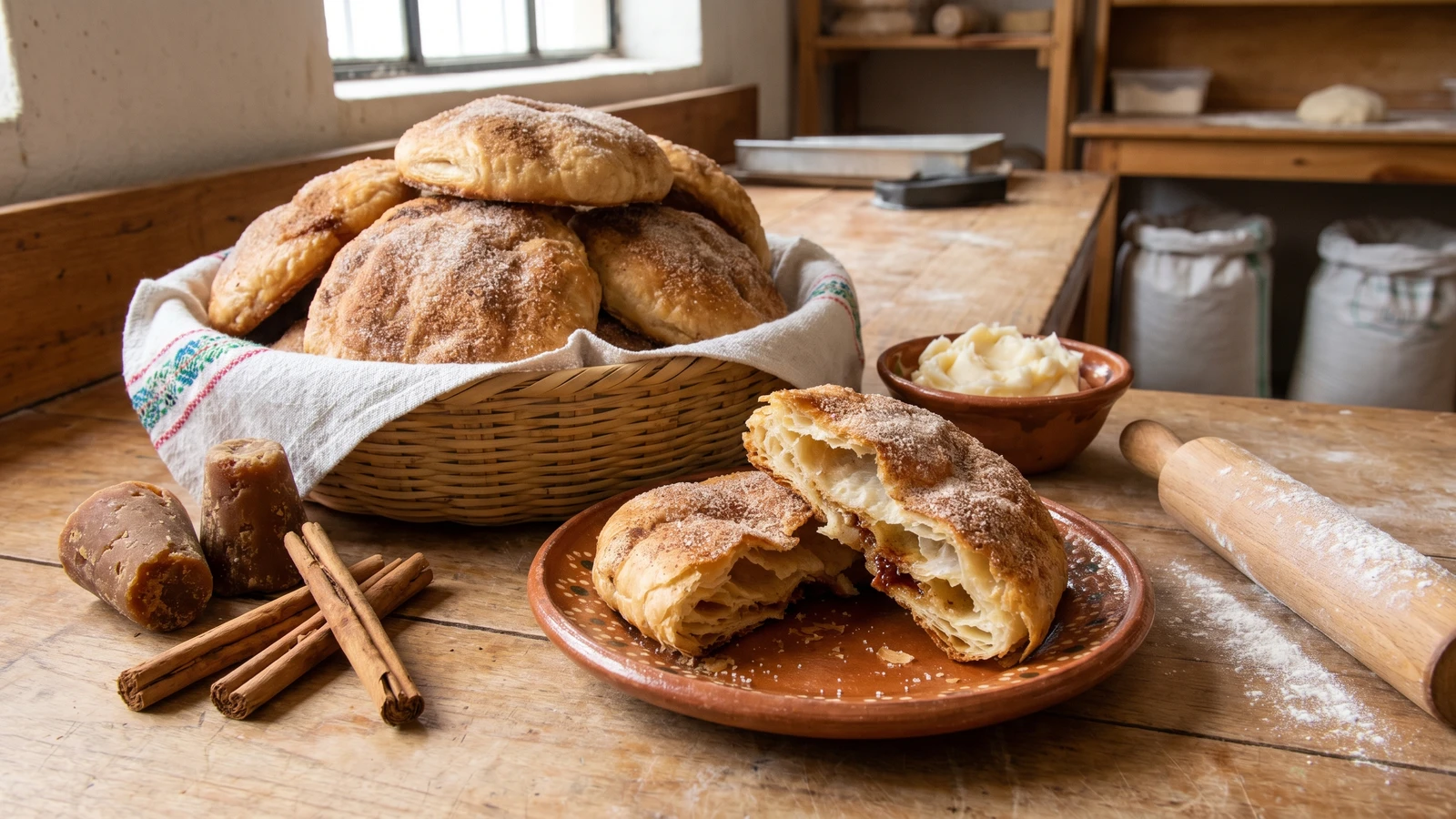
Chiapas panaderia hojaldras, built from wheat dough folded with manteca de cerdo, piloncillo, and canela until the layers bake crisp at the edges and tender in the middle.
Chiapas, from Tuxtla Gutierrez up into San Cristobal de las Casas, is where these hojaldras belong. They sit in panaderia trays beside turuletes and cazuelejas, wrapped in cloth in market baskets before the afternoon coffee. This is not a French pastry wearing a Mexican name. It is wheat, manteca de cerdo, piloncillo, canela, and hands that know when dough has rested enough.
The defining ingredient is manteca de cerdo. In Los Altos, the women who taught me made the layers by touch: roll, smear, fold, rest. Not cold measured butter blocks. Lard that is firm enough to hold a layer and soft enough to spread thin. If the kitchen is hot, you rest the dough. If the dough fights you, you rest it. Asi se hace y punto.
Chiapas is corn country, yes, but it is also wheat-pan country in its bakeries, especially in the highland towns where old ovens became part of daily life. The hojaldras should crack into golden flakes, with piloncillo making dark freckles where it melts at the seam. Put them on Amatenango terracotta, pour cafe de olla, and let the crumbs fall. La cocina no es decoracion, es trabajo.
The word "hojaldra" comes from the Spanish "hojaldre," pastry made in hojas, or leaves, but in Mexico it does not name one national bread. In Puebla it often refers to pan de muerto for Todos Santos, while in Chiapas and neighboring Tabasco it points to a flaky panaderia pastry built from wheat flour and fat. Wheat entered Chiapas with Spanish colonization in the 16th century, and the cooler highland towns around Ciudad Real, today San Cristobal de las Casas, developed an oven-bread tradition alongside older corn-based cooking.
Quantity
4 cups (500 grams), plus more for rolling
Quantity
1 1/2 teaspoons
Quantity
2 tablespoons
Quantity
1/2 teaspoon
Quantity
2 tablespoons
softened, for the dough
Quantity
1
room temperature
Quantity
1/2 cup
strained
Quantity
1/2 cup, plus 1 to 3 tablespoons more as needed
Quantity
1 cup (220 grams)
firm but spreadable, for laminating
Quantity
1/3 cup (40 grams)
Quantity
3/4 cup
finely grated
Quantity
1 teaspoon
Quantity
1 egg beaten with 1 tablespoon water
for brushing
Quantity
2 tablespoons
| Ingredient | Quantity |
|---|---|
| all-purpose flour | 4 cups (500 grams), plus more for rolling |
| fine sea salt | 1 1/2 teaspoons |
| granulated sugar | 2 tablespoons |
| baking powder | 1/2 teaspoon |
| manteca de cerdosoftened, for the dough | 2 tablespoons |
| large eggroom temperature | 1 |
| fresh orange juicestrained | 1/2 cup |
| cool water | 1/2 cup, plus 1 to 3 tablespoons more as needed |
| clean white manteca de cerdofirm but spreadable, for laminating | 1 cup (220 grams) |
| all-purpose flour for lard paste | 1/3 cup (40 grams) |
| piloncillofinely grated | 3/4 cup |
| ground canela | 1 teaspoon |
| egg washfor brushing | 1 egg beaten with 1 tablespoon water |
| granulated sugar for topping | 2 tablespoons |
Beat the 1 cup manteca de cerdo with the 1/3 cup flour until smooth and spreadable. It should look like thick crema, not melted fat. Chill it for 15 to 20 minutes if it turns shiny or loose. Lard melts fast in a warm Chiapas kitchen, and if it melts into the dough, you lose the layers.
Whisk the flour, salt, sugar, and baking powder in a wide bowl. Rub in the 2 tablespoons softened manteca with your fingertips until the flour feels sandy. Add the egg, orange juice, and 1/2 cup cool water. Mix until a rough dough forms, adding only enough extra water to gather the dry flour. Knead 6 to 8 minutes, until smooth but not tight. The orange juice gives tenderness and a faint perfume. It should not taste like a pastry shop trying too hard.
Cover the dough and let it rest 30 minutes. This rest is not laziness. The flour hydrates, the dough relaxes, and the rolling becomes possible without tearing. If the dough fights you, you wait. The senoras in San Cristobal know this by touch.
Lightly flour the table and roll the dough into a rectangle about 16 by 12 inches. Spread one-third of the lard paste thinly over the dough, leaving a 1-inch clean border. Fold the dough like a business letter, one third over the center and the other third over that. Turn it seam side down, wrap it, and chill 30 minutes.
Roll the dough out again to the same size, spread with another third of the lard paste, fold, wrap, and chill 30 minutes. Repeat once more with the final third of the paste. After the third fold, chill the dough 30 minutes more. Roll, smear, fold, rest. That is the work. No me vengas con atajos.
Mix the grated piloncillo with the ground canela. If the piloncillo is hard, shave it with a serrated knife or grate it on the small holes of a box grater. You want small grains that melt into dark freckles, not big rocks that tear the dough.
Heat the oven to 400F. Line two baking sheets with parchment. Roll the chilled dough into a rectangle about 18 by 12 inches and cut it into 12 rectangles. Put 1 tablespoon of the piloncillo mixture on one half of each rectangle, leaving a clean edge. Fold the plain half over the filling and press the edges gently with the heel of your hand. Do not seal them like empanadas. Hojaldras need room to lift.
Set the hojaldras on the baking sheets with space between them. Brush lightly with egg wash and sprinkle with the 2 tablespoons sugar. Bake 12 minutes at 400F, then lower the oven to 375F and bake 10 to 13 minutes more, until the tops are deep golden, the edges are dry and lifted, and a little piloncillo has darkened at the seams.
Let the hojaldras cool on the tray for 10 minutes, then move them to a rack. Eat them warm or at room temperature with cafe de olla. Do not cover them while warm or the flakes soften. The pastry should break into crisp layers at the edge and stay tender where the piloncillo melted. Recetas probadas y garantizadas.
1 serving (about 95g)
Culinary guides, cultural storytelling, and the editorial depth that makes cooking meaningful.
Discover Culinary ExplorerChef Lupita
Puebla's convent almond cookies, made from blanched almonds, sugar syrup, egg yolks, canela, and patient hands, the kind of sweet that belongs beside coffee in talavera, not in a plastic bakery box.

Chef Lupita
Ciudad de Mexico's panaderia banderillas are long sticks of hojaldre pressed with sugar, baked until amber, and finished with a hard glaze for coffee at the kitchen table.

Chef Lupita
Mérida's pale egg-yolk-and-vanilla kisses, tiny cookies built on eight yolks and a perfume of orange blossom, sandwiched with guava paste and dusted heavy with powdered sugar.

Chef Lupita
Hidalgo's bisquet de nata carries Pachuca's mining history into the breakfast table: a Cornish-style bread softened by Mexican nata, split warm and eaten with café de olla.