
Chef Takumi
Agar Jelly with Anko and Fruit (あんみつ, Anmitsu)
Anmitsu looks like a tray of small tasks, but the work is calm: dissolve the kanten fully, chill the pieces clean, then let fruit, anko, and kuromitsu do the speaking.
A cooking platform built around craft, culture, and the stories behind what we eat.
Created by
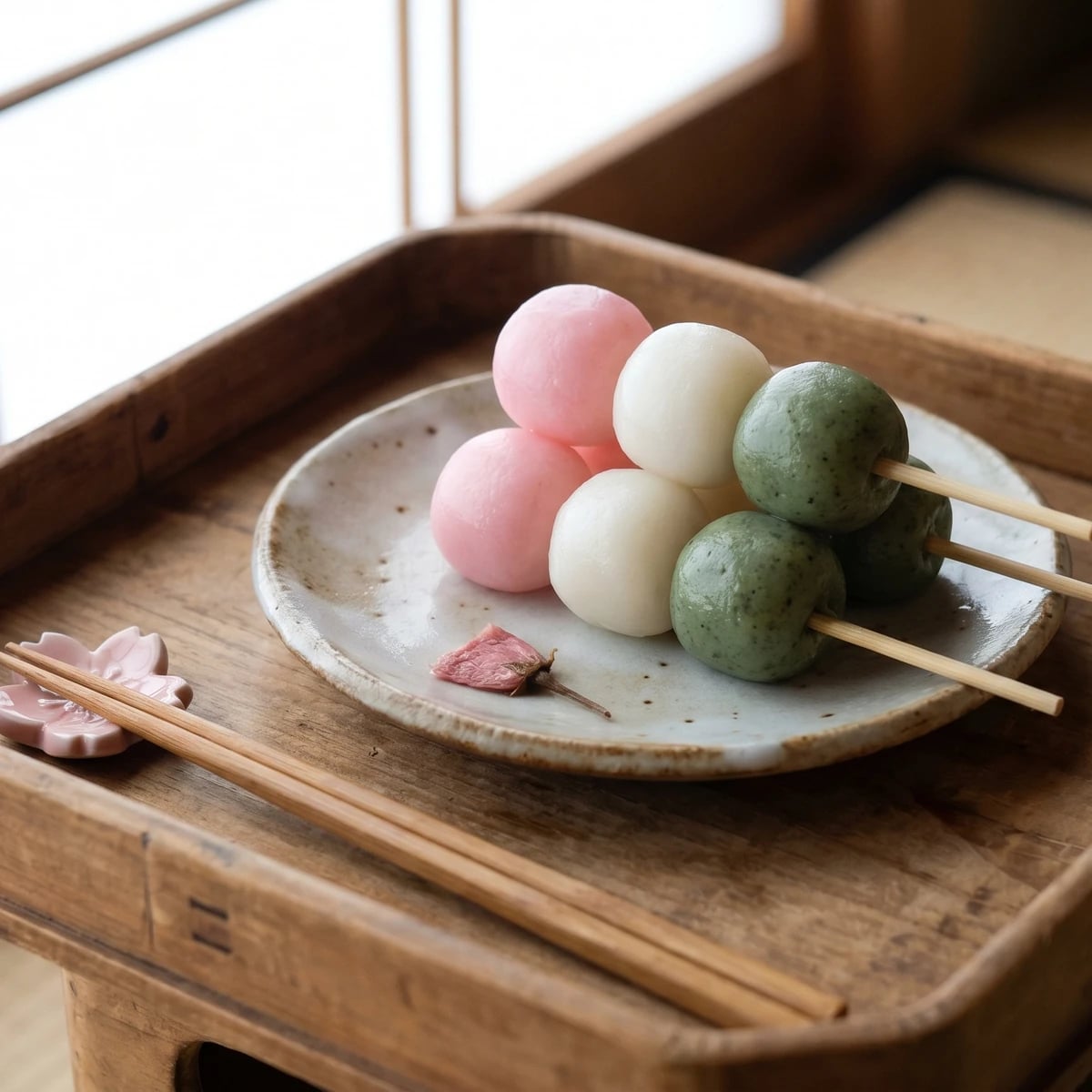
Three colors, one skewer: pink blossom, white snow, green spring grass. Hanami dango asks only for good rice flour, gentle kneading, and the sense to stop cooking when the dumplings float.
Hanami dango looks like festival food because it is festival food, but don't let the colors make it theatrical. Three small rice dumplings on a skewer, pink, white, and green, are enough to say spring without shouting across the picnic cloth.
The dough is the dish. Joshinko gives the dumplings a clean rice flavor and a firm bite, while shiratamako brings the soft chew people want from dango. Use both and you get balance. Use only one and the texture leans too hard, either stiff and plain or too soft and sticky. The first secret is to add the water slowly, because rice flour changes its mind with the weather. You're looking for dough as soft as an earlobe, which sounds unserious until you touch it and realize the old comparison is annoyingly exact.
The colors have their own quiet grammar. Pink is the cherry blossom, white is the last snow, green is the new grass under it. For the green, yomogi, Japanese mugwort, is the honmono flavor of spring. If you can't find it, a little matcha will color the dough and taste good, but call it a stand-in, not the same thing. Nothing hidden here. The beauty is in the plain chew of rice, a little sugar, and the season doing most of the talking.
Hanami dango belongs to the custom of cherry blossom viewing, which became a broad urban pleasure in the Edo period as parks and temple grounds filled with seasonal food sellers. The three-color form is commonly read as spring imagery: pink blossoms, white lingering snow, and green new growth, though some later explanations connect the colors to good fortune and the turning of the seasons. Unlike mitarashi dango, it is not grilled and glazed, and unlike many wagashi it needs no anko, which is part of its picnic usefulness.
Quantity
100g
Quantity
80g
Quantity
60g
Quantity
1/8 teaspoon
Quantity
150ml, plus more as needed
Quantity
a tiny amount or 1/2 teaspoon
Quantity
1 teaspoon
soaked in warm water, then squeezed dry
Quantity
1/2 teaspoon
Quantity
6
soaked in water for 20 minutes
| Ingredient | Quantity |
|---|---|
| joshinko (Japanese non-glutinous rice flour) | 100g |
| shiratamako (Japanese glutinous rice flour) | 80g |
| granulated sugar | 60g |
| fine sea salt | 1/8 teaspoon |
| warm water | 150ml, plus more as needed |
| pink food coloring or sakura powder (optional) | a tiny amount or 1/2 teaspoon |
| dried yomogi powdersoaked in warm water, then squeezed dry | 1 teaspoon |
| matcha (optional) | 1/2 teaspoon |
| bamboo skewerssoaked in water for 20 minutes | 6 |
Soak the bamboo skewers in water for about 20 minutes. The dango are not grilled, but damp skewers slide through the dumplings more cleanly and don't splinter as readily.
Put the joshinko, shiratamako, sugar, and salt in a bowl. Rub the shiratamako between your fingers to break up any hard pearls before you add water. Those little lumps soften unevenly if left whole, and dango should chew evenly from edge to center.
Add the warm water a little at a time, mixing with your fingers or a sturdy spoon. Stop when the dough gathers into a smooth, soft mass about the firmness of an earlobe. If it cracks, add water by the teaspoon. If it sticks heavily to your fingers, dust in a little more joshinko.
Divide the dough into three equal pieces. Leave one white. Knead the pink coloring, or sakura powder, into the second piece until the color is pale and even. Knead the squeezed yomogi into the third piece for green, or use matcha if yomogi is out of reach. Keep the colors gentle. Hanami dango should look like spring, not a toy box.
Divide each color into 6 equal pieces and roll them between your palms into smooth balls, about 2.5cm across. If the surface cracks, wet your hands lightly and roll again. Smooth surfaces cook cleanly and sit better on the skewer.
Bring a wide pot of water to a lively simmer, then lower the dango in by color or in small batches. Stir once so they don't settle and stick to the bottom. When they float, cook them 1 minute longer. Floating tells you the center has set; the extra minute keeps the chew from being pasty.
Lift the dango into a bowl of cold water. This stops the cooking and firms the surface so the dumplings stay round and glossy. Leave them just until cool, then drain well on a clean cloth.
Thread one green, one white, and one pink dango onto each skewer, traditionally with green at the bottom, white in the middle, and pink at the top. Serve the same day at room temperature. No sauce, no filling, no anko hiding the rice. The plainness is the point.
1 serving (about 65g)
Culinary guides, cultural storytelling, and the editorial depth that makes cooking meaningful.
Discover Culinary Explorer
Chef Takumi
Anmitsu looks like a tray of small tasks, but the work is calm: dissolve the kanten fully, chill the pieces clean, then let fruit, anko, and kuromitsu do the speaking.

Chef Takumi
Autumn sits inside this manjū: a whole sweetened chestnut wrapped in pale bean paste, sealed in soft dough, and brushed until the top bakes glossy as lacquer.

Chef Takumi
The first February sweet: tender dōmyōji rice around anko, pressed between two camellia leaves. The work is small, but the season announces itself clearly.

Chef Takumi
Autumn's grand yōkan is simpler than it looks: smooth anko, properly boiled kanten, and whole sweet chestnuts held in a firm jelly that slices cleanly.