
Chef Jeong-sun
Agwi-jjim (Braised Monkfish with Bean Sprouts)
Firm monkfish buried under crisp soybean sprouts, minari, and a red gochugaru sauce thickened at the end; Masan's market dish asks for heat, timing, and a steady hand.
A cooking platform built around craft, culture, and the stories behind what we eat.
Created by
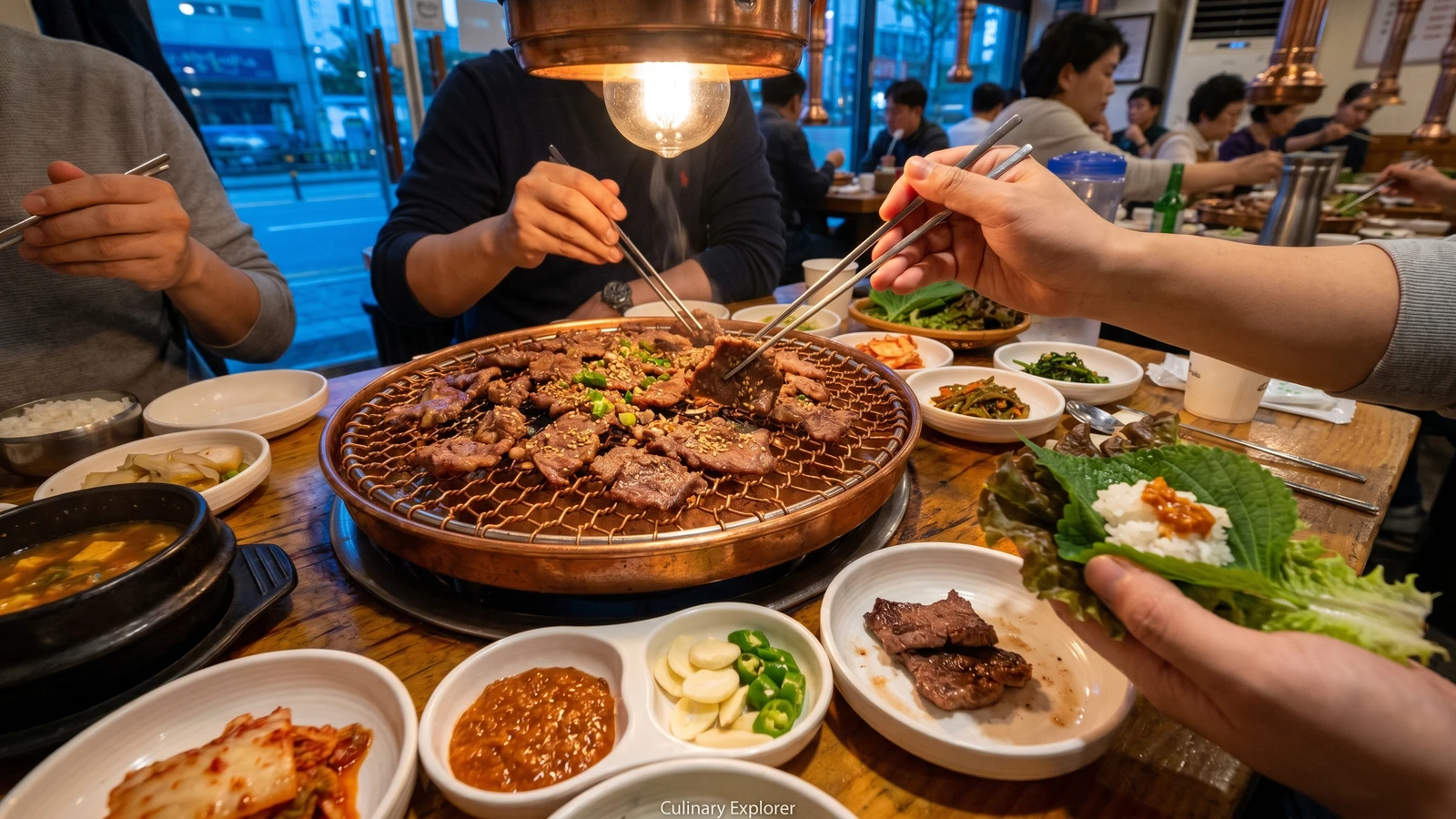
Fresh thin-sliced beef seasoned only moments before it meets oak charcoal, grilled on a copper gridiron until the edges catch and the center stays tender.
Gwangyang bulgogi lives or dies by speed. Not speed from laziness. Speed from respect for the beef. You season it, you carry it to the fire, and you cook it before the soy has time to tighten the meat. My teacher would have called this a dish with no hiding place.
People hear bulgogi and expect a sweet bowl of marinated beef cooked with onions until it gives up broth. That is Seoul's path, and it has its own place. Gwangyang's path is leaner: very thin beef, a light soy-sesame seasoning, oak charcoal, and a copper gridiron that gives fierce heat fast. The fire does the work. Let it taste like itself.
Tonight this dish asks three things from you. Buy beef with fine marbling, slice it thin across the grain, and don't let the seasoned meat sit around while you arrange the table. Have rice, ssam leaves, ssamjang (seasoned soybean paste), sliced garlic, and a few clean banchan ready first. Then cook. 손맛 is real; I measure it anyway, because this is how a table in Gwangyang can travel to your kitchen without turning into some vague sweet beef.
Gwangyang, in South Jeolla Province, is counted with Seoul and Eonyang among Korea's named bulgogi styles, and its version is defined by fresh beef seasoned just before grilling over charcoal on a copper gridiron. The style grew from local charcoal-grill restaurants and remains tied to Gwangyang's bulgogi streets and city food culture, distinct from Seoul's wetter pan-cooked bulgogi and Eonyang's pressed, minced texture. Its restraint is the point: the seasoning supports beef and smoke rather than replacing them.
Quantity
700g
sliced 2 mm thick across the grain
Quantity
3 tablespoons
Quantity
1 tablespoon
Quantity
1 tablespoon
pear grated and squeezed if using
Quantity
1 tablespoon
Quantity
2 teaspoons
Quantity
1 tablespoon
Quantity
3 cloves
finely minced
Quantity
2 tablespoons
finely chopped, white and pale green parts
Quantity
1 teaspoon
lightly crushed
Quantity
1/4 teaspoon
freshly ground
Quantity
1 teaspoon
Quantity
as needed
Quantity
to serve
| Ingredient | Quantity |
|---|---|
| well-marbled beef ribeye, sirloin, or short rib meatsliced 2 mm thick across the grain | 700g |
| Korean soy sauce (ganjang) | 3 tablespoons |
| soup soy sauce (guk-ganjang) (optional) | 1 tablespoon |
| maesil-cheong (Korean green plum syrup) or Korean pear juicepear grated and squeezed if using | 1 tablespoon |
| rice wine or mirim | 1 tablespoon |
| sugar | 2 teaspoons |
| toasted sesame oil | 1 tablespoon |
| garlicfinely minced | 3 cloves |
| scallionfinely chopped, white and pale green parts | 2 tablespoons |
| toasted sesame seedslightly crushed | 1 teaspoon |
| black pepperfreshly ground | 1/4 teaspoon |
| neutral oil (optional) | 1 teaspoon |
| oak charcoal (optional) | as needed |
| lettuce, perilla leaves, sliced garlic, green chili, ssamjang, and hot rice (optional) | to serve |
If slicing at home, freeze the beef for 30 to 40 minutes until firm at the edges, then cut across the grain into sheets about 2 mm thick. Thin matters here because Gwangyang bulgogi is cooked quickly over fierce heat; thick slices toughen before the surface catches.
Stir together the soy sauce, soup soy sauce, maesil-cheong or pear juice, rice wine, sugar, sesame oil, garlic, scallion, sesame seeds, and pepper. Taste it. It should be salty, lightly sweet, and nutty, not syrupy. The sugar is measured at 2 teaspoons because this style should not eat like candy.
Set out the rice, ssam leaves, ssamjang, sliced garlic, green chili, and banchan before you season the beef. This is not ceremony. It keeps the meat from sitting in soy while everyone looks for chopsticks.
Toss the beef with the seasoning by hand for 1 minute, lifting and separating the slices so every piece is thinly coated. Grill it within 10 minutes. Longer marinating is the wrong corner to cut here, because salt begins drawing moisture from the meat and the clean beef flavor dulls.
For the proper version, burn oak charcoal until it is glowing and covered with pale ash, then set a copper gridiron over it and heat it well. No copper gridiron? Use a hot grill basket or a wide cast-iron skillet. 시대가 바뀌면 음식도 바뀌어야 해요. When times change, food must change too, but the heat still has to be strong.
Lay the beef on the hot gridiron in loose single layers, only as much as the table can eat at once. Cook 30 to 60 seconds per side, turning when the edges brown and the surface looks glossy. If juices pool, the grill is crowded or not hot enough. Move slower with your hands, not with the fire.
Move each batch straight to a warm plate, or let diners take it from the grill as it finishes. Eat wrapped in lettuce or perilla with rice, ssamjang, garlic, and chili. The best piece is the one eaten before it has time to wait.
1 serving (about 180g)
Culinary guides, cultural storytelling, and the editorial depth that makes cooking meaningful.
Discover Culinary ExplorerChef Jeong-sun
Firm monkfish buried under crisp soybean sprouts, minari, and a red gochugaru sauce thickened at the end; Masan's market dish asks for heat, timing, and a steady hand.

Chef Jeong-sun
A quick Korean rice bowl built on contrast: warm rice, cold popping flying-fish roe, chopped vegetables, gim, sesame oil, and the crisp rice bottom a hot stone bowl gives you.
Chef Jeong-sun
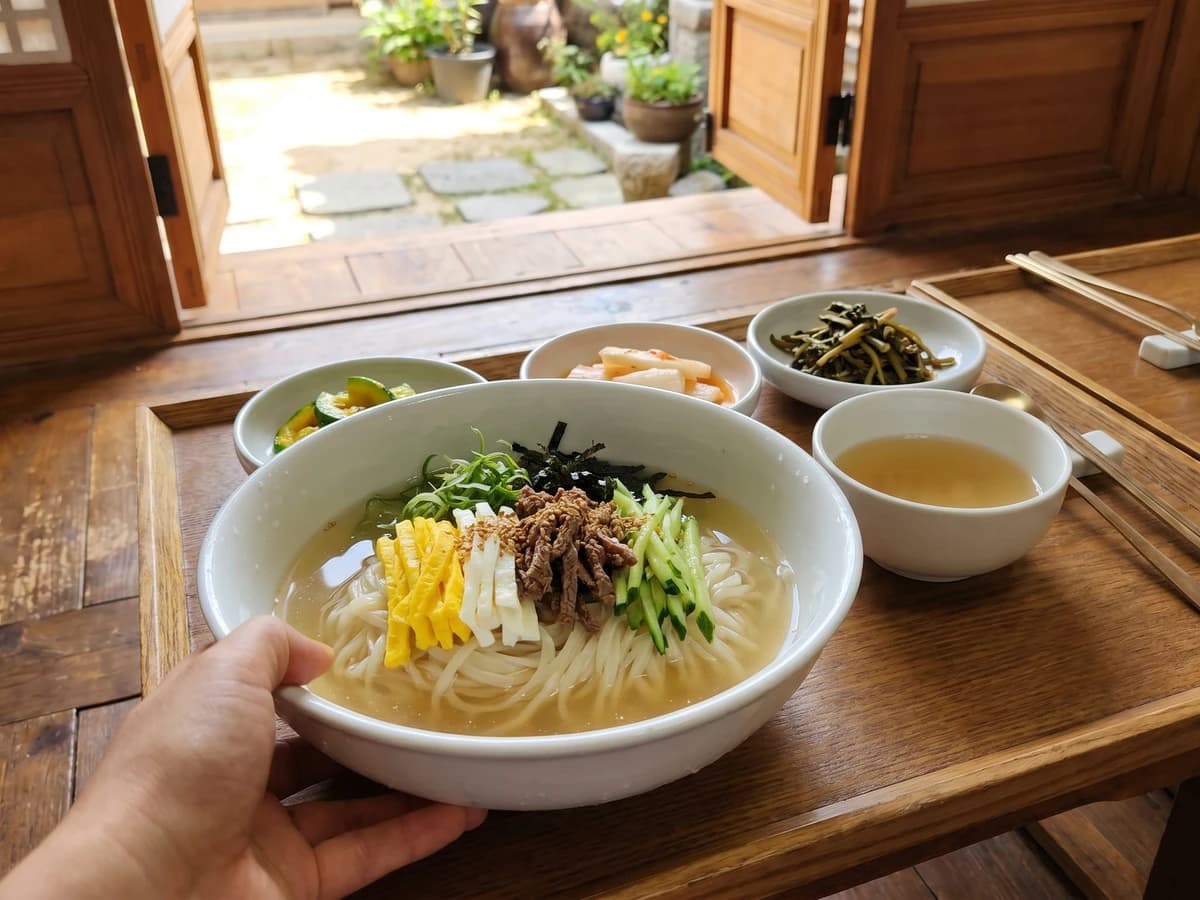
Andong's guest noodles, wheat and roasted soybean flour rolled thin, boiled and rinsed cold, then set in a clear chilled anchovy broth with careful strips of beef, egg, and cucumber.

Chef Jeong-sun
Andong's ritual-table rice served on an ordinary day: separate soy-sesame namul, warm rice, and clear radish soup, mixed without gochujang so every vegetable keeps its own voice.