
Chef Jeong-sun
Aehobak-guk (애호박국, Korean Zucchini Soup)
A clean summer soup of Korean zucchini and salted shrimp, built on quick anchovy-kelp broth and finished before the half-moons lose their shape on a weeknight table.
A cooking platform built around craft, culture, and the stories behind what we eat.

Created by
A shared Korean hot pot of cleaned beef intestine, tripe, greens, mushrooms, and spicy broth, where the chew is earned before the pot ever reaches the burner.
Gopchang-jeongol lives or dies before the broth goes in. People talk about the red seasoning first, but the real work is cleaning, parboiling, and cutting the innards so they taste clean and keep their chew. If that part is careless, no amount of gochujang can forgive it.
A jeongol is not jjigae. Jjigae usually names one main thing and comes to the table already cooked; jeongol carries several ingredients arranged together, then cooks in front of the people eating. That order matters. Lay the white onion and cabbage, brown mushrooms, green minari, red chili seasoning, pale tofu, and ivory gopchang in clear sections before the broth touches them. It is not decoration. The table sees what it is about to share, and each ingredient cooks at its own pace.
I won't tell you this is easy. It asks for a good butcher, a little patience, and the courage to smell the pot honestly at each stage. But when the broth turns deep red-brown, the minari stays green, and the gopchang gives under the teeth instead of fighting, you understand why this dish gathers the brave and the devoted. 손맛 is real; I measure it anyway, so the next cook does not have to guess.
Jeongol as a Korean tabletop hot pot has older roots in late Joseon cooking, including elaborate dishes such as sinseollo, but gopchang-jeongol itself belongs to market, tavern, and restaurant cooking rather than court cuisine. In the twentieth century, especially in urban neighborhoods with slaughterhouse access and night-drinking culture, beef intestines and tripe became prized for their chew and richness, simmered with gochugaru, vegetables, and broth into a shared pot. The dish is still strongly tied to casual dinner tables and anju, food eaten with drinks, where nothing about it is delicate and everything depends on proper cleaning.
Quantity
600g, or 450g gopchang plus 150g beef tripe (yang)
Quantity
2 tablespoons
for scrubbing
Quantity
3 tablespoons
for scrubbing
Quantity
2 tablespoons
for washing
Quantity
8 cups, divided
Quantity
1 piece, about 4 inches square
Quantity
10
heads and guts removed
Quantity
1/2, about 300g
cut into thick slices for broth
Quantity
1
halved for broth
Quantity
6 cloves, divided
Quantity
3 thin slices
Quantity
2 tablespoons
Quantity
1 tablespoon
Quantity
1 tablespoon
Quantity
2 tablespoons
Quantity
1 tablespoon
Quantity
1 tablespoon
Quantity
1 teaspoon
Quantity
1/4 teaspoon
freshly ground
Quantity
1 tablespoon
Quantity
1/2 small head, about 350g
cut into wide bite-size pieces
Quantity
1 medium
sliced 1/2 inch thick
Quantity
1 small
halved lengthwise and sliced thick
Quantity
150g
rinsed
Quantity
150g
torn into clusters
Quantity
100g
stems removed and caps sliced
Quantity
250g
cut into 1/2 inch slabs
Quantity
80g
cut into 2 inch lengths
Quantity
8
stacked, rolled, and sliced
Quantity
2
cut into 2 inch lengths
Quantity
1
sliced on the diagonal
Quantity
1
sliced on the diagonal
Quantity
100g
soaked in warm water 30 minutes and drained
Quantity
1 tablespoon
for finishing
| Ingredient | Quantity |
|---|---|
| cleaned beef small intestine (gopchang) | 600g, or 450g gopchang plus 150g beef tripe (yang) |
| coarse saltfor scrubbing | 2 tablespoons |
| all-purpose flourfor scrubbing | 3 tablespoons |
| soju or rice winefor washing | 2 tablespoons |
| water | 8 cups, divided |
| dried kelp (dasima) | 1 piece, about 4 inches square |
| large dried anchovies (myeolchi)heads and guts removed | 10 |
| Korean radishcut into thick slices for broth | 1/2, about 300g |
| small onionhalved for broth | 1 |
| garlic | 6 cloves, divided |
| fresh ginger | 3 thin slices |
| gochugaru (Korean chili flakes) | 2 tablespoons |
| gochujang (Korean chili paste) | 1 tablespoon |
| doenjang (fermented soybean paste) | 1 tablespoon |
| soup soy sauce (guk-ganjang) | 2 tablespoons |
| fish sauce or Korean anchovy sauce | 1 tablespoon |
| rice wine or mirin | 1 tablespoon |
| sugar | 1 teaspoon |
| black pepperfreshly ground | 1/4 teaspoon |
| toasted sesame oil | 1 tablespoon |
| napa cabbagecut into wide bite-size pieces | 1/2 small head, about 350g |
| onionsliced 1/2 inch thick | 1 medium |
| zucchini (aehobak)halved lengthwise and sliced thick | 1 small |
| soybean sprouts (kongnamul)rinsed | 150g |
| oyster mushroomstorn into clusters | 150g |
| shiitake mushroomsstems removed and caps sliced | 100g |
| firm tofucut into 1/2 inch slabs | 250g |
| minari (Korean water parsley)cut into 2 inch lengths | 80g |
| perilla leaves (kkaennip)stacked, rolled, and sliced | 8 |
| scallionscut into 2 inch lengths | 2 |
| green chilisliced on the diagonal | 1 |
| red chilisliced on the diagonal | 1 |
| glass noodles (dangmyeon) (optional)soaked in warm water 30 minutes and drained | 100g |
| toasted sesame seedsfor finishing | 1 tablespoon |
Put the gopchang and tripe, if using, in a large bowl. Rub with the coarse salt and flour for 3 full minutes, working the flour into the folds, then rinse under cold running water until the water runs clear. Add the soju or rice wine, rub once more, and rinse again. Flour grabs the slick surface and odor; salt gives your hand enough friction to clean without tearing the intestine.
Bring 4 cups water to a boil with the radish slices, halved onion, 2 garlic cloves, and ginger. Add the cleaned innards and boil 12 minutes, uncovered. Drain, discard the boiling liquid and aromatics, then rinse the innards briefly in warm water. This first boil is not broth. It pulls away what would muddy the jeongol.
In a clean pot, combine 4 cups water, the kelp, and the dried anchovies. Bring just to a simmer over medium heat, then pull the kelp out as soon as the water trembles, before it turns the broth slick and bitter. Simmer the anchovies 8 more minutes, then strain. You should have about 3 1/2 cups clean broth.
Mince the remaining 4 garlic cloves. Stir them with the gochugaru, gochujang, doenjang, soup soy sauce, fish sauce, rice wine, sugar, black pepper, and sesame oil to make a thick red paste. Use only 1 tablespoon gochujang. This pot needs chili depth, not sweetness and starch taking over the broth.
Cut the parboiled gopchang into 1 1/2 inch pieces and the tripe into thin bite-size strips. Keep the pieces large enough to chew. Too small and they toughen quickly; too large and the table has to fight them with chopsticks.
Use a wide shallow jeongol pan or a 12 inch skillet set on a portable burner. Lay the cabbage across the bottom so it protects the pot and sweetens the broth. Arrange the onion, zucchini, soybean sprouts, mushrooms, tofu, and cut innards in separate sections by color. Spoon the seasoning paste into the center. This is how a jeongol announces itself before it cooks.
Pour 3 cups of the broth around the edge of the pan, not directly onto the seasoning paste, so the arrangement holds for a moment. Bring to a lively simmer at the table, then stir the paste into the broth once the cabbage begins to soften. Simmer 18 to 22 minutes, turning the innards once or twice, until the gopchang is tender with a springy bite and the vegetables have given their sweetness to the broth.
Add the minari, perilla leaves, scallions, and sliced chilies. Cook 2 minutes only. Minari should bend and stay green; perilla should perfume the pot without disappearing. Taste the broth now. If it needs salt, add 1 teaspoon soup soy sauce at a time. If it is too strong, add the remaining 1/2 cup broth.
If using soaked glass noodles, tuck them into the bubbling edge for the last 4 to 5 minutes, moving them once so they do not clump. They are a guest in this pot, not the main dish, so 100g is enough. Scatter toasted sesame seeds over the top and eat from the center with rice and banchan.
1 serving (about 800g)
Culinary guides, cultural storytelling, and the editorial depth that makes cooking meaningful.
Discover Culinary ExplorerChef Jeong-sun
A clean summer soup of Korean zucchini and salted shrimp, built on quick anchovy-kelp broth and finished before the half-moons lose their shape on a weeknight table.
Chef Jeong-sun
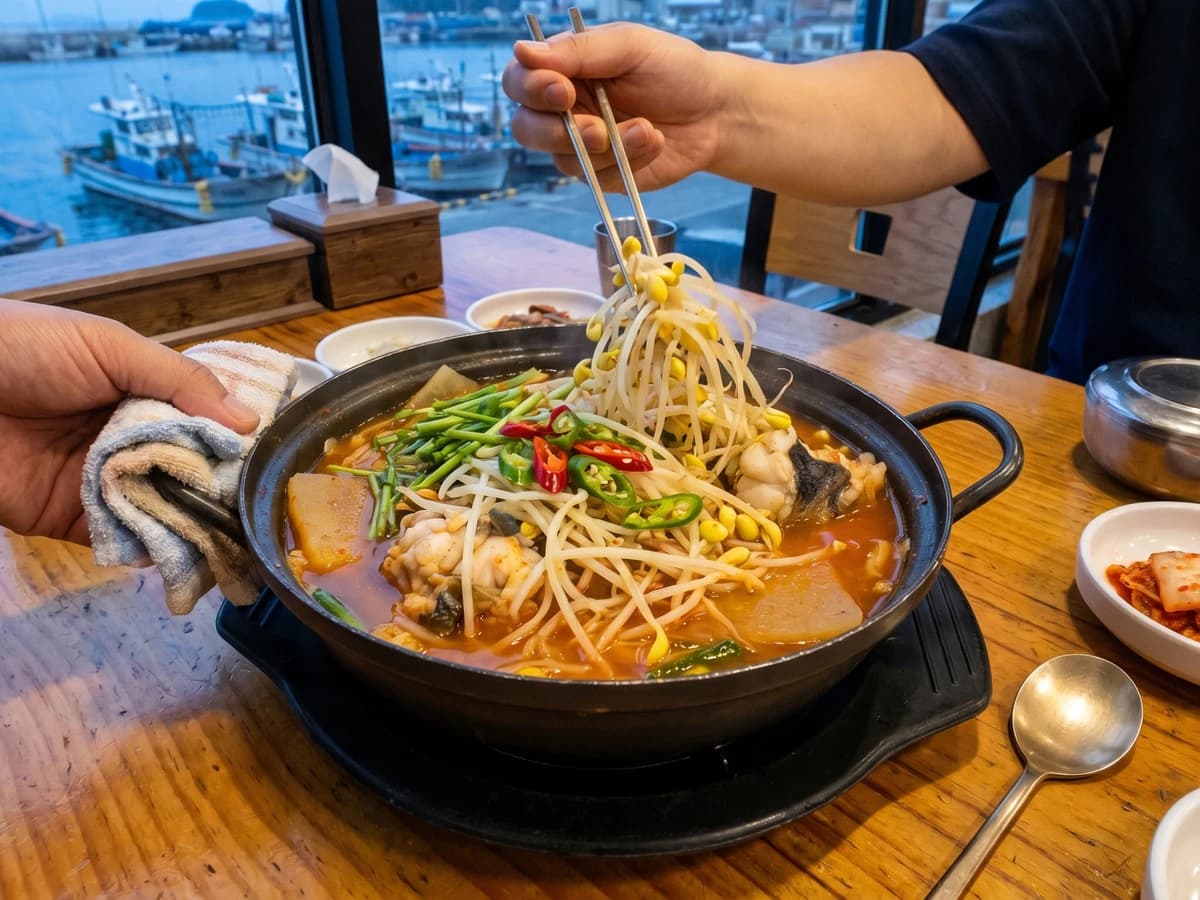
A Masan coast monkfish stew with firm white meat, gelatin at the bones, soybean sprouts for crunch, and a red broth seasoned to carry the fish, not bury it.

Chef Jeong-sun
A weeknight fish roe stew with radish and crown daisy in a clean spicy broth, where the whole success depends on adding the roe late enough that it sets tender, not chalky.

Chef Jeong-sun
Late-summer mallow leaves rubbed with salt until the bitter green water runs off, then simmered in a clean doenjang broth with dried shrimp, the quiet soup a Korean weeknight deserves.