Chef Joost
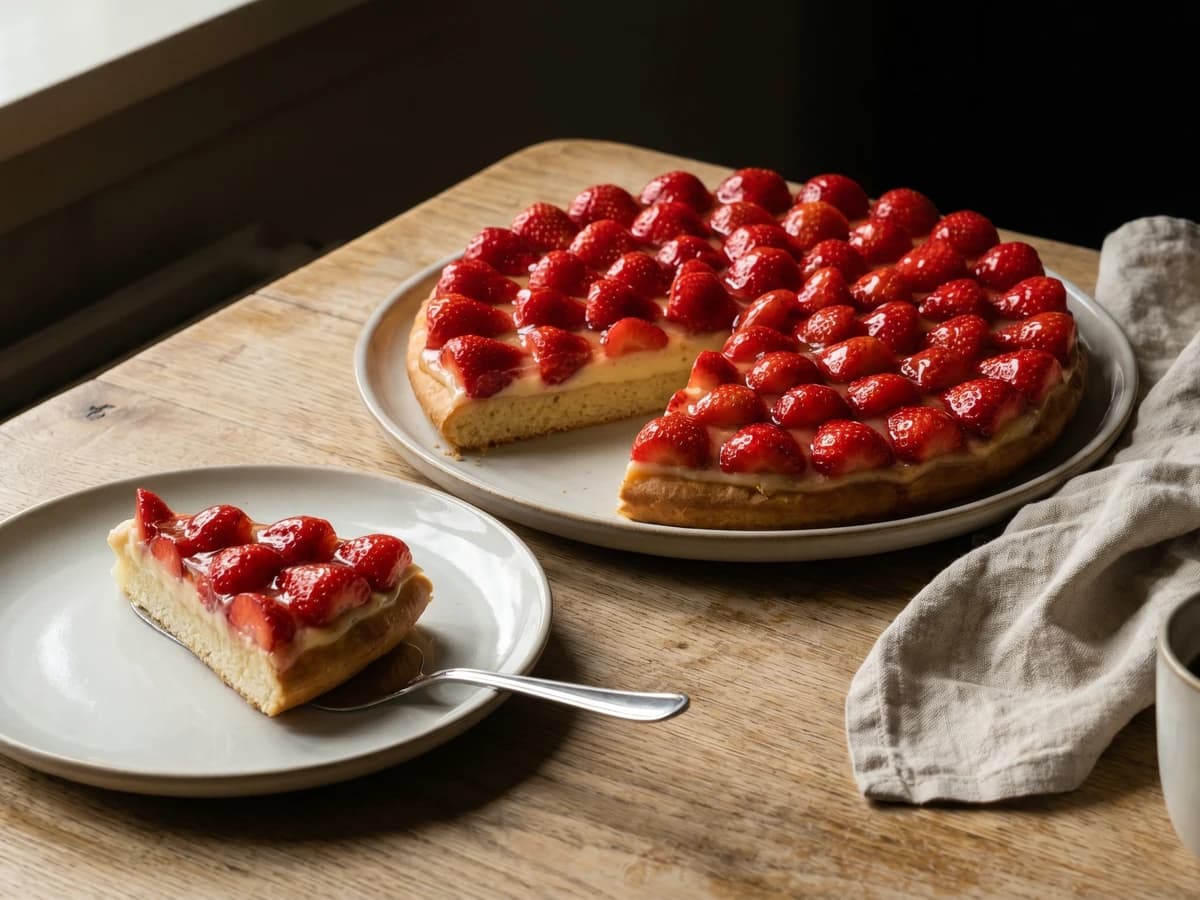
Aardbeienvlaai (Limburg Strawberry Vlaai)
The summer vlaai that politely breaks Limburg's baked-fruit rule: soft gistdeeg, cool pastry cream, and strawberries left fresh because June knows better than the oven.
A cooking platform built around craft, culture, and the stories behind what we eat.

Created by
The name means filled speculaas, but what it carries is larger: spice-route wealth, almond sweetness, and the Dutch habit of hiding extravagance inside something square and sensible.
Gevulde speculaas is what happens when a frugal country decides, once a year, to stop pretending. The outside is dark, spiced dough: cinnamon, clove, nutmeg, mace, ginger, a little white pepper if you have courage. The inside is amandelspijs, almond paste, dense and golden and scented with lemon. A country accused of plain eating built one of its richest December bakes as a neat brown square. For obvious reasons, we called this modest.
But let me tell you a secret: speculaas is never just a cookie. Its spices are a seventeenth-century cargo list made edible, the VOC world folded into butter, flour, and brown sugar. The name speculaas is still argued over, with scholars pointing either to speculum, Latin for mirror, because molded cookies mirror their carved boards, or to old names for Saint Nicholas. Nobody at the table will settle this. The plate will be empty first.
The word gevulde simply means filled, and it matters. The dough must be strong enough to hold its spice and soft enough to cut cleanly; the almond paste must be loosened with egg so it bakes into a rich layer rather than a brick. Hou het altijd simpel, always keep it simple: rest the dough, roll it evenly, chill the slab before baking, and let it cool before cutting. December rewards the patient cook, not the theatrical one.
Speculaas became closely tied to the Dutch winter feast of Sinterklaas in the seventeenth and eighteenth centuries, when imported cinnamon, clove, nutmeg, and mace became more available through Dutch trade networks and entered festive home baking. Gevulde speculaas developed as the richer celebration version, enclosing amandelspijs, almond paste, between two layers of spiced dough and serving it in thick slices rather than as small molded biscuits. Though eaten through the Christmas season today, it still belongs most strongly to the Dutch December table, especially around Sinterklaas on 5 December.
Quantity
300g
Quantity
2 teaspoons
Quantity
150g
Quantity
2 tablespoons
Quantity
1/2 teaspoon
Quantity
175g
cold and diced
Quantity
3 tablespoons
Quantity
300g
Quantity
1
beaten and divided
Quantity
1 teaspoon
finely grated
Quantity
1 tablespoon
Quantity
24
for topping
| Ingredient | Quantity |
|---|---|
| plain flour | 300g |
| baking powder | 2 teaspoons |
| dark brown basterdsuiker or dark soft brown sugar | 150g |
| speculaaskruiden | 2 tablespoons |
| fine sea salt | 1/2 teaspoon |
| unsalted buttercold and diced | 175g |
| milk | 3 tablespoons |
| amandelspijs, Dutch almond paste | 300g |
| eggbeaten and divided | 1 |
| lemon zestfinely grated | 1 teaspoon |
| lemon juice | 1 tablespoon |
| blanched almondsfor topping | 24 |
Mix the flour, baking powder, brown sugar, speculaaskruiden, and salt in a wide bowl. Rub in the cold butter with your fingertips until the mixture looks like damp sand, then add the milk and press it into a firm dough. Do not knead it like bread; speculaas wants shortness, not bounce.
Divide the dough into two equal pieces, flatten each into a rectangle, wrap, and chill for at least one hour. This rest is not ceremony. The butter firms, the flour hydrates, and the spices settle into the dough so the slab bakes cleanly instead of spreading like an argument.
Mash the amandelspijs with half the beaten egg, the lemon zest, and the lemon juice until smooth and spreadable. It should hold its shape but yield to a spoon. If it is too stiff, add a teaspoon of water, no more; almond paste should be generous, not runny.
Heat the oven to 175C and line a 20cm square tin with baking paper. Roll one piece of dough into a square and lay it in the tin, pressing it neatly into the corners. Spread the almond paste over it in an even layer, leaving a narrow border, then roll the second dough piece and lay it on top. Press the edges gently to seal.
Brush the top with the remaining beaten egg and arrange the blanched almonds in tidy rows. This is the Dutch part: not fussy, just orderly enough that every slice gets its almond. Chill the assembled slab for fifteen minutes before baking; a cold top keeps its shape and takes the glaze better.
Bake for 35 to 40 minutes, until the top is deep brown, glossy from the egg, and firm at the edges. Let it cool completely in the tin before cutting into squares or bars. Cut too soon and the almond layer will drag under the knife; wait, and you get the clean stripe this pastry deserves.
1 serving (about 85g)
Culinary guides, cultural storytelling, and the editorial depth that makes cooking meaningful.
Discover Culinary ExplorerChef Joost
The summer vlaai that politely breaks Limburg's baked-fruit rule: soft gistdeeg, cool pastry cream, and strawberries left fresh because June knows better than the oven.

Chef Joost
A Limburg vlaai is not a pie trying to be grand. It is a thin yeast-dough round, fruit-bright and generous, made for birthdays, coffee, and second slices.

Chef Joost
The December bakery counter made small: cold leafed pastry wrapped around lemon-scented amandelspijs, brushed gold, and scattered with almonds so one person gets the whole holiday in both hands.
Chef Joost
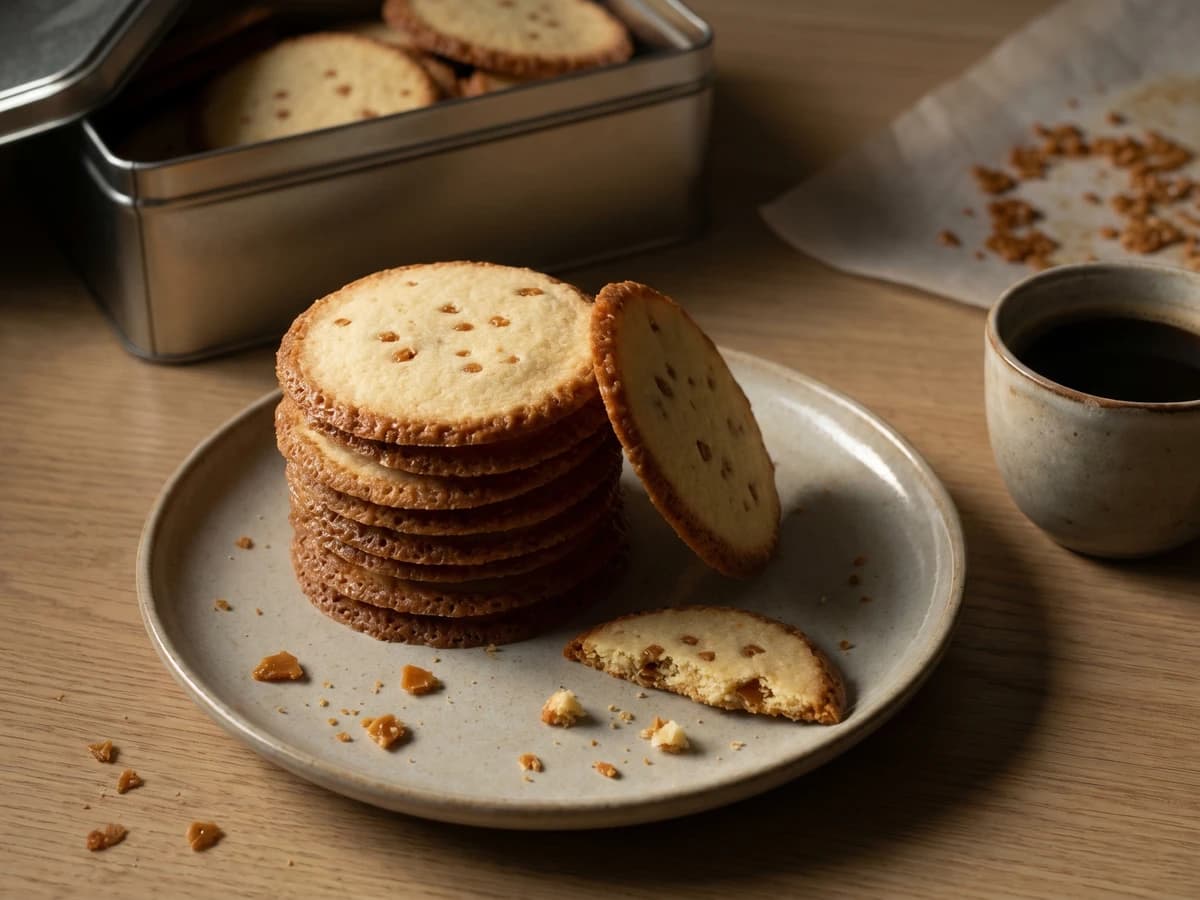
A thin Amsterdam cookie carrying a cog ship in its name: caramelized butter dough, almond nougatine, and a 1934 contest that turned municipal pride into something for coffee.