Chef Graziella
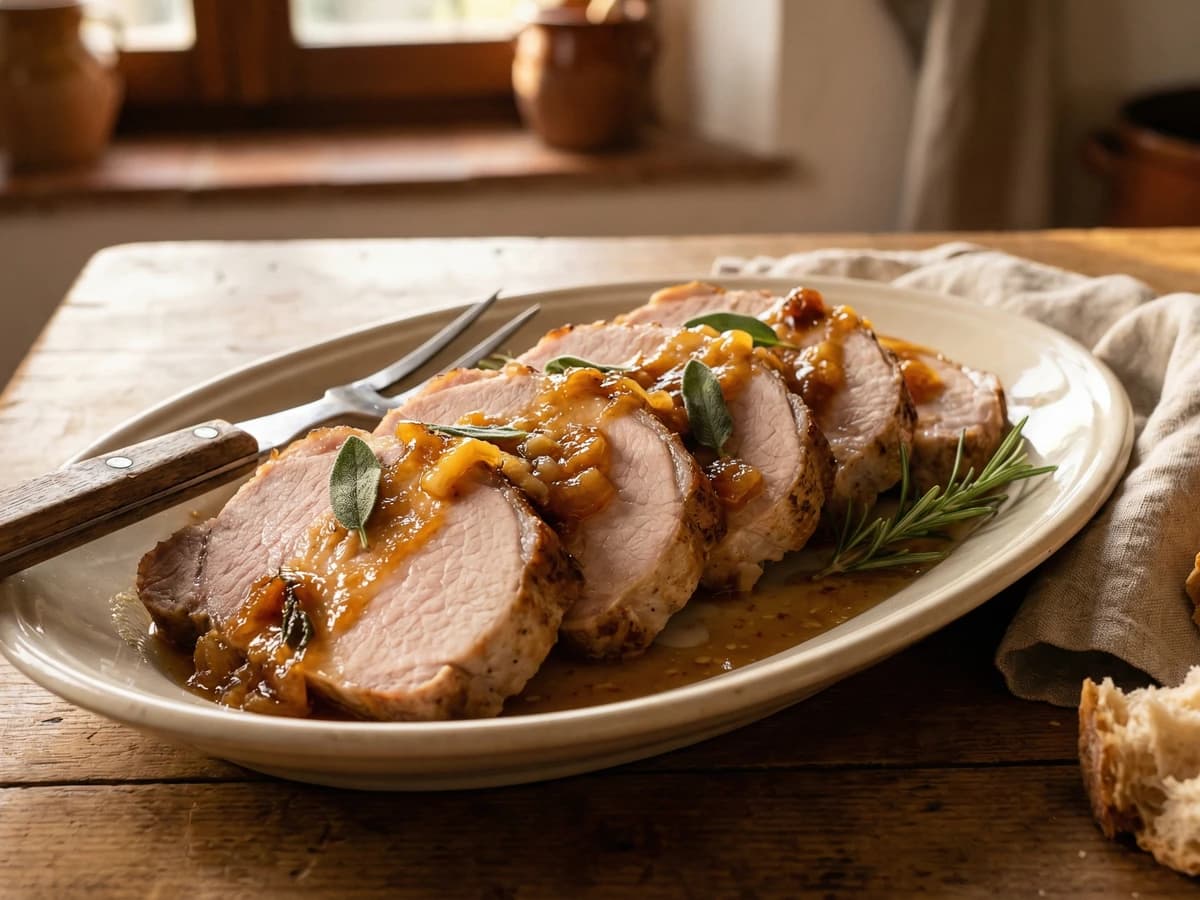
Arrosto di Maiale al Latte
Pork loin braised in milk until the liquid transforms into nutty, golden curds that cling to impossibly tender meat. The technique looks like failure and tastes like triumph.
A cooking platform built around craft, culture, and the stories behind what we eat.

Created by
Ridged egg pasta tubes rolled by hand, each groove designed to trap the delicate sauce of sweet peas, rose-colored ham, and just enough cream to bind them together. This is Emilia-Romagna in spring.
Garganelli is the pasta that separates those who cook from those who merely heat things up. Each piece is cut, rolled around a thin dowel, pressed against a ridged board to create grooves, then slipped off and set to dry. It is tedious. It is time-consuming. It is worth every minute.
The ridges exist for a reason. They catch sauce. They hold the peas in their little valleys. They grip the cream so it clings rather than slides off. A smooth tube would let the sauce pool at the bottom of the bowl. The ridges prevent this. Form follows function, as it does in all honest cooking.
This is a spring dish, made when peas are sweet and tender. Frozen peas work adequately in winter. Fresh peas at their peak make this dish transcendent. The prosciutto here is cotto, the cooked ham, not the cured crudo. Cotto has a gentler flavor that lets the peas sing. The cream is a whisper, not a flood. What you keep out is as significant as what you put in.
Garganelli originated in Imola, a town between Bologna and the Adriatic coast, where local cooks adapted the maccheroni shape by adding ridges using a weaving comb called a pettine. The name derives from 'garganel,' the Romagnolo dialect word for chicken's esophagus, which the pasta's tubular shape resembles. It became the signature pasta of Romagna, distinct from Bologna's tortellini and tagliatelle.
Quantity
2 cups (300g)
plus more for dusting
Quantity
3
Quantity
1
Quantity
1/4 teaspoon
Quantity
2 tablespoons
Quantity
1 tablespoon
Quantity
1 small
minced fine
Quantity
6 ounces
sliced 1/4-inch thick and cut into strips
Quantity
1 1/2 cups
shelled
Quantity
1/2 cup
Quantity
3/4 cup
Quantity
1 cup
freshly grated, plus more for serving
Quantity
to taste
Quantity
to taste
freshly ground
Quantity
2 tablespoons
chopped
| Ingredient | Quantity |
|---|---|
| tipo 00 flourplus more for dusting | 2 cups (300g) |
| large eggs | 3 |
| large egg yolk | 1 |
| fine sea salt | 1/4 teaspoon |
| unsalted butter | 2 tablespoons |
| extra virgin olive oil | 1 tablespoon |
| shallotminced fine | 1 small |
| prosciutto cottosliced 1/4-inch thick and cut into strips | 6 ounces |
| fresh peasshelled | 1 1/2 cups |
| dry white wine | 1/2 cup |
| heavy cream | 3/4 cup |
| Parmigiano-Reggianofreshly grated, plus more for serving | 1 cup |
| kosher salt | to taste |
| black pepperfreshly ground | to taste |
| flat-leaf parsleychopped | 2 tablespoons |
Mound the flour on a wooden board or clean work surface. Make a well in the center, large enough to hold the eggs. Crack the eggs and yolk into the well, add the salt, and beat gently with a fork, gradually incorporating flour from the inner walls. When the mixture becomes too stiff to work with a fork, use your hands to bring the dough together. It will look shaggy. This is correct.
Knead the dough firmly, pushing with the heel of your hand, folding it over, rotating, and pushing again. Continue for 8 to 10 minutes. The dough should become smooth, elastic, and spring back when pressed. If it feels sticky, dust with flour. If it feels dry and cracked, wet your hands slightly. Wrap tightly in plastic and rest at room temperature for 30 minutes. The rest is not optional.
Divide the rested dough into four pieces. Work with one piece at a time, keeping the others covered. Roll each piece through a pasta machine, starting at the widest setting and progressively narrowing until you reach setting 5 or 6. The sheet should be thin enough to see your hand through, but sturdy enough to hold its shape. Cut the sheets into 1 1/2-inch squares. You will have approximately 60 squares.
Place a pasta square on a gnocchi board or the back of a fine-tined fork, positioning it diagonally so one corner points toward you. Place a thin wooden dowel or pencil along the near corner. Roll the dowel away from you, wrapping the pasta around it while pressing firmly against the ridged surface. The pasta should form a tube with visible grooves on the outside. Slip the garganelli off the dowel and set on a floured tray. Repeat with remaining squares. This takes time. Do not rush.
In a large skillet, melt the butter with the olive oil over medium heat. Add the minced shallot and cook gently until soft and translucent, about 4 minutes. The shallot should not brown. Add the prosciutto cotto strips and cook, stirring, for 2 minutes. The ham should warm through and release some of its fat.
Add the peas to the skillet. If using fresh peas, cook for 3 minutes. Frozen peas need only 1 minute to heat through. Pour in the white wine and let it bubble until nearly evaporated, about 2 minutes. You should smell wine, then not smell it. That is when you proceed.
Pour in the cream and bring to a gentle simmer. Cook for 3 minutes, allowing the cream to reduce slightly and thicken. Season with salt and pepper, remembering that the prosciutto and cheese will add saltiness. Remove from heat while you cook the pasta.
Bring a large pot of water to a vigorous boil. Salt it generously. Add the garganelli and cook until tender but with pleasant resistance to the bite, 3 to 4 minutes for fresh pasta. Fresh pasta cooks quickly. Watch it. Reserve one cup of pasta cooking water before draining.
Return the sauce to medium heat. Add the drained garganelli and half the Parmigiano-Reggiano. Toss vigorously, adding pasta water a few tablespoons at a time, until the sauce coats every ridge and the cheese melts into the cream. Add the remaining cheese and the parsley. Toss once more. The sauce should cling to the pasta, not pool beneath it. Serve immediately in warmed bowls. Pass additional Parmigiano at the table.
1 serving (about 290g)
Culinary guides, cultural storytelling, and the editorial depth that makes cooking meaningful.
Discover Culinary ExplorerChef Graziella
Pork loin braised in milk until the liquid transforms into nutty, golden curds that cling to impossibly tender meat. The technique looks like failure and tastes like triumph.

Chef Graziella
Thick pork chops rubbed with salamoia bolognese and grilled over live fire. This is how we eat in summer in Emilia-Romagna: simply, outdoors, with family.
Chef Graziella
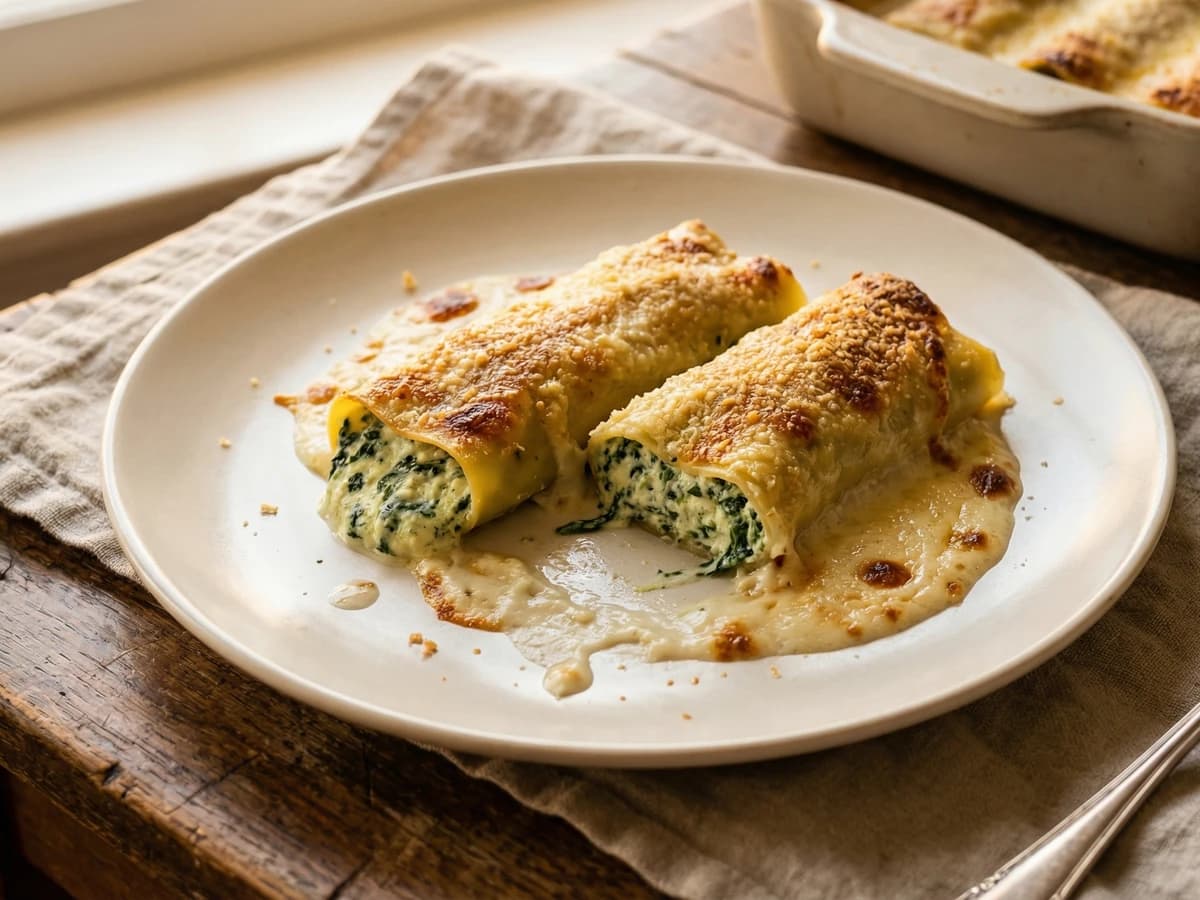
Hand-rolled pasta sheets wrapped around a filling of ricotta and spinach, covered in besciamella and baked until golden. This is the Sunday cooking of Emilia-Romagna, made without shortcuts.
Chef Graziella
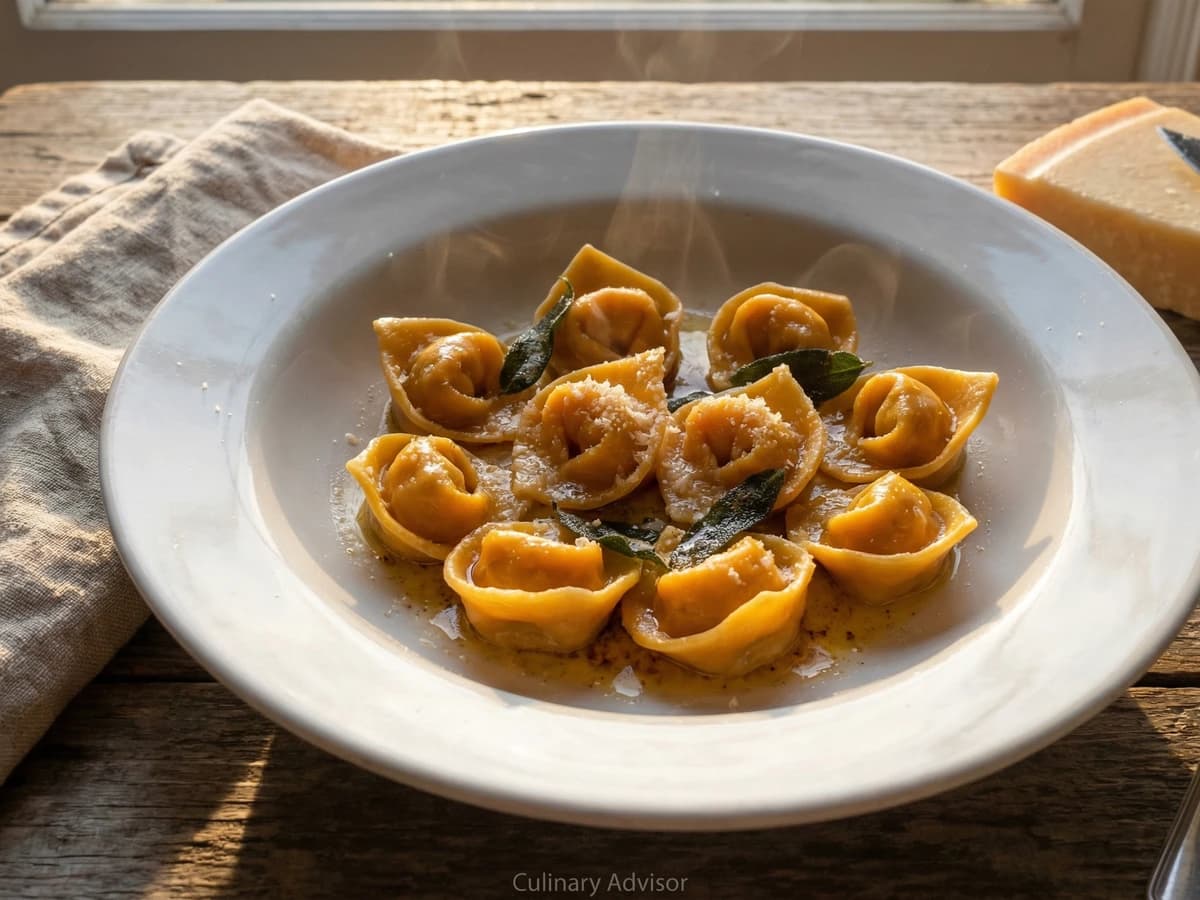
The pasta of the Este dukes, where sweet roasted pumpkin meets fresh egg pasta in shapes like little peasant hats. Dressed only with butter and sage, as Ferrara has done since the Renaissance.