
Chef Jeong-sun
Agwi-jjim (Braised Monkfish with Bean Sprouts)
Firm monkfish buried under crisp soybean sprouts, minari, and a red gochugaru sauce thickened at the end; Masan's market dish asks for heat, timing, and a steady hand.
A cooking platform built around craft, culture, and the stories behind what we eat.
Created by
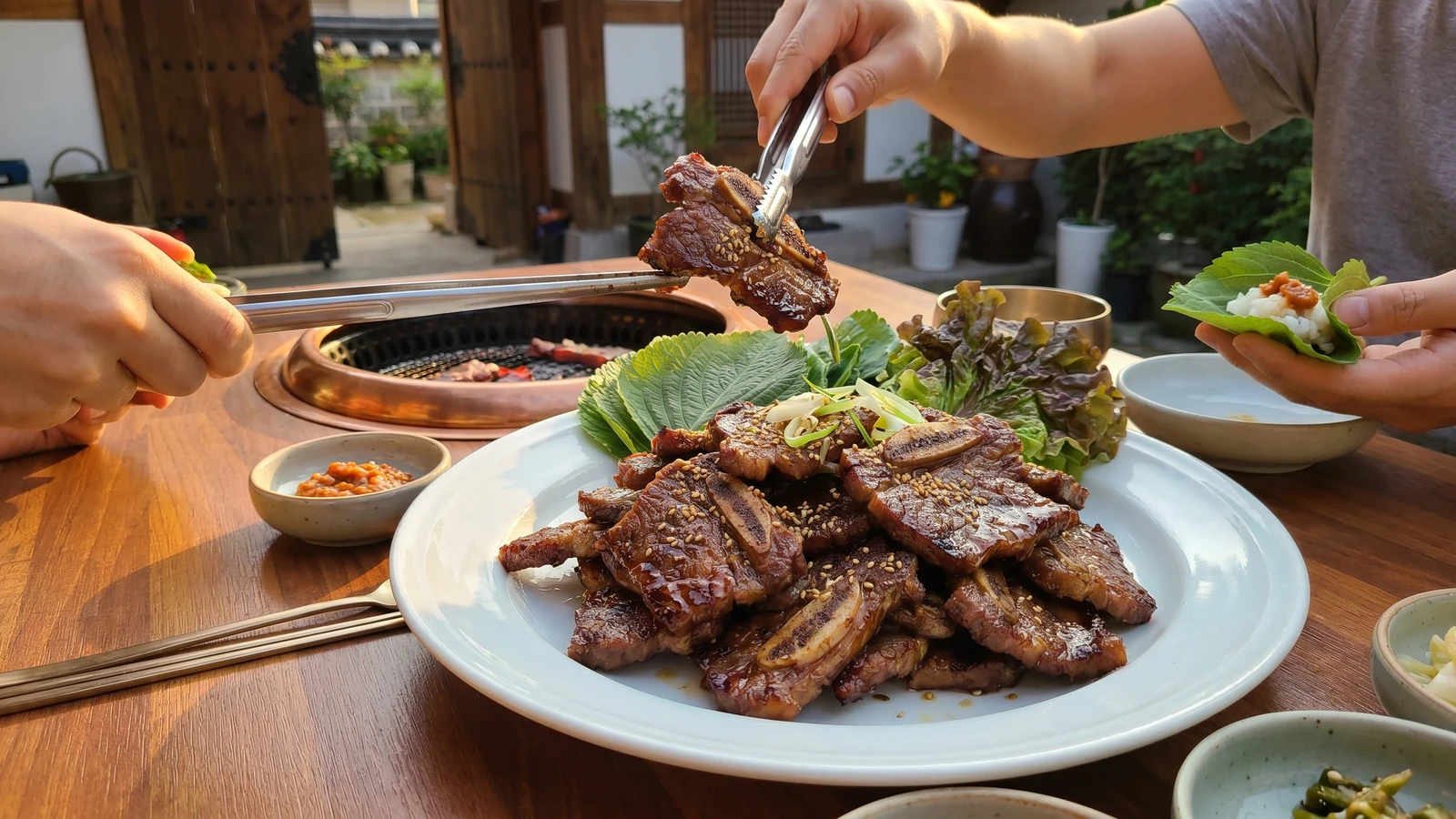
Cross-cut beef short ribs scored to the bone, rested in soy, pear, garlic, and sesame, then grilled over charcoal until the edges darken and the meat releases cleanly.
Galbi-gui lives or dies before it reaches the fire. The ribs must be cut and scored correctly, down to the bone but not through it, so the marinade can enter and the meat can curl open over heat. A lazy cut gives you chewy beef with sauce on the outside. A proper cut gives you meat that pulls from the bone without a fight.
My teacher made us score each rib in silence. 눈동냥, 귀동냥, borrowing with the eyes and ears. She would turn one piece over, look at the depth of the knife marks, and put it back without praise. That was enough. The lesson stayed: galbi is celebration food, but it is not careless food. The table may be noisy. The preparation should be exact.
Keep the sweetness restrained. Pear and onion soften the meat and round the soy, but sugar should not lead the dish. You want beef first, then soy, garlic, sesame, and charcoal at the edges. If you have no charcoal, use a broiler or cast-iron grill pan honestly. 시대가 바뀌면 음식도 바뀌어야 해요. When times change, food must change too. The vessel can change. The knife work and seasoning cannot.
Galbi-gui became strongly associated with celebration dining in modern Korea as beef, once expensive and eaten sparingly, grew more available in the twentieth century. Suwon is especially known for wang-galbi, large beef ribs seasoned with a soy-based marinade, and the city's galbi restaurants helped make grilled ribs a destination dish. LA galbi, the thin cross-cut style common in Korean American kitchens, developed through immigrant butchery and is now cooked in Korea too, a good example of the table moving both ways.
Quantity
1.5kg
flanken-cut LA galbi style, 1/4 to 1/3 inch thick
Quantity
1/2 pear, about 120g
peeled, cored, and grated
Quantity
1/2 medium, about 100g
grated
Quantity
6 tablespoons
Quantity
2 tablespoons
Quantity
2 tablespoons
Quantity
1 tablespoon
Quantity
2 tablespoons
Quantity
5 cloves
minced
Quantity
1 teaspoon
grated
Quantity
3
finely chopped
Quantity
1/2 teaspoon
freshly ground
Quantity
1 tablespoon, plus more for serving
Quantity
1 tablespoon
for the grill grate
Quantity
to serve
Quantity
to serve
| Ingredient | Quantity |
|---|---|
| beef short ribsflanken-cut LA galbi style, 1/4 to 1/3 inch thick | 1.5kg |
| Korean pear or Asian pearpeeled, cored, and grated | 1/2 pear, about 120g |
| yellow oniongrated | 1/2 medium, about 100g |
| soy sauce | 6 tablespoons |
| sugar | 2 tablespoons |
| mirin or rice wine | 2 tablespoons |
| honey or rice syrup | 1 tablespoon |
| toasted sesame oil | 2 tablespoons |
| garlicminced | 5 cloves |
| fresh gingergrated | 1 teaspoon |
| scallionsfinely chopped | 3 |
| black pepperfreshly ground | 1/2 teaspoon |
| toasted sesame seeds | 1 tablespoon, plus more for serving |
| neutral oilfor the grill grate | 1 tablespoon |
| red leaf lettuce or perilla leaves (optional) | to serve |
| ssamjang, sliced garlic, and sliced green chili (optional) | to serve |
Rinse the cut ribs briefly under cold running water to remove bone dust from the saw cut. Soak them in cold water for 10 minutes, then drain and pat very dry. This is not to wash away flavor. It is to keep gritty bone from ending up at the table.
Lay each rib flat and score the meat in shallow diagonal cuts, about 1/8 inch deep and 1/2 inch apart, on both sides. Do not cut through the meat. These cuts let the marinade enter and help the rib relax over the fire instead of tightening into a tough strip.
In a large bowl, stir together the grated pear, grated onion, soy sauce, sugar, mirin, honey, sesame oil, garlic, ginger, scallions, black pepper, and sesame seeds. Taste it before the raw meat goes in. It should be salty, gently sweet, garlicky, and nutty, not syrupy. 손맛 is real; I measure it anyway.
Add the ribs and turn them by hand so marinade touches every cut surface. Cover and refrigerate at least 4 hours and up to 12 hours. Turn the ribs once halfway through. Longer than overnight is not kindness to the meat; the soy takes over and the texture softens too far.
Set up a charcoal grill for medium-high direct heat. Oil the grate lightly. The coals are ready when they glow evenly and you can hold your hand 4 inches above the grate for only 3 to 4 seconds. Too weak and the ribs stew. Too fierce and the sugar burns before the meat releases from the bone.
Lift the ribs from the marinade and let excess drip back into the bowl. Grill in a single layer, 2 to 3 minutes per side, turning once or twice as needed, until the edges darken, the surface turns glossy, and the meat begins to pull back from the bone. Do not walk away. Sweet soy marinades burn quickly, and galbi asks for attention.
Move the ribs to a platter and rest them 3 minutes. Cut between the bones with kitchen scissors if you want easier sharing, or serve the strips whole for people to pick up at the table. Scatter a little toasted sesame over the top.
Serve with rice, lettuce or perilla leaves, ssamjang, sliced garlic, green chili, and several banchan. Wrap one piece of rib with rice and sauce, then eat while the edges are still glossy. This is celebration food because it makes the table reach toward the same plate.
1 serving (about 280g)
Culinary guides, cultural storytelling, and the editorial depth that makes cooking meaningful.
Discover Culinary ExplorerChef Jeong-sun
Firm monkfish buried under crisp soybean sprouts, minari, and a red gochugaru sauce thickened at the end; Masan's market dish asks for heat, timing, and a steady hand.

Chef Jeong-sun
A quick Korean rice bowl built on contrast: warm rice, cold popping flying-fish roe, chopped vegetables, gim, sesame oil, and the crisp rice bottom a hot stone bowl gives you.
Chef Jeong-sun
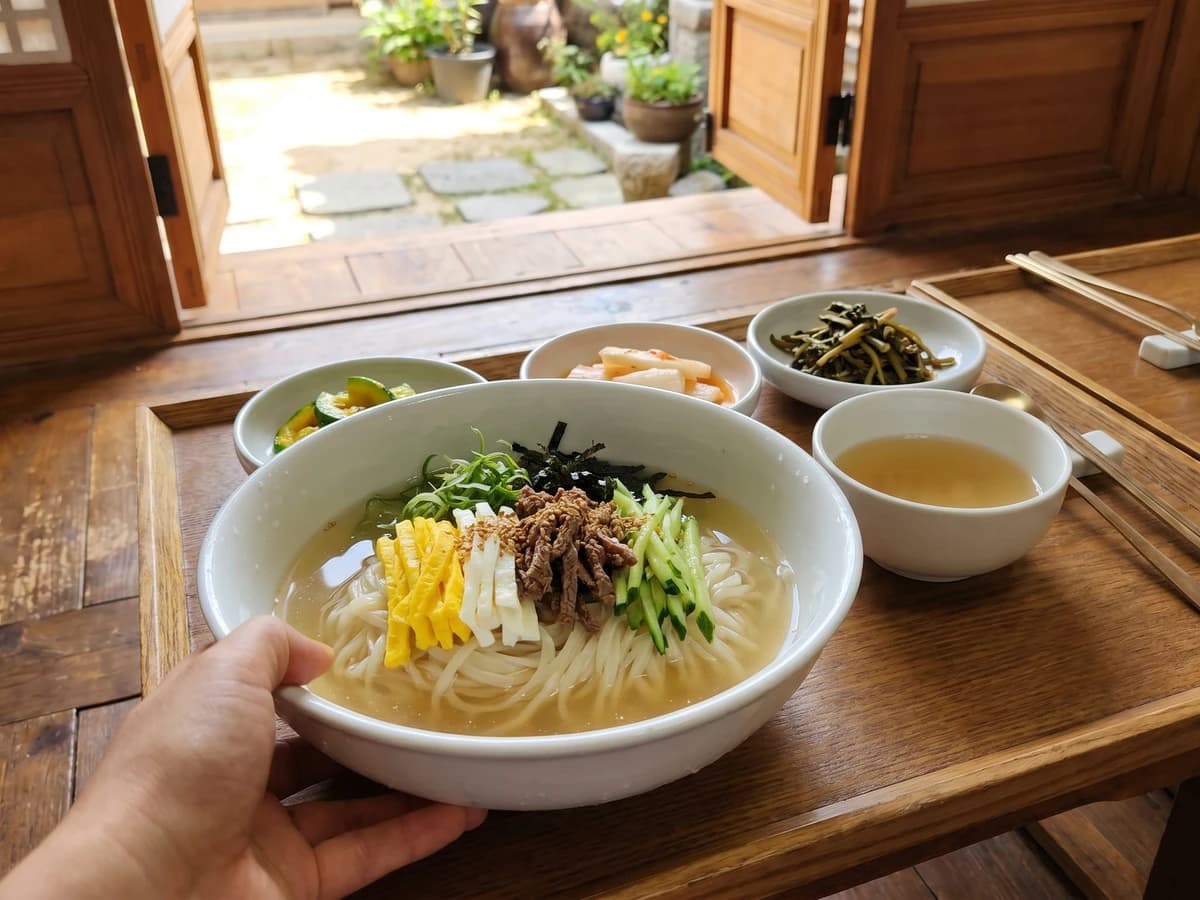
Andong's guest noodles, wheat and roasted soybean flour rolled thin, boiled and rinsed cold, then set in a clear chilled anchovy broth with careful strips of beef, egg, and cucumber.

Chef Jeong-sun
Andong's ritual-table rice served on an ordinary day: separate soy-sesame namul, warm rice, and clear radish soup, mixed without gochujang so every vegetable keeps its own voice.